There are different types of walking aids, for different needs.
Let’s meet three people who use walking aids. Each person uses a different type of walking aid, because their needs are different.
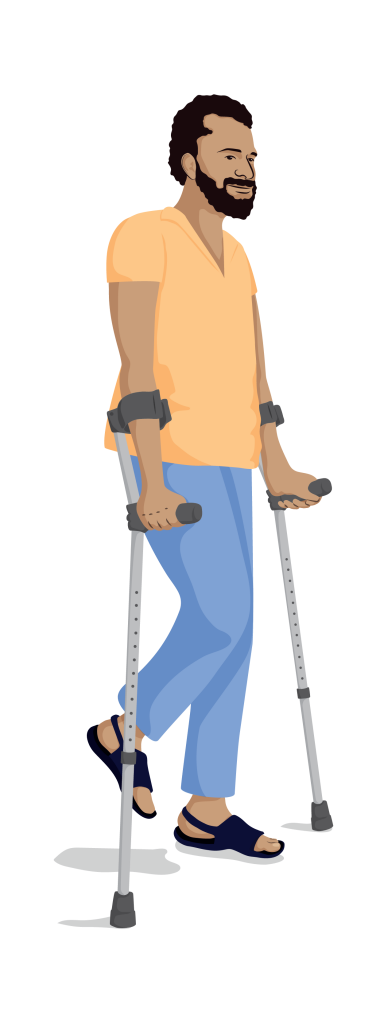
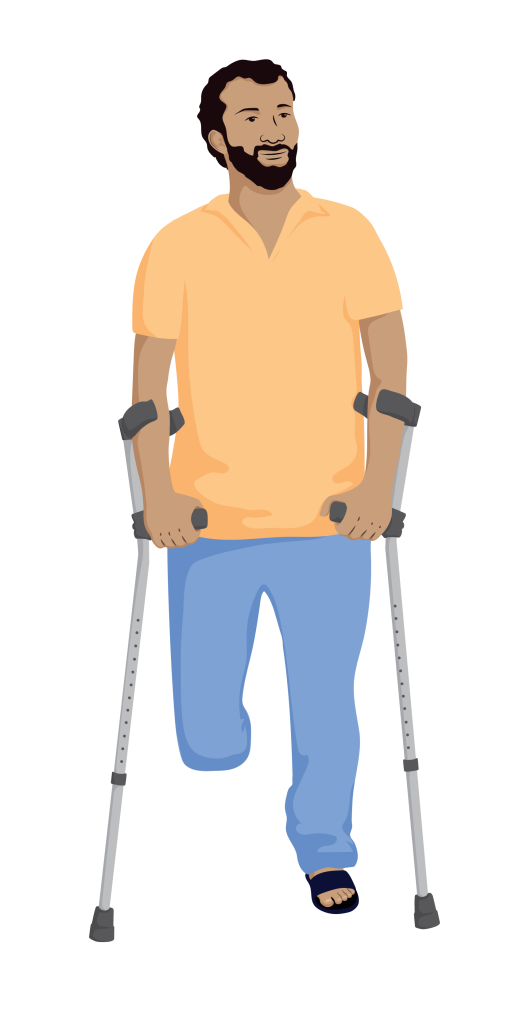
Asif has a below knee prosthetic leg. He uses forearm crutches when tired, or when he is not wearing his leg.

Cali has arthritis. She uses a walking frame. Due to her frailty, poor coordination, pain, she uses a walking frame to help her walk indoors.
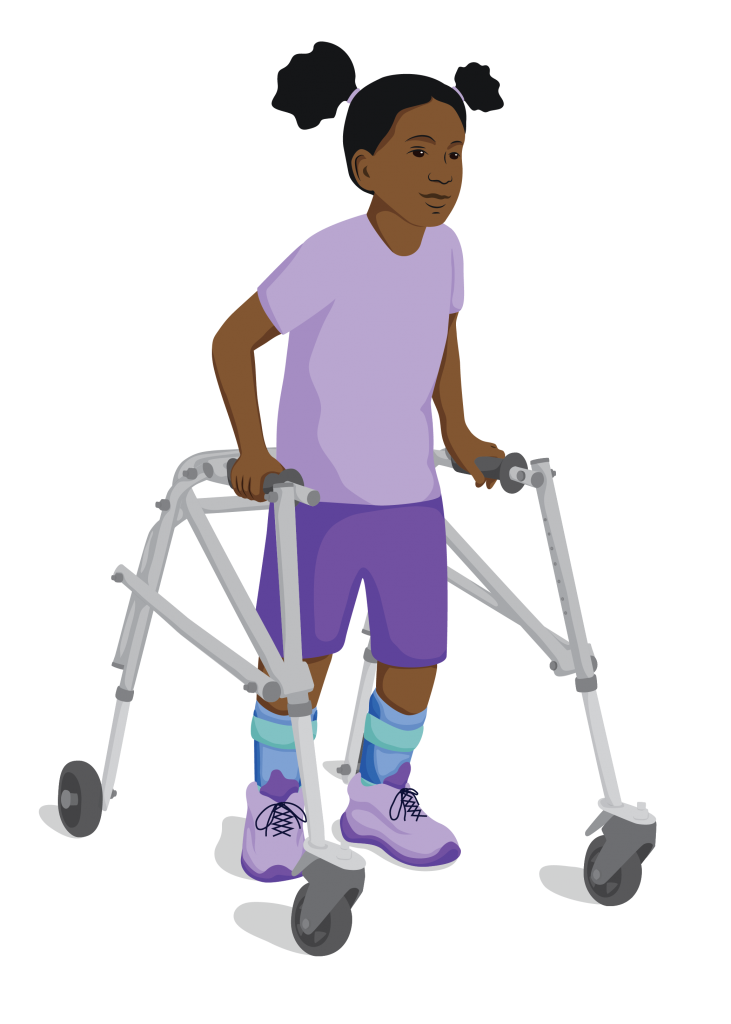
Dinah has cerebral palsy. She uses a posterior walker. She cannot walk without extra support. She needs help with balance and support of her weak leg muscles.
Asif, Cali and Dinah each use a different type of walking aid.
People need the right type of walking aid, depending on their physical condition, lifestyle and environment.
Using the wrong walking aid can lead to problems such as falling or injury.
Read on to find out more about some of the most common types of walking aids.
クラッチ
クラッチは前腕型クラッチとも呼ばれます。
Elbow crutches are good for children and adults who:
- Walk using either one or two legs
- Have good upper body strength, coordination and balance

Elbow crutches parts include (see the labelled image above):
- Shaft – a strong tube that forms the main part of the crutch
- Elbow cuff – fixed to the top of the shaft the cuff is shaped to fit around and support the forearm
- ハンドグリップ– シャフトに固定され、握って本人の体重を支えるように設計された、成形されたグリップ
- Rubber tip – fixed to the bottom of the shaft the tip provides grip between the crutch and the floor
Read on to see why Asif chooses to use elbow crutches
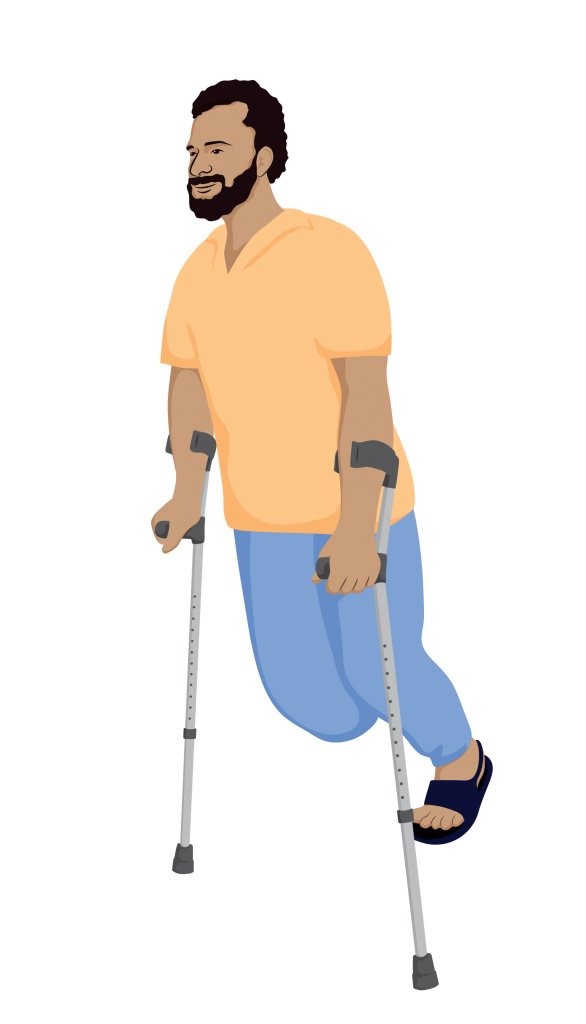 Elbow crutches suit Asif because:
- They are lightweight and easy to take with him wherever he goes
- 立っている時、クラッチを離さなくても手が使える
- They work well outdoors and over rough ground
松葉杖
松葉杖は腋窩支持クラッチとも呼ばれます。
松葉杖は、以下のような子どもや大人に適しています:
- Walk using one or two legs
- Need a bit more support than is provided by elbow crutches
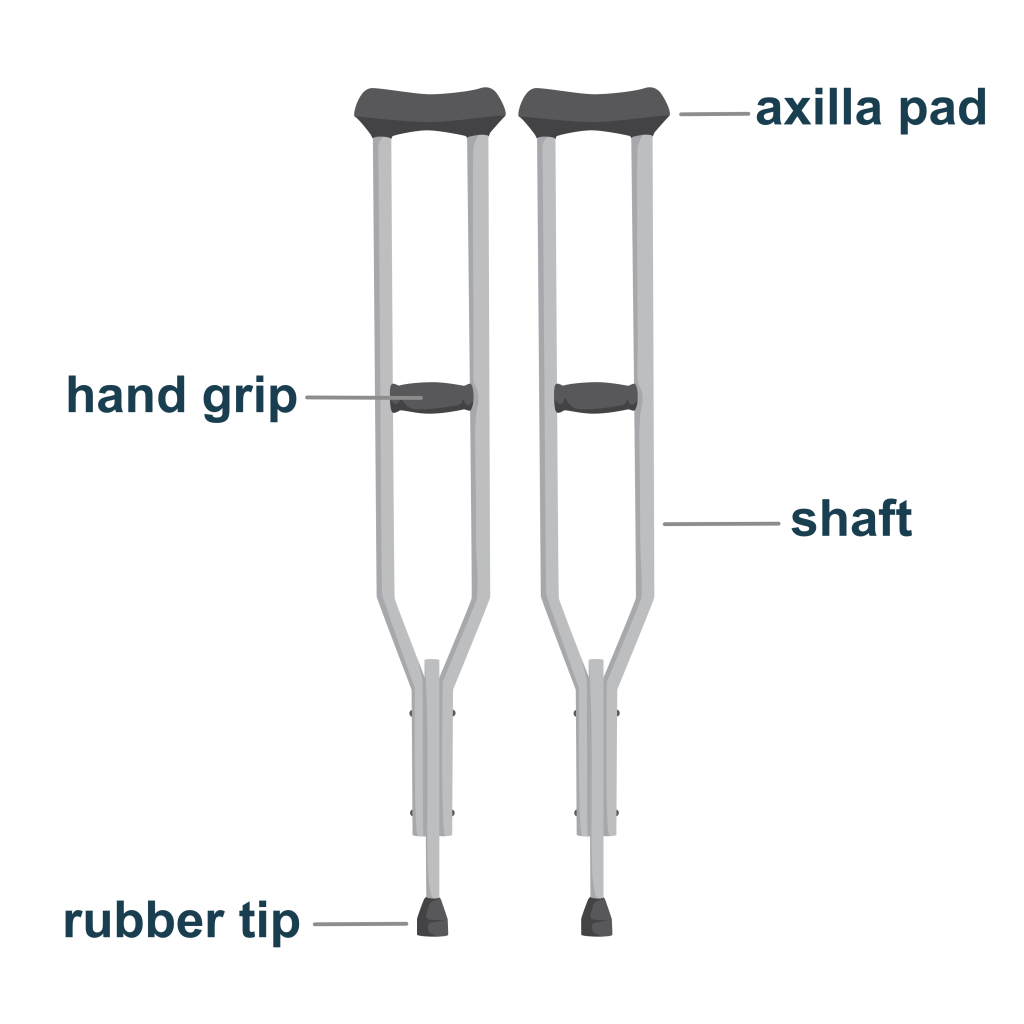
松葉杖は以下のようなパーツからなります (上の表示付き画像を参照):
- Shaft – an adjustable metal frame which supports the other parts of the crutch
- 脇パッド– 松葉杖の上部に固定された、強固なパッド付きサポート。本人の脇の下に配置され、その体重を支えるように設計されている。
- ハンドグリップ – 使用者が握って松葉杖を操作できるように成形されたグリップ
- Rubber tip – fixed to the bottom of the shaft the tip provides grip between the crutch and the floor
質問
アシフにとって、松葉杖は歩行支援用品のよい選択肢でしょうか?
松葉杖はクラッチほど使いやすくはありません。また、脇の下への圧迫により、長期的には損傷を引き起こす可能性もあります。
歩行器
歩行器は、次のような人に適しています:
- Walk using one or two legs
- Are able to use both hands
- バランスを保つのに助けが必要です
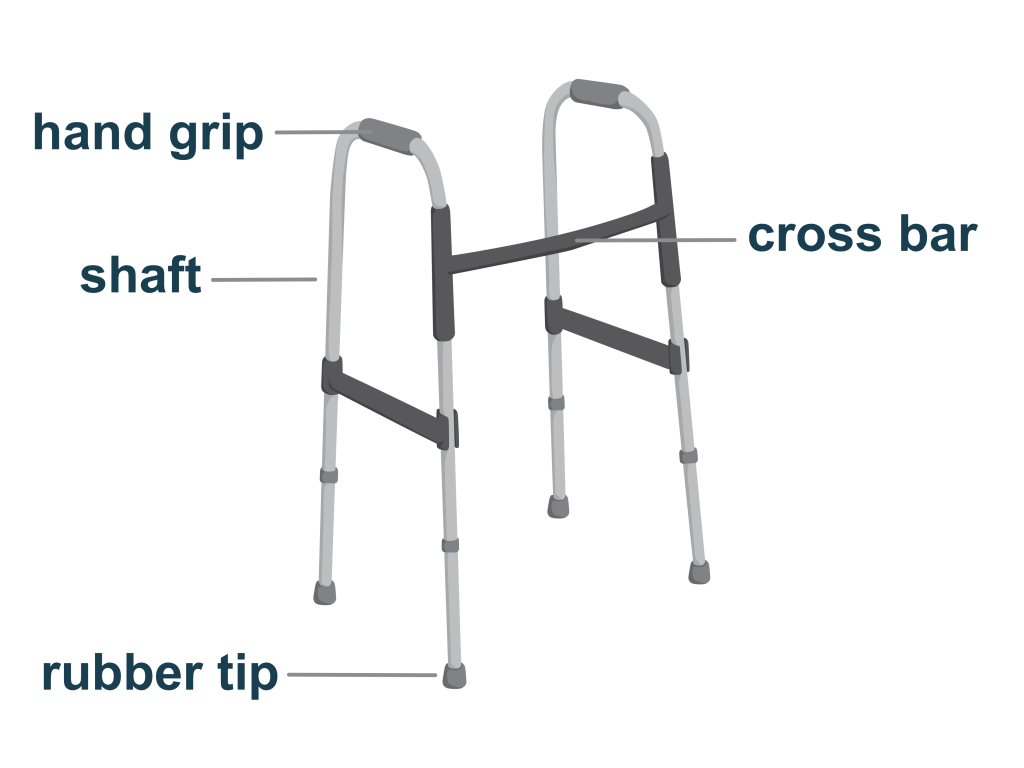
Walking frame parts include: (see the labelled image above)
- Shaft – a strong metal structure that forms the main part of the frame
- ハンドグリップ– 握って本人の体重を支え、またフレームを動かすための、成形されたグリップ
- Cross bar – a metal bar that links the two halves of the frame
- Rubber tip – fixed to the feet of the frame and provide grip on the floor
Read on to see why Cali chooses to use a walking frame
A walking frame suits Cali because it provides her with more support and stability than crutches.
She only uses her walking frame indoors, where the ground is flat. Outdoors the ground is uneven, and the walking frame is not stable.
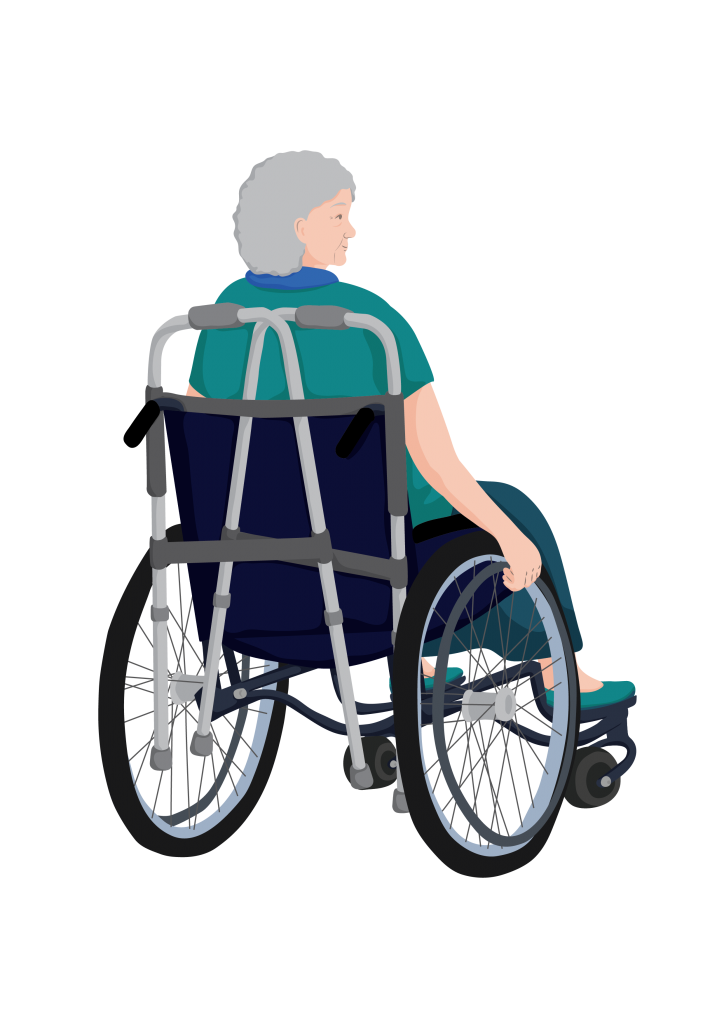
Cali uses a wheelchair outdoors.
歩行車
歩行車は、四輪歩行器とも呼ばれます。
歩行車は、次のような人に適しています:
- Walk using two legs
- Are able to use both hands and have strong hands
- Need a small amount of support to walk and have good coordination
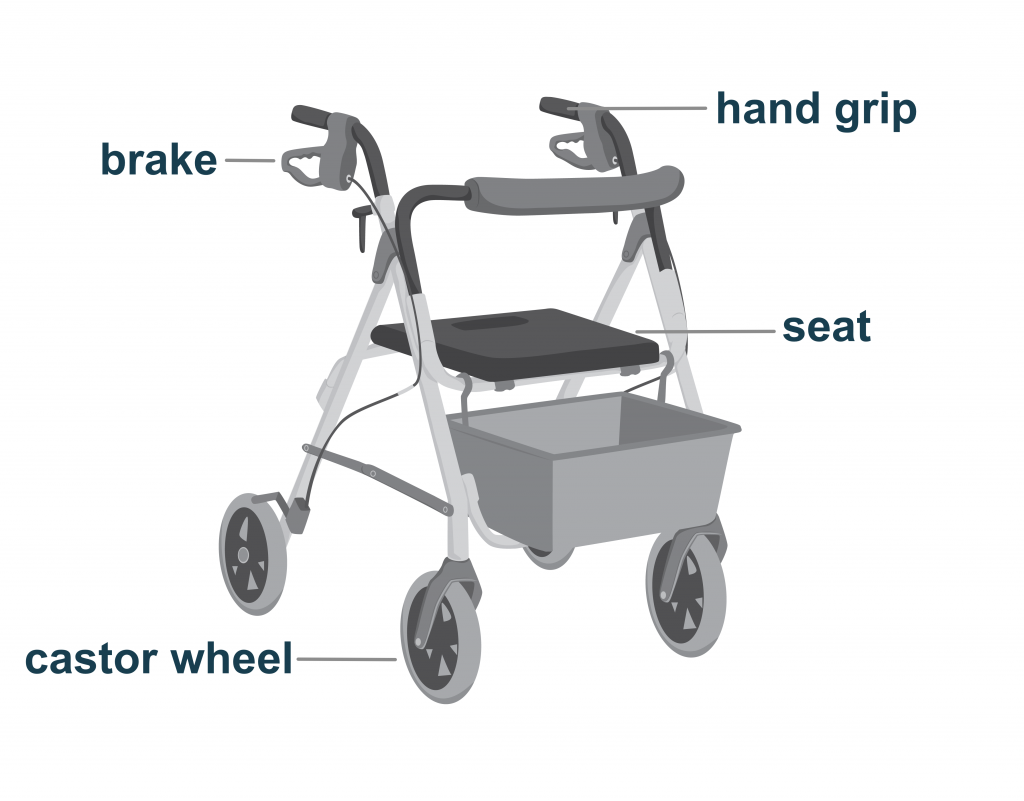
Rollator parts include (see the labelled image above):
- Hand grip – shaped grips that are held by the person to bear their weight and also to move the rollator
- Brake – a hand lever activated brake that allows the person to stop the rollator
- Seat – an integrated platform which the person can sit on when not walking
- Castor wheels – wheels on the base of the rollator that allow it to move without being lifted
質問
カリも歩行車を使えるでしょうか?
Cali tried a rollator, however her hands were not strong enough to use the brakes and she lost control. This made her feel unsafe. She prefers a walking frame.
Posterior walker
Posterior walkers can also be called Kaye walkers.
Posterior walkers are good for children who:
- Walk using two legs
- Can hold the walker with both hands
- バランスを保つためのサポートが必要
- Can understand how to use the walker
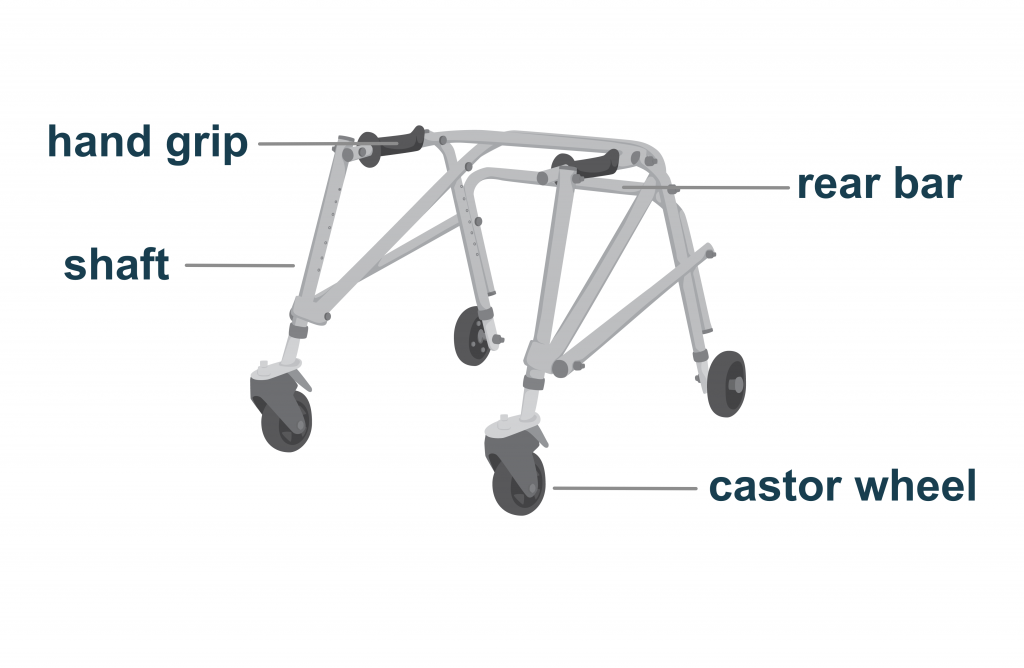
Posterior walkers include the following parts (see the labelled image above):
- Hand grips – shaped grips that are held by the person to bear their weight and also to move the walker
- Rear bar – a metal bar that connects the two halves of the adjustable walker frame behind the person
- Shaft – an adjustable metal frame that supports the other parts of the walker
- Castor wheels – wheels on the base of the walker that allow it to move without being lifted
Read on to see why Dinah chooses to use a posterior walker
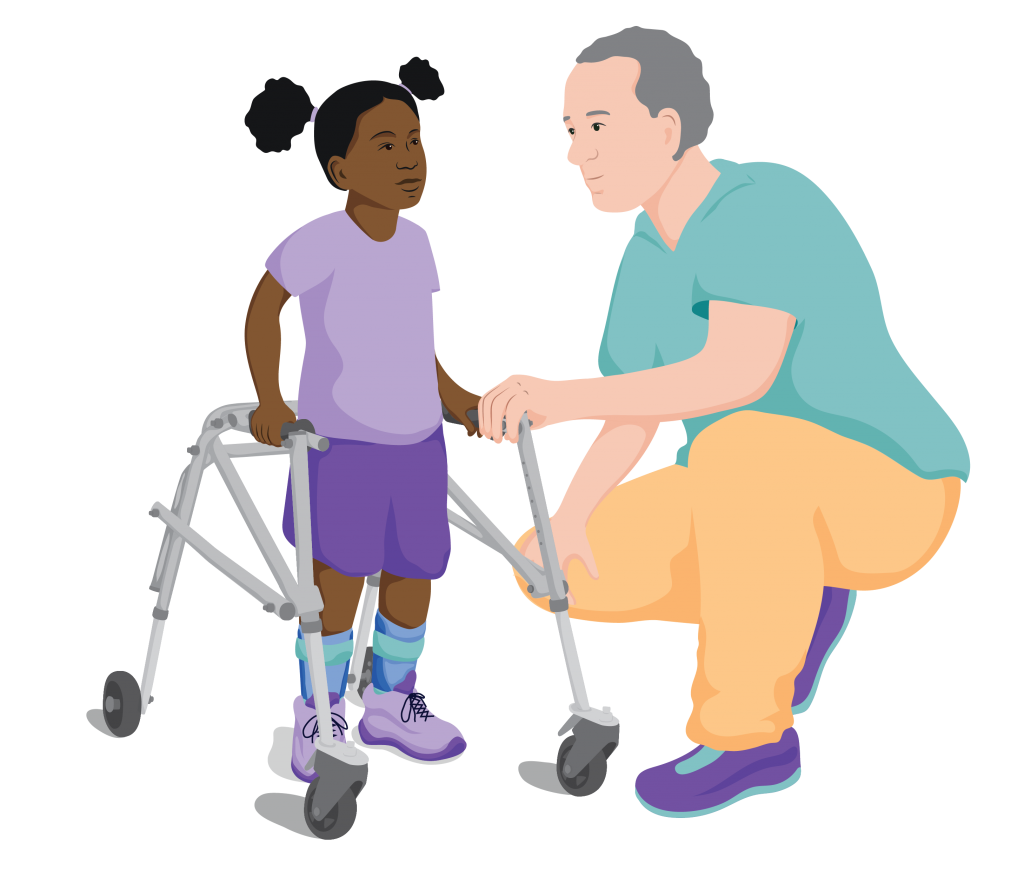
A posterior walker works well for Dinah because it helps her to walk with a natural walking pattern and posture, because the hand grips are close to her side.
Dinah began using her posterior walker at school. She had regular practise with a trained rehabilitation worker. When she was using it well, she began using it at home as well as at school.
Dinah cannot use her walker to go up steps; and she also finds it difficult to use outside as the ground is uneven and sandy. If Dinah stays on hard or paved surfaces paths, it is OK.
歩行杖
歩行杖は、次のような人に適しています :
- Walk using two legs
- Need a small amount of support while walking and have good balance and upper body strength
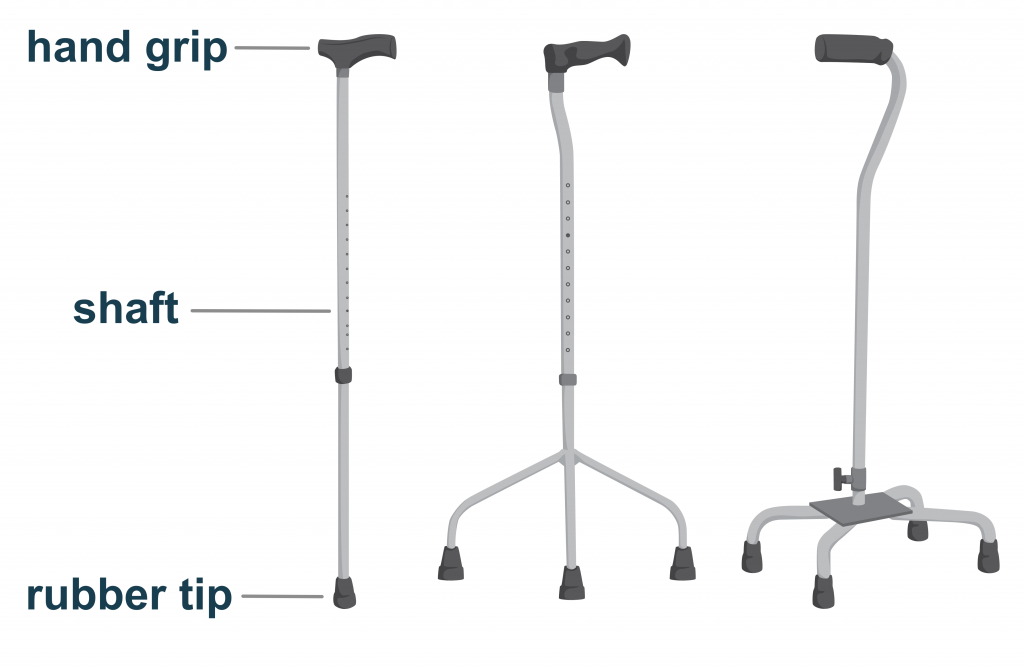
歩行杖 以下のものがあります(上のラベル付き画像を参照):
- Hand grip – a shaped grip held by the person and used for partial weight bearing and to move the stick
- Shaft – a wooden or metal shaft that may be adjustable in length
- ゴム製先端部–歩行杖シャフト底部(または複数の足部)に固定され、杖と床の間にグリップを提供する