In this topic, you will find out about some other important issues which can affect the selection and use of a walking aid.
Read on to see how answers to these questions affect provision of a walking aid.

Problems with feeling (sensation)
If a person has little or no feeling (sensation) in the hands or feet, they may not feel if there is an injury.
Explaining this to the person is very important so that they check their hands and feet daily for any injury.
A person with diabetes or who has had a stroke may have less feeling in their feet. This means they are more at risk of developing a wound.
A referral may be needed to a foot care professional or health care service.
You will learn more about sensation and using a walking aid in Lesson four.
Current foot wound
A foot wound that does not heal can get infected and lead to amputation. Foot wounds are a serious health risk.
A person with a foot wound should avoid walking or putting weight on the wound until it has healed well.
Refer the person to a health care professional if they are not already having treatment for their foot wound.
Discussion
Are foot wounds common in your area?
Healed foot wound
If someone has diabetes and has had a foot wound before, they are at risk of another wound.
A person at risk of developing a foot wound should avoid hopping.
Hopping puts too much pressure on the foot and can lead to another foot wound.
Refer the person to a foot care professional or diabetes clinic to assist with prevention of foot wounds.
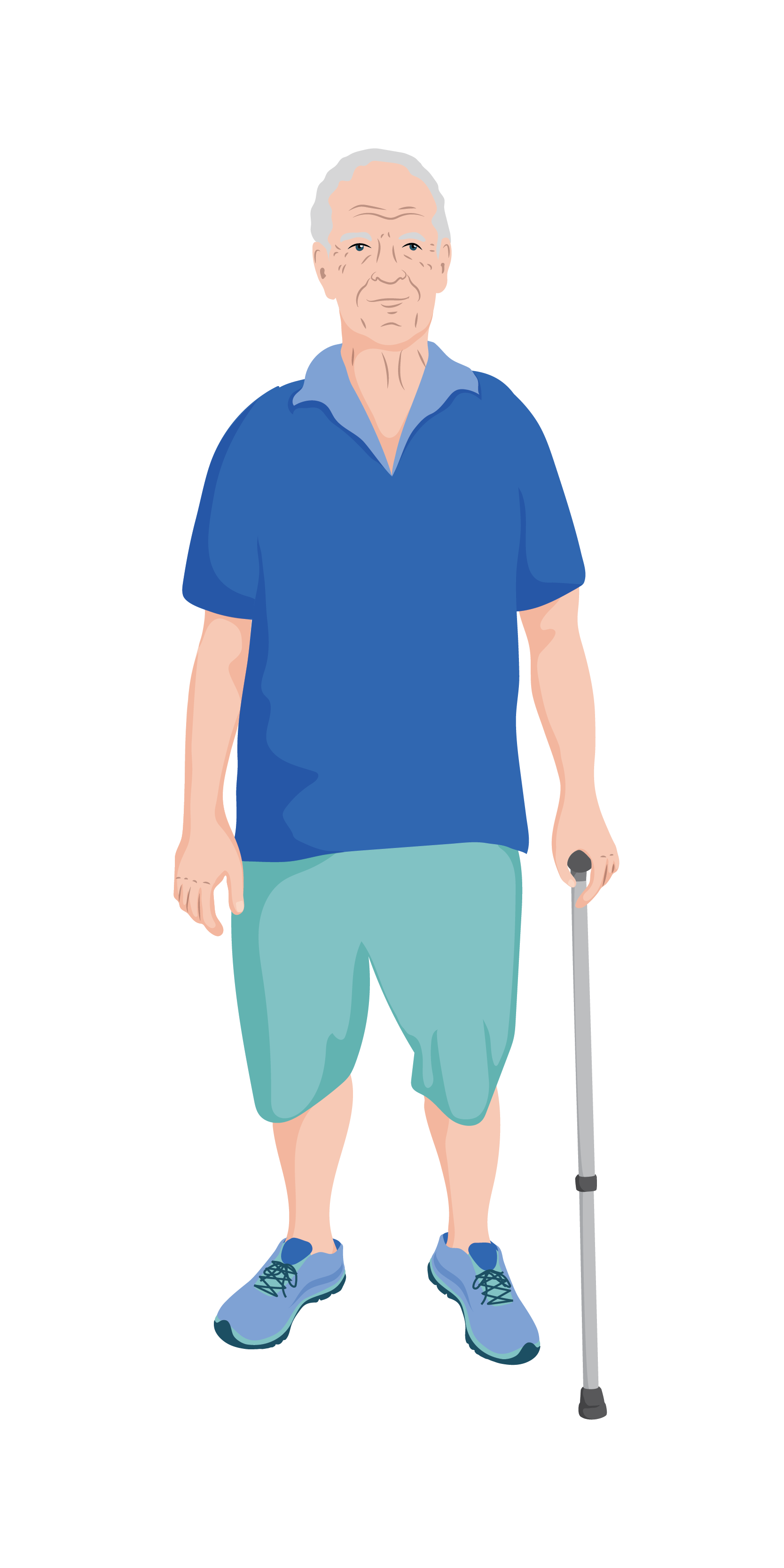
Remember Jensen?
Last year Jensen had a diabetic foot wound after cutting his toe on a rock in the garden. The foot wound is now healed, and Jensen is taking good care of his feet.
He checks his feet daily, visits his local diabetes clinic regularly, and follows the advice of his diabetes nurse.
Question
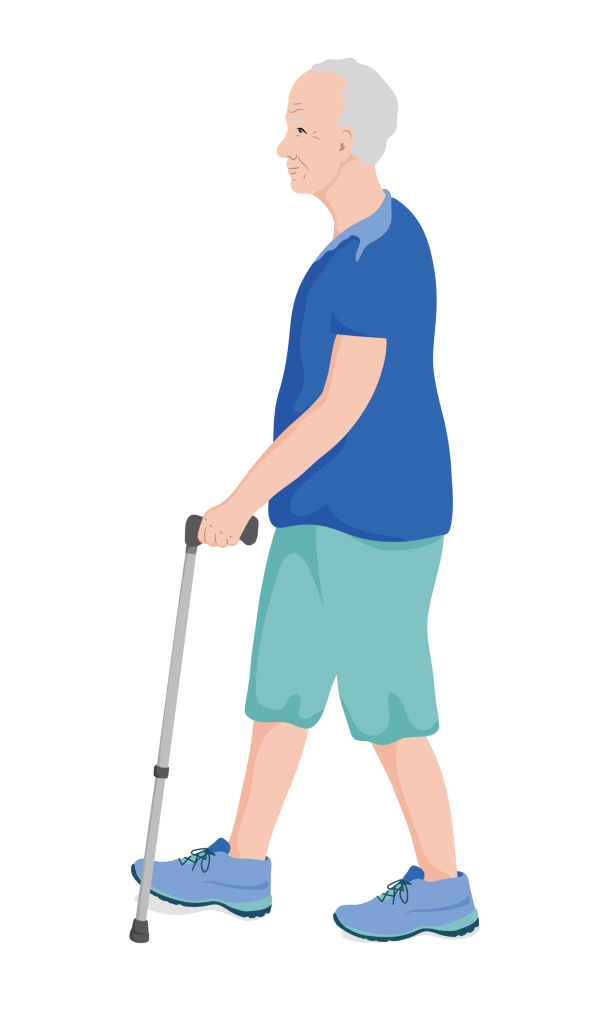
1. Do you think that Jensen may be at risk of developing another foot wound?
Yes, Jensen is at risk, because he has diabetes and has had a foot wound before.
2. What could you advise Jensen to do, to reduce the risk of getting another foot wound?
All of these things could help reduce the risk of Jensen getting another foot wound:
- Learning to walk correctly with his walking aid
- Always wearing suitable shoes
- Checking his feet every day for damaged or broken skin or wounds
- Going to the doctor straight away if he has any damaged/broken skin or wounds.
Difficulty seeing or hearing
A person who has difficulty seeing might be at higher risk of falling. Health problems such as diabetes and stroke might affect a person’s vision.
If the person has difficulty seeing or hearing, they should be referred to a health professional where they can receive a vision or hearing screen.
Discussion
Think about your community. Are there health centres where a person can receive a vision screen or an eye exam?
The TAP Vision assistive products module can teach you how to do a simple vision screen.
Difficulty remembering instructions
Good memory and being able to understand instructions is important to learn how to use walking aids correctly.
Diabetes, stroke and frailty are examples of health problems which can affect a person’s ability to remember instructions.
If a person has difficulty remembering instructions; include family members in training and take more time.
The person may need assistance or supervision when using their walking aid.
Uses a prosthesis
If the person has a prosthesis, they may need a walking aid when they are wearing their prosthesis, and another for when they are not wearing it.
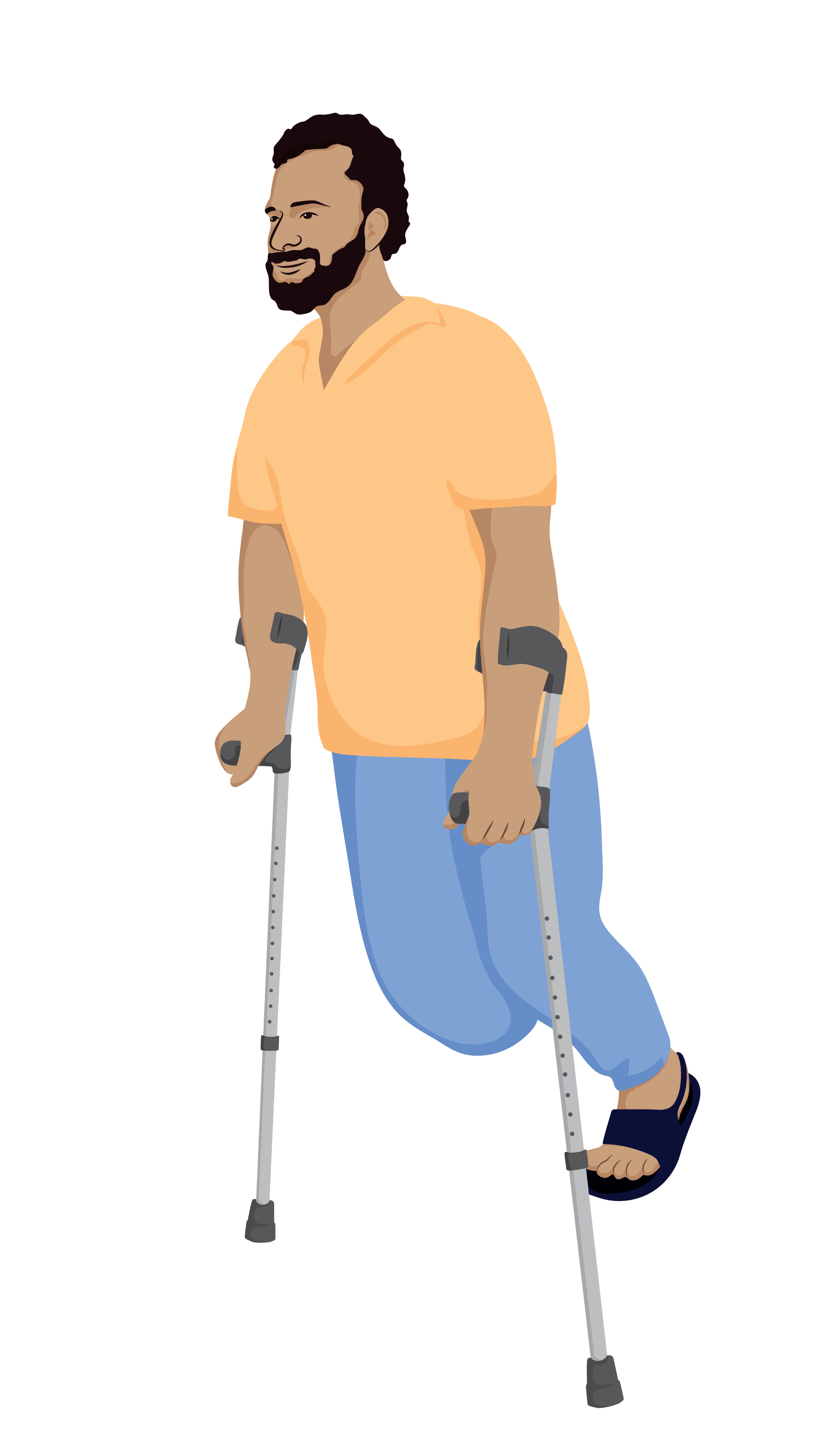
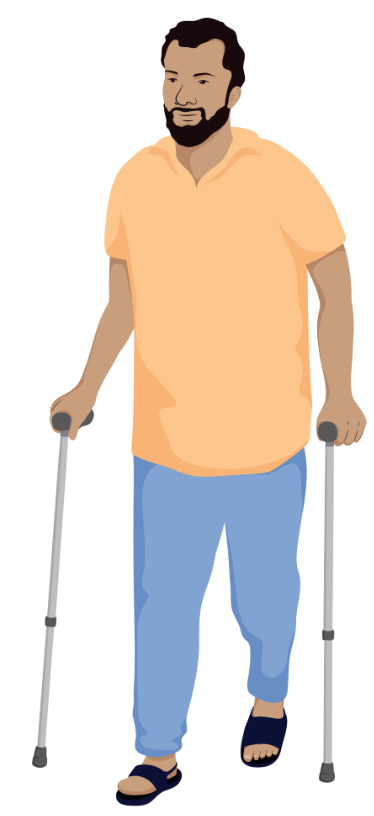
Remember Asif?
Asif needs to be able to use a walking aid both with and without his prosthesis.
He will need training in how to use the walking aids both with and without his prosthesis.
One side of the body is stronger than the other
It is important to know if one side of the body is stronger because this will affect how the walking aid is used, including:
- Which leg steps forward first when going up and down stairs with a walking aid
- Which hand to hold a walking stick in.
You will learn more about this in Lesson four.