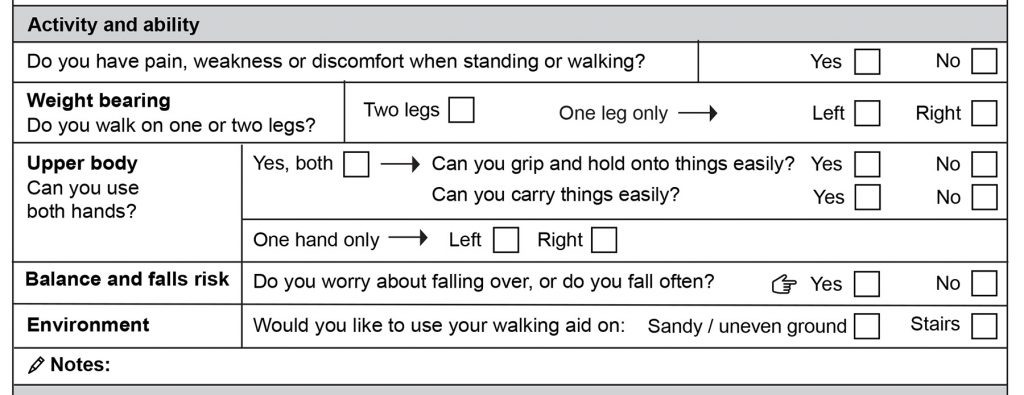
Use this part of the assessment form to find out about the person’s activity and ability.
Weight bearing

Ask the person:
Do you have pain, weakness or discomfort when standing or walking?
Ask the person:
Do you walk with one or two legs?
If the person walks with two legs, find out which leg is stronger and make a note on the assessment form.
A person may not be able to put weight through one or both legs because of:
- Pain
- Broken bone
- Amputation
- Diabetic foot wound
- Muscle weakness or paralysis.
Often a person can put weight through both legs but one leg is stronger than the other.
Question
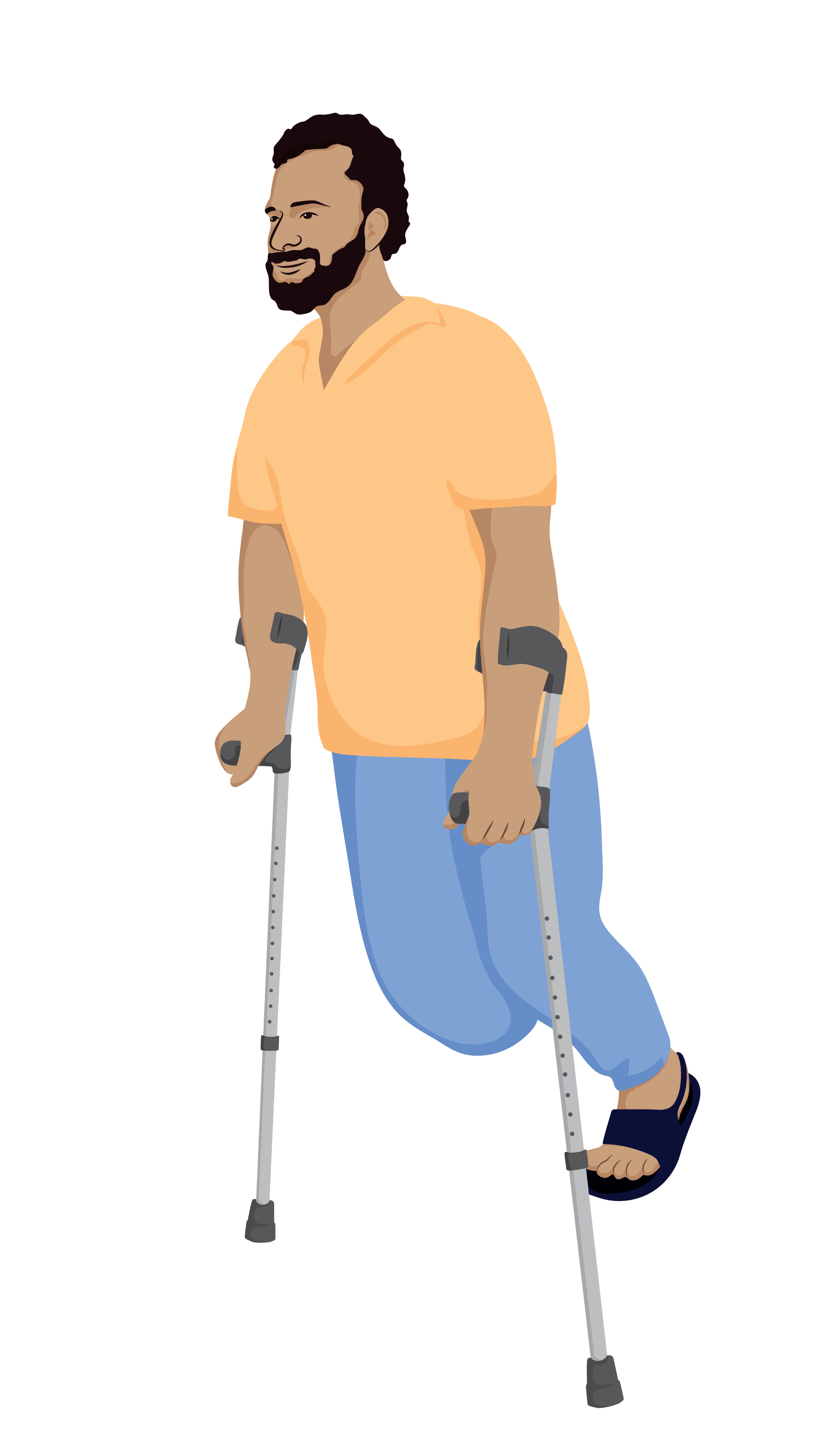
1. Which walking aids are not suitable for a person who can put weight through only one leg?
Rollators and walking sticks are not suitable for a person who can weight bear through only one leg.
A person who can weight bear through only one leg will need two crutches or a walking frame.
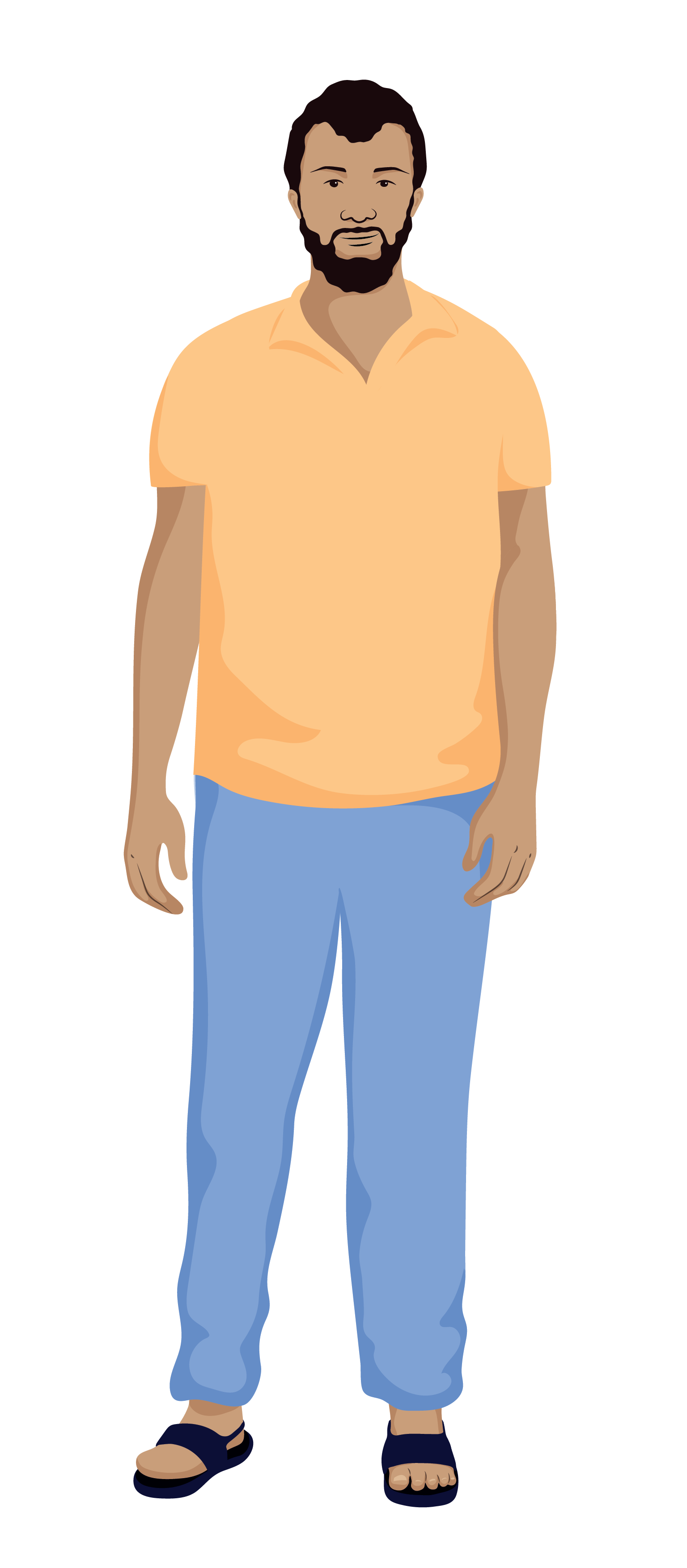
2. Would a walking stick be suitable for Asif?
A walking stick may provide Asif with enough support when he is wearing his prosthesis. However, a walking stick would not be suitable when he is not wearing his prosthesis.
Upper body

Ask the person:
Can you use both hands?
Can you grip and hold onto things easily?
Can you carry things easily?
A person’s hand function will affect the choice of walking aid.
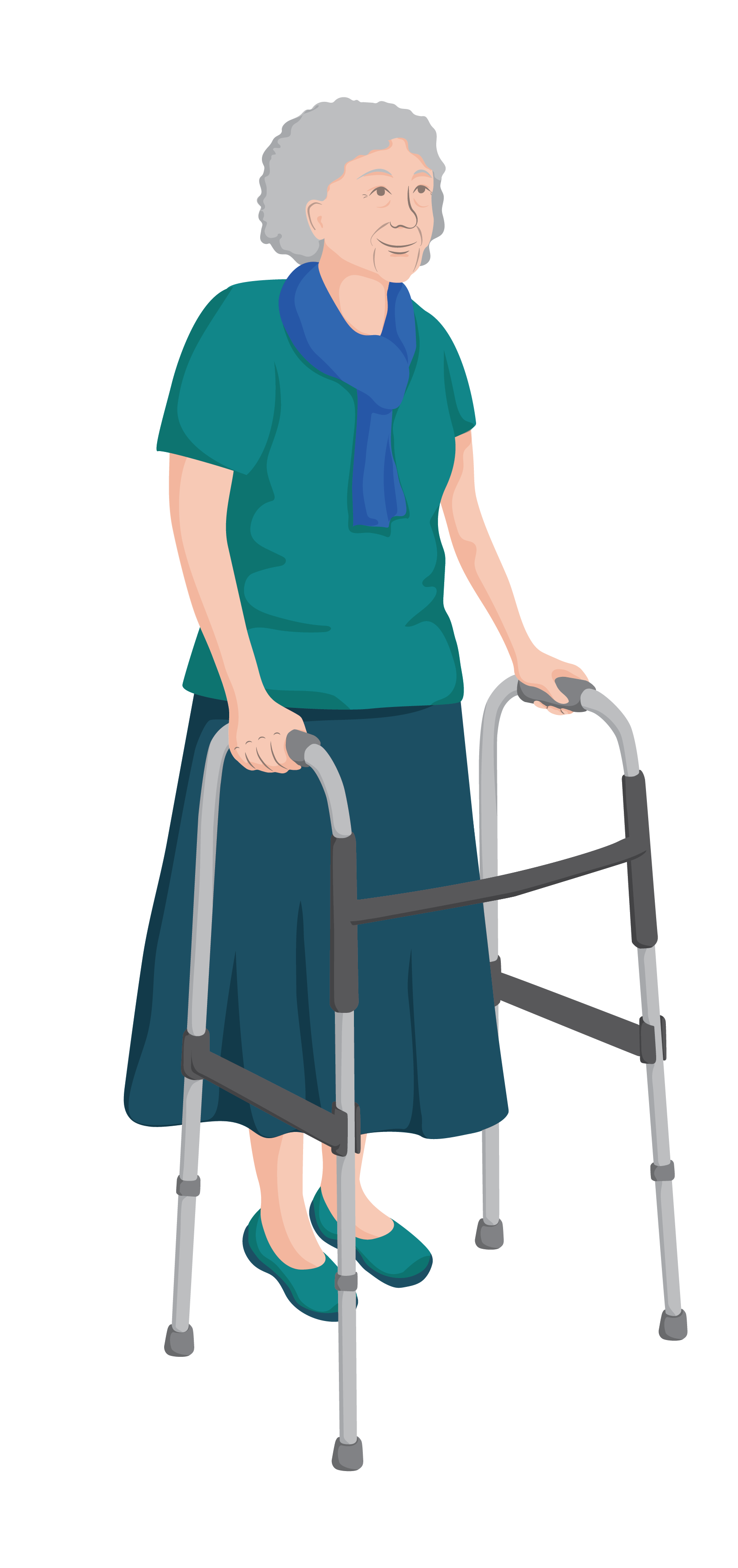
Remember Cali?
Cali cannot use a rollator because she doesn’t have the strength in her hands to work the brakes.
If a person can only use one hand, they will not be able to use crutches, a walking frame, a rollator or two walking sticks. They would be able to use one walking stick, tripod or quadripod.
If the person finds it difficult to grip and hold onto things, they may find it hard to use the brakes on a rollator. Some people might also find it difficult to lift a walking frame, depending on its weight.
There are many types of rollators and walking frames: make sure that the product available to you is suitable for the person.
Question
From the health problems on the assessment form, which ones are more likely to cause weak hands?
Diabetes, stroke, frailty and arthritis can all lead to weakened muscles and reduced control of the hands and fingers.
Balance and falls risk

Ask the person:
Do you worry about falling over, or do you fall often?
If the person has balance problems, they may feel worried about falling over. They will need a walking aid that is stable and provides good support such as a rollator or a walking frame.
A walking aid may increase the risk of falling if it is used incorrectly.
If someone is at risk of falling, they may need more training and supervision to use the walking aid safely.
As well as difficulty with balance, the risk of falling can also be increased by problems such as difficulty seeing or hearing, difficulty thinking and remembering and being frail.
If an older person has fallen more than once in the past 12 months, they are at risk of falling again. Refer them to a rehabilitation service for a full falls assessment.
Question
1. True or false? A walking stick provides more support than a rollator.
False
2. True or false? A walking frame provides more support than elbow crutches
True
3. True or false? Two walking sticks provide more support than elbow crutches
False
Environment

Ask the person:
Would you like to use your walking aid on sandy or uneven ground?
Would you like to use your walking aid on stairs?
Elbow crutches, axilla crutches and single point walking sticks can be used on stairs, sandy and uneven ground.
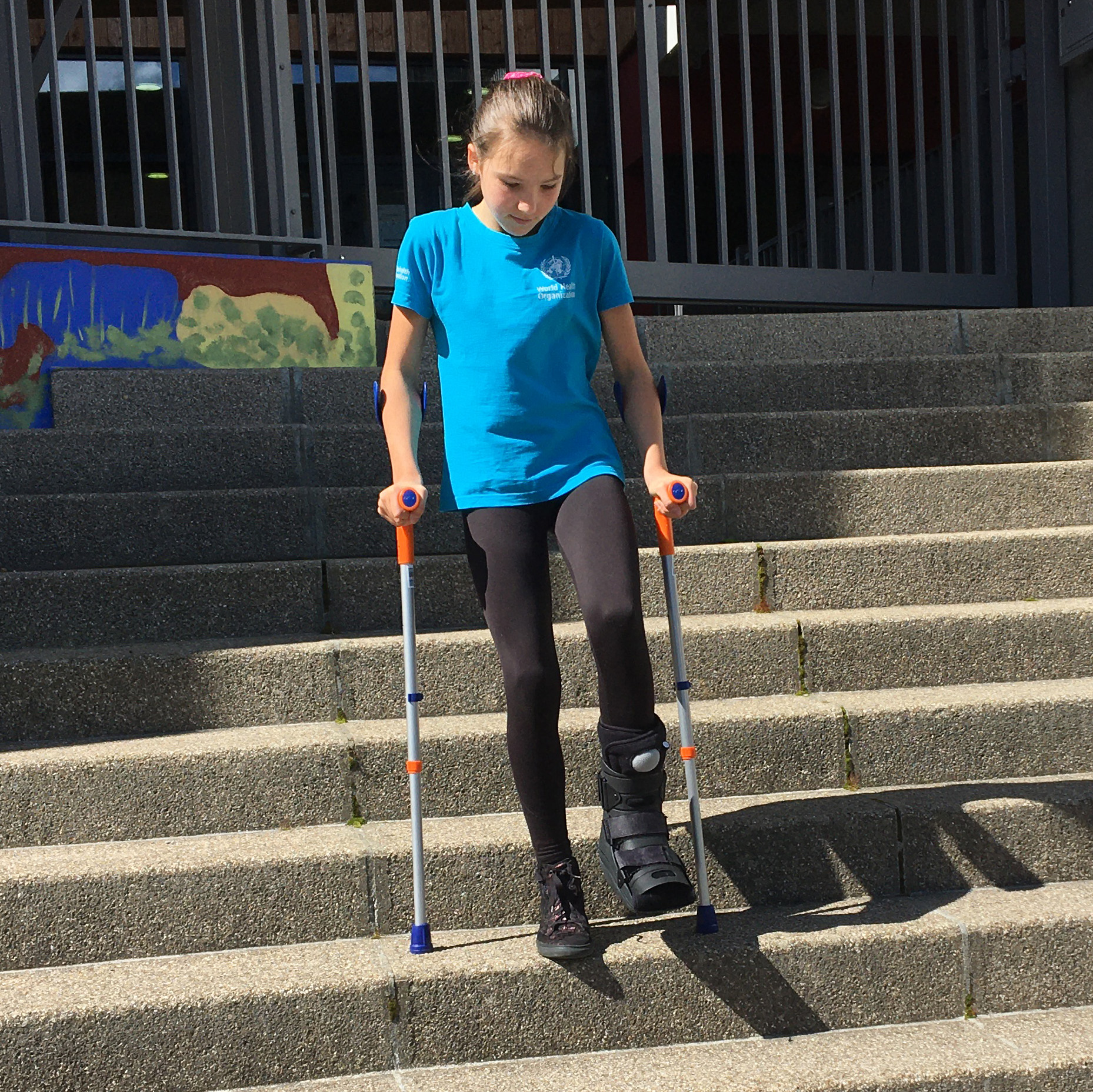
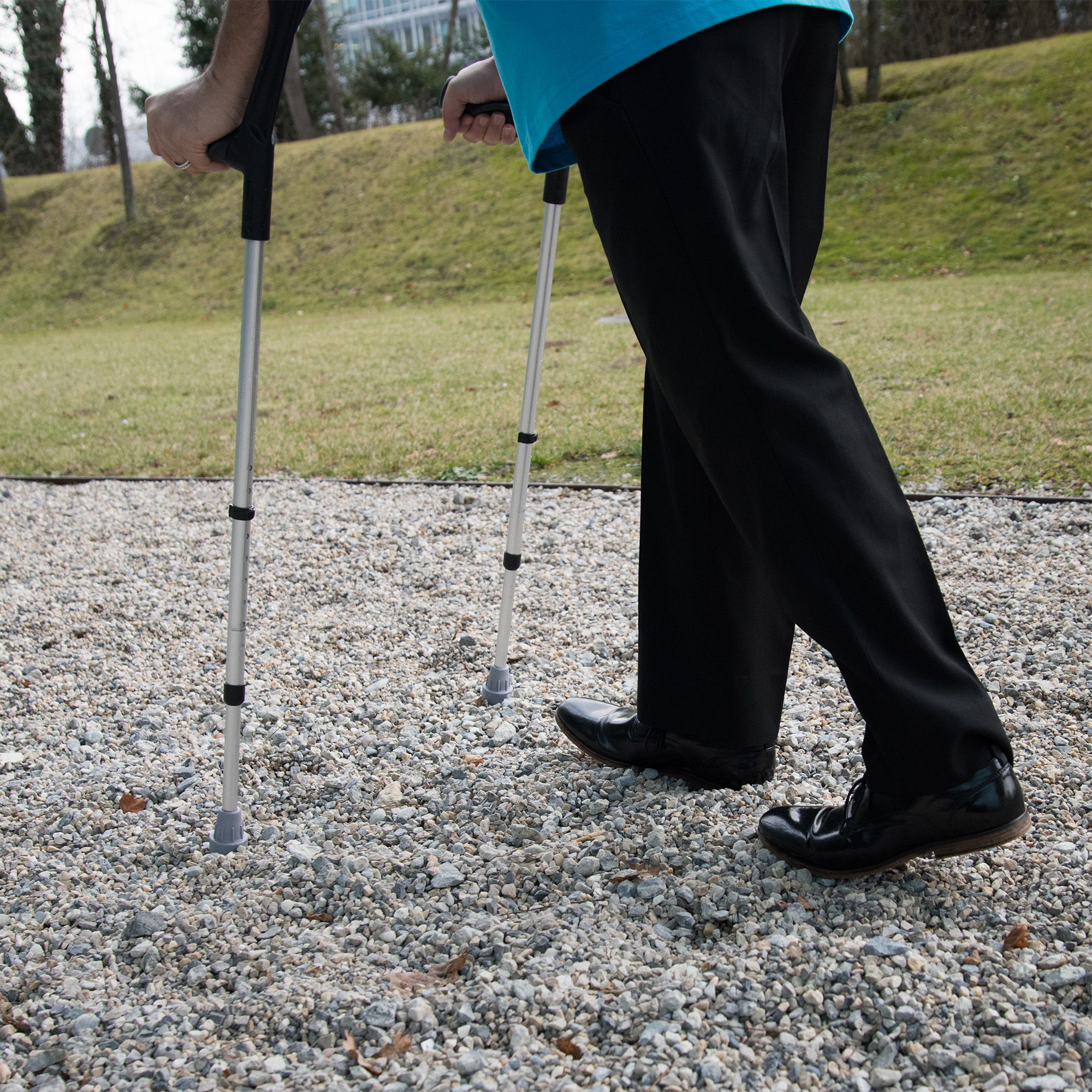
Walking frames rollators, tripod and quadripod walking sticks:
- Can be used to go up or down a single step but they cannot be used on stairs
- Can be unstable and difficult to use on uneven ground.
Rollators are likely to get stuck in sandy ground.

Question
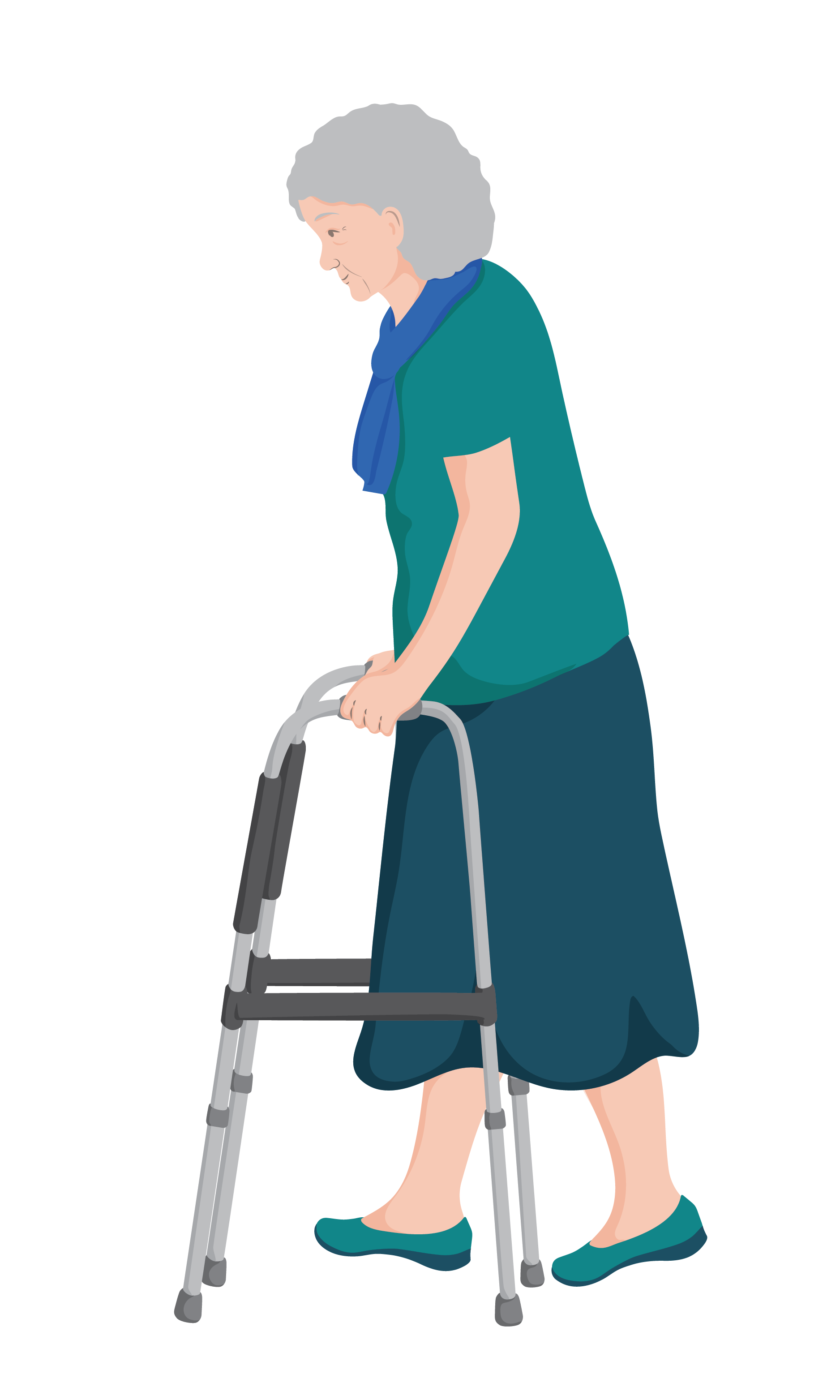
1. Cali’s daughter has stairs at the front of her house. Can Cali use her walking frame to go up and down stairs?
No, walking frames cannot be safely used on stairs.
2. How else can Cali get into her daughter’s house?
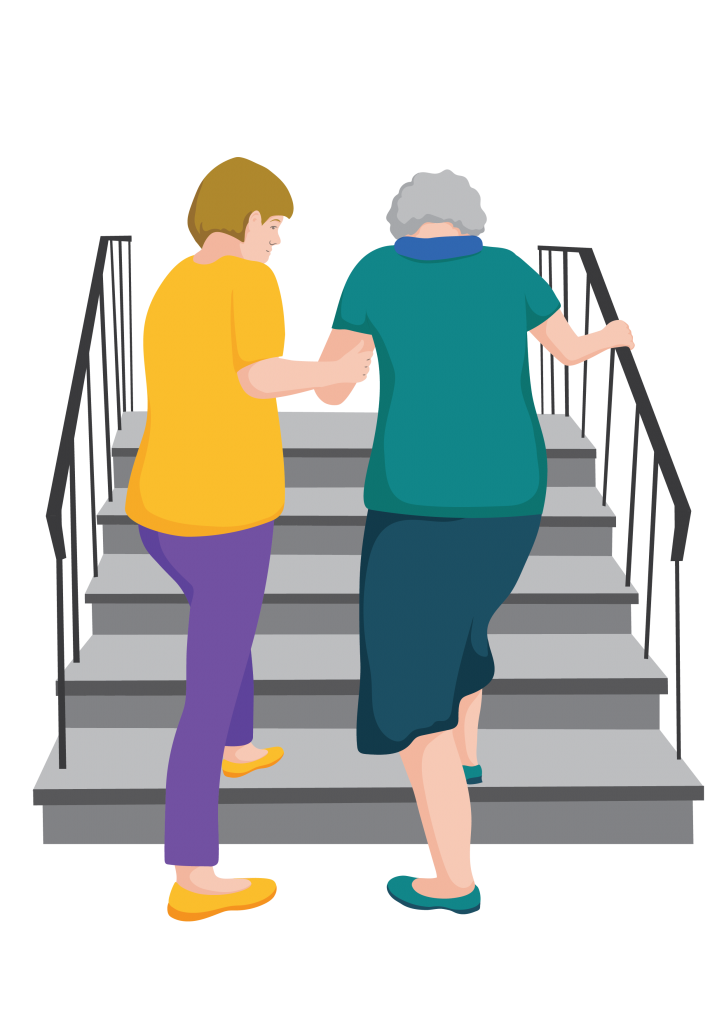
- Install a ramp or grab bars for Cali to use
- Cali’s family could assist her on the stairs.