Walking aids support people to walk. There are different types of walking aids for different needs. People need the right type of walking aid, depending on their health, the activities they can do and the environment where they live.
Using the wrong walking aid can cause an injury or a fall.
A person might need the support of a walking aid if they:
- Have weak leg muscles
- Have poor balance
- Can’t put all their weight on one leg
- Have pain when they stand or walk.
Read on to learn about some common health conditions that often result in a person needing a walking aid.
Diabetes
A person with diabetes might need a walking aid:
- For extra support due to weak leg muscles
- To help to balance and reduce the risk of falling
- After an amputation, because they may not be able to put their full weight through their leg/s.
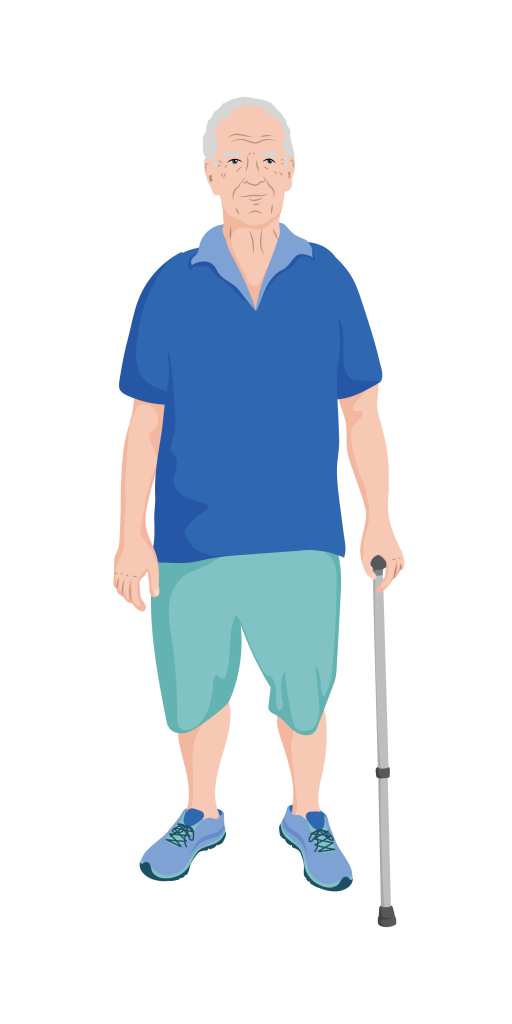
Meet Jensen
Jensen is 60 years old. He has diabetes and sometimes feels off balance when he is walking. He uses a walking stick to give him extra support, particularly when he is in his garden.
A broken leg
A person with a broken leg needs a walking aid because they cannot put weight through the leg until the bone heals.
The length of time a walking aid is needed depends on the doctor’s recommendation.
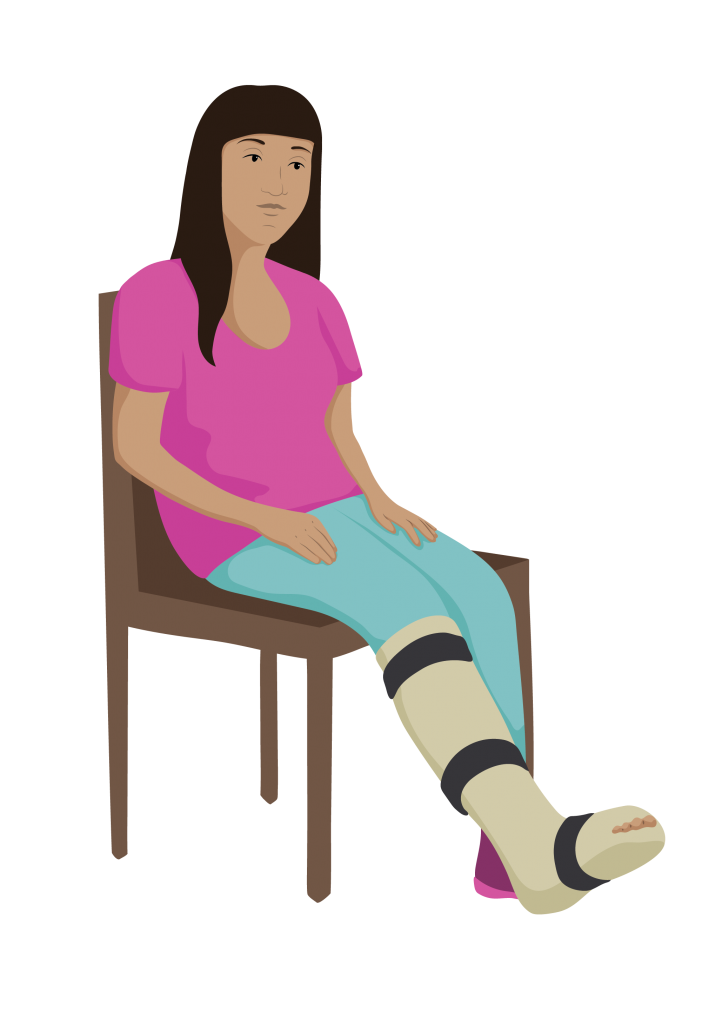
Meet Adira
Adira is a young woman who has broken her leg and it has been put in a cast.
You will see Adira again in Lesson 2 to select the best walking aid for her.
Stroke
A stroke usually causes weakness or loss of movement (paralysis) on one side of the body. After a stroke, a person may need a walking aid to support the weak side.
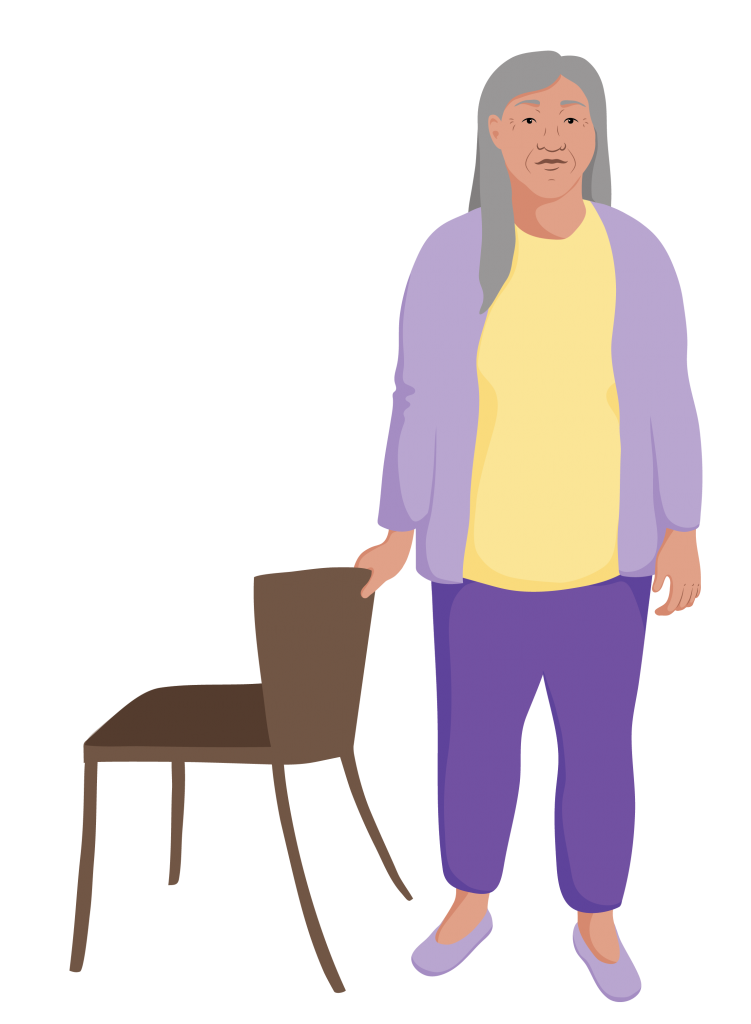
Meet Nguyen
She had a stroke which has resulted in weakness of her left arm and leg. She cannot use her left hand to hold on to anything.
Frailty
A person who is frail may need a walking aid because they have poor balance and weakness.
They might need a walking aid that provides more support such as a walking frame or a rollator.
Leg or foot amputation
Following a leg or foot amputation, a person may need a walking aid to help them to balance or for extra support. The best walking aid for a person with an amputation depends on:
- Whether the amputation is on one or both sides
- If the person uses a prosthesis.
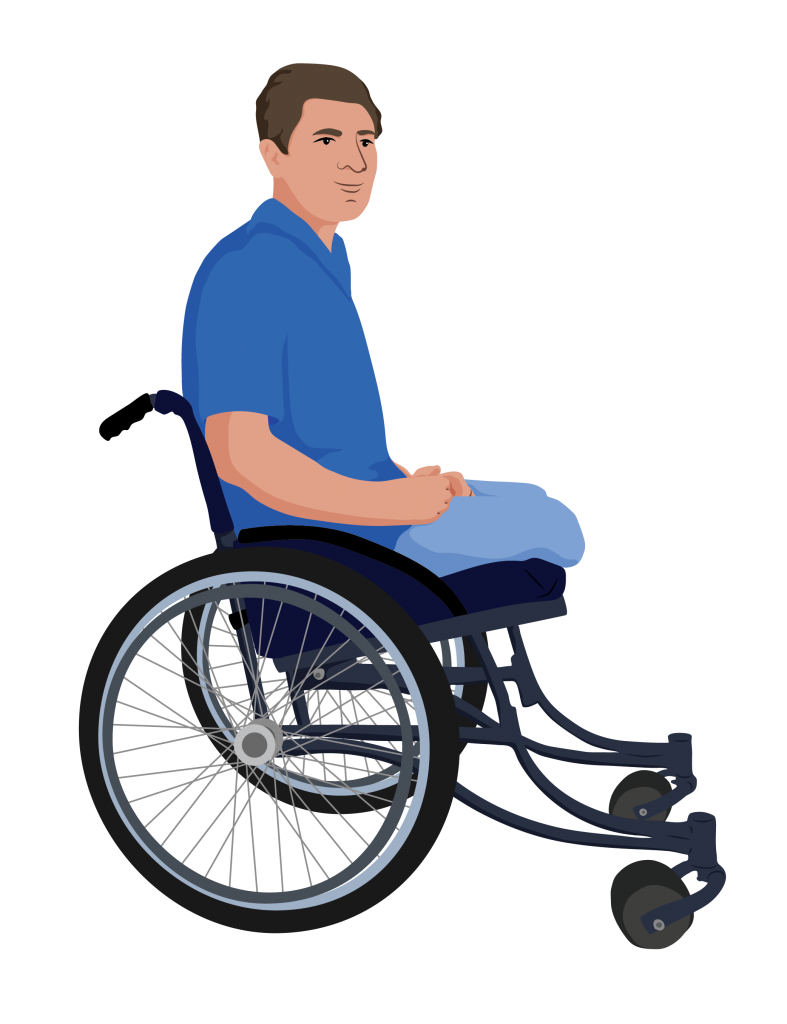
Meet Jacob
Jacob has had amputations of both legs above the knee.
Question
Do you think Jacob would need walking aids?
A person with both legs amputated usually needs a wheelchair when not using prostheses. If they have prostheses, they may also need a walking aid for extra support and balance.
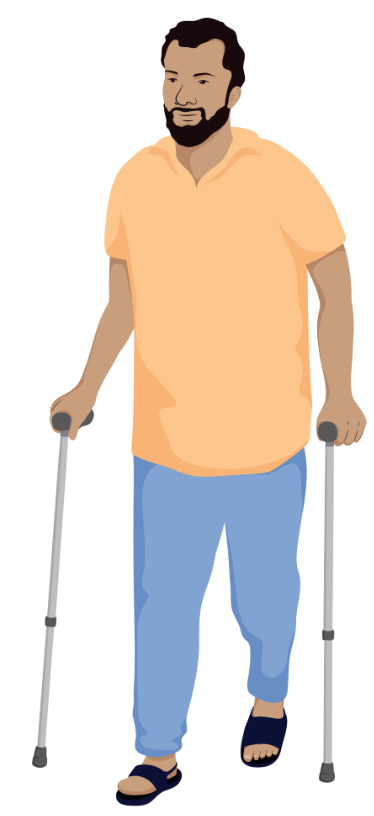
Meet Asif
Asif has had a below knee amputation and when he is wearing his prosthesis, he uses two sticks for extra balance.
Arthritis
A person who has arthritis might need a walking aid because arthritis can cause:
- Pain when standing and walking
- Muscle weakness.
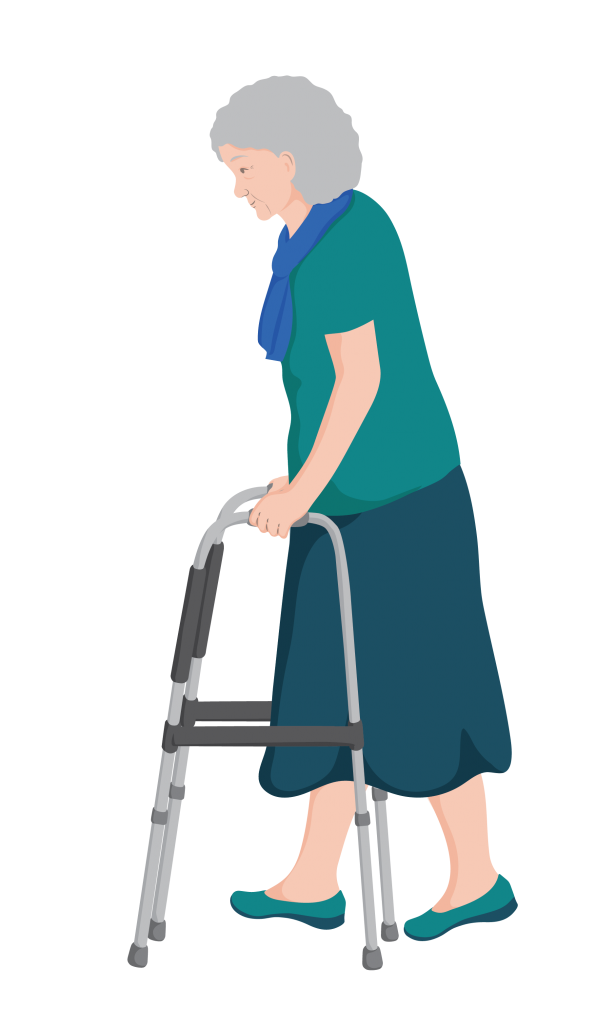
Meet Cali
Cali has arthritis. She often has pain in her hip and knees when she walks. Using the walking frame helps to take some weight off her legs. This makes walking less painful. She is also frail and has poor balance.
Polio
A person who has had polio might need a walking aid because polio can cause muscle weakness or loss of movement. This affects how a person puts weight through their legs.
People use different types of walking aids because they have different needs. Some people, like Jensen, need only a little support to walk. Other people, like Cali, need more support when walking.