Find out if the walking aid is still meeting the person’s needs
- Are they are using their walking aid?
- Do they have any problems using the walking aid?
- Do they have any questions?
If the person is not using their walking aid or has problems using it, it is important to find out why. You can then try to find a solution together.
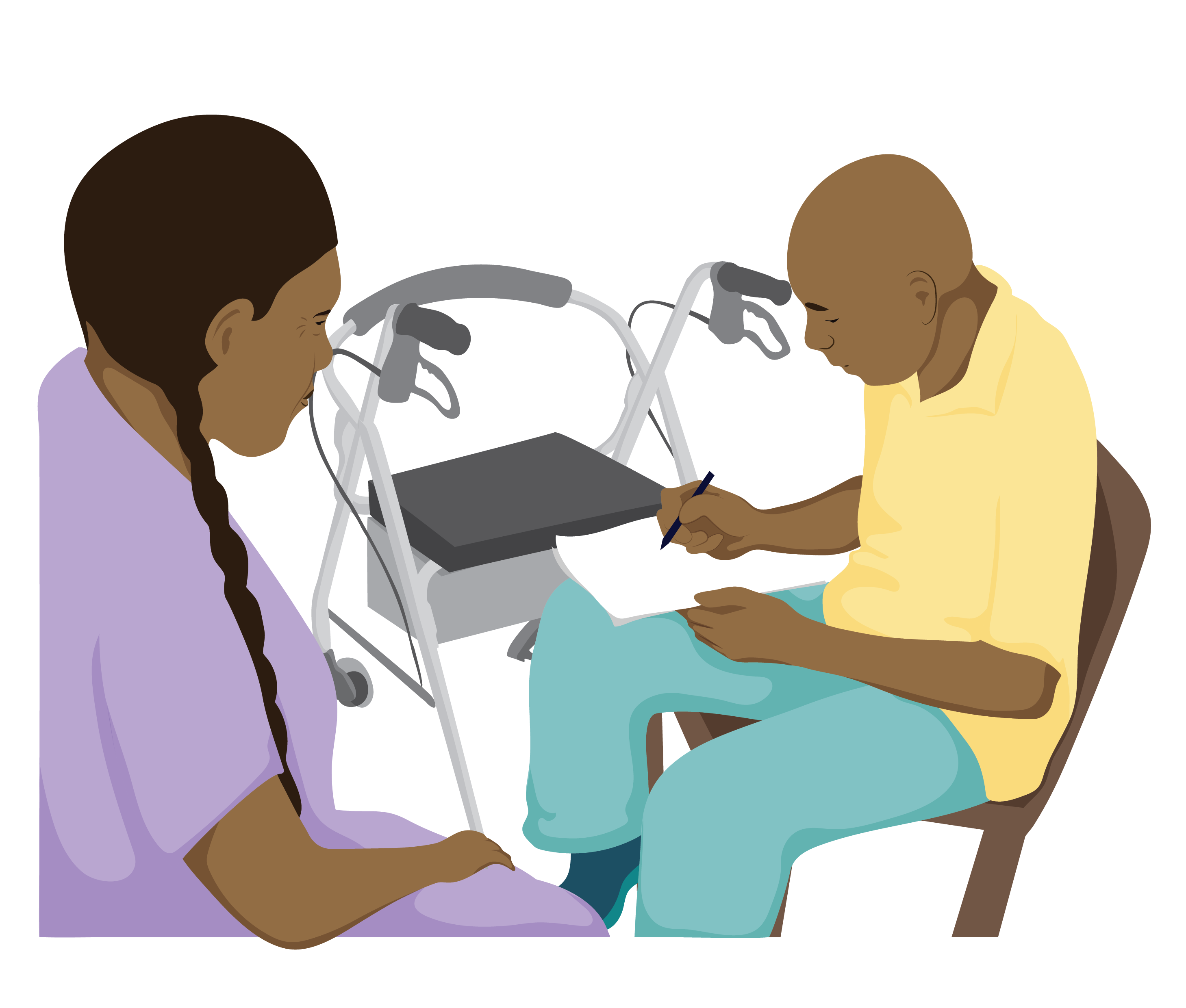
Question
Can you think of some reasons why a person may not be using their walking aid?
- The walking aid is broken
- The walking aid is not suitable
- The walking aid does not fit
- They have health problems that are affecting their mobility
- The environment makes it difficult to use the walking aid
- They need support from others to use the walking aid but don’t have the support.
Identify any new needs or issues
Discuss any new needs or issues with the person and decide together what you need to do. This might include:
- Reassessment
- Referral to other services.
Question
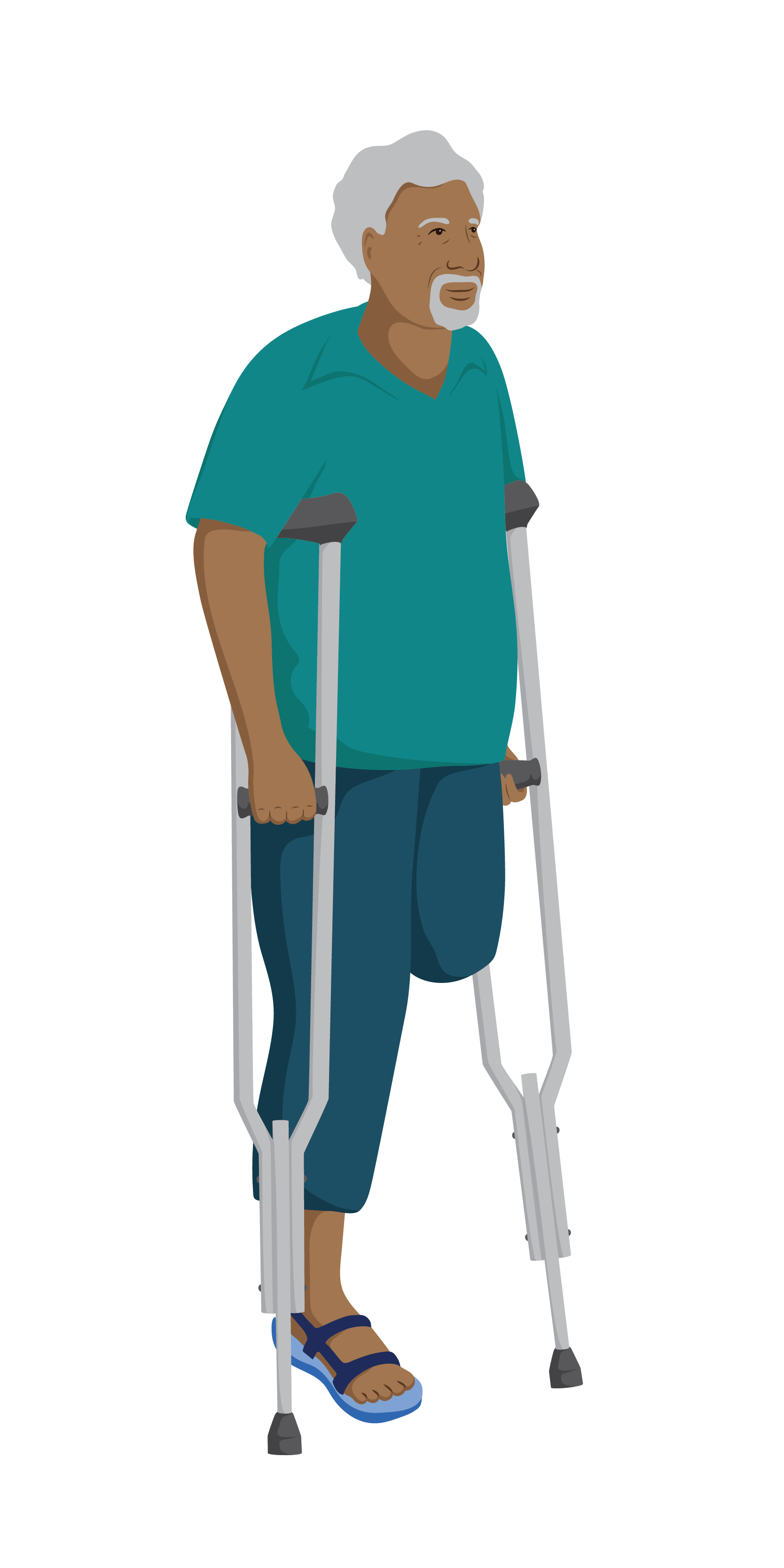
Remember Ravi?
Ravi had one leg amputated due to diabetes. He was provided with axilla crutches to use to access his toilet.
During a follow up visit, a community health worker found that Ravi has a small wound on the bottom of his foot. The area around the wound is red and swollen.
What follow up actions would you suggest for Ravi?
- Urgent referral to a nurse or doctor for wound management. The redness and swelling suggest it may be infected.
- Avoid putting weight on the foot as it will stop the wound from healing and may make it worse.
- Avoid using walking aids. Only use a wheelchair to move around. This means a solution for the toilet needs to be found.
For example, providing Ravi with a toilet chair. - Consider a referral to an orthotic service for specialist footwear.
Check the condition of the walking aid
Check the walking aid to see if anything is worn out or broken.
Check each of the following parts are working and not broken or worn out:
- Rubber tips
- Hand grips
- Underarm pads
- Brakes on rollators (not too tight or too loose)
- Metal or wooden shaft.
Also check that all screws and bolts are tight and not rusted or broken.
If the walking aid is unsafe to use, then it must be repaired or replaced before checking the fit of the walking aid.
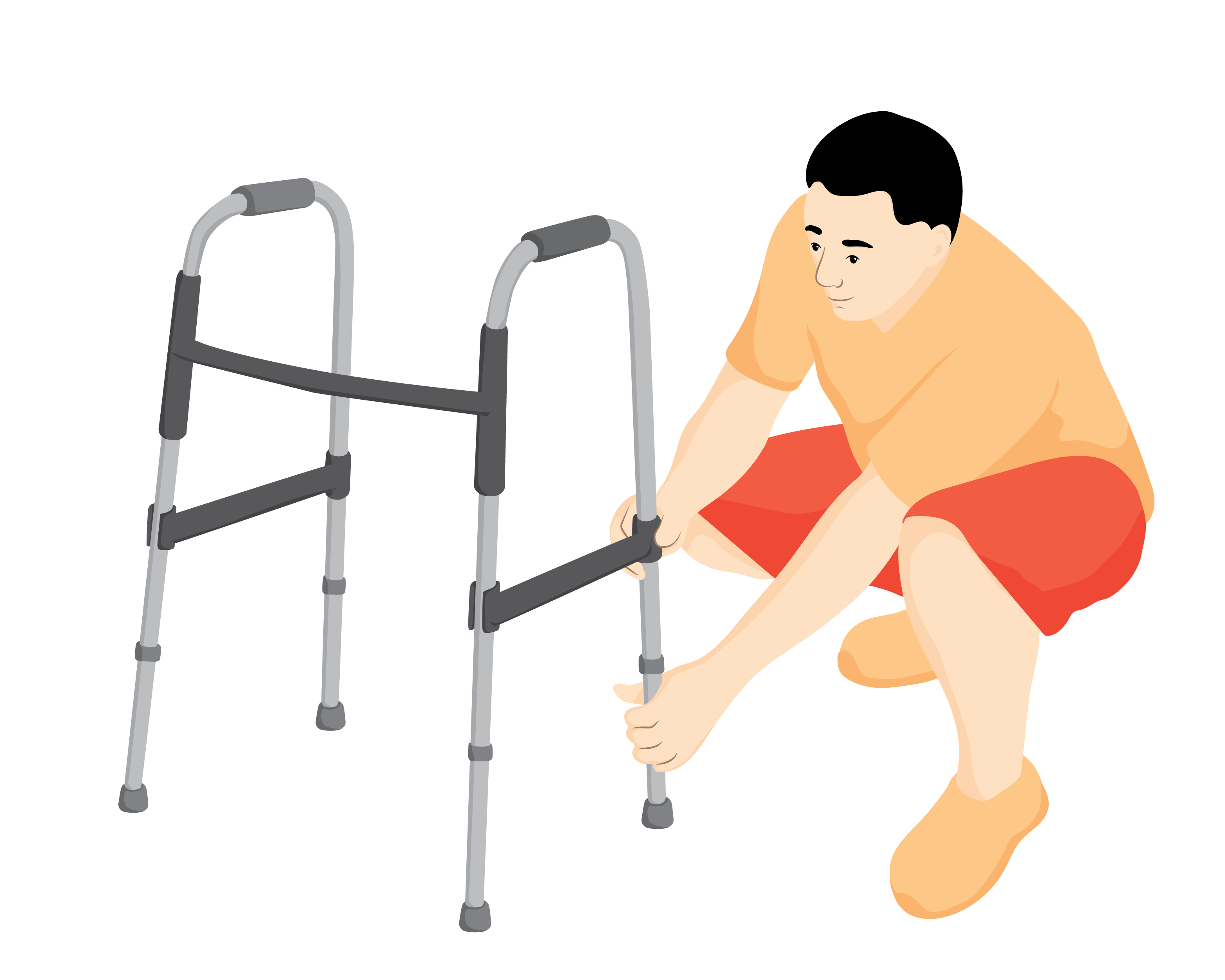
Read on to learn how to decide if a walking aid needs to be repaired or replaced.
When to repair or replace
Replace
Replace the walking aid if:
- The shaft is cracked or broken. Cracks and breaks in the walking aid are dangerous.
- All or most parts of the walking aid need to be replaced. It is usually more cost and time efficient to replace the whole walking aid.
Repair
Only repair the walking aid for small damage such as:
- Tightening brakes and screws
- Replacing worn underarm pads and rubber tips.
You will learn more about how to carry out these simple repairs in the next topic.
Activity
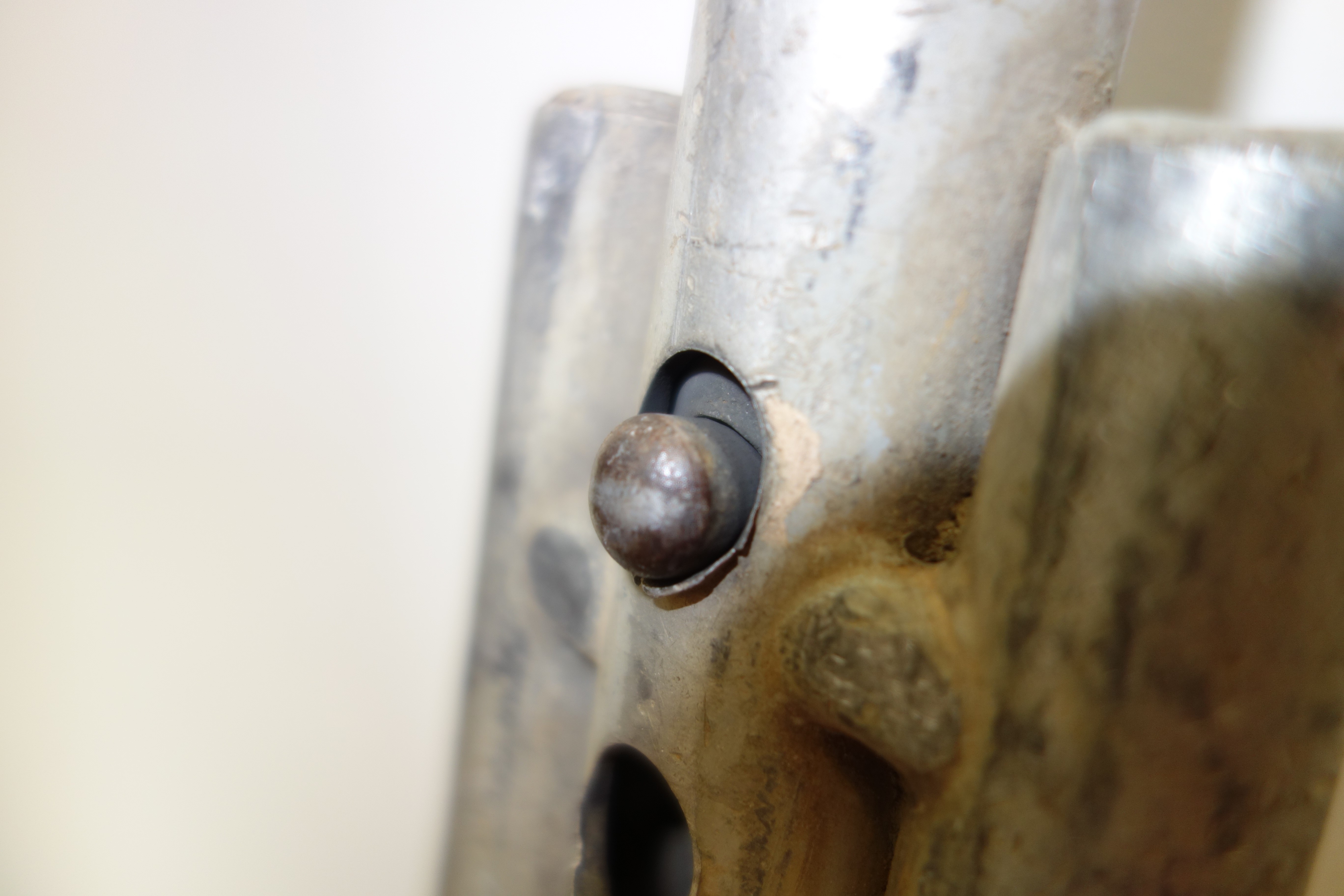
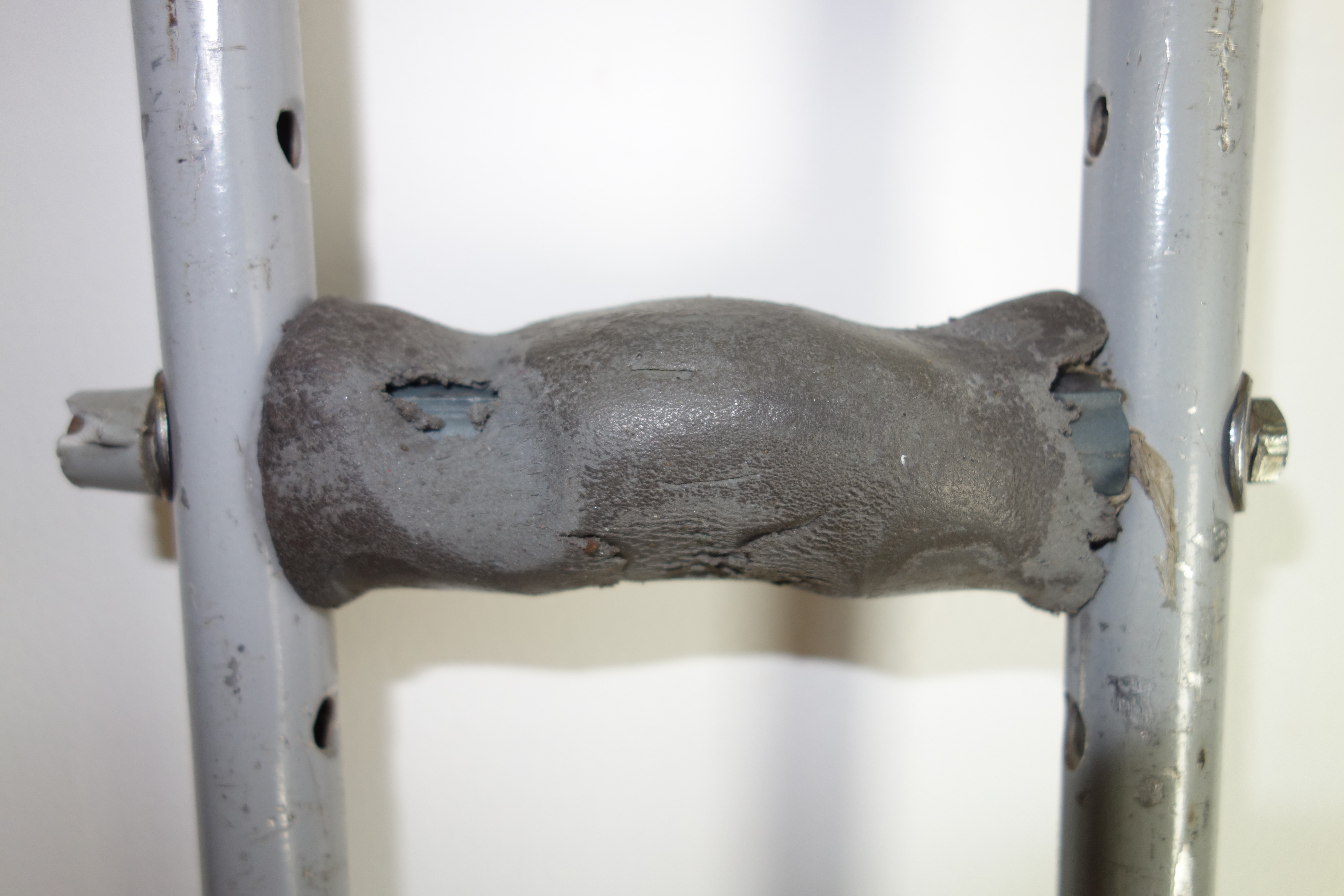
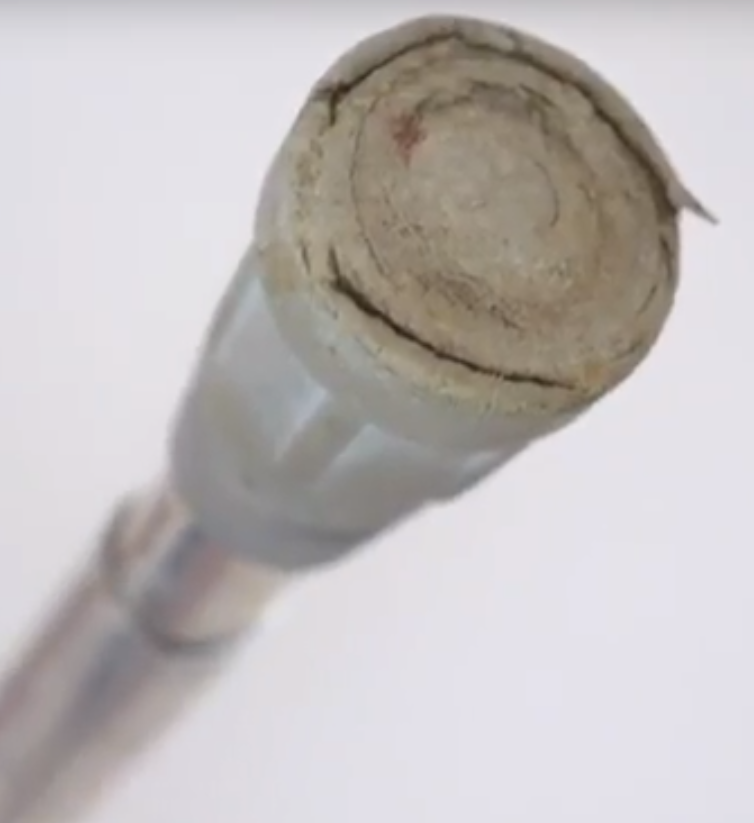
Look at the following photos and decide if you would repair the walking aid, or replace it completely.
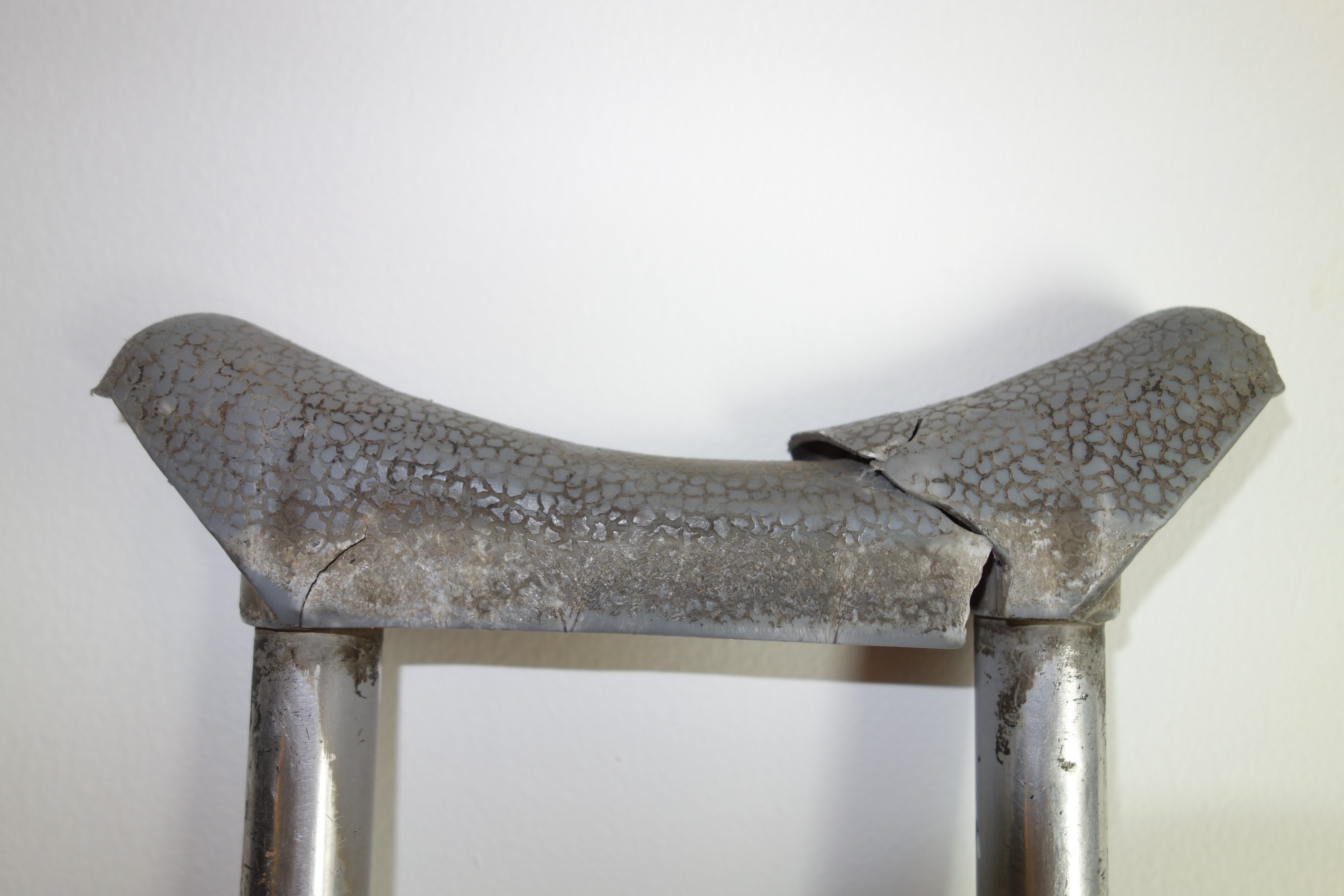
Question
Remember Cali?
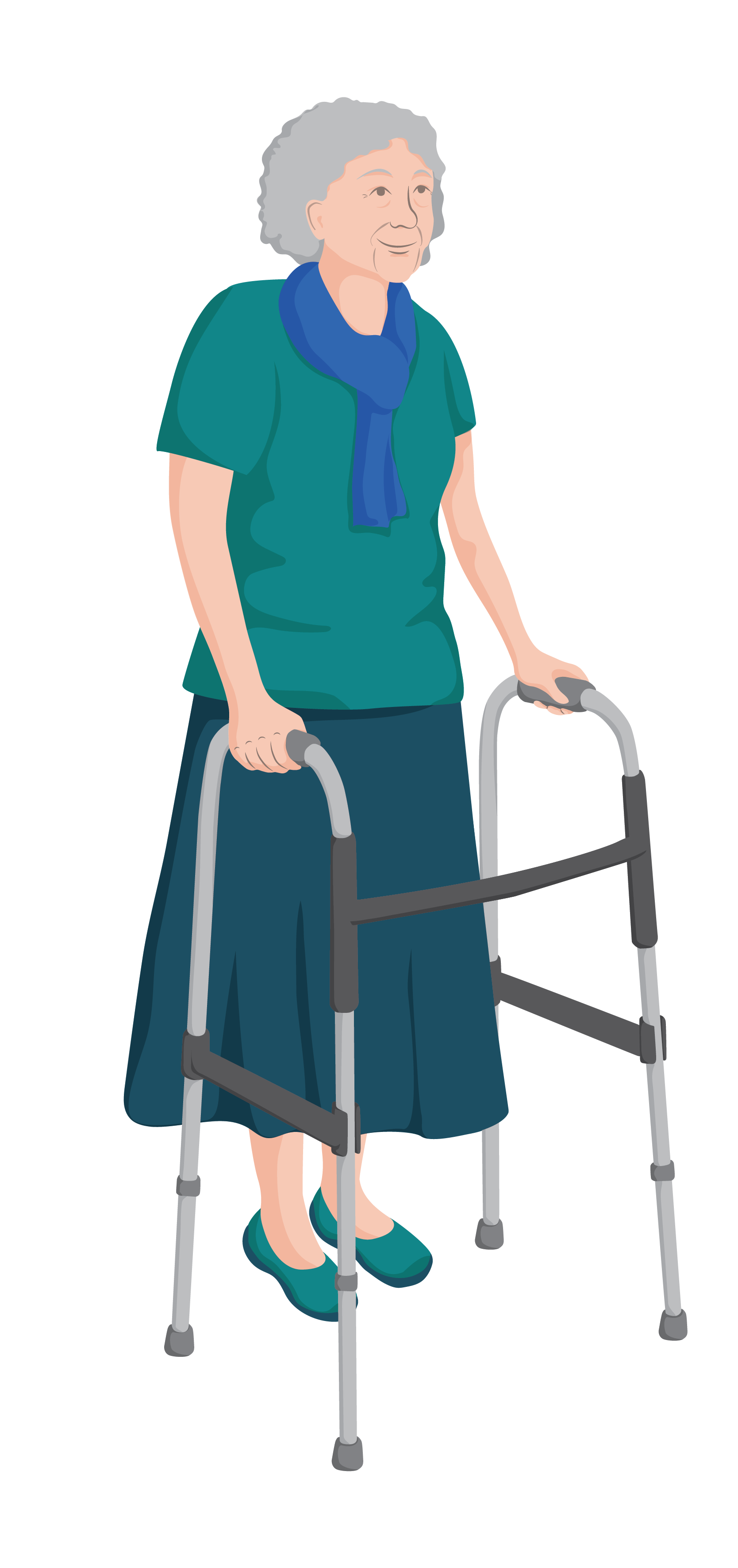
Cali has been using her walking frame at home for 2 years. She has come to see you for a follow up.
- The hand grips on the walking frame are torn and worn out
- The front two rubber tips are also very worn
- The shafts of the walking frame are still in good condition, with no cracks or damage
- The walking frame still folds up easily.
Would you repair or replace Cali’s walking frame?
It may not be necessary to replace the whole walking frame.
The shafts of the walking aid are still in good condition.
The hand grips and rubber tips can be replaced.
Question
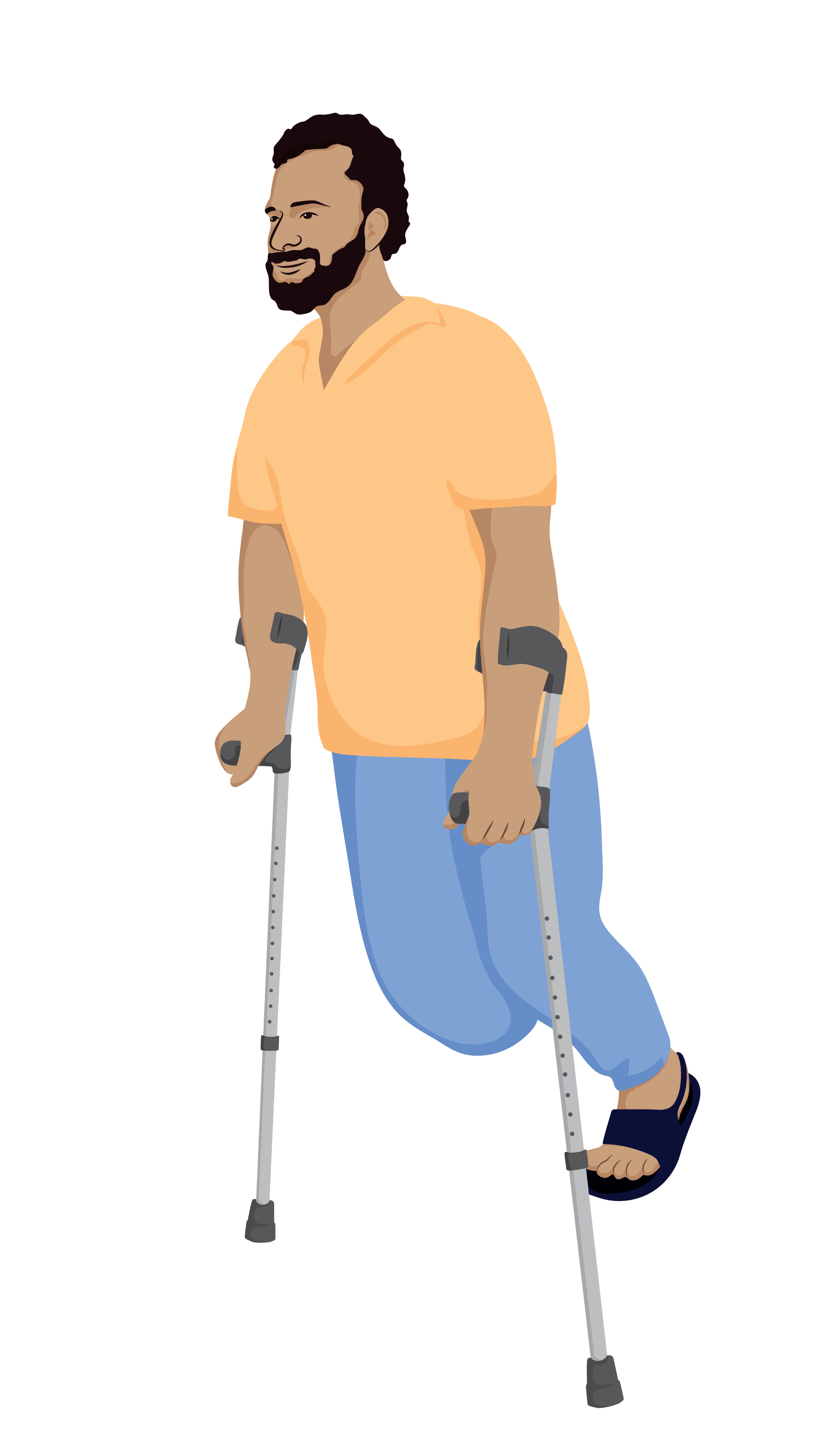
Remember Asif?
Asif has come for a follow up after using his elbow crutches for 3 years.
- The rubber tips are in good condition, because he has been replacing them himself
- The hand grips are very worn
- There is some movement in the shaft at the height adjustment point
- When you look closer there are some small cracks at the height adjustment point
- There is also some cracking near the forearm cuff area. The adjustment screws have rusted.
Would you repair or replace Asif’s crutches?
Replace. The cracks in the crutches are not safe. Asif needs new crutches.
If the walking aid is in good condition and does not need repair or replacement, you can move on to check the fit.
Check the fit of the walking aid
Always check the walking aid still fits the person. A child may have grown, or a person’s posture may have changed.
If you do not remember how to check the fit of a walking aid, go back to Lesson three.
Question
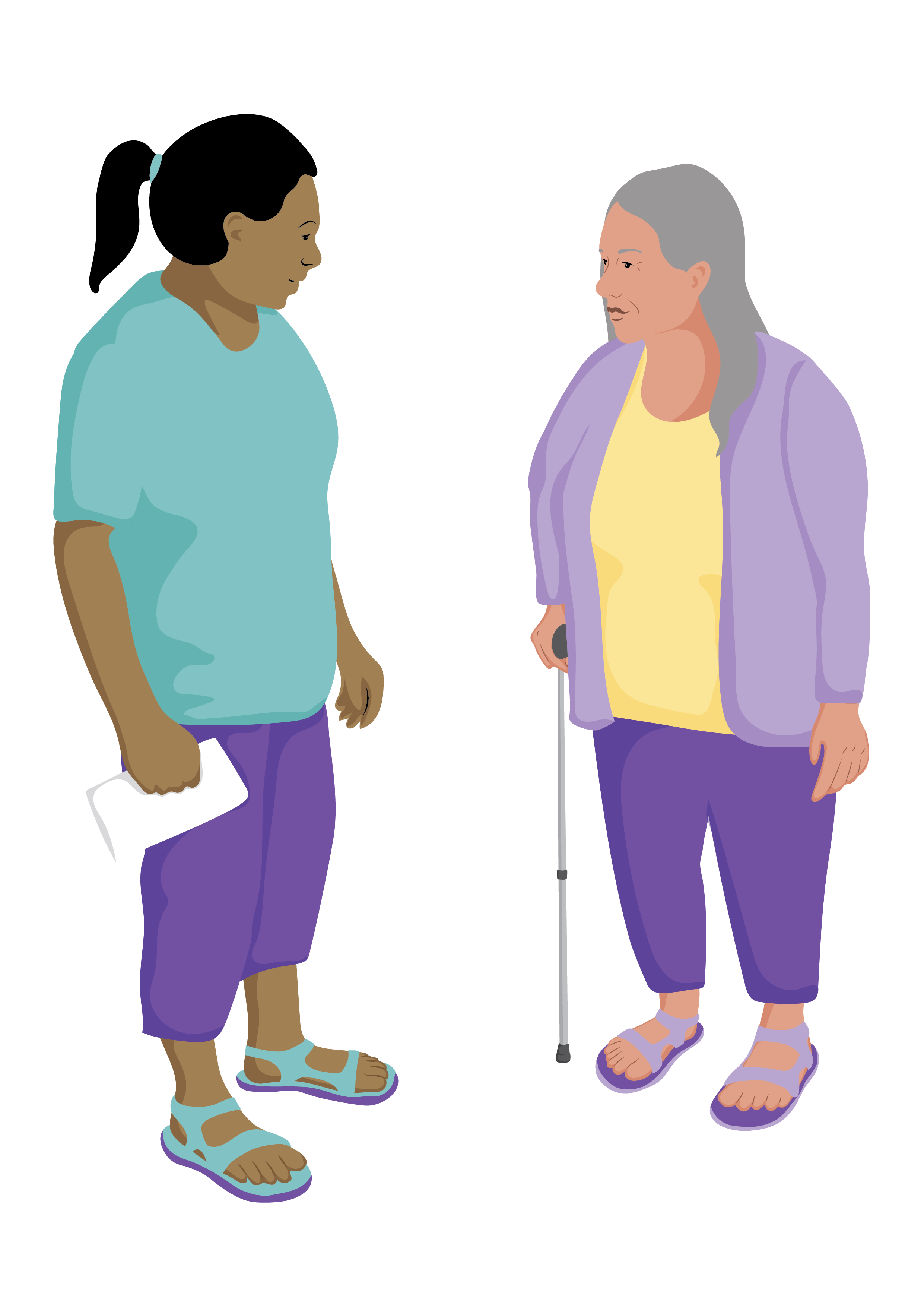
During a follow up, you notice Nguyen’s walking stick is too low for her. What actions could you take?
First check there is no damage to the stick. Replace it if necessary.
If the stick is still in good condition, adjust it so that it fits properly.
If any adjustments are needed, make these before going on to check if the person is using their walking aid safely and correctly.
Watch how the person uses their walking aid
If the fit is ok, check the person is using their walking aid safely and correctly.
If you do not remember how the walking aids should be used correctly, go back to Lesson four.
Question
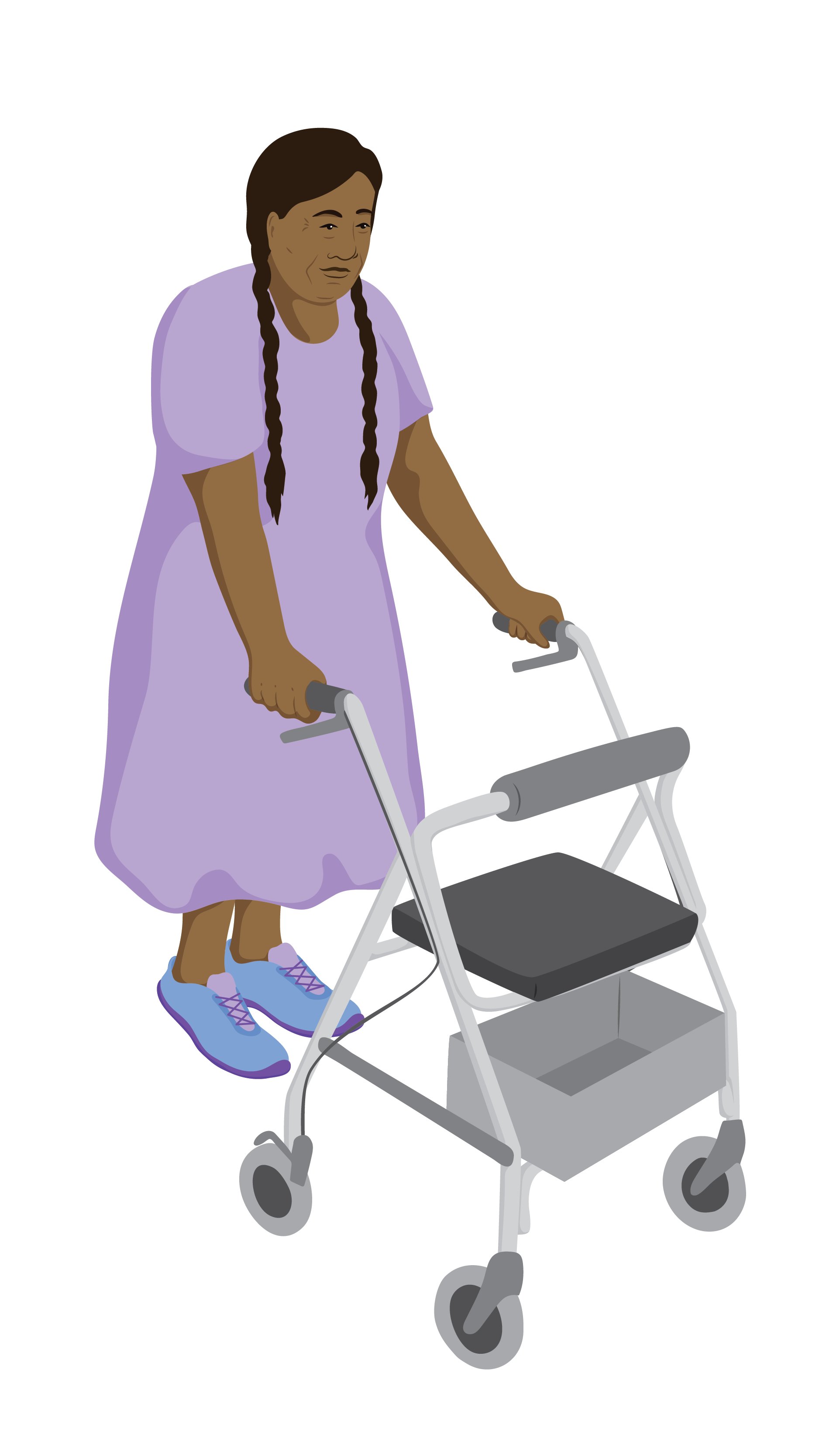
Remember Sofia?
Sofia has been using her rollator around her home and to go shopping. It has helped with her balance.
Sofia’s daughter said that last week she fell down when she was getting up from the chair. She is worried that she is starting to forget some things.
During a follow up, you notice that Sofia is not putting the brakes on before sitting down in the chair. She is also pulling on the rollator to help her get up from the chair.
What could you do?
Teach Sofia again how to use the rollator safely.
After teaching Sofia, watch her doing it again to check she understands.
Show Sofia’s daughter how to safely use the rollator so that she can help remind her at home.
If you think a rollator is no longer the best type of walking aid for her, consider a different walking aid.
You may need to consider referring Sofia for a wheelchair.
Question
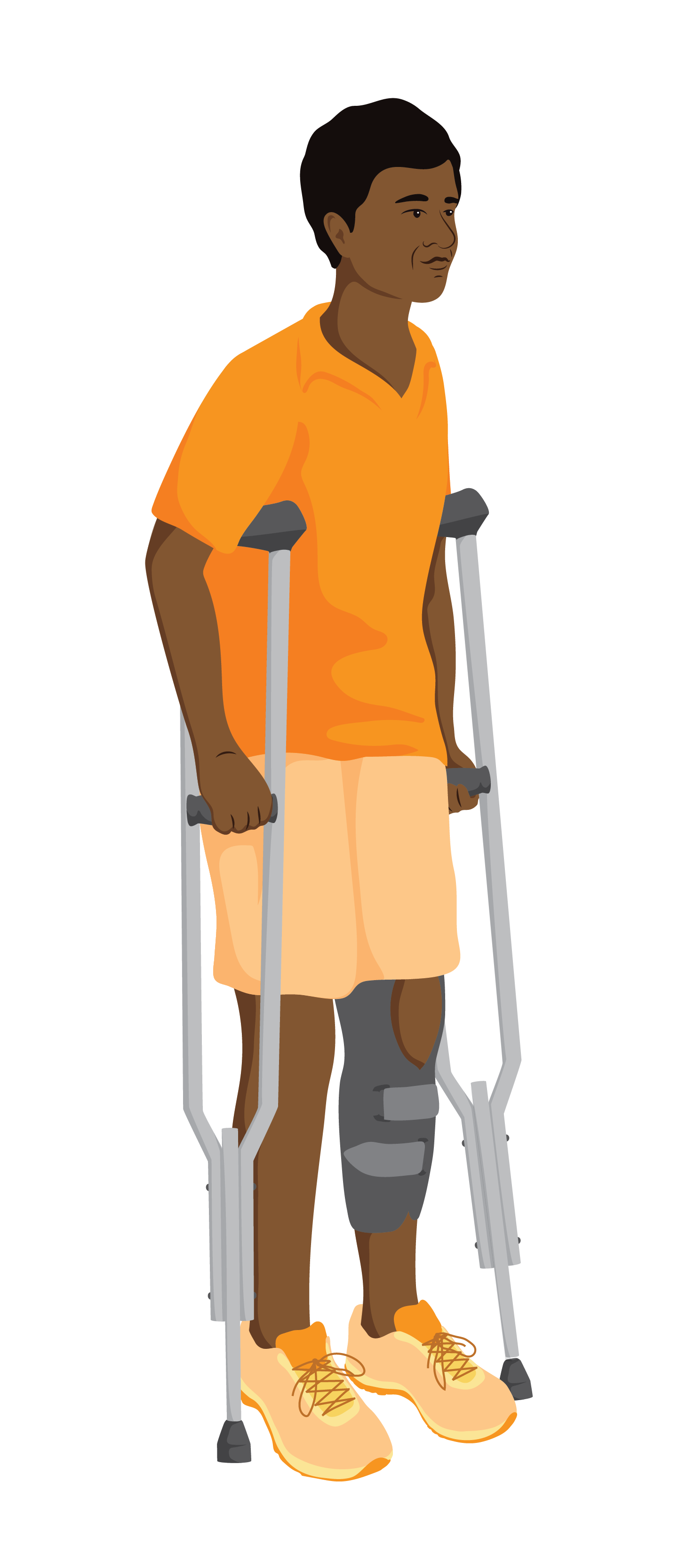
Remember Hugo?
Hugo is using axilla crutches while he recovers from knee surgery. During his first outpatient visit he complains that he cannot use the axilla crutches because they are causing pain under his arms. It is important that Hugo keeps moving around.
What would you check and what action could you take during a follow up?
- Check the condition of the underarm pads, to see if the padding is still in good condition. If not, replace the padding.
- Check that the height of the axilla crutches is correct. The underarm pads should be 2-3 fingers width below the person’s armpit. If not, adjust the height.
- Check that he is using the axilla crutches properly. If not, show him how to use them.
If the above actions do not fix the problem, consider a different walking aid. Hugo may be able to safely use elbow crutches or a walking frame.
Planning follow-up actions
At the end of the follow up appointment, plan what to do next with the person. This might include:
- Providing a new walking aid
- More user training
- Making another follow up appointment
- Referral to another service.
If the walking aid does not suit the person, or their situation has changed, always go back to step and do a new walking aid assessment.
If you need a reminder about when to refer a person to another service, go back to Lesson two.