In this topic you will learn more about the walking aids covered in TAP.
Discussion
Do you know anyone who uses a walking aid? How does it help them in their daily life?
Walking stick or cane
Walking sticks can be used either:
- On one side to provide some support
- On both sides to provide more support.
If a person is only using one stick, it should always be used on the strong side.
Walking sticks are good for people who:
- Walk (weight bear) on two legs
- Only need a small amount of support while walking (have good balance and strength)
- Can hold the walking stick comfortably.
Weight bearing, balance and hand function will be discussed more in Lesson 2.
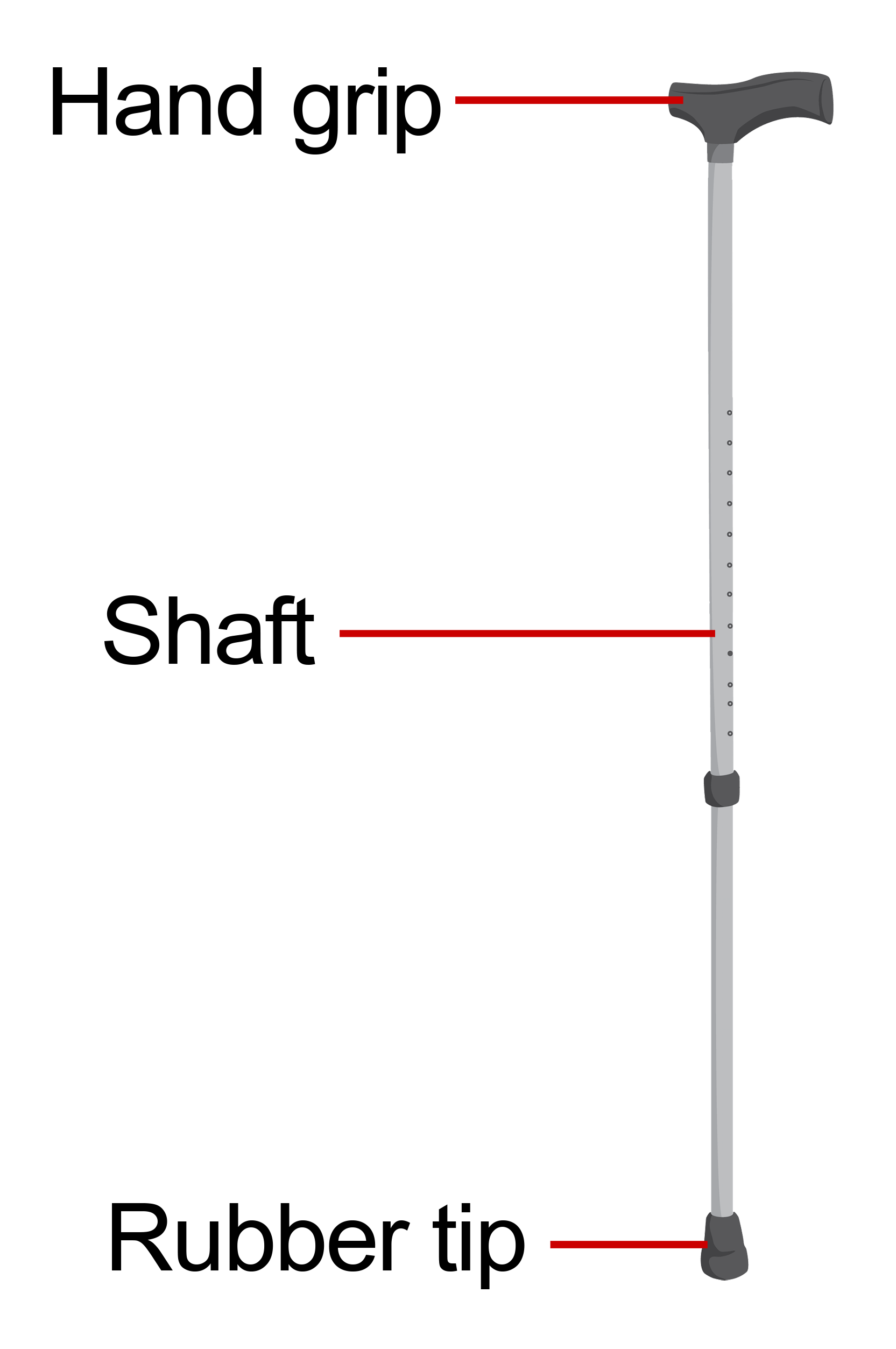
Walking stick parts include:
- Hand grip: a shaped grip held by the person and used to move the stick.
- Shaft: a wooden or metal shaft that may be adjustable in length.
- Rubber tip: fixed to the bottom of the shaft (or multiple feet) of the walking stick, the tip provides grip between the stick and the floor.
Tripod (three point) and quadripod (four point) sticks provide more support than a single point walking stick when walking on flat ground.
But tripod or quadripod sticks can be more difficult to use on uneven ground. They cannot be used on stairs.
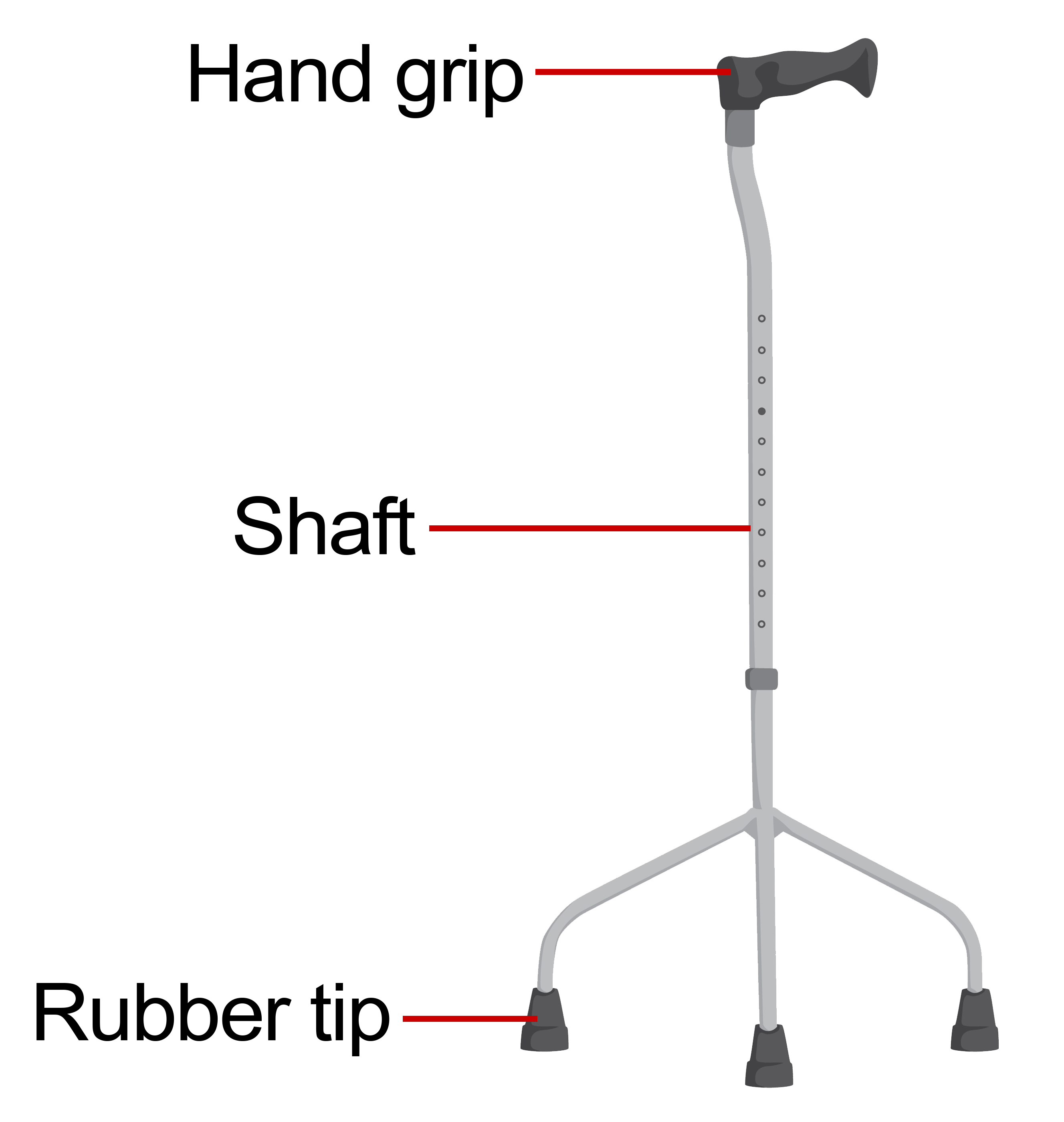
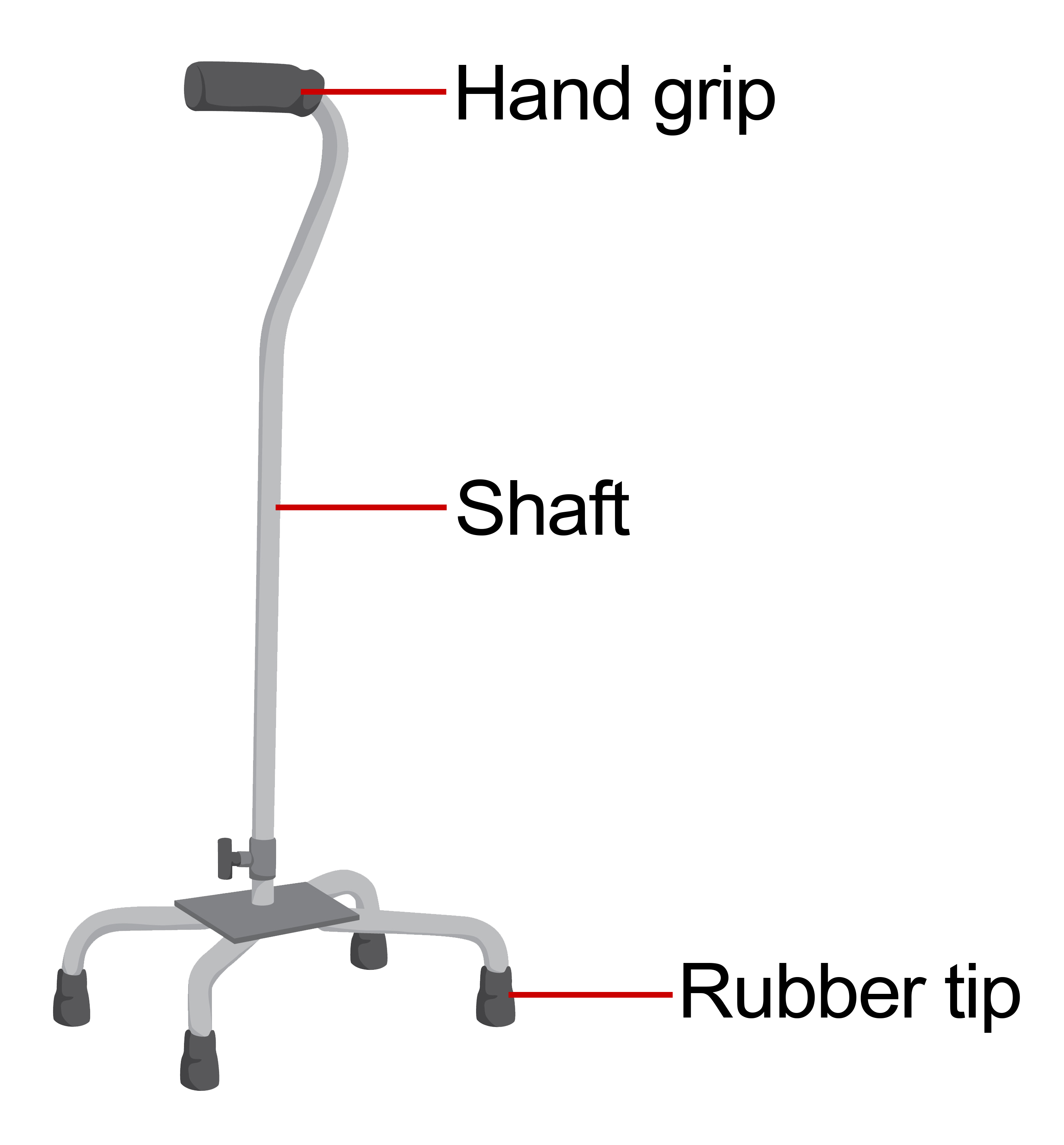
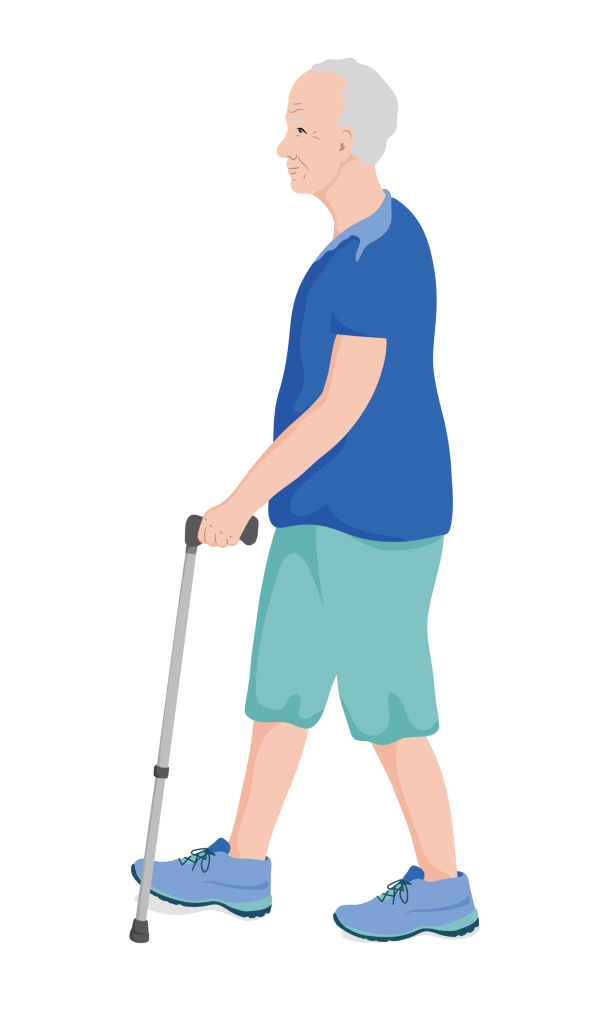
Remember Jensen?
Jensen tried a tripod stick at first. He liked the support it gave him inside his house but he felt unstable when he tried to use it in his garden. He decided a single point walking stick would suit him better.
Elbow crutches
Elbow crutches can also be called forearm crutches.
Elbow crutches are usually used as a pair.
Elbow crutches are good for people who:
- Walk on one or two legs
- Can use both hands
- Have good balance.
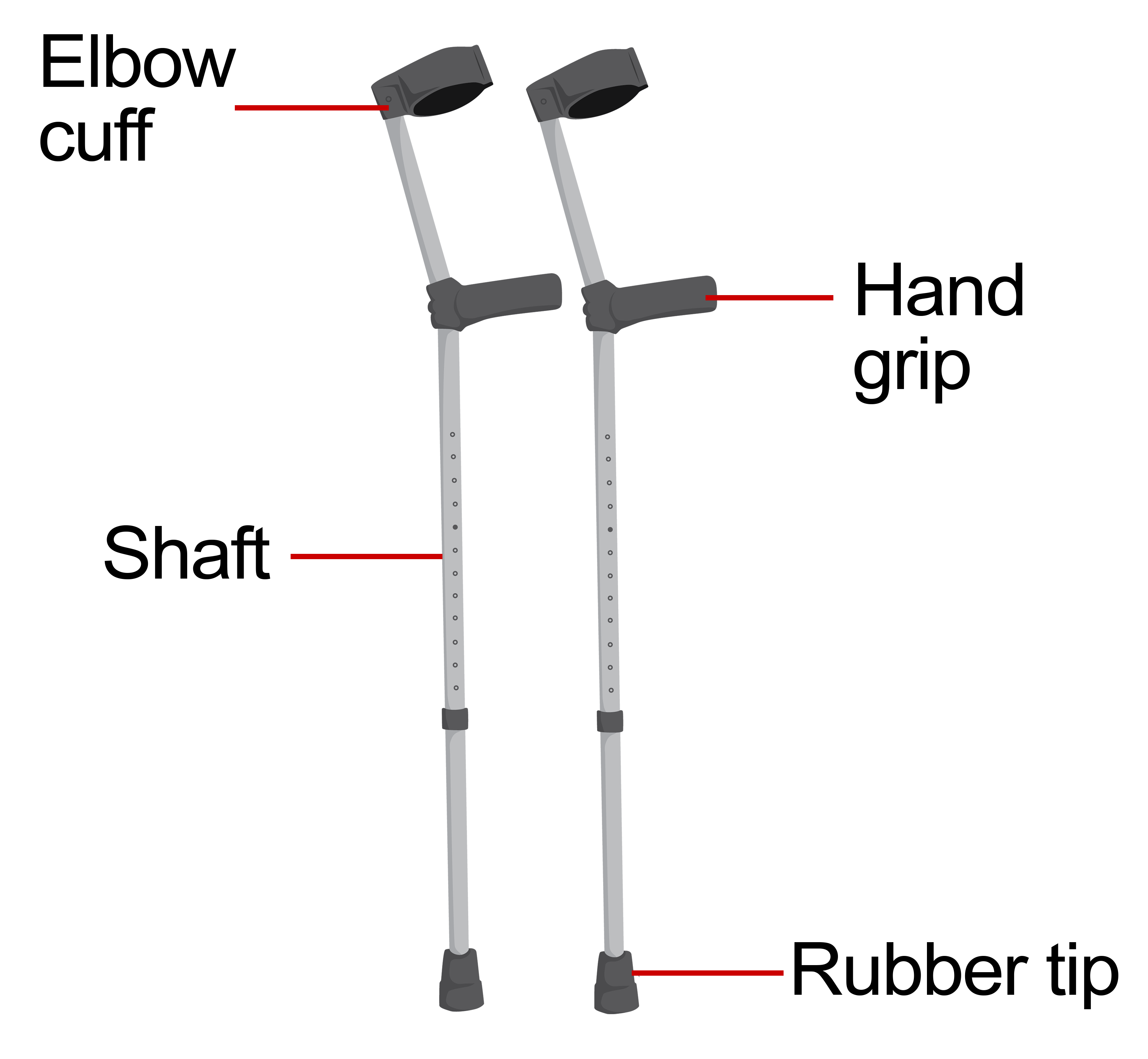
Elbow crutch parts include:
- Shaft: a strong tube that forms the main part of the crutch.
- Elbow cuff: fixed to the top of the shaft, the cuff is shaped to fit around and support the forearm.
- Hand grip: a shaped grip fixed to the shaft which is designed to be held and to bear the person’s weight.
- Rubber tip: fixed to the bottom of the shaft the tip provides grip between the crutch and the floor.
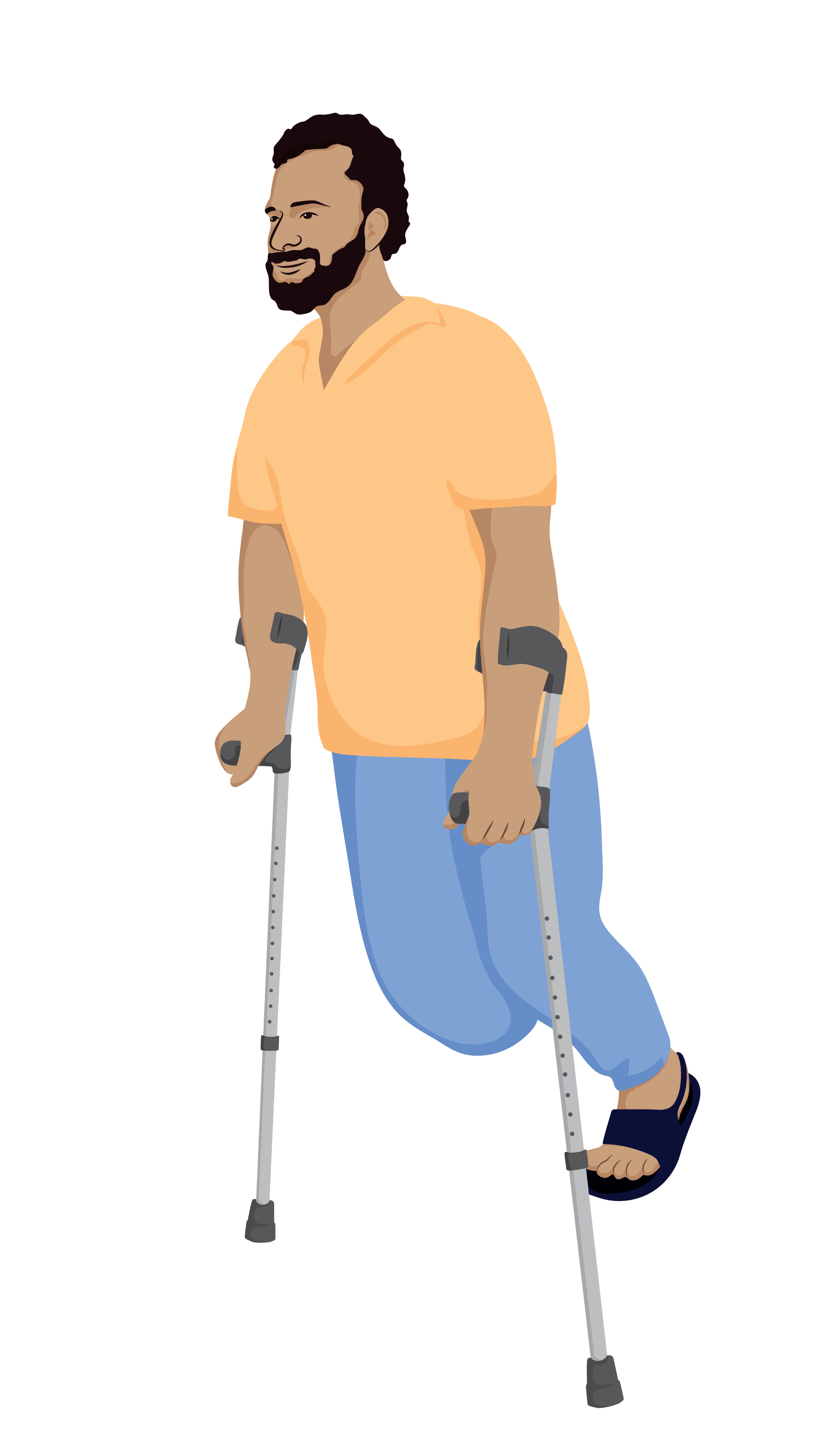
Remember Asif?
Asif chose to use elbow crutches when he is not wearing his prosthesis because:
- They are light and easy to take with him wherever he goes
- He can use his hands when he is standing still, without having to put his crutches down
- They work well over uneven ground and he can use them on stairs.
Axilla crutches
Axilla crutches can also be called underarm crutches.
Axilla crutches should always be used as a pair.
Axilla crutches are good for people who:
- Walk on only one leg
- Need crutches only for a short time
- Can use both hands
- Need more support than elbow crutches can give.
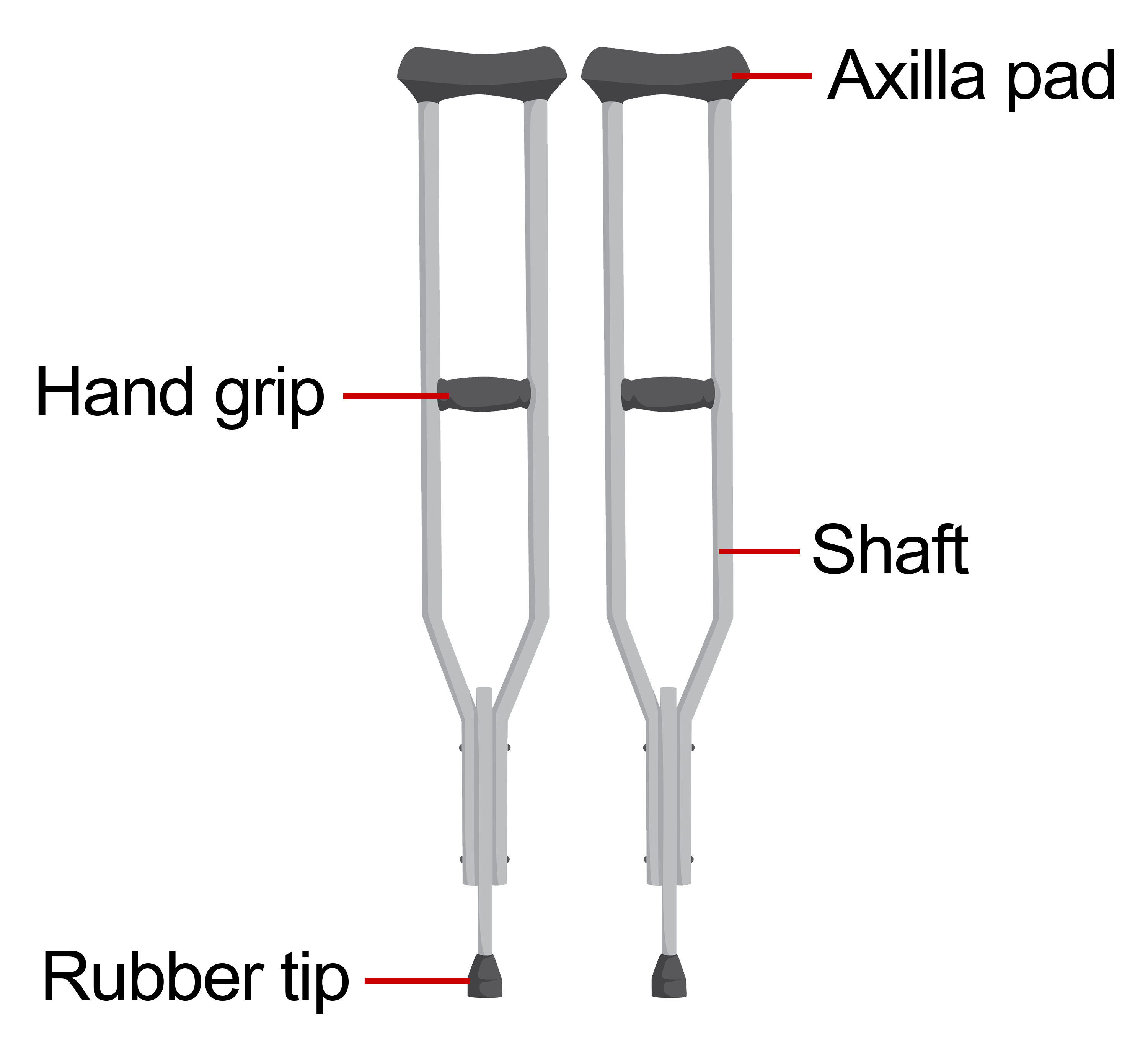
Axilla crutch parts include:
- Shaft: an adjustable metal frame which supports the other parts of the crutch.
- Axilla pad: a strong, padded support fixed to the top of the crutch, positioned just below the armpit.
- Hand grip: a shaped grip to be held in the person’s hands to allow movement of the crutch.
- Rubber tip: fixed to the bottom of the shaft, the tip provides grip between the crutch and the floor.
Question
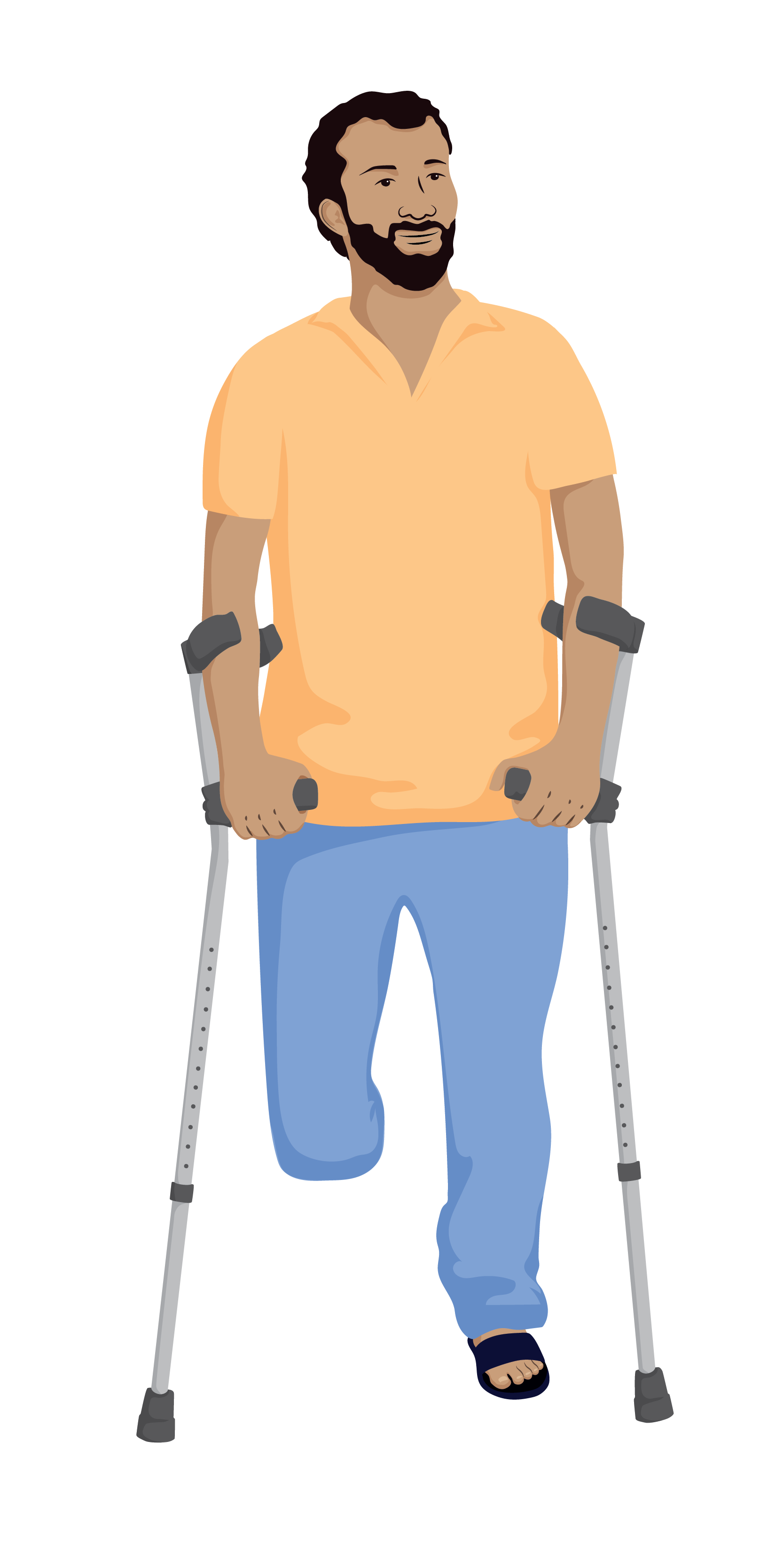
Would axilla crutches be a good choice of walking aid for Asif when he is not wearing his prosthesis?
Axilla crutches are not as convenient as elbow crutches. If used for long periods, the pressure under the armpits can damage the nerves and cause pain or arm weakness.
Rollators
Rollators can also be called four wheel walkers.
Rollators are good for people who:
- Walk on two legs
- Can use both hands
- Walk outside on even ground and need extra support to balance
- Walk outside on even ground and need to stop and rest often.
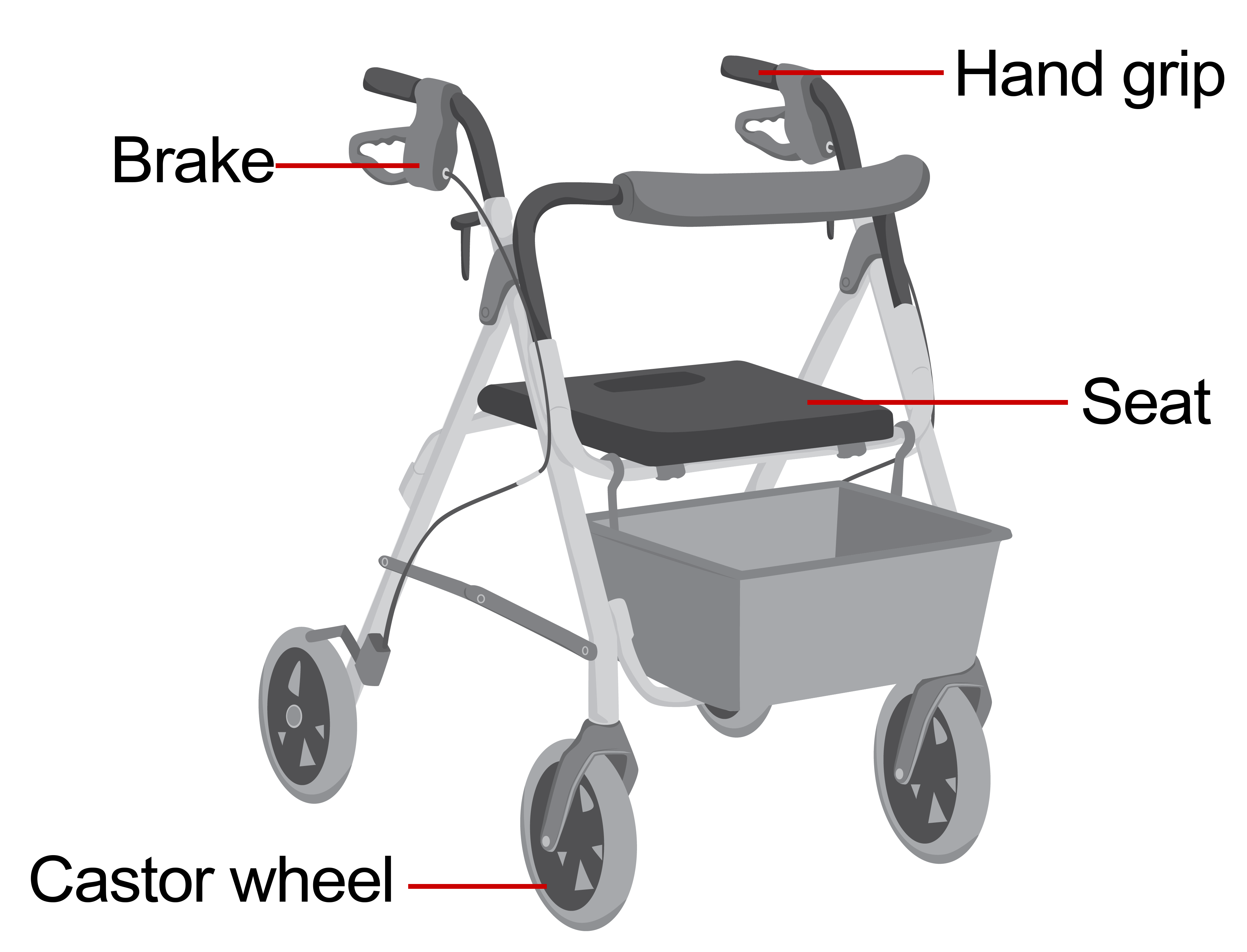
Rollator parts include:
- Hand grip: shaped grips that are held by the person to bear their weight and also to move the rollator.
- Brake: a hand lever activated brake that allows the person to stop the rollator.
- Seat: an integrated platform which the person can sit on when not walking.
- Castor wheels: wheels on the base of the rollator that allow it to move without being lifted.
Walking Frames
Walking frames are good for people who:
- Walk on one or two legs
- Can use both hands
- Need extra support to walk short distances, mainly indoors
- Are strong enough to lift the frame easily.
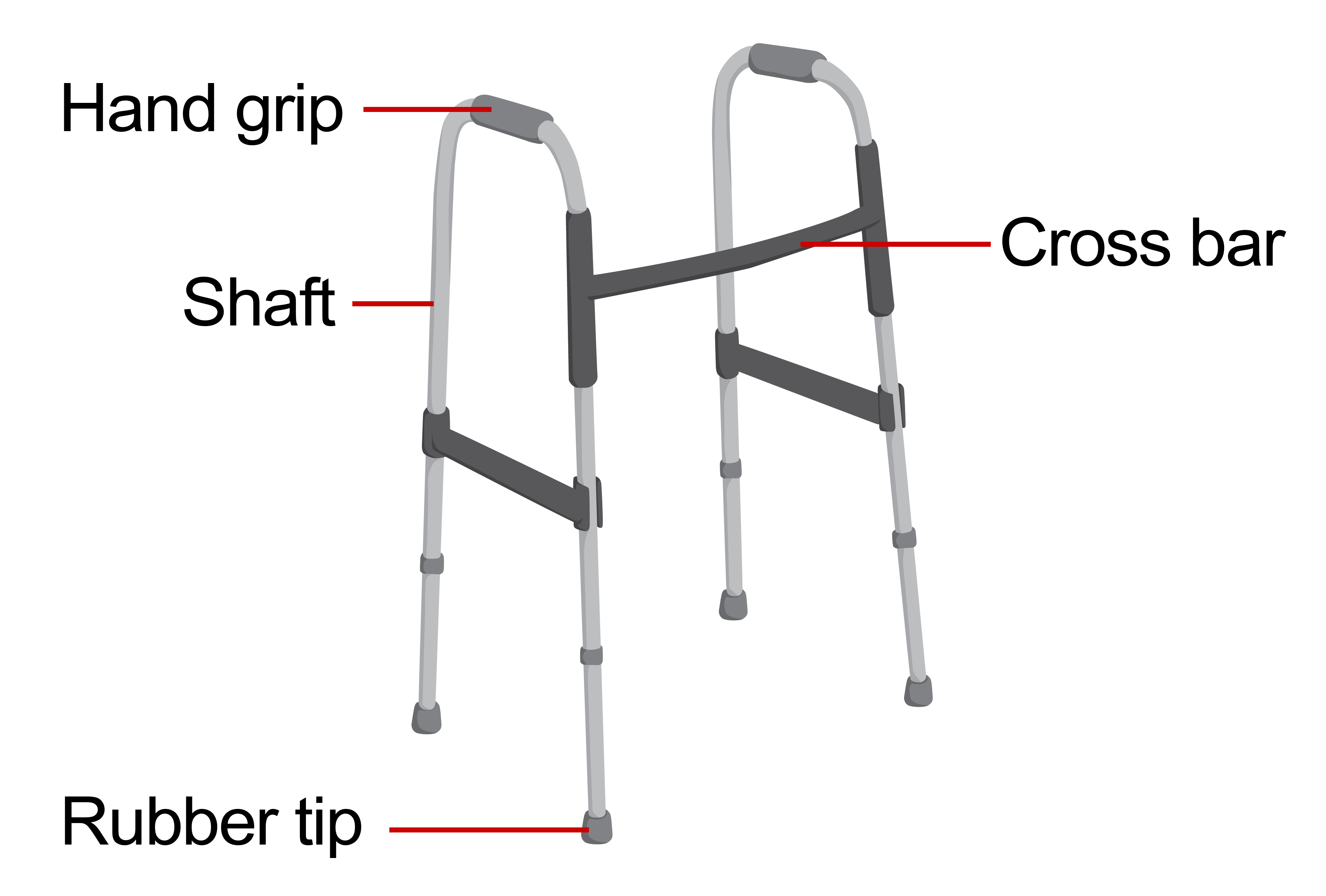
Walking frame parts include:
- Shaft: a strong metal structure that forms the main part of the frame.
- Hand grip: shaped grips that the person holds to support their weight and also to move the frame.
- Cross bar: a metal bar that links the two halves of the frame.
- Rubber tip: fixed to the feet of the frame and provide grip on the floor.
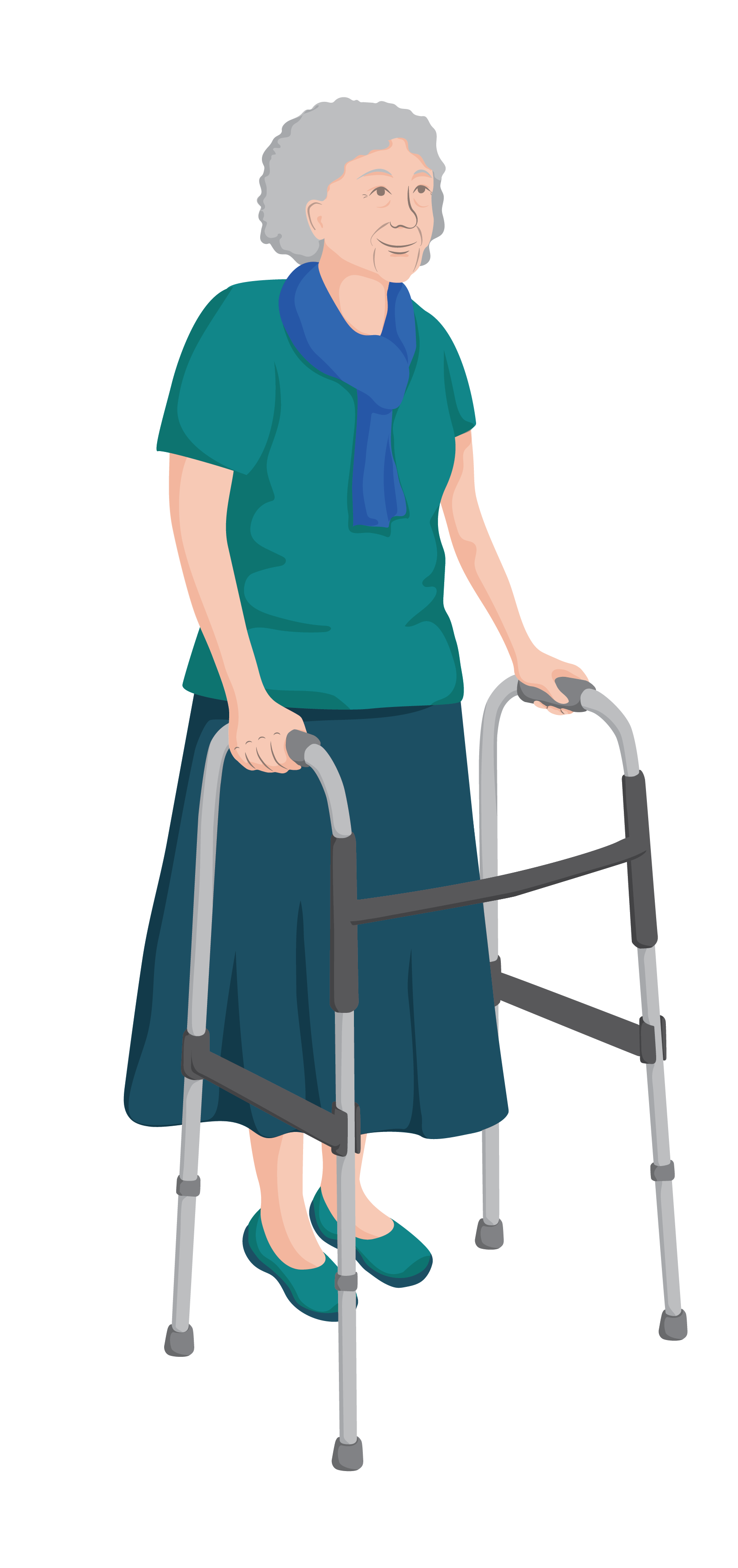
Remember Cali?
Cali chose a walking frame because it provides her with more support and stability than the other walking aids.
She only uses her walking frame indoors, where the ground is flat. Outdoors the ground is uneven and the walking frame is not stable.
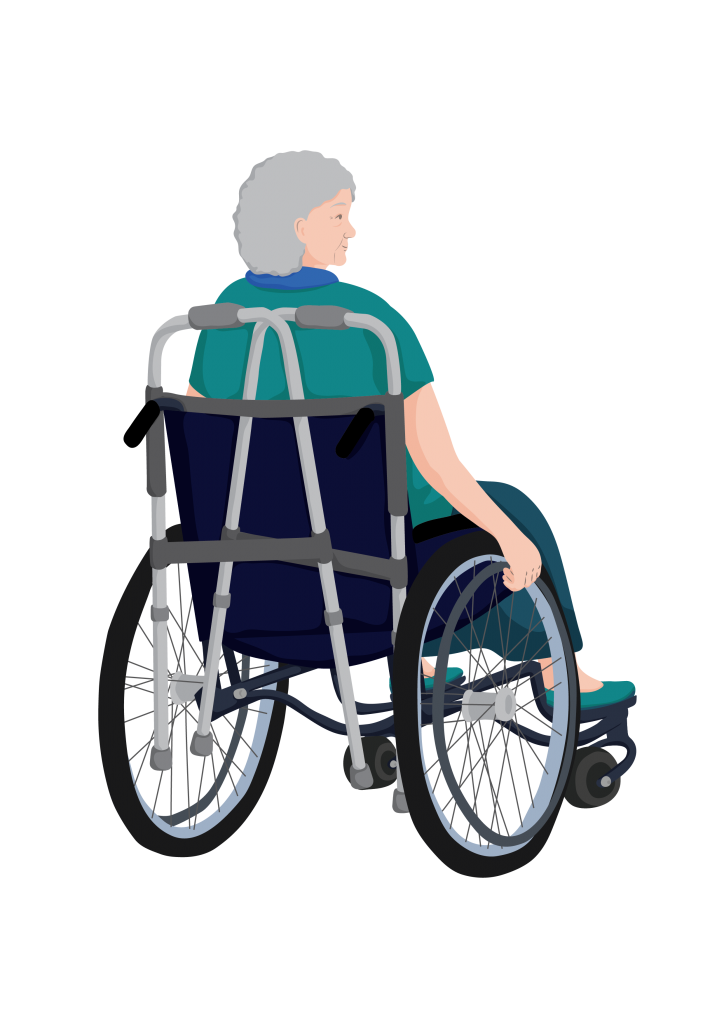 Cali uses a wheelchair outdoors. She can self-propel for short distances, but her daughter pushes her over longer distances.
Question
Could Cali also use a rollator?
Cali tried a rollator indoors, however her hands were not strong enough to use the brakes and she lost control. This made her feel unsafe. She prefers a walking frame.
Discussion
What are the most common walking aids available in your area? Are there different types of walking aids available to select from?