Assessment is an important first step in providing a transfer board.
The assessment will gather information about the person’s health, activity and ability, and where they will use the transfer board.
Information from the assessment will help you to plan:
- How the person will use their transfer board
- What to teach the person
- If referral to any other service is needed.
TAP transfer board assessment form
The TAP transfer board assessment form will help you to understand why a person is having difficulty transferring and if a transfer board could help.
The assessment form includes questions to ask the person. It also has some space to write notes and make a plan with the person.
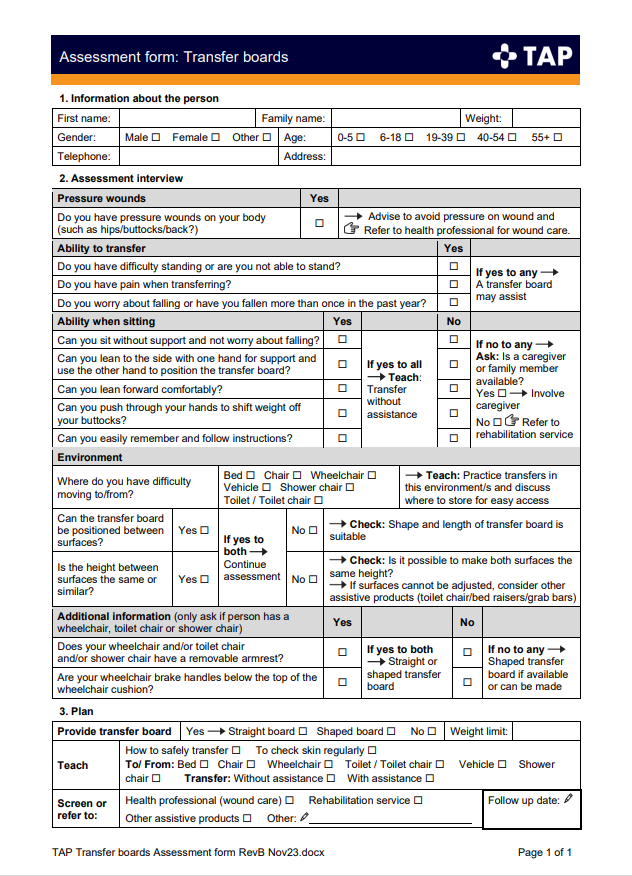
If you haven’t already, download the TAP transfer board assessment form and print a copy.
If you are unable to download the form, don’t worry. Each of the questions on the form are clearly shown as you go through this section of the module.
If your service uses a different form, discuss this with your supervisor.
Whenever you see this icon on the form, it means that the person may need referral.
Prepare the person
To carry out the assessment, find a quiet, private space to sit with the person. Explain to the person that you will ask some questions. Their answers will help you to work with them to make a plan.
Involve family members or caregivers when appropriate. Use the questions on the assessment form to learn about:
- The person’s abilities when sitting
- Where the person transfers to and from.
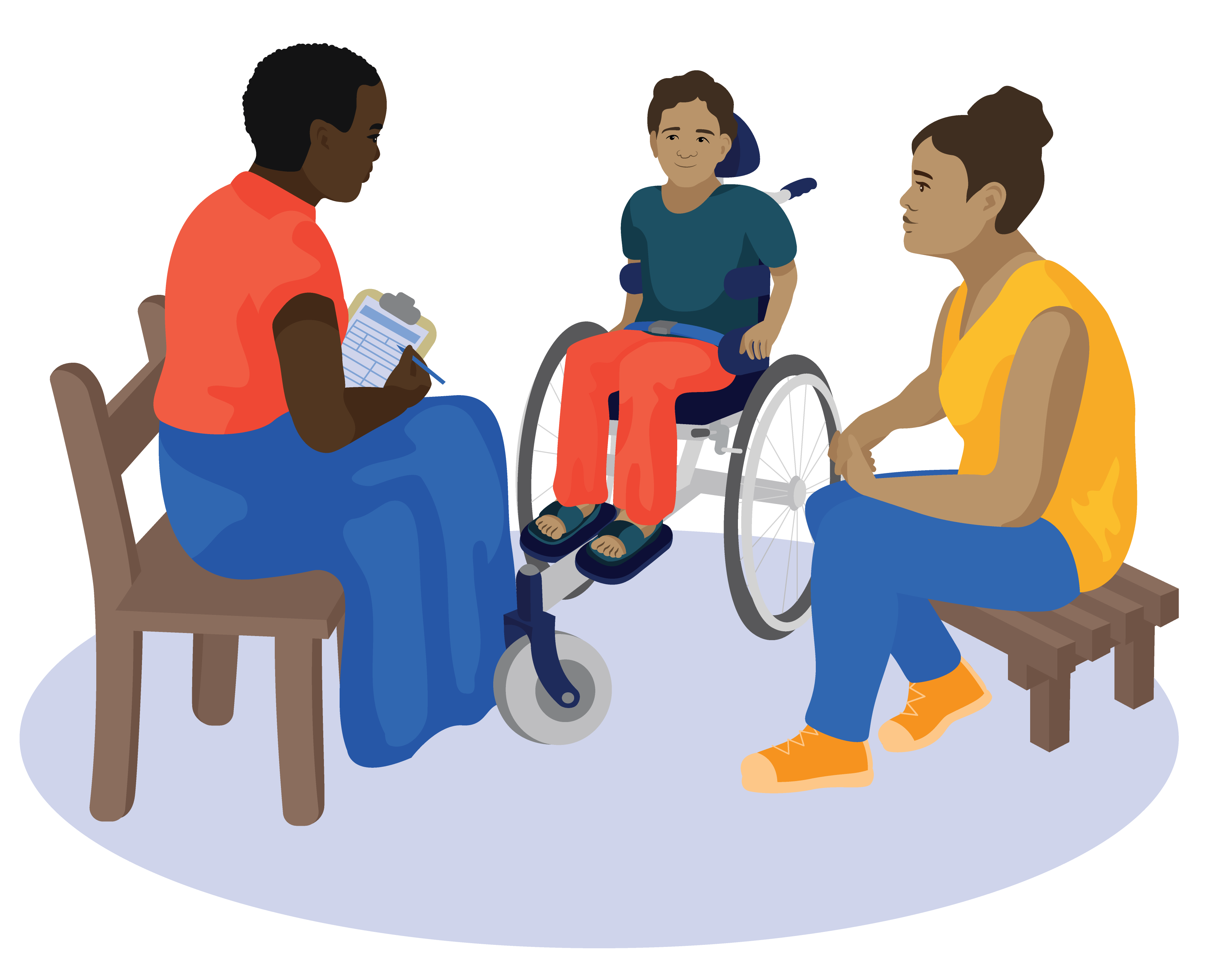
The following topics will explain more about the assessment questions and how answers to these questions can guide the selection of the right transfer board.
Information about the person
Start by collecting general information about the person, including their contact details, gender, age and weight.

Question
What could you do if the person does not know their weight and is not able to stand?
Select all that apply.
If you selected a and b, you are correct!
If a chair scale or wheelchair scale is available, the person can be weighed while sitting down.
If they don’t know and you do not have scales, the person’s weight can be estimated. If you think the person’s weight may be close to the weight limit, it is important to assess whether it is safe to continue.
In the next topic you will learn about the assessment questions that will guide the selection of a transfer board.