Transfer boards should be fit for each person’s environment and needs. This is important to make the transfer board safe to use.
Check the product
Before using the transfer board check the:
- Weight limit is suitable for the person
- Surface is safe to use
- Shape matches the plan on the assessment form.
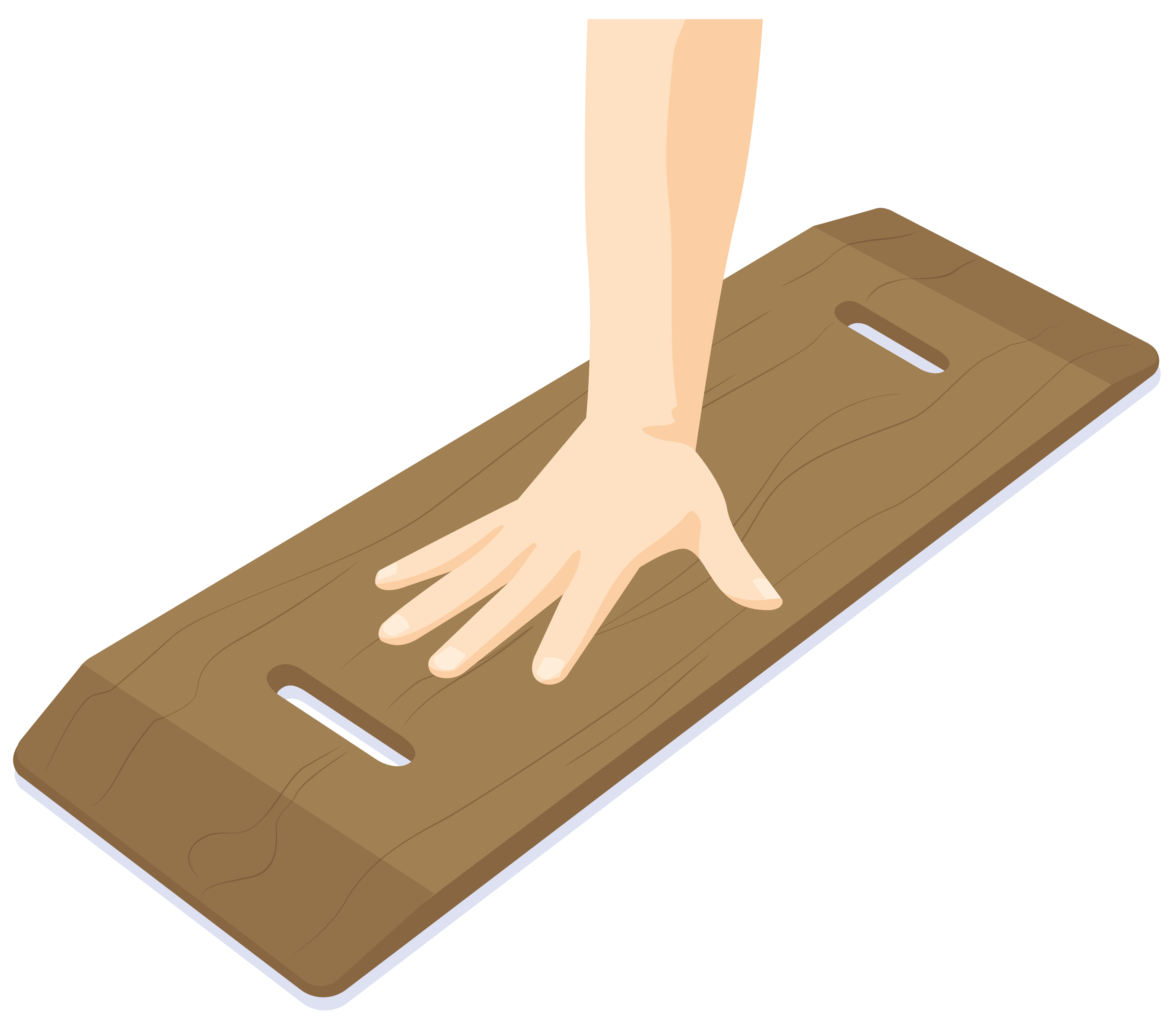
Surface is safe to use
Run your hands over the surface of the transfer board.
- The top and edges should be smooth with no rough edges or cracks
- The bottom should be non-slip.
Check the shape
- Check the transfer board matches the shape selected on the assessment form
- Each end of the board is fully supported on the transfer surfaces.
Question
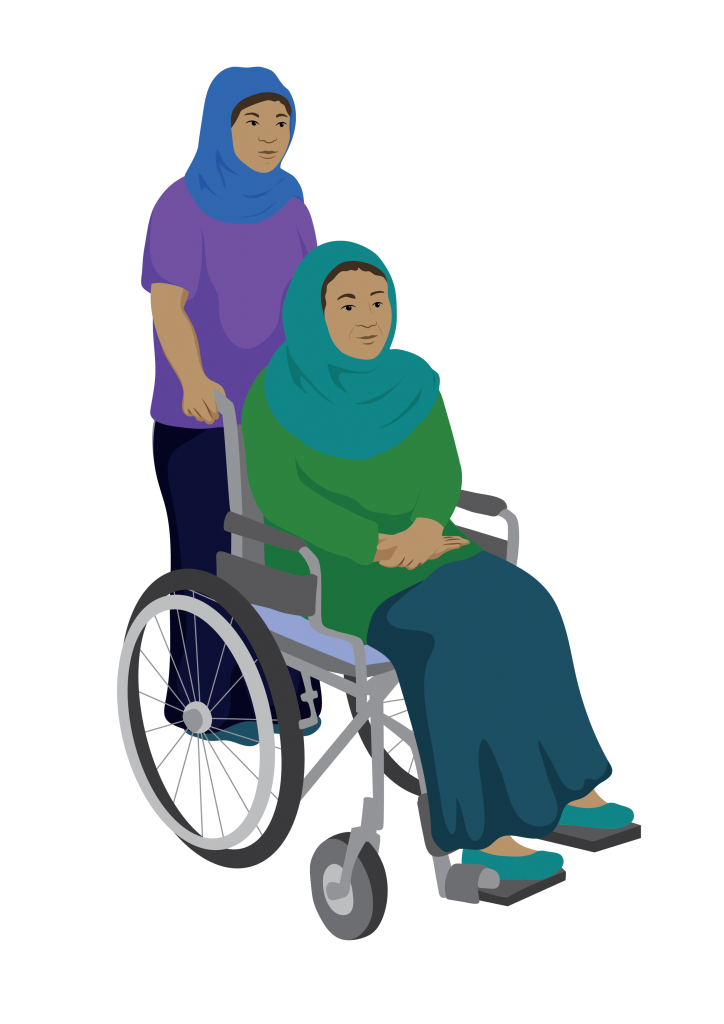
Remember Maria?
Maria is 61 years old and has multiple sclerosis. She lives with her daughter Lisa. Maria uses a wheelchair and has difficulty when transferring to her bed and toilet.
Maria’s wheelchair has a fixed armrest and the brakes are positioned below her cushion. Maria weighs 70 kilograms.
Lisa shows you a picture of a transfer board they are considering to buy.
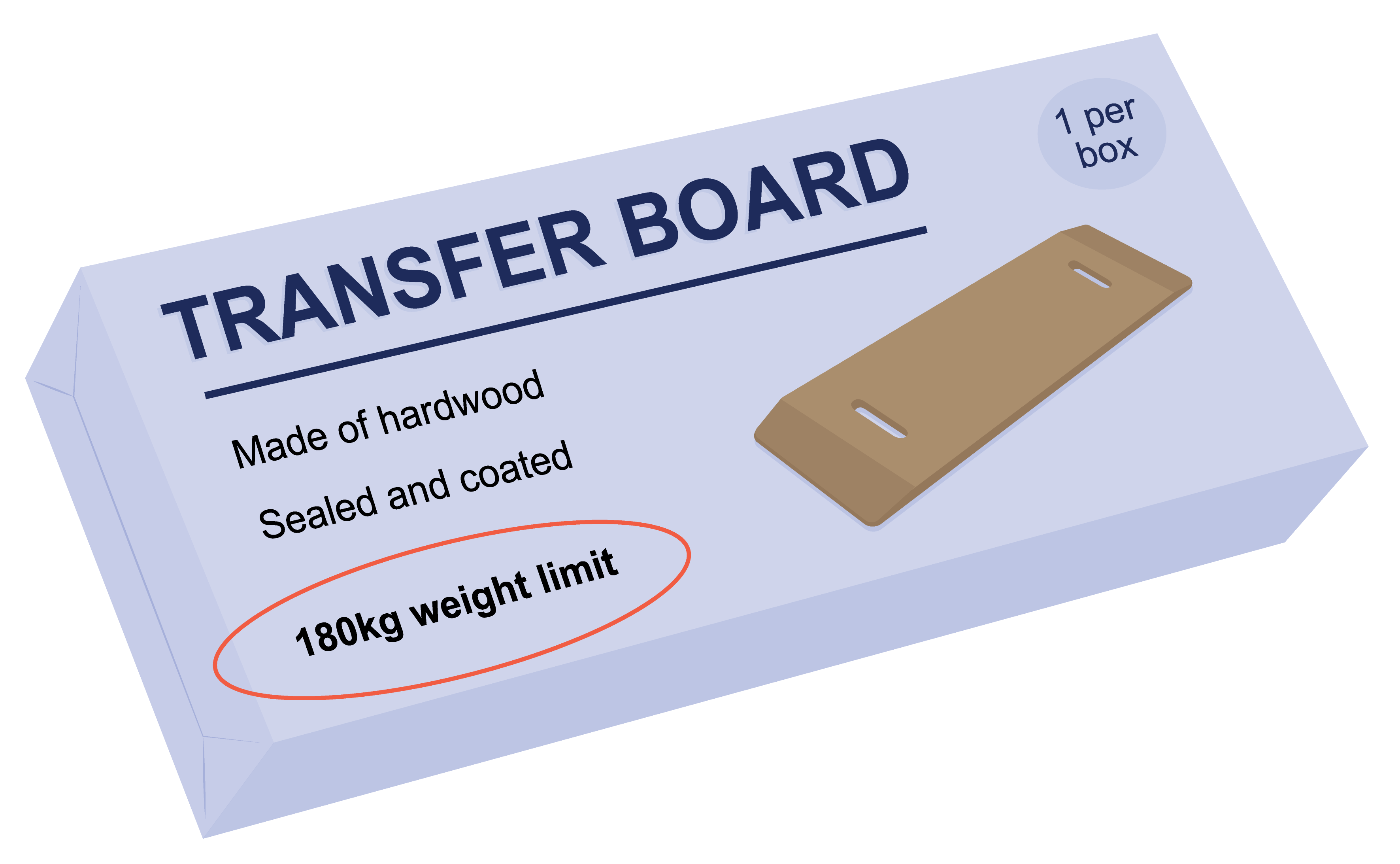
1. Look at the product information. Is the weight limit of the transfer board suitable for Maria?
Yes is correct!
This board is suitable for Maria. Her weight is less than the 180 kilograms (kg) limit of the transfer board.
Look at the product information and Maria’s assessment plan.
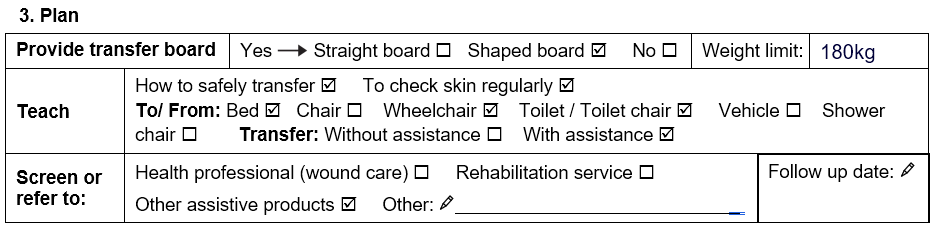
2. What action would you recommend to Maria?
All are correct!
Maria has found a different transfer board to the shape agreed on the assessment form.
Try using a curved transfer board and confirm whether it can be positioned with both ends fully supported.
Compare to using a straight transfer board and assess with Maria and her daughter which shape of transfer board they would prefer.
If necessary, encourage them to find a different shape of board.
Environment where the transfer board will be used
Check the:
- Surfaces are clear of obstacles
- Height of surfaces are the same or similar
- Transfer board fits on both surfaces.
Question

Remember Malu?
Malu is 55 years and has diabetes. He is using a wheelchair whilst his foot wounds heal.
Look at the set up for positioning Malu’s transfer board.
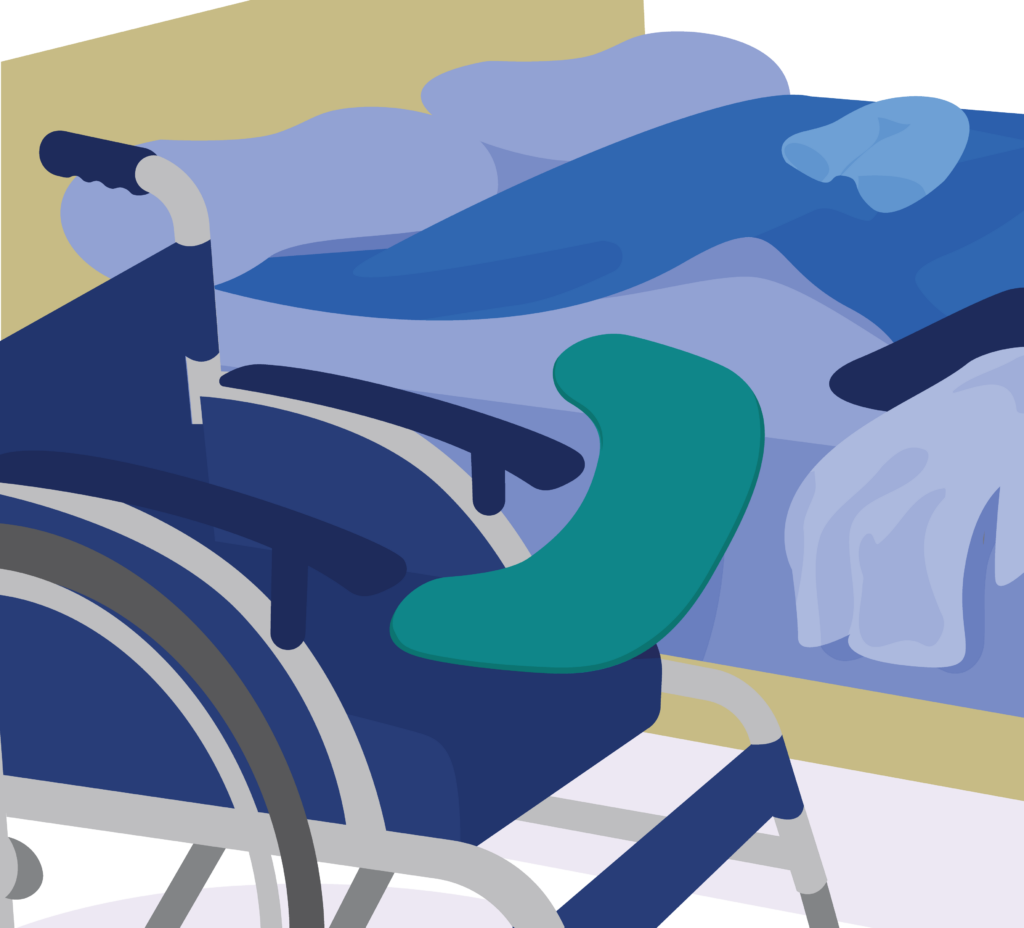
1. Is there a surface that the board can sit on and is this clear of obstacles?
No is correct!
The surface of the bed is not clear of obstacles.
2. Are the two surfaces similar height?
No is correct!
The bed is higher than the wheelchair seat.
Explore with Malu if it is possible to adjust the height of the bed so it is of similar height to the wheelchair seat.
3. Is the transfer board long enough to bridge the distance between the wheelchair seat and the bed?
Yes is correct!
The transfer board is long enough to be positioned safely in between the bed and the wheelchair seat. If the distance between surfaces is further apart, a longer transfer board may help.
It is not always possible to make both transfer surfaces the same height. A small height difference may still be safe and acceptable.
Always check the transfer with the person.
Assistance
If a person needs assistance, check:
- There is enough space for the assistant to move around
- The area is clear of obstacles
- The floor is not slippery
- There is good lighting, particularly for use at night to reduce the risk of falls.
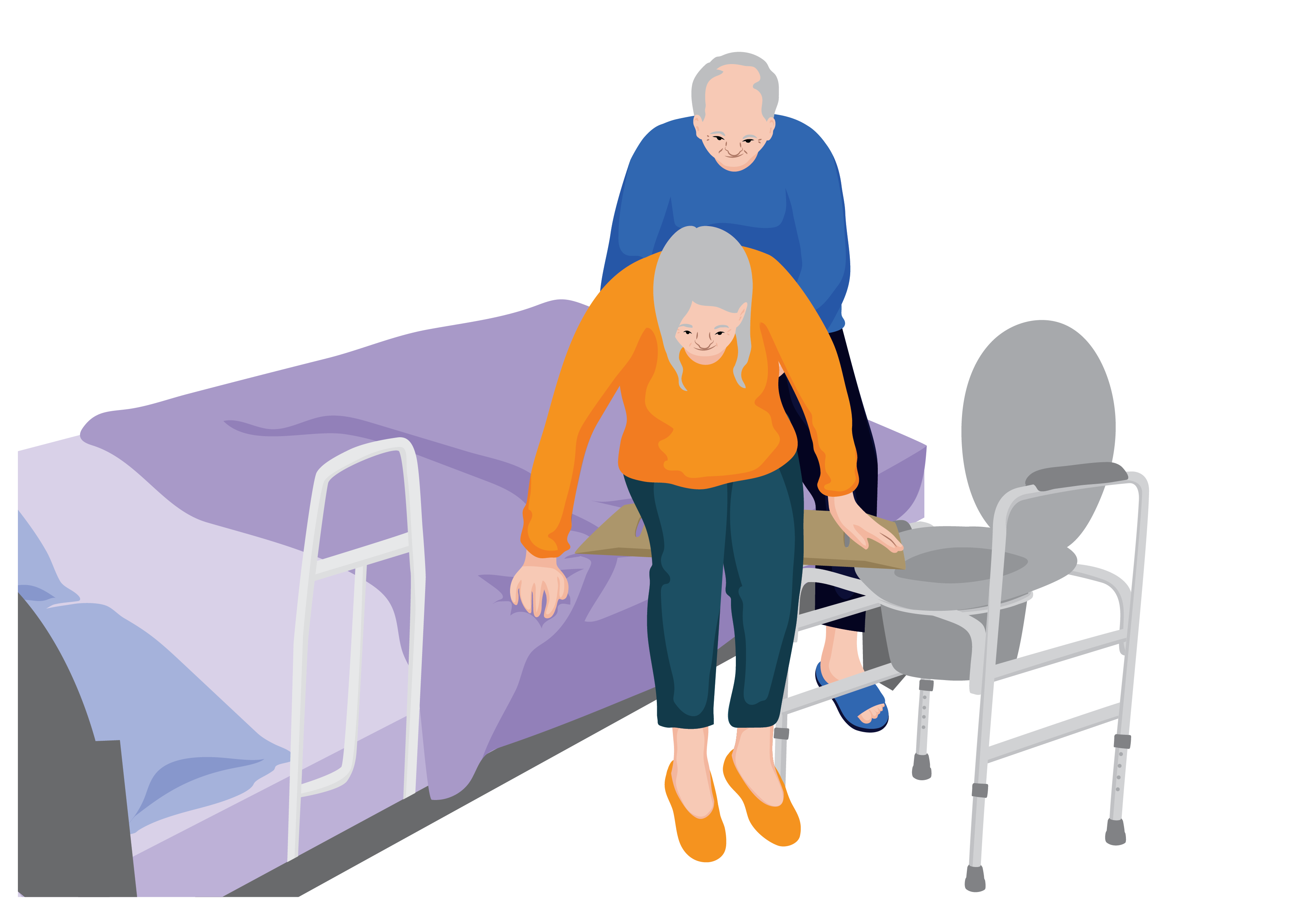
Read more about safe environments for transfers in the TAP Toilet and shower chair module.