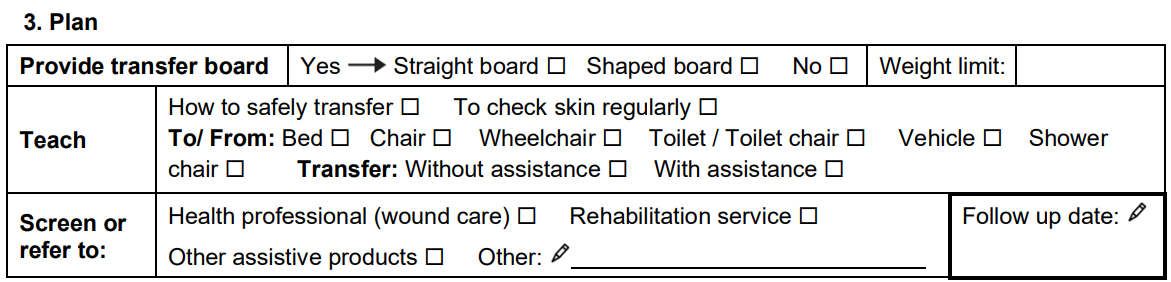
After the assessment interview, make a plan with the person and decide together:
- If the person needs a transfer board and the type of transfer board that would be most suitable
- What to teach to use the transfer board safely
- If they may benefit from a referral to other services
- When to book a follow up appointment.
Question
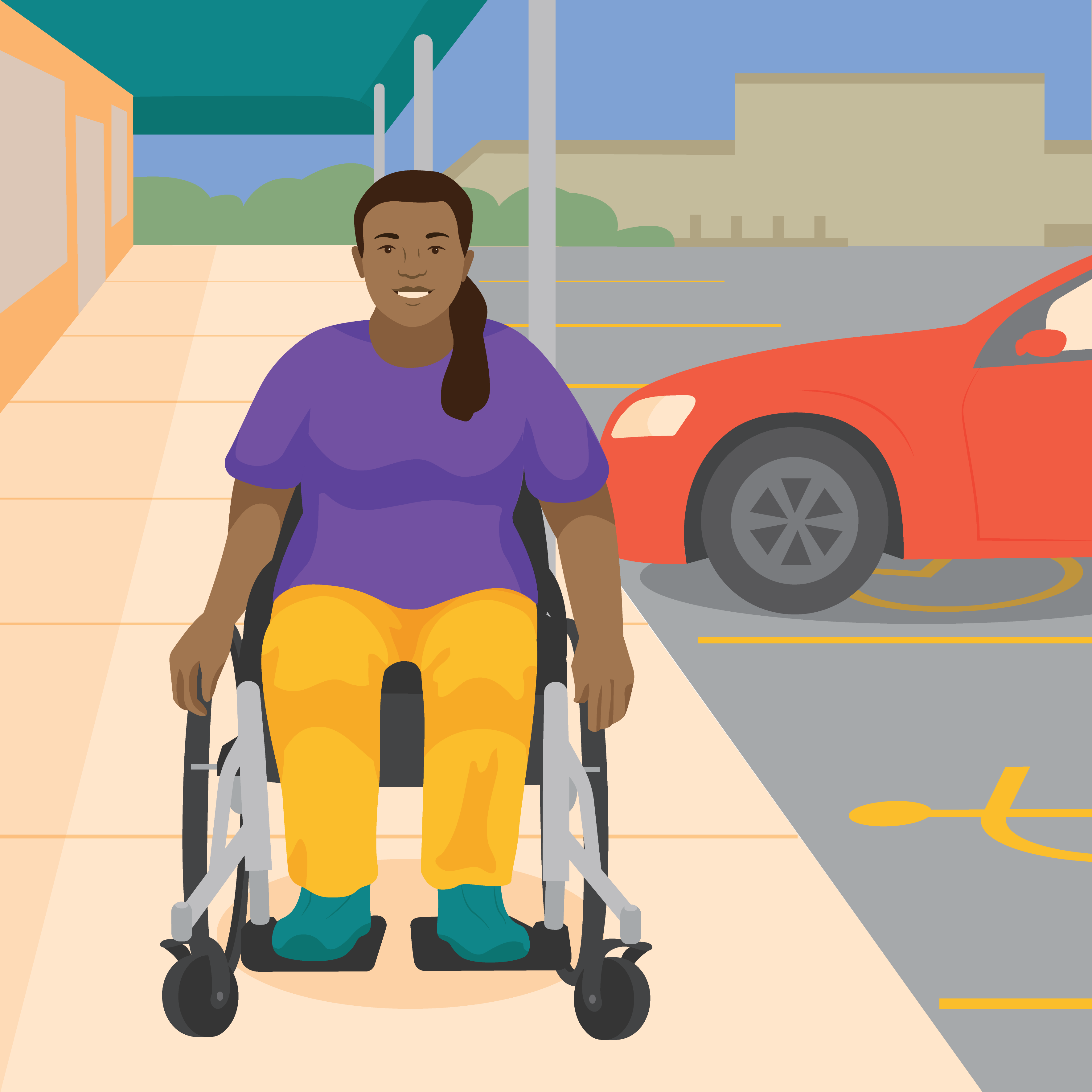
Remember Ejaz?
Ejaz is 24 years old and lives alone. She has a spinal cord injury and cannot move her legs. After injuring her shoulder, she is finding car transfers difficult.
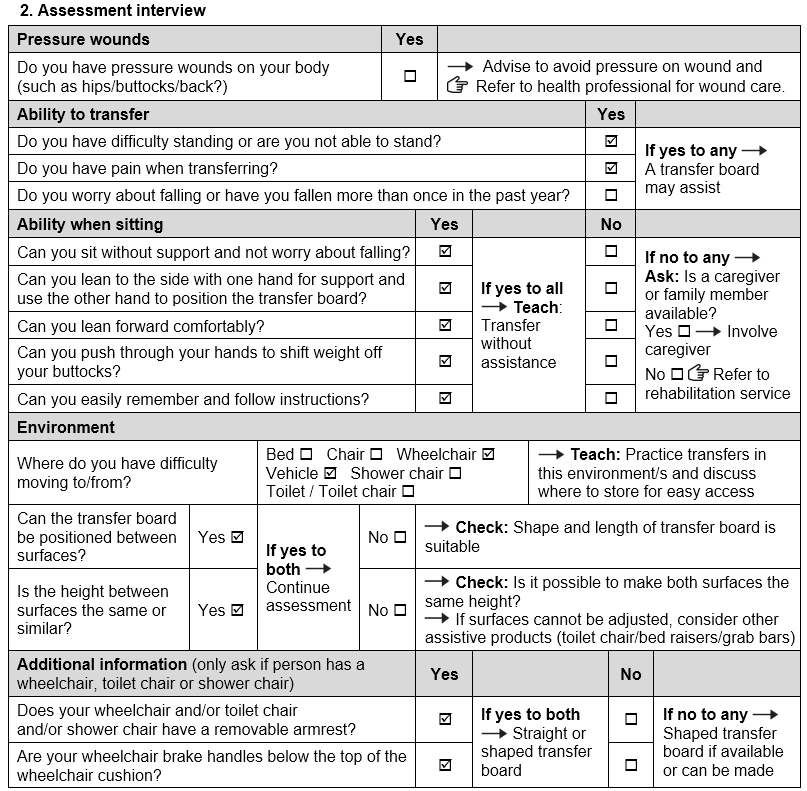
Read the summary of her assessment interview below:
1. Would Ejaz benefit from using a transfer board?
Yes is correct!
Ejaz is having difficulty transferring to and from her car because of a painful shoulder. A transfer board may help.
2. What type of transfer board will benefit Ejaz?
If you selected c, you are correct!
Either transfer board can benefit Ejaz as neither the armrest or the brakes of her wheelchair will get in the way of the transfer.
It is important to try both transfer boards to see which works best in her transfer environment.
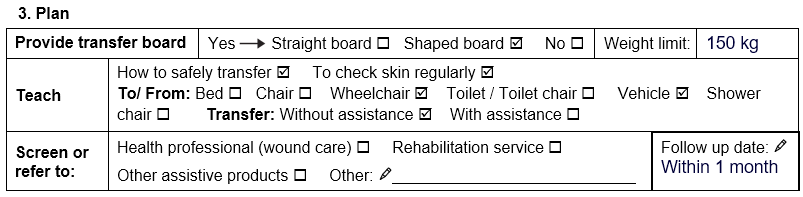
Ejaz selected a curved transfer board made of plastic. The weight limit is 150 kilograms. Ejaz weighs 68 kilograms.
3. Is this transfer board suitable?
Yes is correct!
Ejaz’s weight is within the weight limit of the transfer board.
4. What will you teach Ejaz?
Select all that apply.
If you selected a, b and c, you are correct!
Ejaz is learning to use a transfer board for the first time. It is important to explain how to safely use a transfer board and the importance of checking her skin.
She answered ‘yes’ to all ability when sitting questions and can use the transfer board without assistance.
5. Which environment will you teach Ejaz to use the transfer board in?
Select all that apply.
If you selected c and f, you are correct!
Ejaz is only having difficulty transferring from her wheelchair to the vehicle. Teach Ejaz to use the transfer board in this environment.
6. Does Ejaz need a referral for wound care?
No is correct!
Ejaz does not have any pressure wounds.
7. Does Ejaz need a referral to a rehabilitation service?
No is correct!
Ejaz is independent and does not need rehabilitation at this stage.
Instead, follow up is important to check her shoulder is healing. If her shoulder is not healing, then discuss referral to a rehabilitation service.
8. Does Ejaz need a referral for other assistive products?
No is correct!
Ejaz has not raised other difficulties that might require other assistive products.
9. When would you schedule follow up with Ejaz?
If you selected b, you are correct!
Ejaz does not have difficulty using the transfer board. Encourage Ejaz to come back within the first month of using the transfer board, to check her shoulder is healing.
If a person has difficulty using the transfer board, it is recommended that you follow up in one week.