A person might need a wheelchair if they are:
- Unable to walk
- Only able to walk short distances.
They may:
- Propel themselves
- Be assisted to propel.

Propel themselves
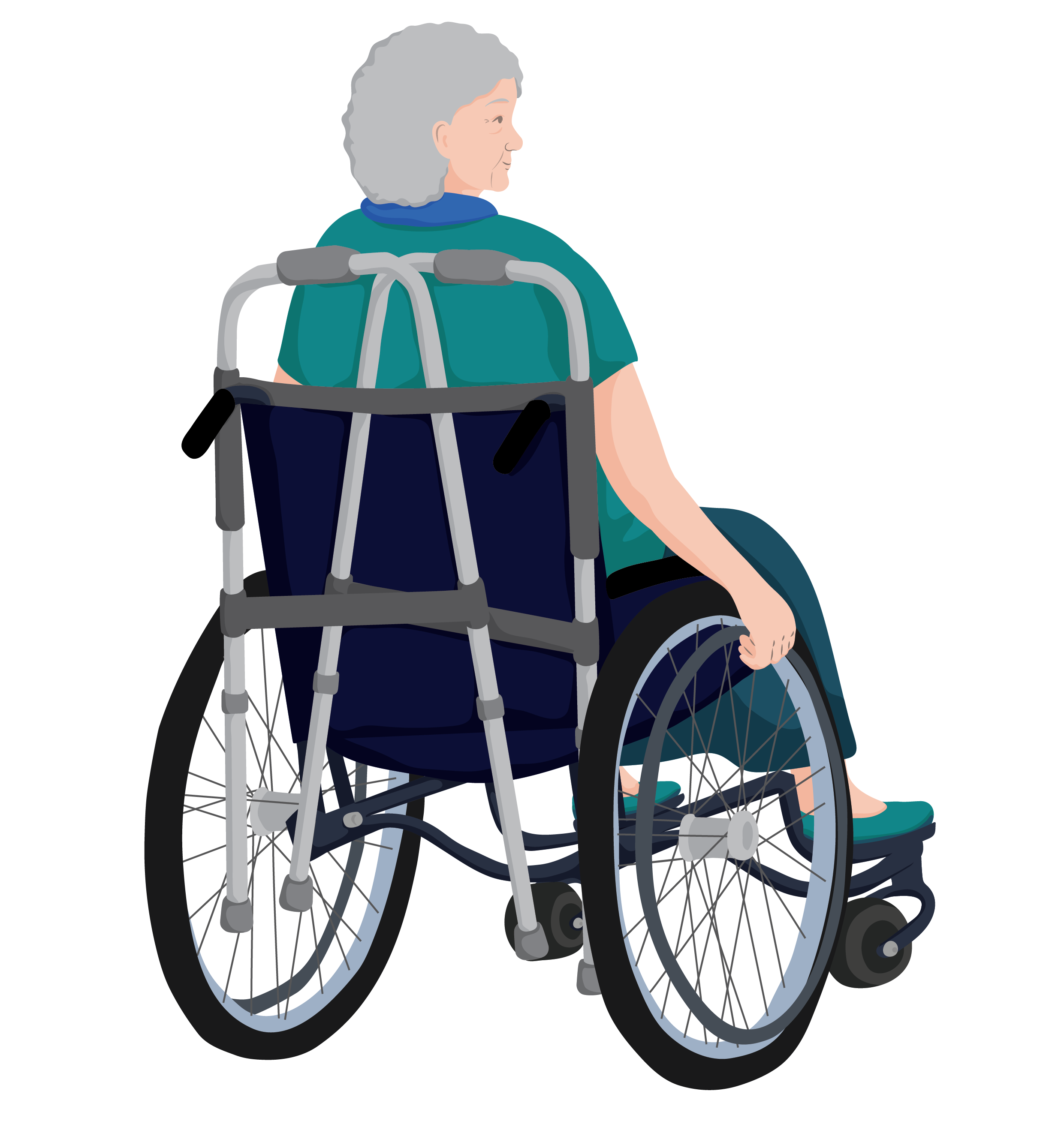
Propel themselves
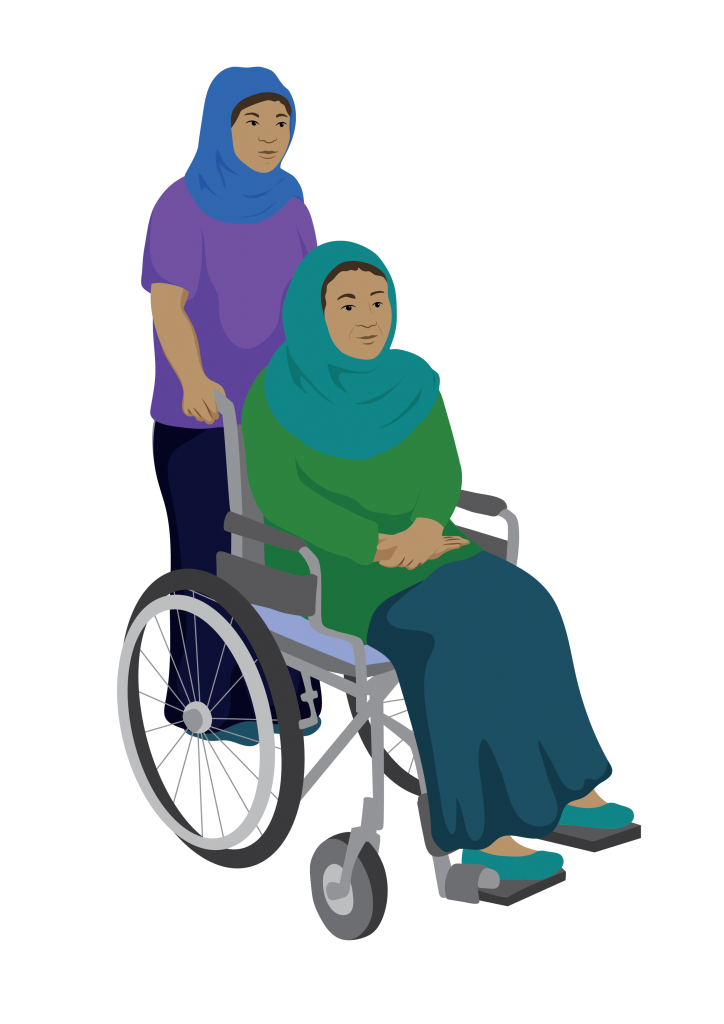
Be assisted to propel
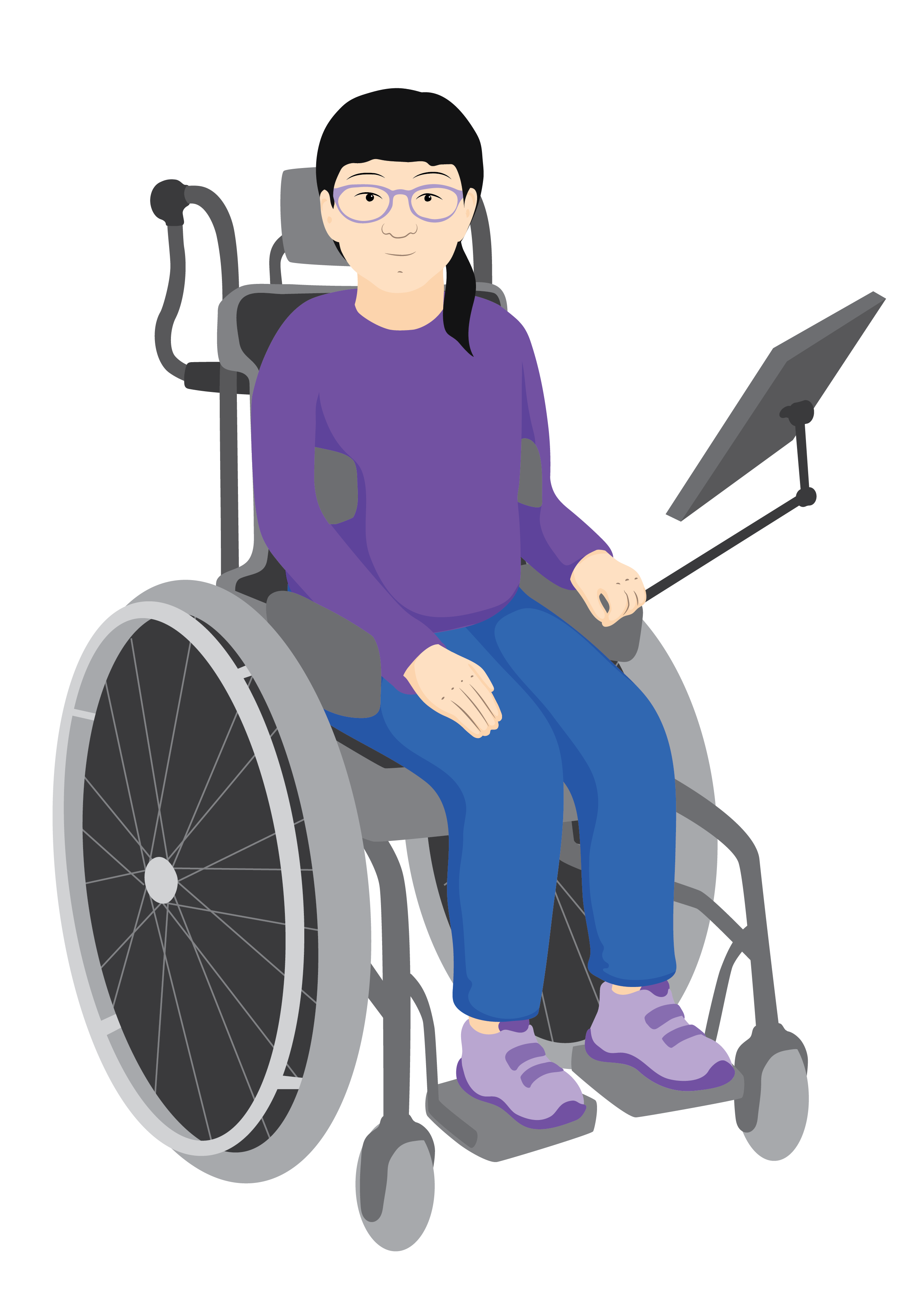
Need extra support
Read on to learn about some common health problems that often result in a person needing a wheelchair in an emergency.
Wheelchairs in emergencies support people who are injured, older or with a disability to be mobile and access relief efforts. This helps them to survive in an emergency situation.
People may need a wheelchair for temporary or long term use.
Temporary wheelchair users include people who will be mobile again after recovering from:
- Injury / surgery or
- An illness.
Long term wheelchair users include people who have an ongoing health problem. They may use a wheelchair:
- For the whole day
- Combined with other mobility aids for short times each day.
Let us meet some people and consider whether they may need a temporary or long term wheelchair.
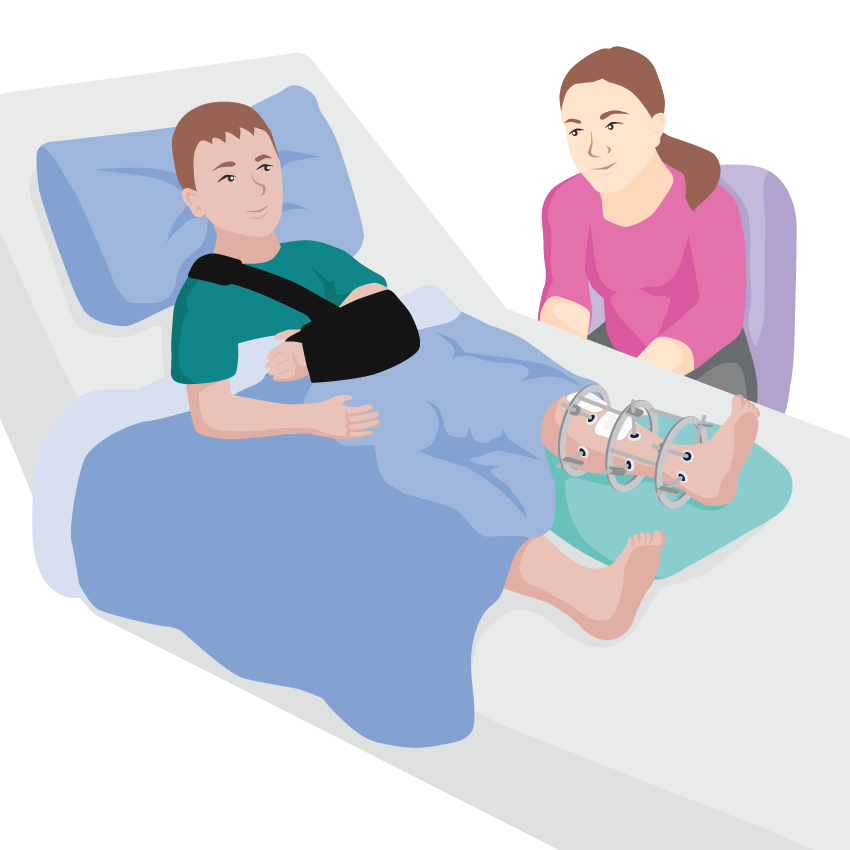
Meet Roman
Roman is 10 years old and had an injury to his leg when the building where he lives with his family collapsed. He also injured his arm.
He has an external fixator on his leg and cannot put weight through it until his injuries heal.
Question
Is Roman a temporary or long term wheelchair user?
Temporary is correct!
Roman is recovering from his injuries. He has temporarily lost his ability to walk. Roman has a short term need for a wheelchair.
Long term is incorrect.
Roman will not need a wheelchair once his injuries are healed.
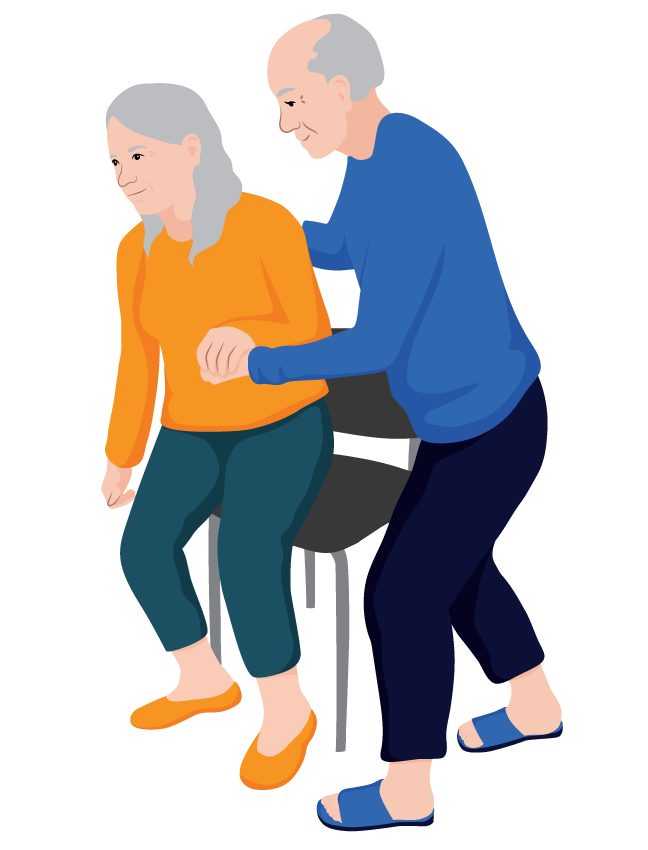
Meet Verna
Verna is 89 years old and lives with her husband Leif. They live close to an area of conflict and have had difficulty getting enough food and water.
Verna has become very frail and Leif has taken her to hospital. She can stand with help but cannot walk.
The health worker spoke with Verna about how a wheelchair could help her with daily activities, including moving inside her home and outside in the community.
Verna may not need to use a wheelchair for all of her mobility, but she can benefit from a wheelchair for her long term use.
Meet Peter
Peter has a spinal cord injury and his legs are paralysed. He has been using a wheelchair, catheter and some other assistive products for many years.
Peter and his friends had to escape flooding of their homes after a severe hurricane. His friends carried him to safety but his wheelchair was lost.
Question
Is Peter a temporary or long term wheelchair user?
Long term is correct!
Peter has a spinal cord injury and is unable to walk. Peter needs a replacement wheelchair for long term use.
Temporary is incorrect.
Peter is unable to walk and needs a replacement wheelchair for long term use.