Assessment overview
The first step in assessing if a person may need a remote microphone system is to complete the TAP Personal remote microphone system assessment.
Through the assessment you will gather information about the person’s activities and ability to hear when using their hearing aids. This is to check if they may benefit from using a remote microphone system.
Information from the assessment will help you to plan:
- How the person will use their remote microphone system
- What to teach the person
- If referral to any other service is needed.
If the person already has a remote microphone system, the assessment is a good way to check whether it is meeting their needs. The assessment will help to make decisions about adjusting, repairing or replacing their remote microphone system.
Assessment form
The assessment form includes questions to ask the person on their:
- Ability to hear in quieter environments
- Ability to hear in noisy environments.
It also has space to make a plan with the person.
Instruction
If you haven’t already, download the TAP Personal remote microphone system assessment form and print a copy.
If your service uses a different form, discuss this with your supervisor.
Whenever you see this icon on the form, it means the person may need a referral.
Prepare the person
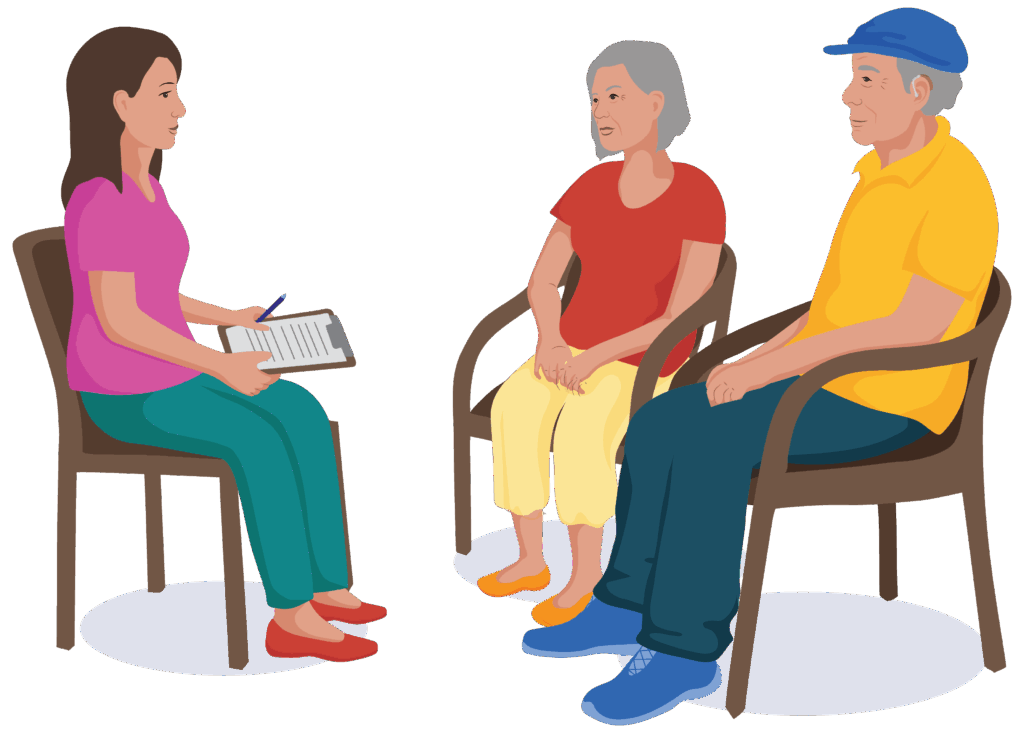
Find a quiet, private space to sit with the person.
Explain to the person these questions help identify if they may benefit from a remote microphone system and select the best remote microphone system for their needs.
Instruction
The following topics will explain more about the interview questions and how answers to these questions can guide the selection of a suitable remote microphone system.
Assessment
Instruction
The first step in providing a remote microphone system is to assess the person’s needs.
Information about the person
Start by collecting general information about the person including their name, gender, age, address and telephone.
Interview questions
Instruction
Use the interview questions part of the assessment form to find out about a person’s hearing in different environments.
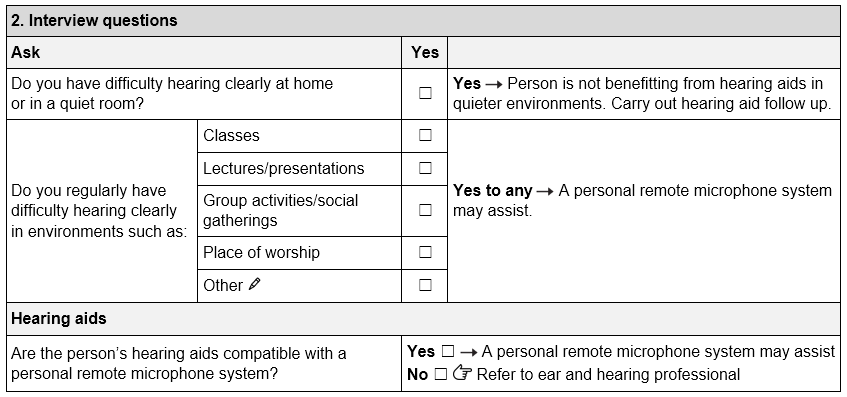
Ask questions to identify if a person needs more support with their hearing aids or may benefit from a remote microphone system.
Difficulty hearing clearly in quieter environments
It is important to check that the person’s hearing aids are working well in quieter environments or when speaking directly with one person.
Instruction
Ask: Do you have difficulty hearing clearly at home or in a quiet room?
If Yes Person is not benefitting from using hearing aids in quieter environments. Carry out hearing aid follow up.
Difficulty hearing clearly in noisy environments or at a distance
Some people hear well with their hearing aids in quieter environments but have difficulty hearing clearly in noisy environments or from a distance.
Instruction
Ask: Do you regularly have difficulty hearing clearly in environments such as:
- Classes
- Lectures/presentations
- Group activities/social gatherings
- Places of worship
- Other
If Yes to any A personal remote microphone system may assist.
If a person has difficulty hearing conversations in other noisy or busy environments, record on the form and consider whether a remote microphone system may assist.
Instruction
If you are unsure if a remote microphone system will assist in other noisy environments, discuss with your service mentor.
Hearing aids
A person’s hearing aids need to be compatible with a remote microphone system. This means they can communicate and pair with each other.
Instruction
Before providing a remote microphone system, check person’s hearing aids are compatible with a personal remote microphone system.
- If Yes A personal remote microphone system may assist.
- If No Refer to ear and hearing professional.
Tip
Check the user manual provided by the manufacturer to find details about which hearing aids are compatible with the remote microphone system. If you are not sure, contact the supplier.
Question
What will happen if the remote microphone system is not suitable for the person’s hearing aids?
Select one.
If you selected a, you are correct!
If a person’s hearing aids cannot communicate with the remote microphone system, they will not connect.
Plan
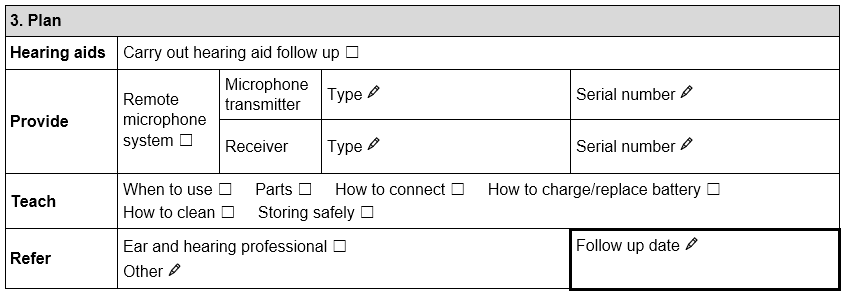
After the interview questions, make a plan with the person. The plan might include:
- Hearing aid follow up
- Providing a remote microphone system
- Teaching the person how to use their remote microphone system
- Making a referral
- A follow up appointment.
Hearing aid follow up
If a person is not fully benefitting from their hearing aids at home and in quieter environments, they may benefit from more support and problem solving on using their hearing aids.
Instruction
Carry out hearing aid follow up.
Meet Letia
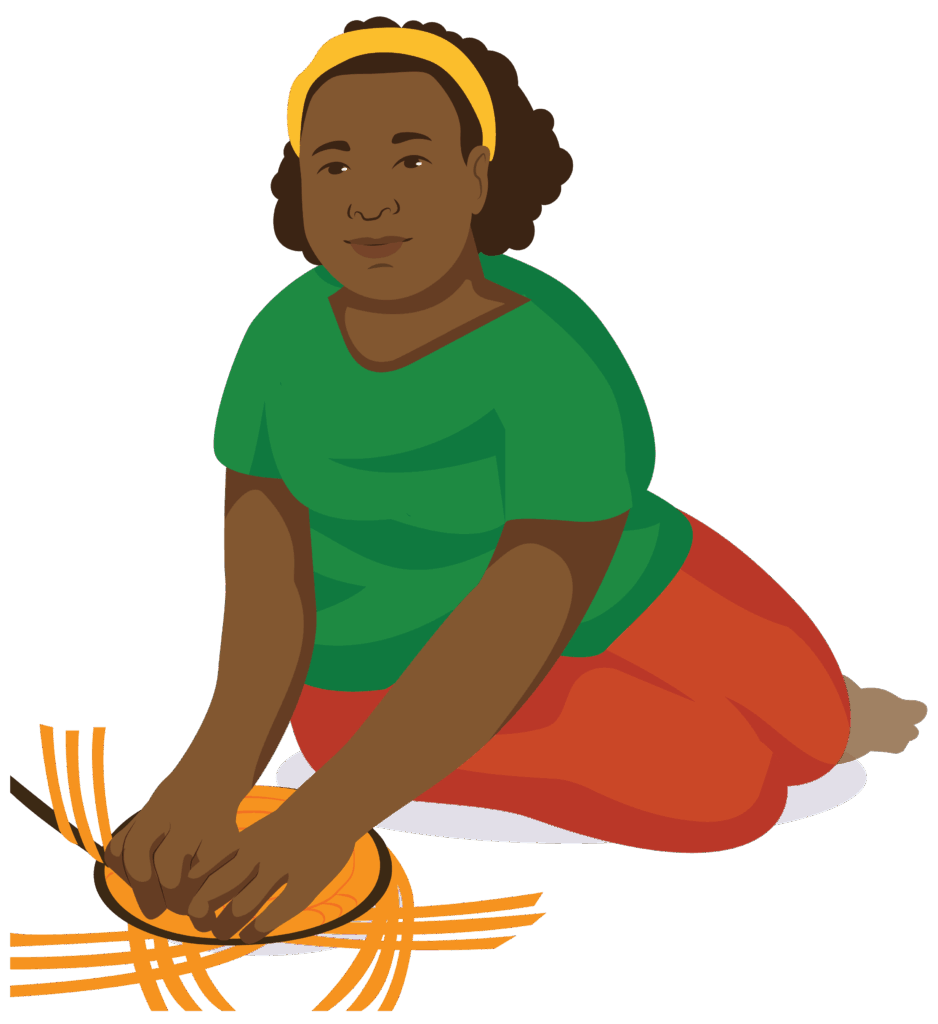
Letia is a young woman who sells woven mats and baskets at her local market.
Letia was fitted with hearing aids two months ago. She has difficulty hearing her customers at the market and hearing her family at home. She is not feeling satisfied with her hearing aids and wears them for two hours each day.
Letia is an example of a person who is experiencing problems with her hearing aids in both quieter and noisy environments. She is wearing her hearing aids for less than four hours each day.
Letia requires a hearing aid follow up appointment and problem solving to support her to fully benefit from her hearing aids. This should be done before considering a remote microphone system.
Provide
Instruction
On the TAP assessment form, tick if providing a remote microphone system.
Microphone transmitter
Consider which type of microphone transmitter is most suitable for the environment/s where the person is experiencing difficulty hearing. For example:
- Clip on or neck loop microphones are useful when the person speaking is standing or moving around. The clip or neck loop keep the microphone close to the person’s mouth. This maintains consistent audio quality.
- A tabletop microphone is useful where a group is seated around a table. Placing it centrally allows it to pick up voices from multiple directions.
- A handheld microphone is useful for group conversations where people are standing and talking. It can be passed from person to person so each person can be heard clearly.
Instruction
Write down the type of microphone transmitter selected and the serial number.
Tip
The serial number is usually on the bottom or back of the product or on a label on the packaging.
Question

Remember Mahmoud?
Mahmoud is a student. His hearing aids work well in quieter environments. However, he has difficulty hearing lectures and when he goes to his place of worship.
Which type of microphone transmitter may be most suitable for Mahmoud?
Click to check answers.
Possibly.
A handheld option is possible for Mahmoud’s professor and leader at his place of worship. However, they may need their hands free while speaking. This would be a less flexible option.
No.
A tabletop option is not recommended. Mahmoud’s professor and the leader at his place of worship will not be sitting at a table.
Yes!
A clip on microphone can be worn by his professor and the person leading at his place of worship. This will keep their hands free for other activities, which is a more flexible option.
Receiver
The receiver for the remote microphone system depends on the type of hearing aid. It may be a:
- Built in receiver
- Ear level receiver
- Direct Audio Input (DAI)
- Audioshoe connector with receiver
- Neck loop receiver worn by the person using hearing aids.
Instruction
Write down the type of receiver and serial number.
Tip
It may be necessary to use a magnifier to read the serial number on a receiver.
Teach how to use
For the person to get the most benefit, explain how to use and look after their remote microphone system.
Instruction
Learn more about how to use and look after a remote microphone system in Topic three.
Making a referral
A person may need a referral to an ear and hearing professional if:
- They are not satisfied with their hearing aids after problem solving
- Their hearing aids are not suitable for the available remote microphone systems.
Follow up
People need time to adjust to using their remote microphone system.
Include remote microphone system follow up in a person’s hearing aid follow up schedule.
Encourage them to make an appointment sooner if they experience problems at any time.
Instruction
Learn more about follow up in Topic four.
Instruction
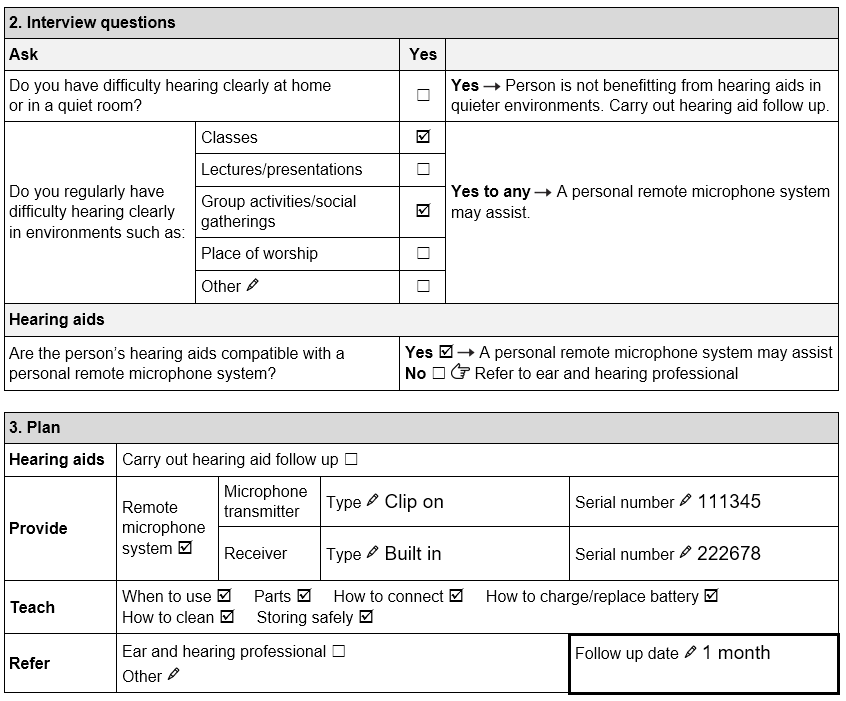
Practice completing an assessment and making a plan for Santiago using the TAP Personal remote microphone assessment form.
Activity

Meet Santiago
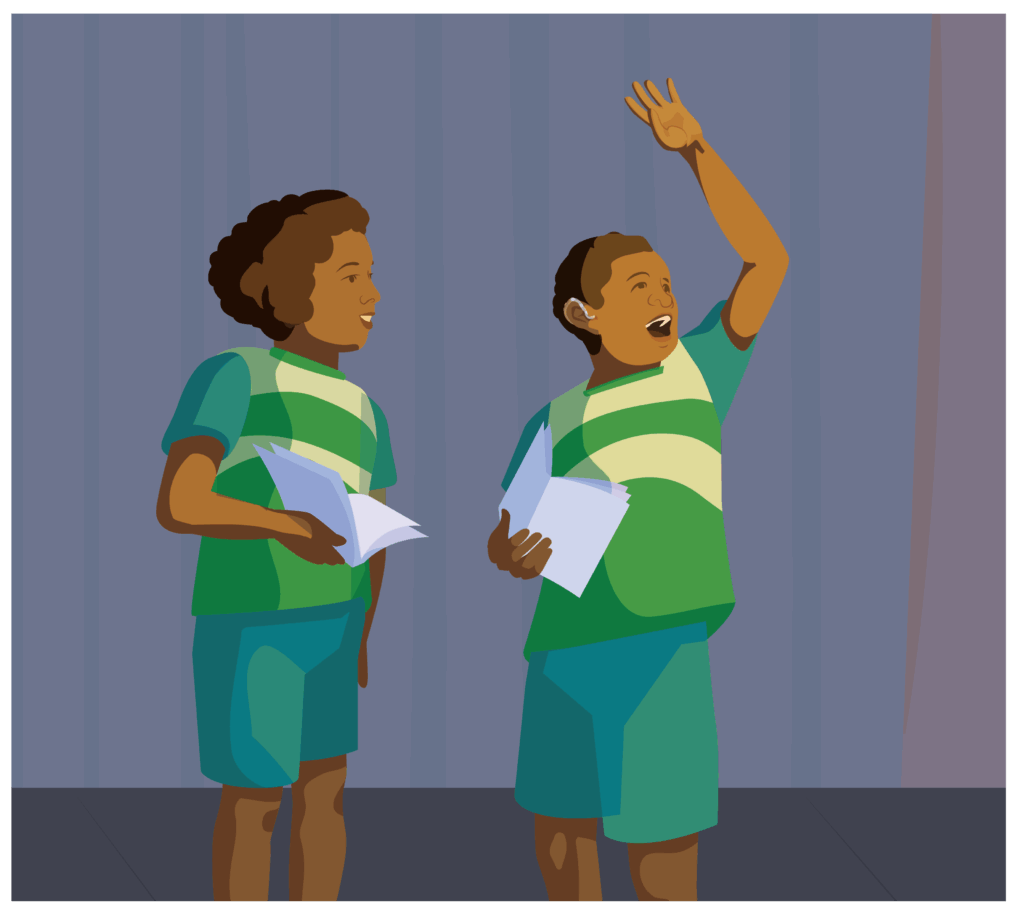
Santiago enjoys school, and spending time with his friends. At his one year hearing aid follow up appointment his parents mention he can hear well at home and is doing well at school. However, he has difficulty following discussions during some group activities in the classroom and struggles to hear directions from the teacher when rehearsing for the school play.
1. Does Santiago need more support with his hearing aids?
Select one.
No is correct!
Santiago’s hearing aids are working well at home and in quieter environments.
2. Would Santiago benefit from a remote microphone system?
Select one.
Yes is correct!
Santiago’s hearing aids are working well but he is having difficulty in some classroom activities and rehearsals for the school play.
3. What type of microphone transmitter may be most suitable for his teachers?
Select one.
Clip on is correct!
His teacher can wear it during group activities and during play rehearsals.
4. Santiago’s hearing aids are compatible with the remote microphone system. His hearing aids have a built in receiver. What would you do next?
Select one.
If you selected a, you are correct!
It is important to record the details of Santiago’s microphone transmitter and receiver in case they require spare parts or repairs in the future.
b and c are incorrect.
Before teaching how to look after and use a remote microphone system, record the details.
5. What should you do before teaching Santiago how to use his remote microphone system?
Select two.
If you selected a and c, you are correct!
It is important to check the remote microphone system has paired successfully with his hearing aids and it is charged before teaching how to use.
If you selected b and d, you are incorrect.
Cleaning a remote microphone system is important for keeping it in good working order after it has been used.
Santiago has already had a hearing aid follow up appointment to check his hearing aids are working well.
6. Does Santiago require referral to an ear and hearing professional?
Select one.
No is correct!
Santiago is benefitting from his hearing aids. His hearing aids are compatible with the selected remote microphone system. He does not require a referral.
7. Santiago and his parents can use and look after the remote microphone system. Would Santiago benefit from follow up?
Select one.
Yes is correct!
It takes time to get used to using a remote microphone system. Plan a phone or in person follow up within one month.
Current remote microphone systems
A person may already have a remote microphone system. You will need to decide with them:
• If their current remote microphone system is meeting their needs
• If they need a different product, or
• If their current remote microphone system needs repair or replacement.