Instruction
The second step in providing an assistive product is to fit the device to suit the person.
Near vision spectacles should fit comfortably on a person’s face.
If spectacles do not fit well:
- They will be uncomfortable
- People may not wear them
- They may slip and/or fall off.
Near vision spectacles are not usually adjustable. To get the best fit, you need to select the most appropriate size of frame for the person.
Tip
To fit the frame size to best suit each person, you will need to know what frame sizes are available. This was covered in Lesson one of this module.
The ideal fit for near vision spectacles
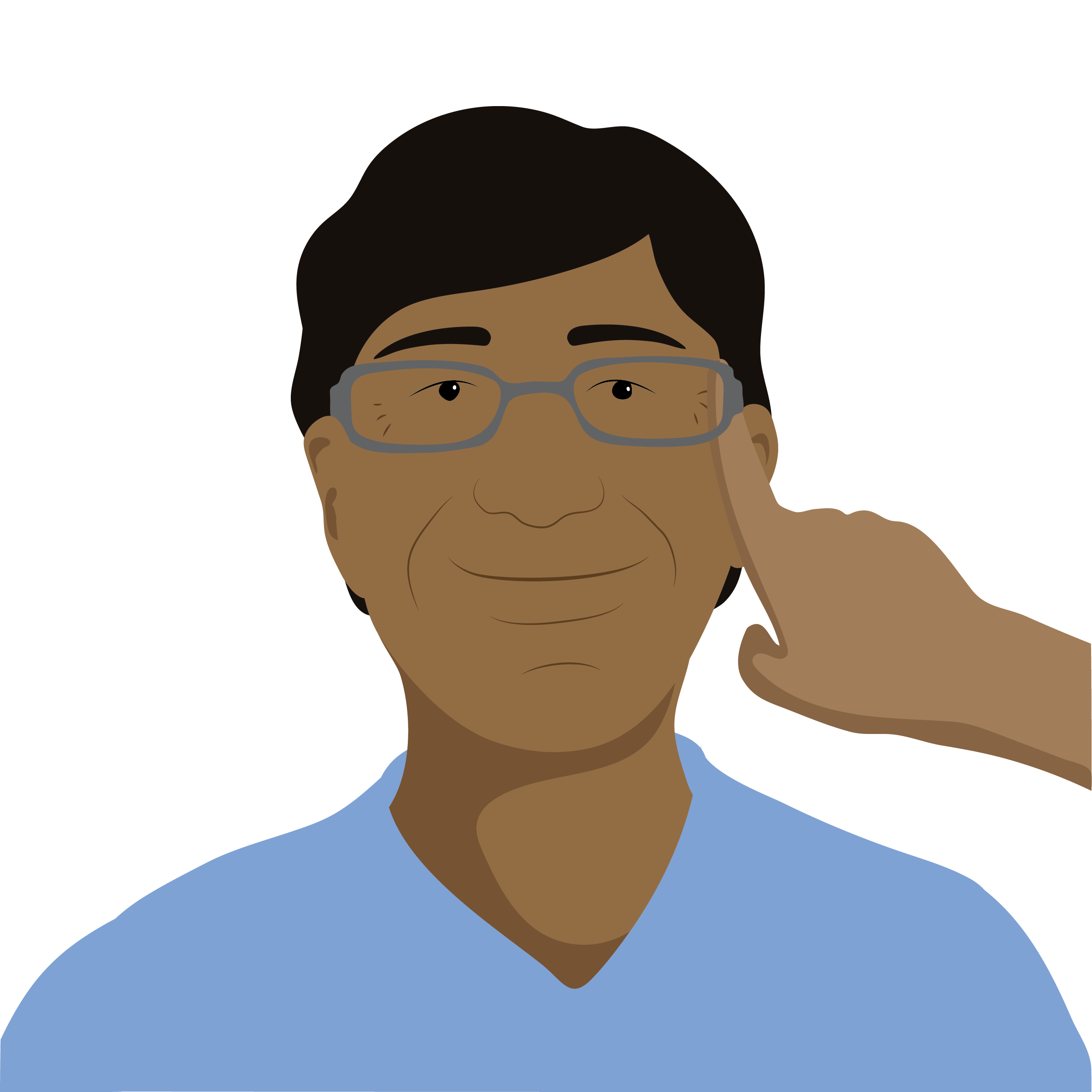
Frame width: No wider than the overall width of the person’s face. If the frame is too wide or narrow, the temples will not sit comfortably on the side of the person’s face.
To check:
- There should be no more than a one finger width gap between the person’s face (just behind their eyes) and the arm of the spectacles.
Bridge and nose pads: Spectacles should fit snugly on the bridge of the person’s nose.
To check:
- Ask the person if the spectacles feel comfortable (not pinching). Ask them to move their head up and down and check the spectacles stay in place.
Level: The frame should sit level on the person’s face.

Activity
In pairs, practice fitting near vision spectacles to your colleague with the near vision spectacles you have available.