Types of vision problems
Question
Think back to the TAP Vision assistive products module. Can you remember the common types of vision problems?
- Eye health problems such as cataracts, lumps, bumps or redness in or around the eye, discharge, drooping eyelids, eyes that turn inwards, pupils of different sizes, or jerky movements of the eyes.
- Distance and/or near vision problems that can be improved such as myopia, hyperopia, astigmatism or presbyopia.
- Vision problems that cannot be fully improved such as low vision or blindness.
Most of the people you assess for magnifiers or telescopes will have low vision.
If the person has an eye health problem or a vision problem that can be improved, they may not need a magnifier or telescope as their vision problem may be treatable.
For people who have a vision problem that cannot be fully improved, there may still be some vision correction possible. This should be explored first. Low vision assistive products should only be provided after the person has had a full assessment by an eye health professional in the last 3 months.
Always check the vision screen results and refer to an eye health professional if indicated.
Instruction
To provide magnifiers and telescopes, there are some more details about vision problems that are useful to understand.
Let’s take a look at the assessment form now.
Eye health professional assessment
Instruction
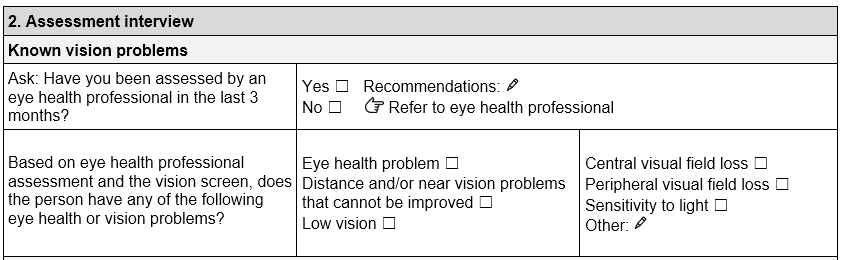
Ask the person: Have you been assessed by an eye health professional in the last 3 months?
This allows you to find out if the person has been assessed by an eye health professional, and if so, what the eye health professional told them about their vision and any recommendations.
Warning
If the person has not seen an eye health professional in the last 3 months you should stop your assessment and refer them now. This is because prescription spectacles or medical care could improve their vision.
Vision problems
Instruction
Based on eye health professional assessment and the vision screen, does the person have any of the following eye health or vision problems?
- Eye health problem
- Distance and/or near vision problem that cannot be improved
- Low vision
- Central visual field loss
- Peripheral visual field loss
- Sensitivity to light
- Other
Tick the relevant boxes.
This information comes from the person’s vision screen, and what the eye health professional has said and recommended.
Tip
Remind yourself about different eye health problems, distance and/or near vision problems that cannot be improved and low vision in the TAP Vision assistive products module and TAP Primary eye care course.
Instruction
Read on to learn about some other important things to find out about from the eye health professional’s assessment.
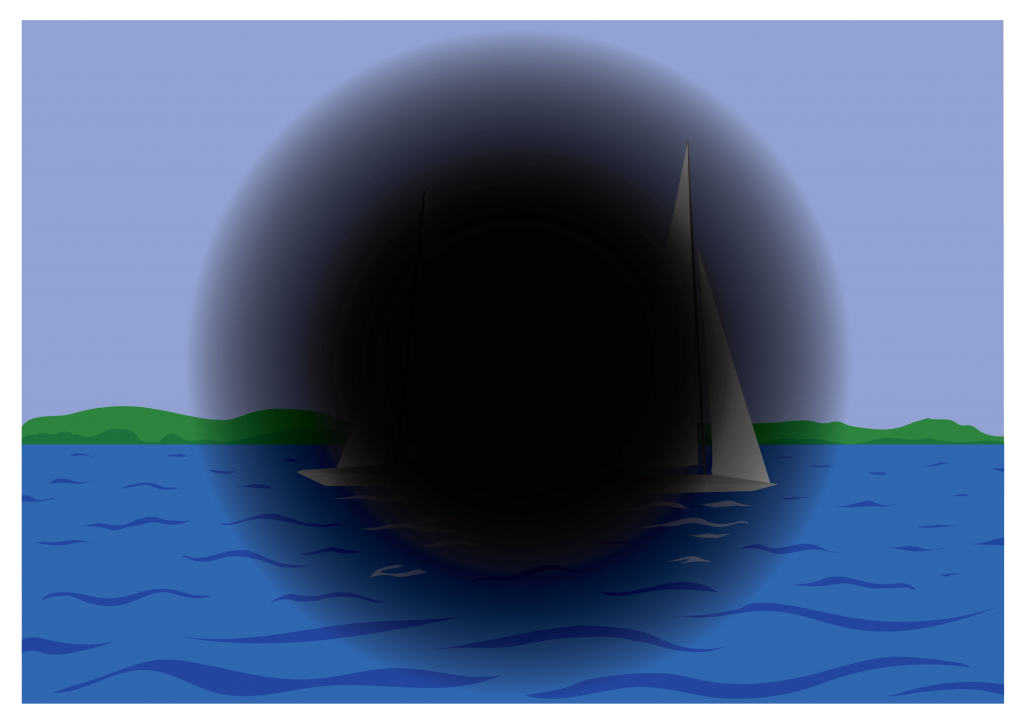
Central visual field loss
- The central visual field is the area of vision directly in front of a person.
- A person with a limited central visual field cannot see people or objects in front of them.
- Telescopes are not suitable for people with a central visual field problem.
Peripheral visual field loss
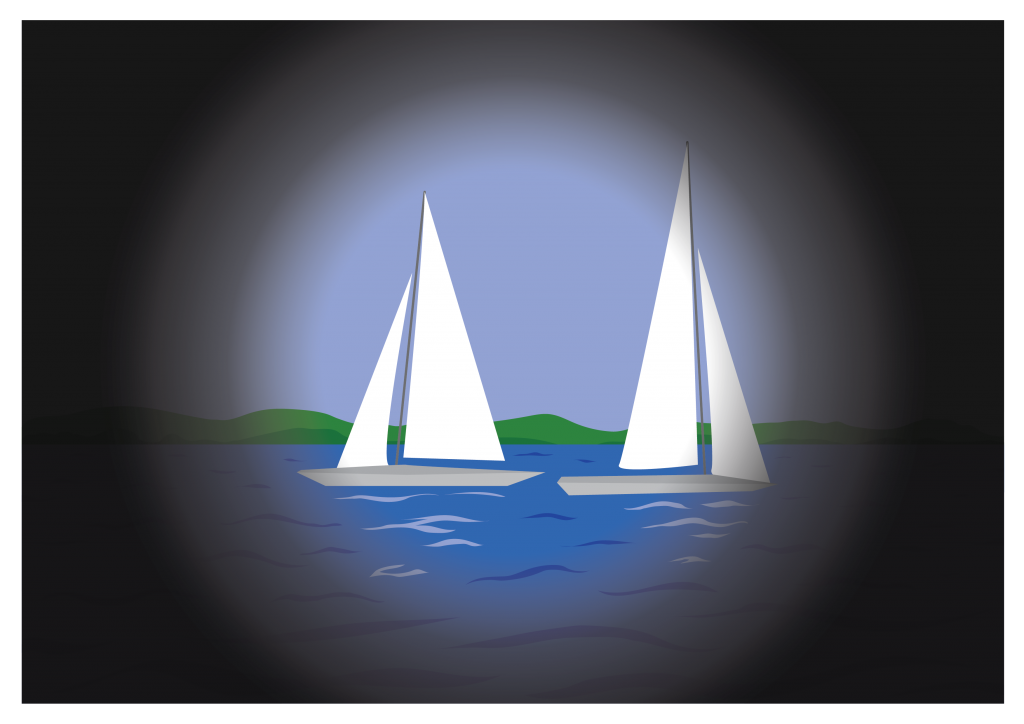
- The peripheral visual field includes the things we see on the edges of our vision.
- A person with a limited peripheral visual field only sees things directly in front of them.
- Telescopes are not suitable for people with a peripheral visual field problem.
Sensitivity to light
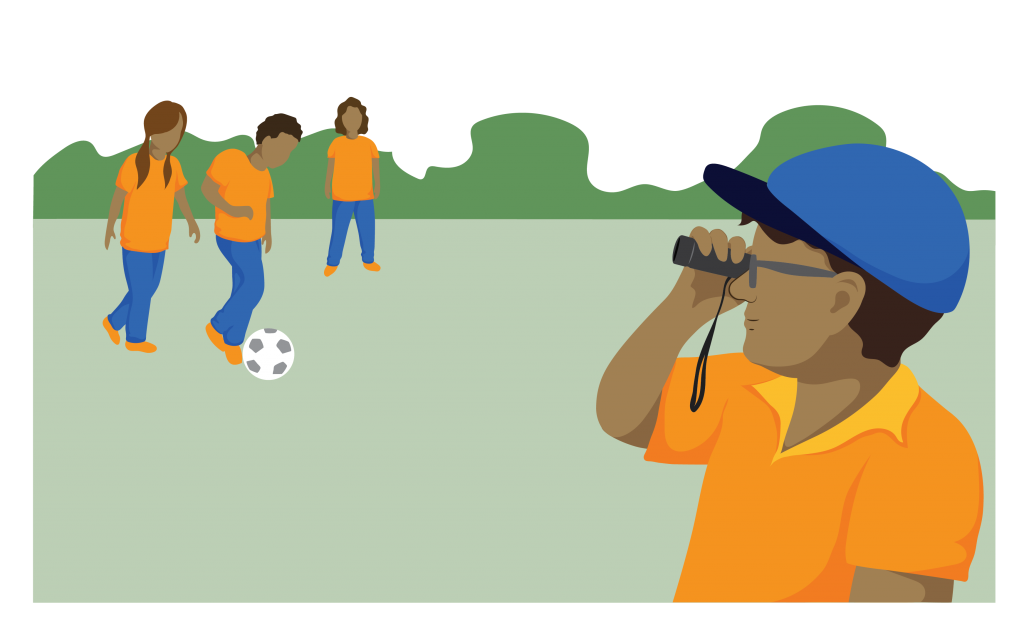
Some people are very sensitive to bright light.
If a person has difficulty seeing in bright light, you can advise them to wear a peaked cap/hat to shade their eyes.
Instruction
If the person still has problems seeing in sunlight or broad daylight refer them back to an eye health professional. They may require a product with a tinted lens.
Instruction
After understanding what vision problem a person has, it is important to:
- Refer to other services if necessary
- Look at how their activity and ability are affected, to see if they might benefit from a magnifier or telescope.
Read on to learn more.