A wheelchair will last longer and will be safer if it is well looked after.
Taking care of a wheelchair in an emergency includes:
- Washing the cushion and/or cushion cover
- Pumping up tyres (unless they are solid)
- Tightening any nuts and bolts that are loose.
It is important to provide a wheelchair with a simple toolkit for adjustments, and pump for keeping the tyres firm.
Let the person know who they can contact if they need spare parts or have any problems with their product.
Cushion and cover
- Wipe clean the cushion with soapy water and rinse. Always dry completely before using.
- Remove cover and wash and dry separately.
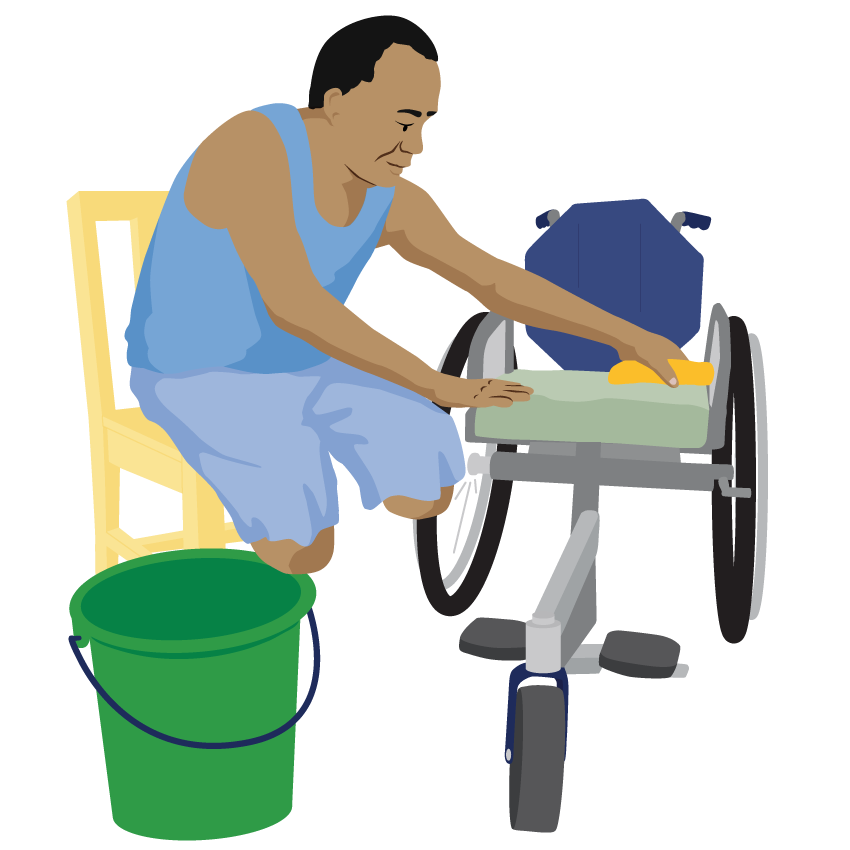
Wipe the cushion clean
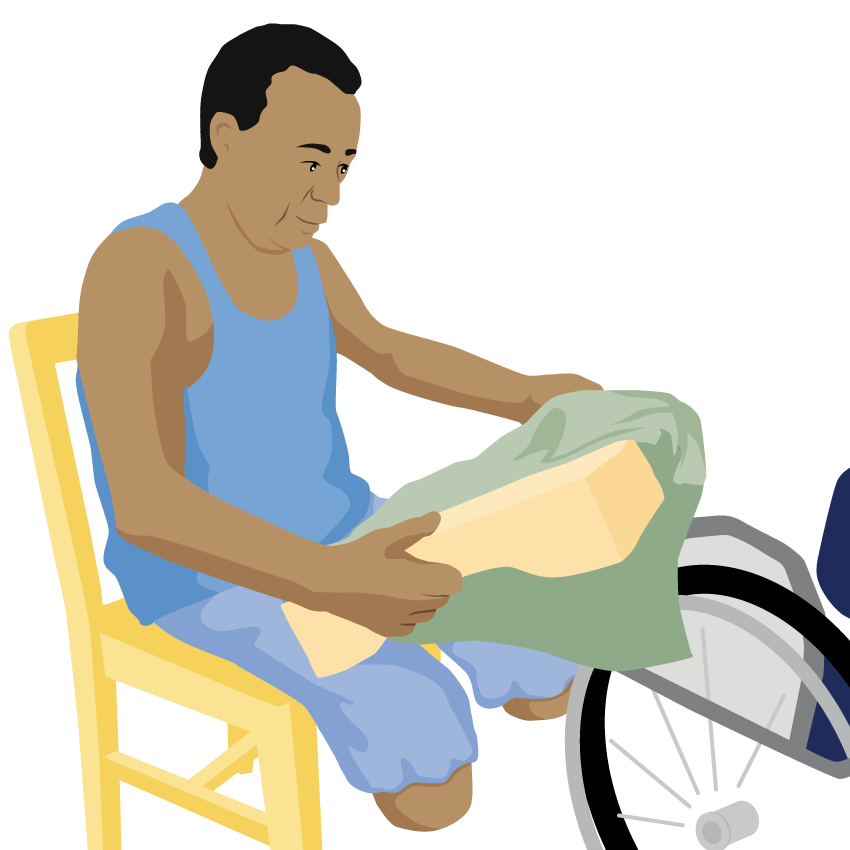
Remove cushion from cover and wash separately
Tyres
- Keeping tyres firmly pumped up makes it easier to push the wheelchair.
- Press the tyres. They should only press a few millimetres.
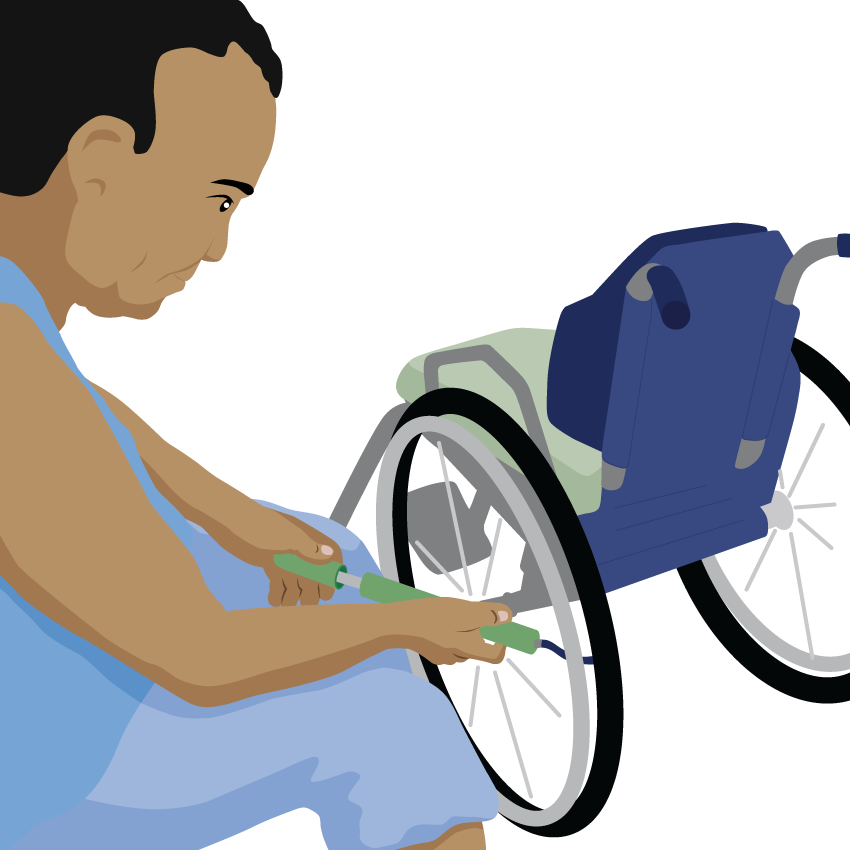
Pump up the tyres
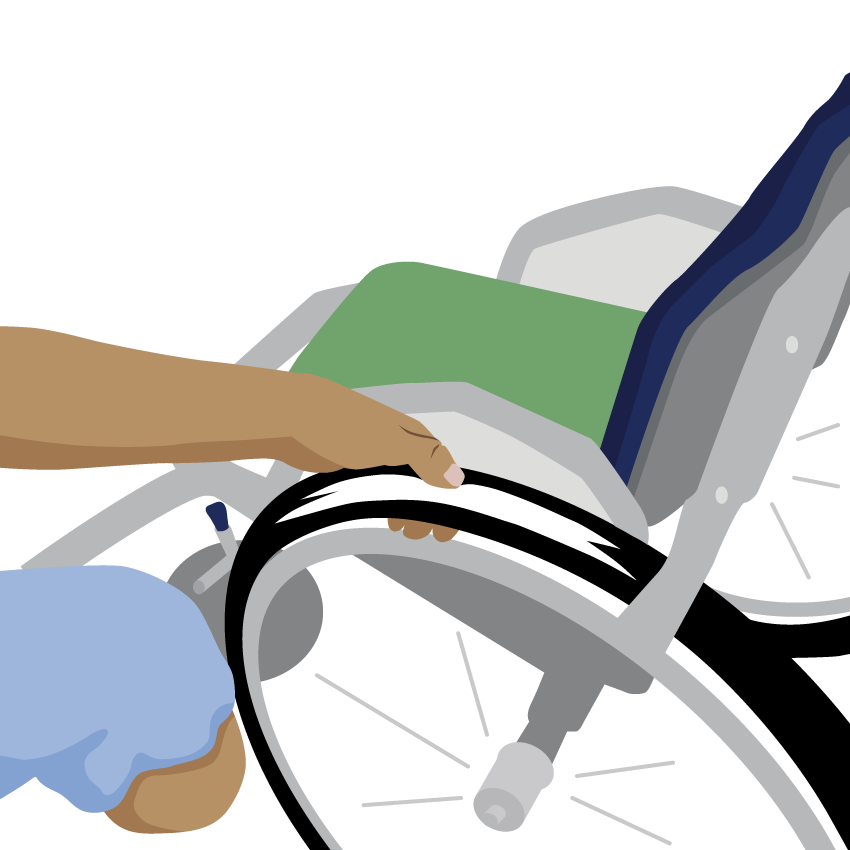
Check the tyres
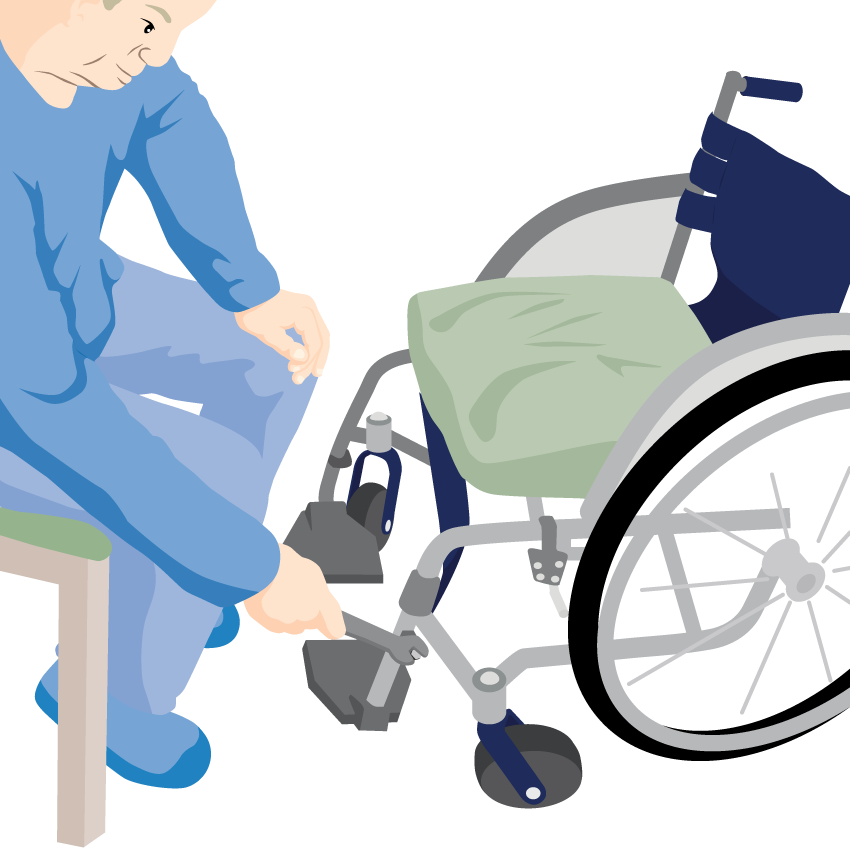
Tighten nuts and bolts
Take care not to over tighten.
Activity
Find any nuts and bolts on the wheelchair:
- Check if they are tight
- Do not over tighten.
What happens if you over tighten nuts and bolts?
Select all that apply.
If you selected a, b and c, you are correct!
Over tightening nuts and bolts can change how easily the wheelchair moves by stopping parts spinning freely.
d is incorrect.
Tightening nuts and bolts will keep them on. Over tightening will stop moving parts spinning freely. Avoid over tightening.