Instruction
In this topic you will learn more about the magnifiers and telescopes covered in TAP.
Types of magnifiers and telescopes
There are many different types of magnifiers and telescopes. The best type for each person depends on the person’s vision and the activities they want to do.
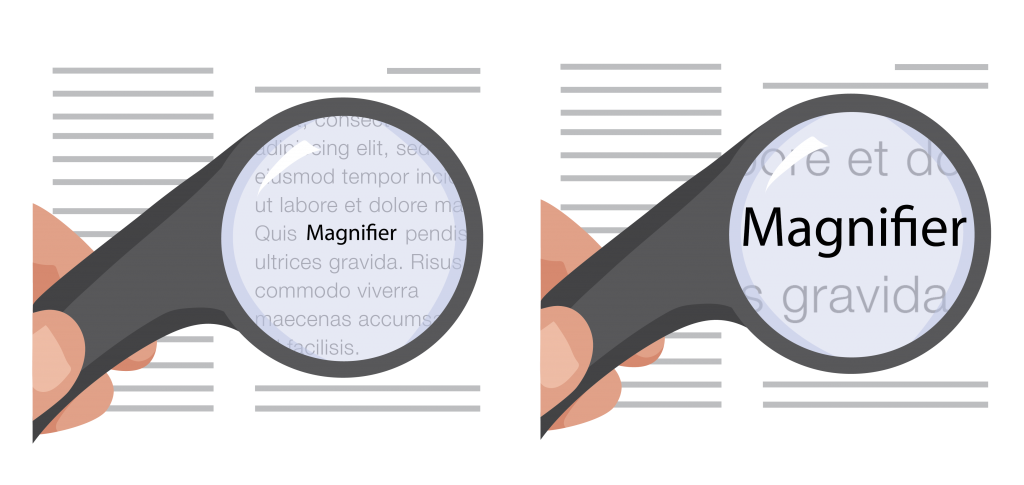
Magnifiers and telescopes can have different magnification power. This means that some are stronger than others.
The magnifiers and telescopes included in TAP have a range of magnification power of 2x to 6x.
- A magnification power of 2x means the object appears two times larger than it is.
- A magnification power of 6x means the object appears six times larger than it is.
Magnifiers with a high power have thicker, heavier and smaller diameter lenses than magnifiers with low power.
This means that high power magnifiers have a smaller field of view (less can be seen at once) than low power magnifiers.


Warning
The magnifiers and telescopes included in TAP will not be strong enough for some people. If a person needs a stronger magnifier or telescope, they should be referred to an eye health professional.
Instruction
Let’s look at each type of magnifier and telescope included in TAP.
Handheld magnifier
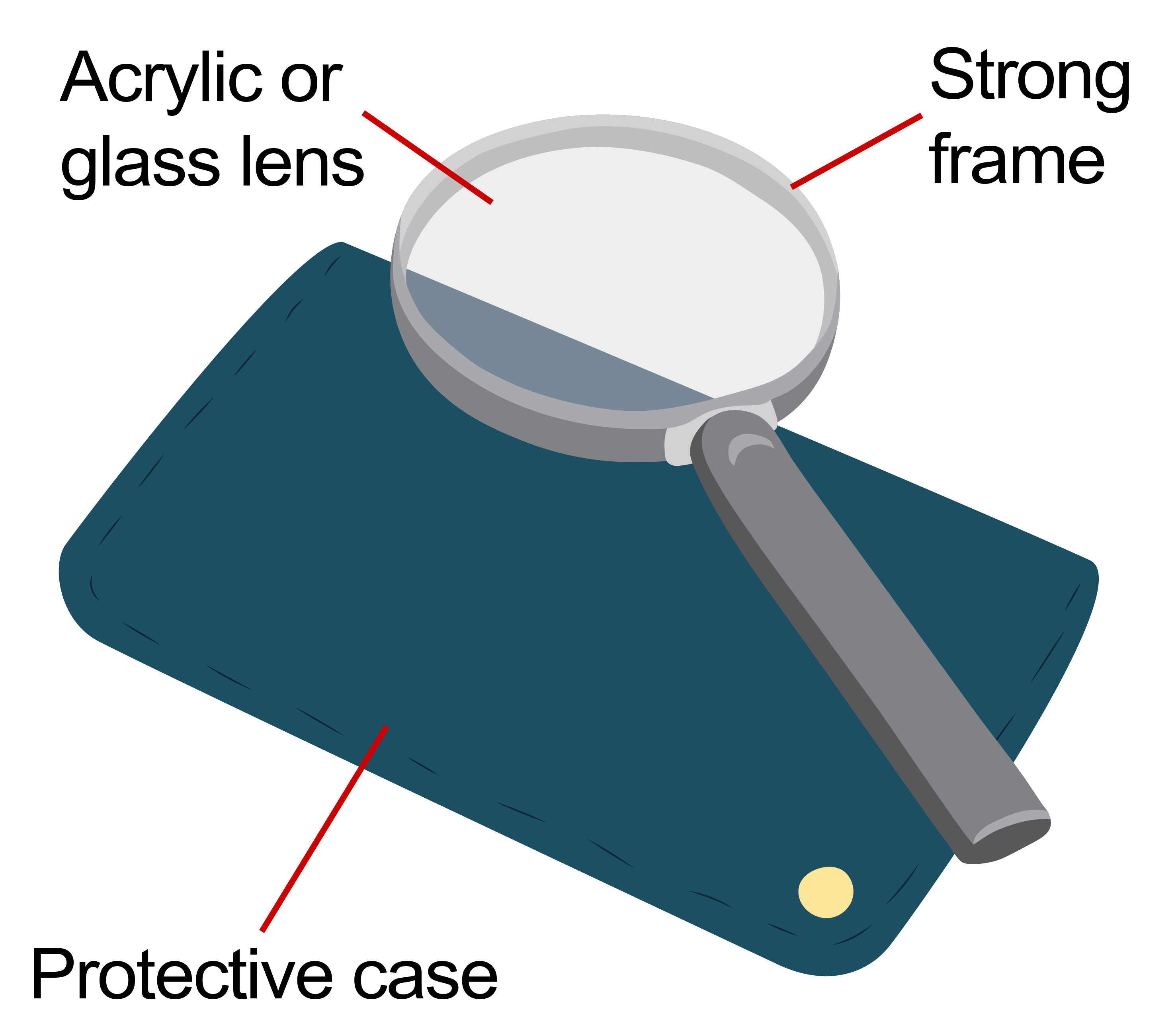
People that have difficulty seeing objects, text or pictures within arms-reach can use handheld magnifiers.
Handheld magnifiers usually:
- Are lightweight and small enough to easily fit in a pocket or bag
- Have a plastic (acrylic) or glass lens
- Come in a magnification range of 2x to 4x.
Some handheld magnifiers have an internal LED light.
Advantages of handheld magnifiers are that they:
- Can be held in one hand and are easy to carry.
- Can be used in any position or angle.
- Allow light onto print or an object.
Disadvantages of handheld magnifiers are that they:
- Need to be kept at the correct distance from print or objects and held steady, which can be difficult for some people.
- Need one hand to hold, so it is difficult to do tasks that use both hands.
Stand magnifier
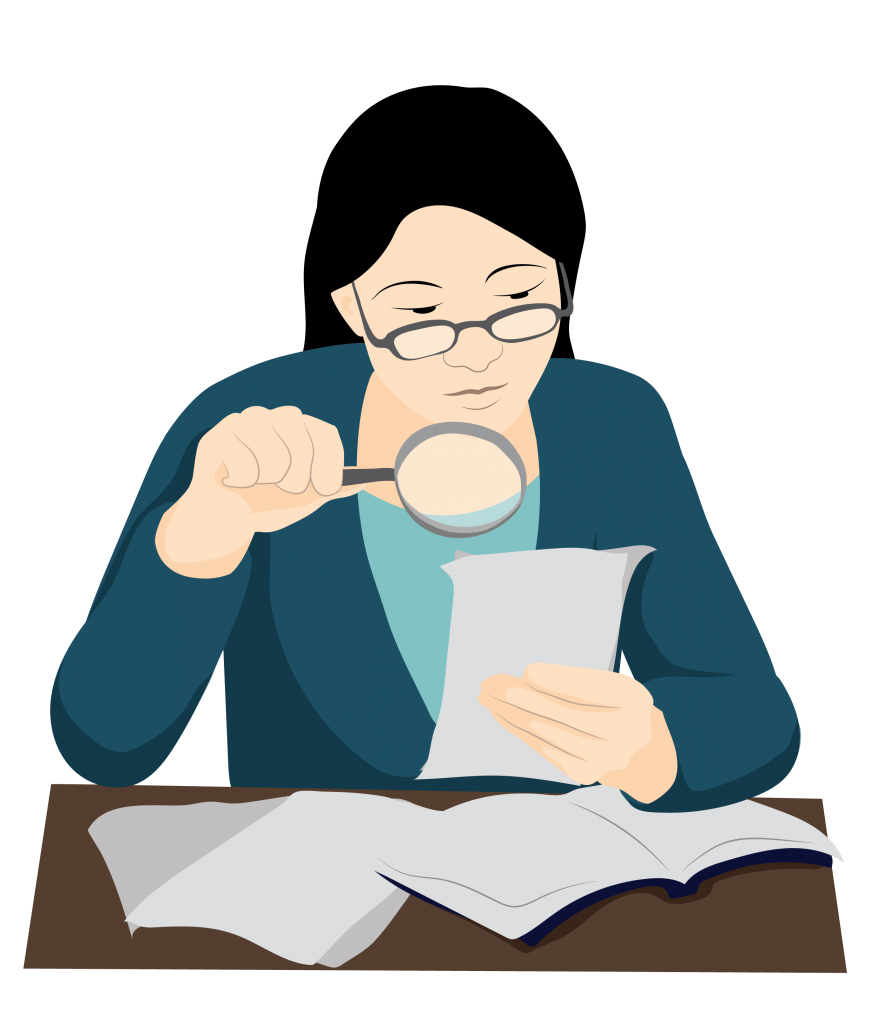
People that have difficulty seeing objects, text or pictures close up, and who need to use their hands for a task such as writing or sewing may benefit from a stand magnifier.
A stand magnifier may also be a good choice for someone who cannot hold a handheld magnifier.
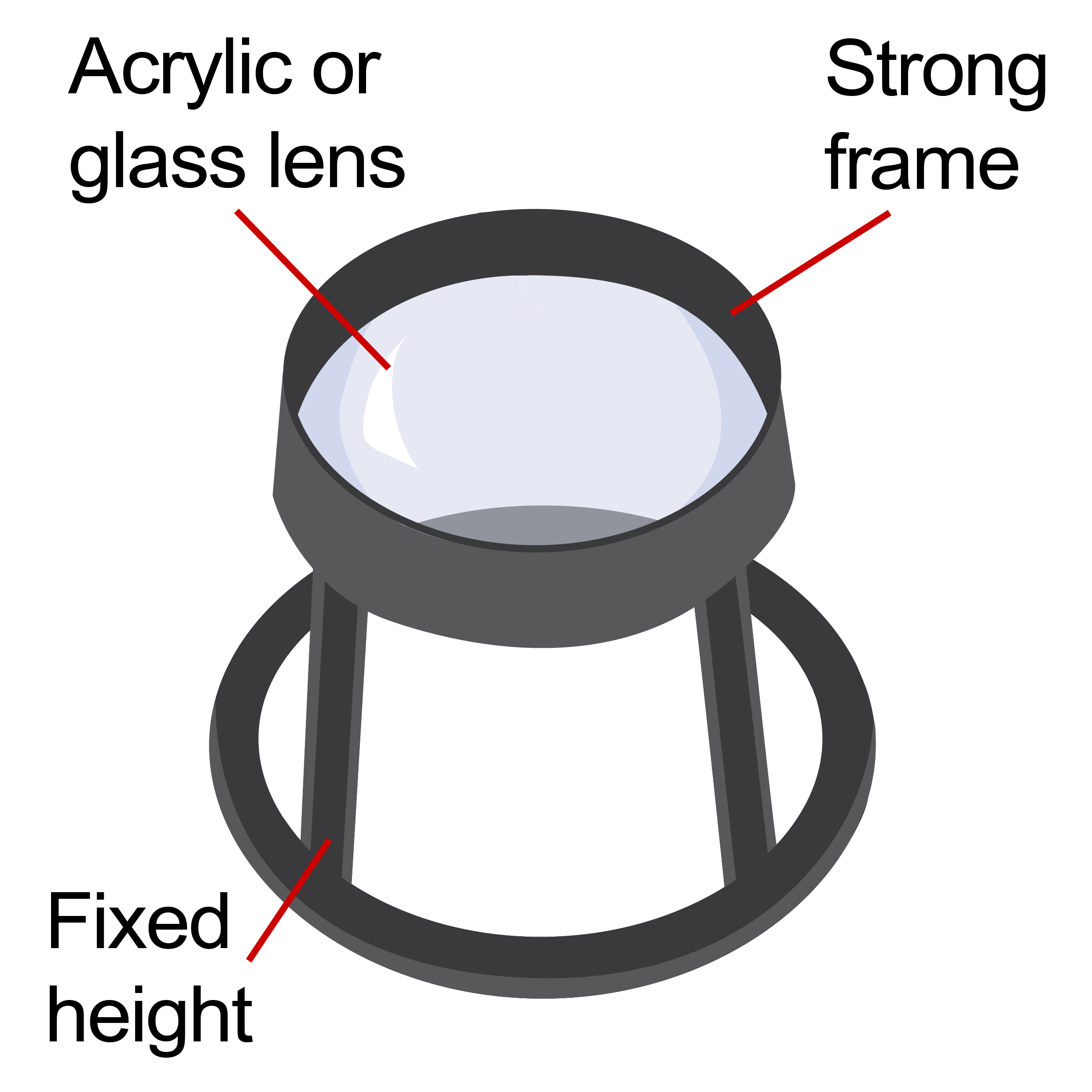
Stand magnifiers have ‘legs’ that stand over a page or object at a fixed distance.
Depending on the type of stand magnifier, the magnification range can be between 2x to 5x.
Stand magnifiers may be portable or fixed.
Some have internal LED lights.
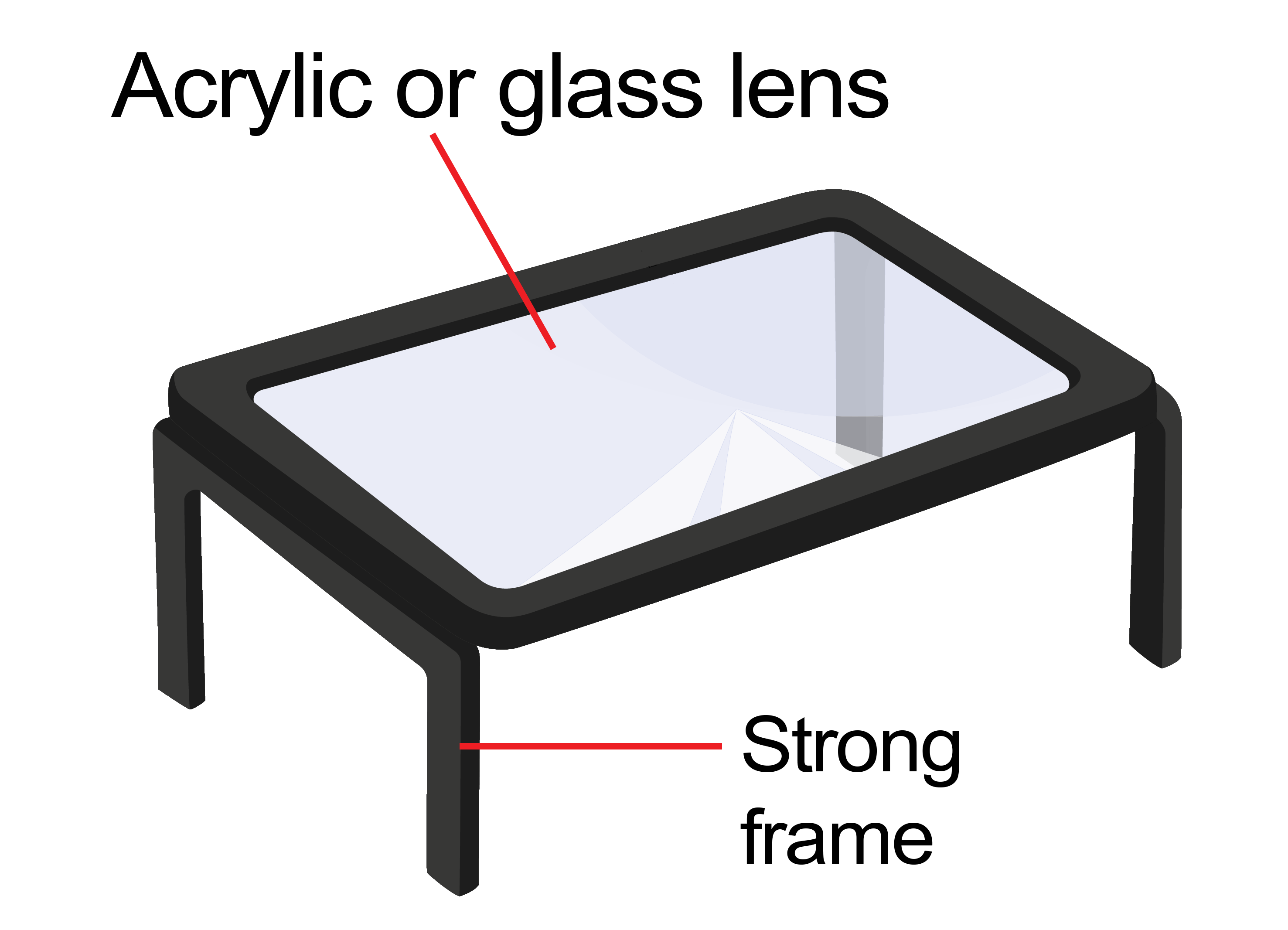
Advantages of stand magnifiers are that:
- The distance from the page or object is fixed
- A person can use both hands to carry out tasks
- Many stand magnifiers provide a larger field of view than handheld magnifiers.
The disadvantages of stand magnifiers are that:
- They are usually larger and not as easy to carry around as handheld magnifiers
- The magnification range is limited, so they may not suit someone with very low vision.
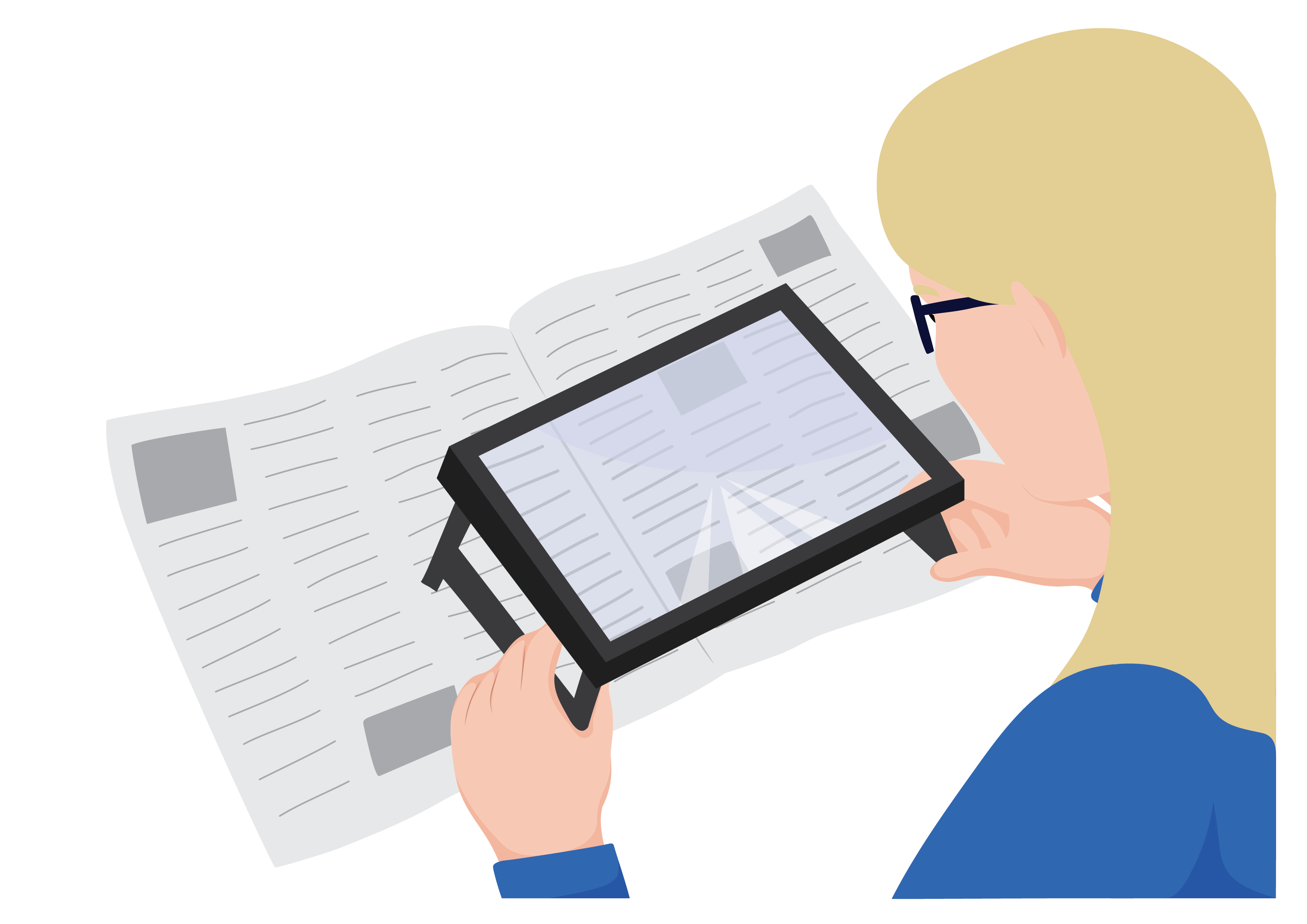
Sheet magnifiers on adjustable stands
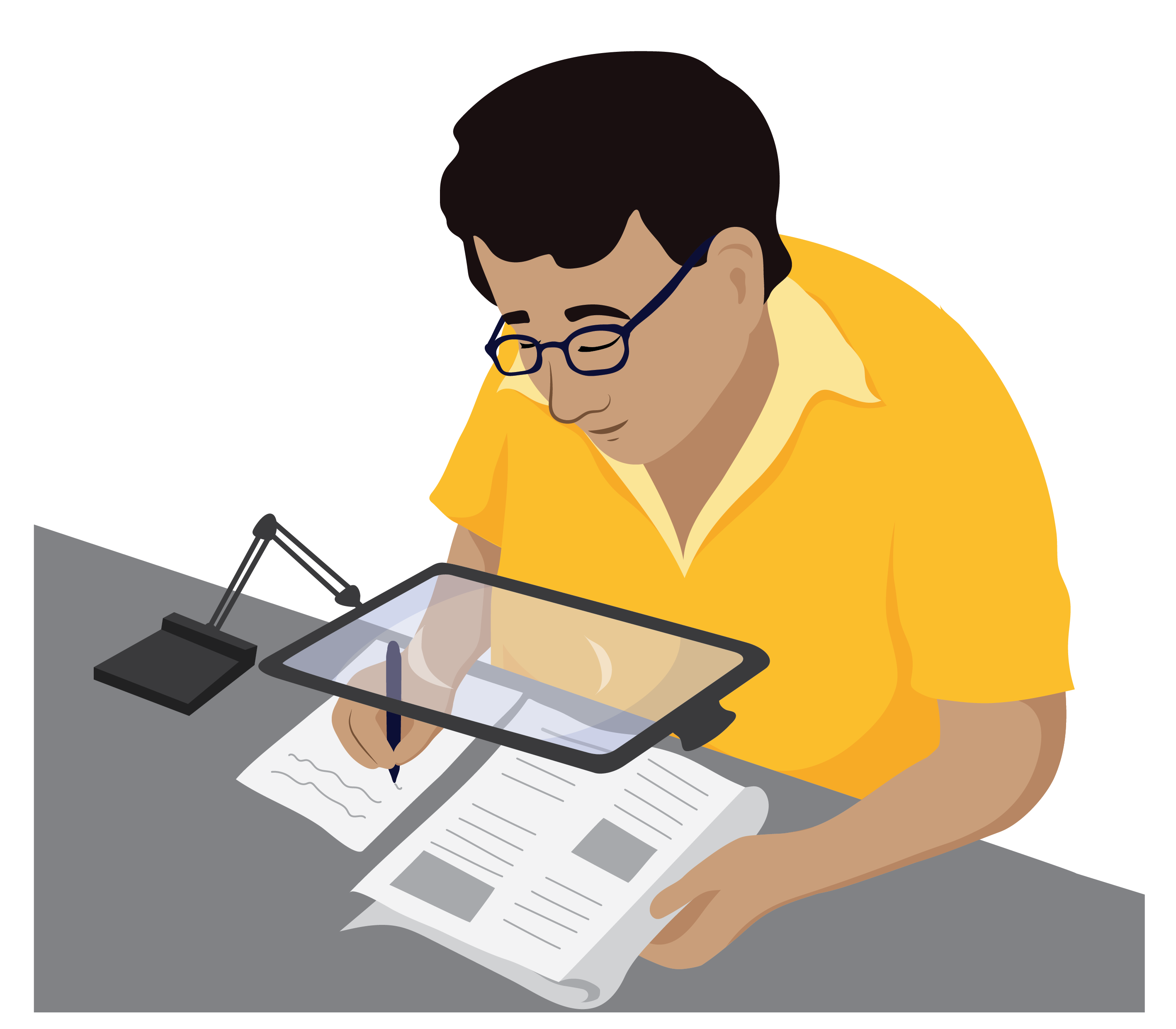
People that have difficulty seeing objects, text or pictures close up, and who need to use their hands for a task may also benefit from a sheet magnifier mounted on an adjustable stand.
These magnifiers are different to stand magnifiers as they are not set at a fixed height, but they can be adjusted up or down. This means the person must focus them at the correct distance from the object to see the object clearly.
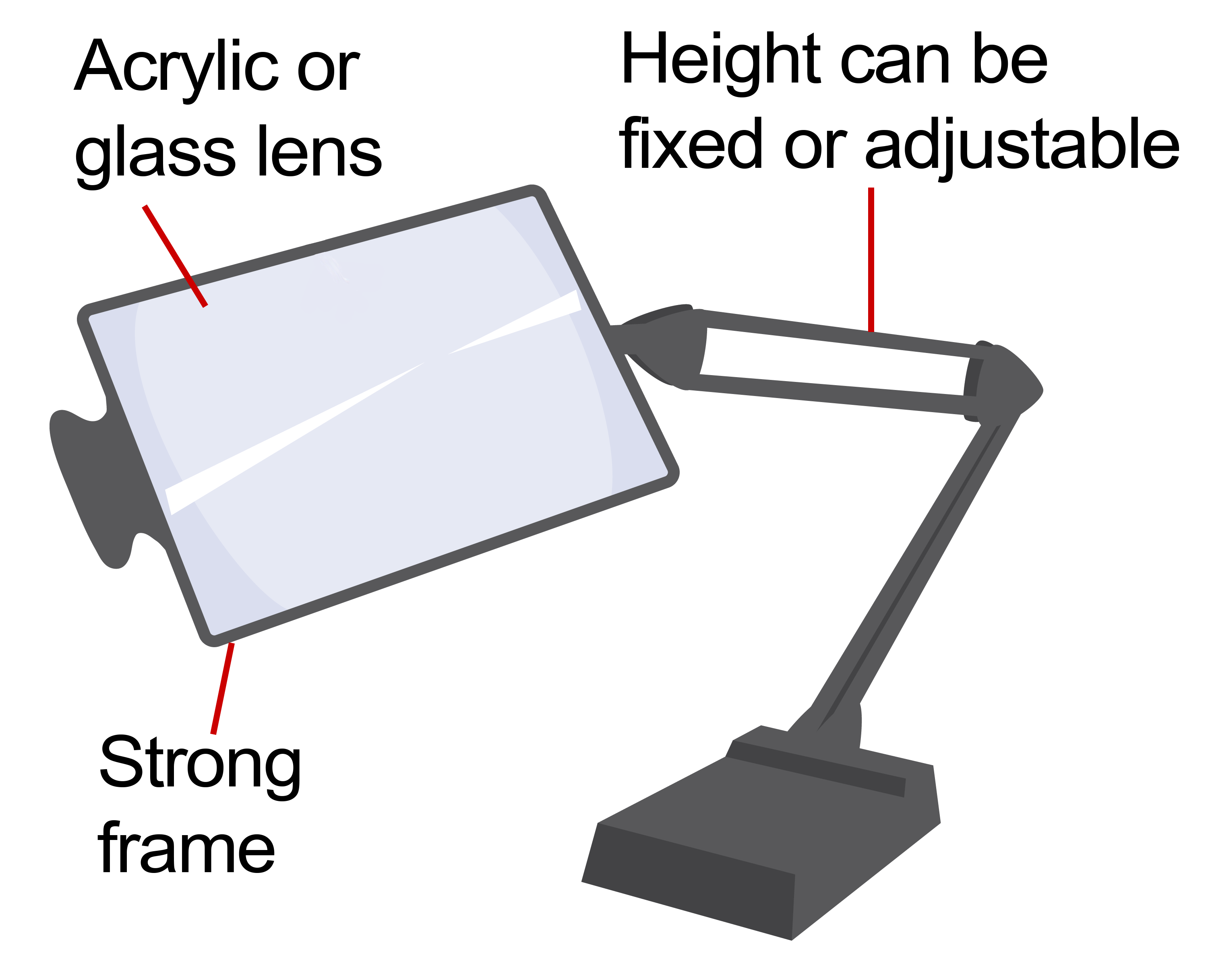
Advantages of sheet magnifiers on adjustable stands are that:
- The height of the magnifier is adjustable
- A person can use both hands to carry out tasks
- They provide a larger field of view than handheld magnifiers.
The disadvantages are that:
- Like stand magnifiers, they are usually larger and not as easy to carry around as handheld magnifiers
- The magnification range is limited, so they may not suit someone with very low vision.
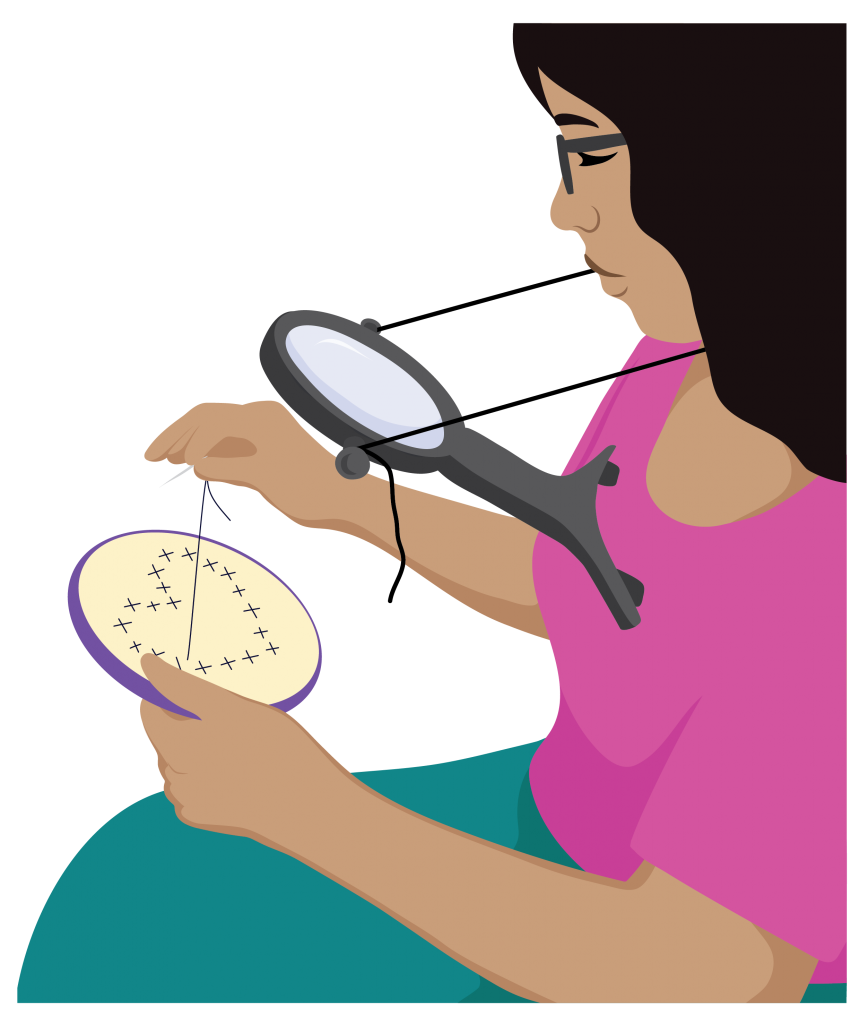
Around the neck magnifiers
Around the neck magnifiers are another option for people that have difficulty seeing objects, text or pictures close up, and who need to use their hands for a task.
The magnifier hangs around the person’s neck on an adjustable cord. It is stabilised against the person’s chest. The person places the object they are viewing at the correct distance for it to be seen clearly.
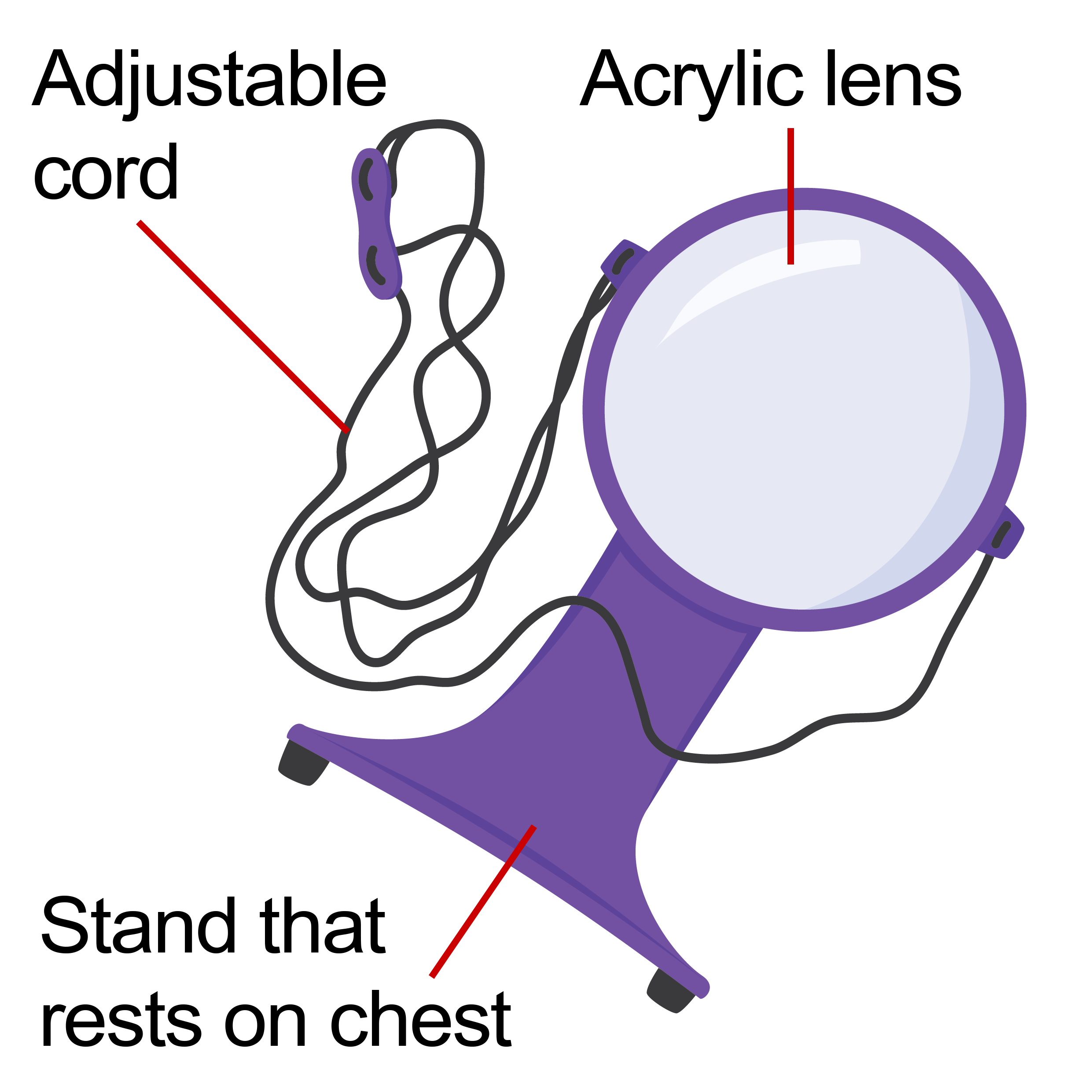
Advantages of around the neck magnifiers are that:
- A person can use both hands to carry out tasks
- The person does not have to be sitting at a table
- They are portable.
The disadvantages are that:
- The magnification range is limited, so they may not suit someone with very low vision.
Dome magnifier
People that have difficulty seeing text or pictures within arms-reach can use dome magnifiers.
Dome magnifiers usually:
- Are lightweight.
- Have a plastic (acrylic) or glass lens.
- Come in a magnification range of 2x to 5x.
- Are small enough to fit into a pocket or bag.
Some dome magnifiers include internal LED lights.
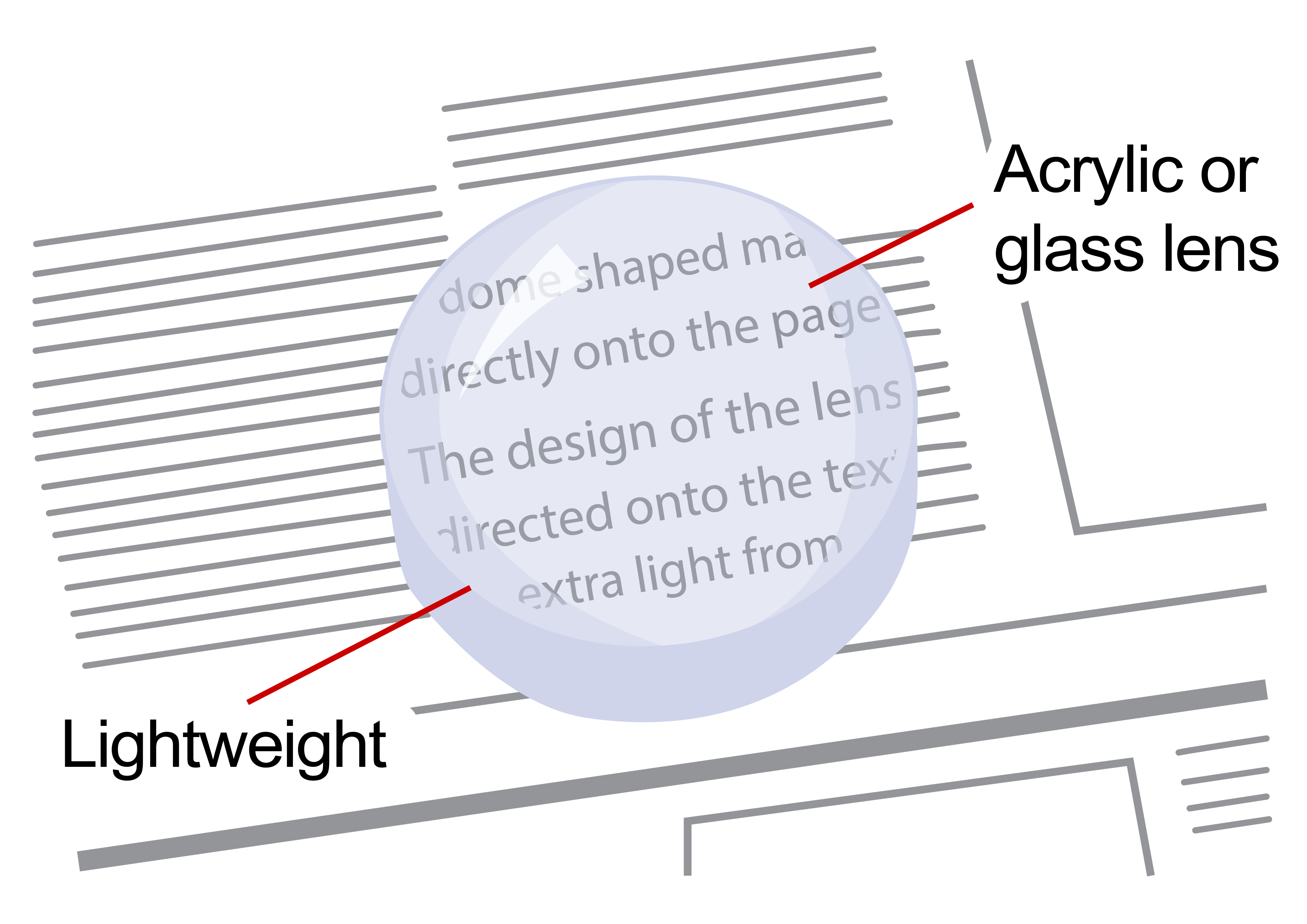
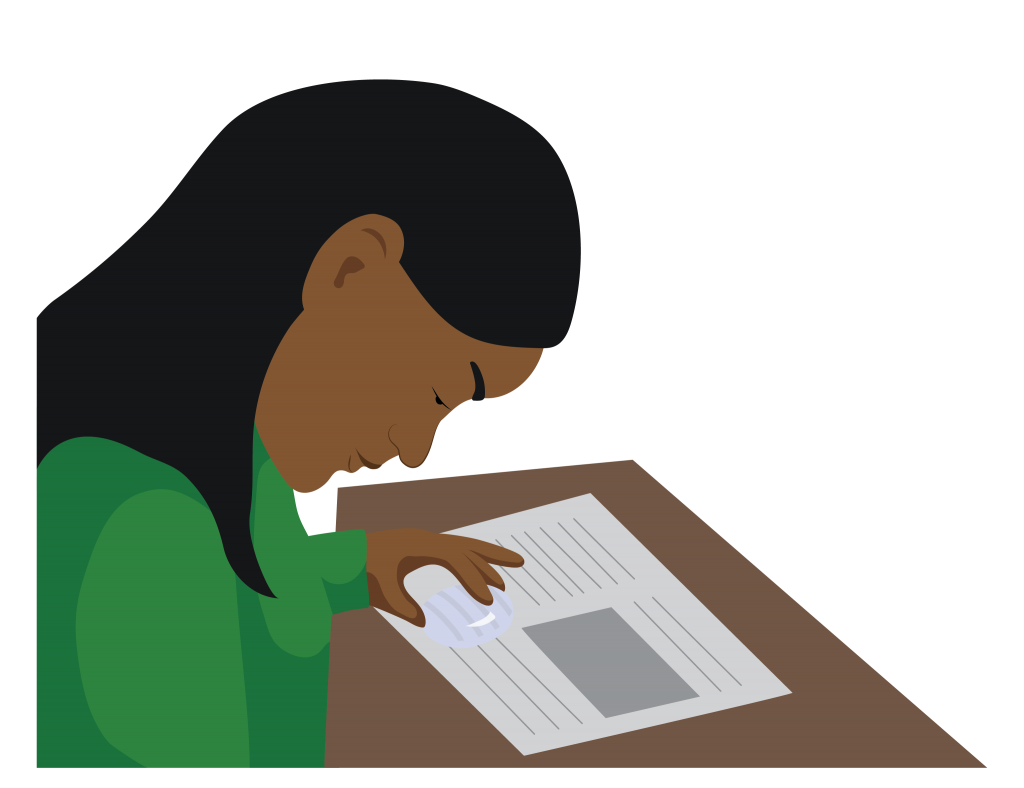
Advantages of dome magnifiers are that they:
- Sit flat on a page or object.
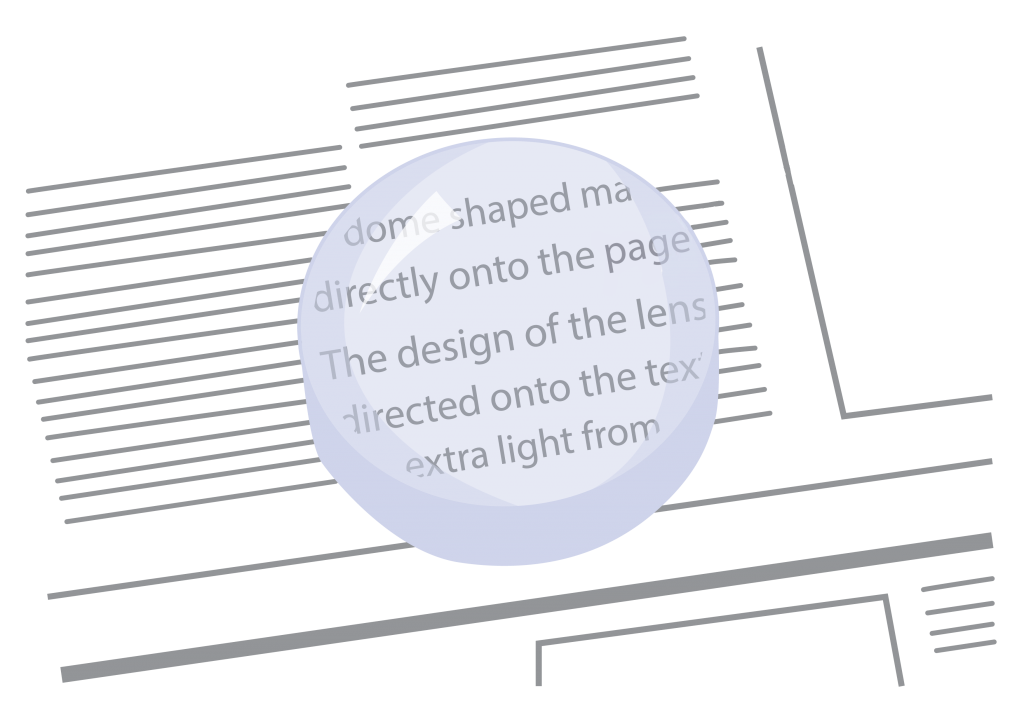
- Help to direct natural light onto a page.
- Can be used without good hand strength.
Disadvantages of dome magnifiers are that they are not useful for activities such as writing.
Handheld telescopes
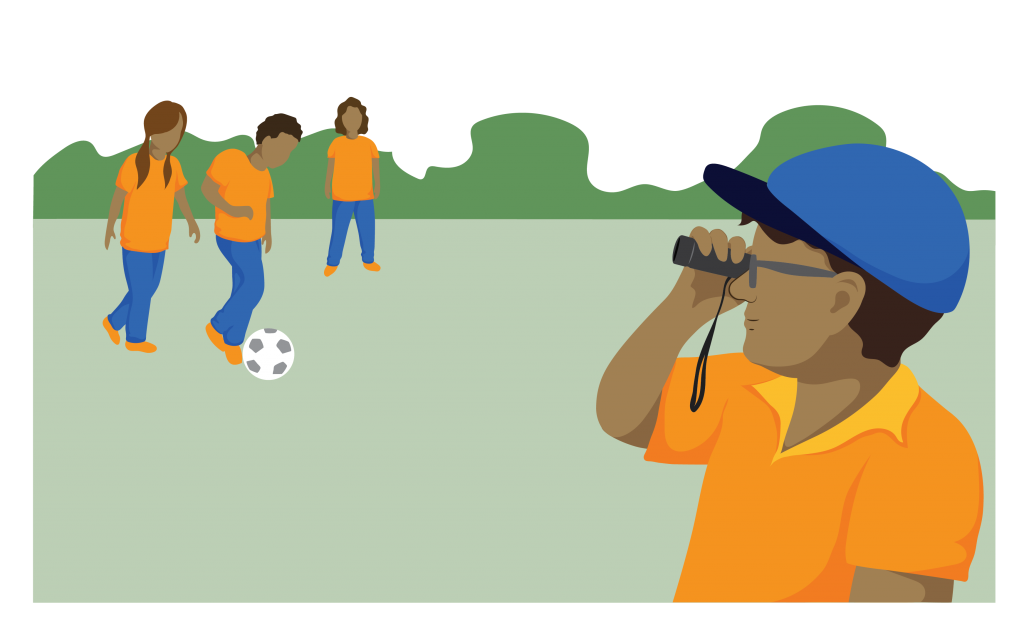
People that have difficulty seeing objects at a distance may benefit from a handheld telescope. They can be used to read from a blackboard, see objects such as street signs, or people across a room.
Handheld telescopes:
- Are lightweight and small enough to fit into a pocket or bag.
- Have a plastic (acrylic) lens.
- Come in a magnification range of 2x to 6x.
- Usually have a neck or wrist strap for ease of use.
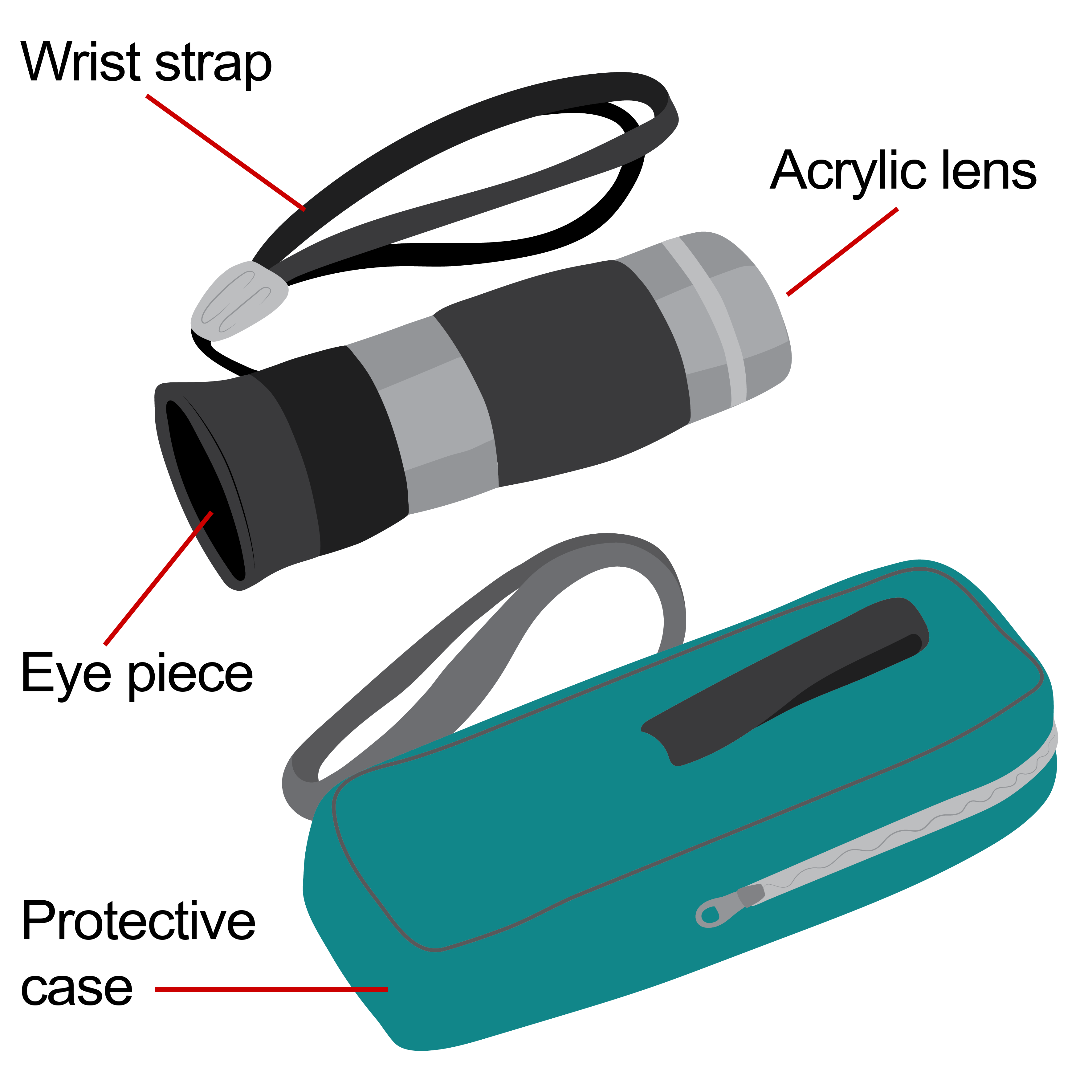
Advantages of handheld telescopes are that they:
- Make distant objects appear closer
- Can be used indoors and outdoors
Disadvantages of handheld telescopes are that they:
- Require good contrast (ability to differentiate between objects)
- Require extensive training
- Can be expensive
- Are not likely to be useful for people whose vision problem includes central visual field loss (cannot see directly in front of them).
Digital handheld magnifier
Digital handheld magnifiers are used in the same way as standard handheld magnifiers, but have greater magnification power.
Digital handheld magnifiers usually:
- Have adjustable magnification.
- Have auto focus.
- Are battery powered.
Some come with a stand for stability and some can be connected to a computer or television screen.
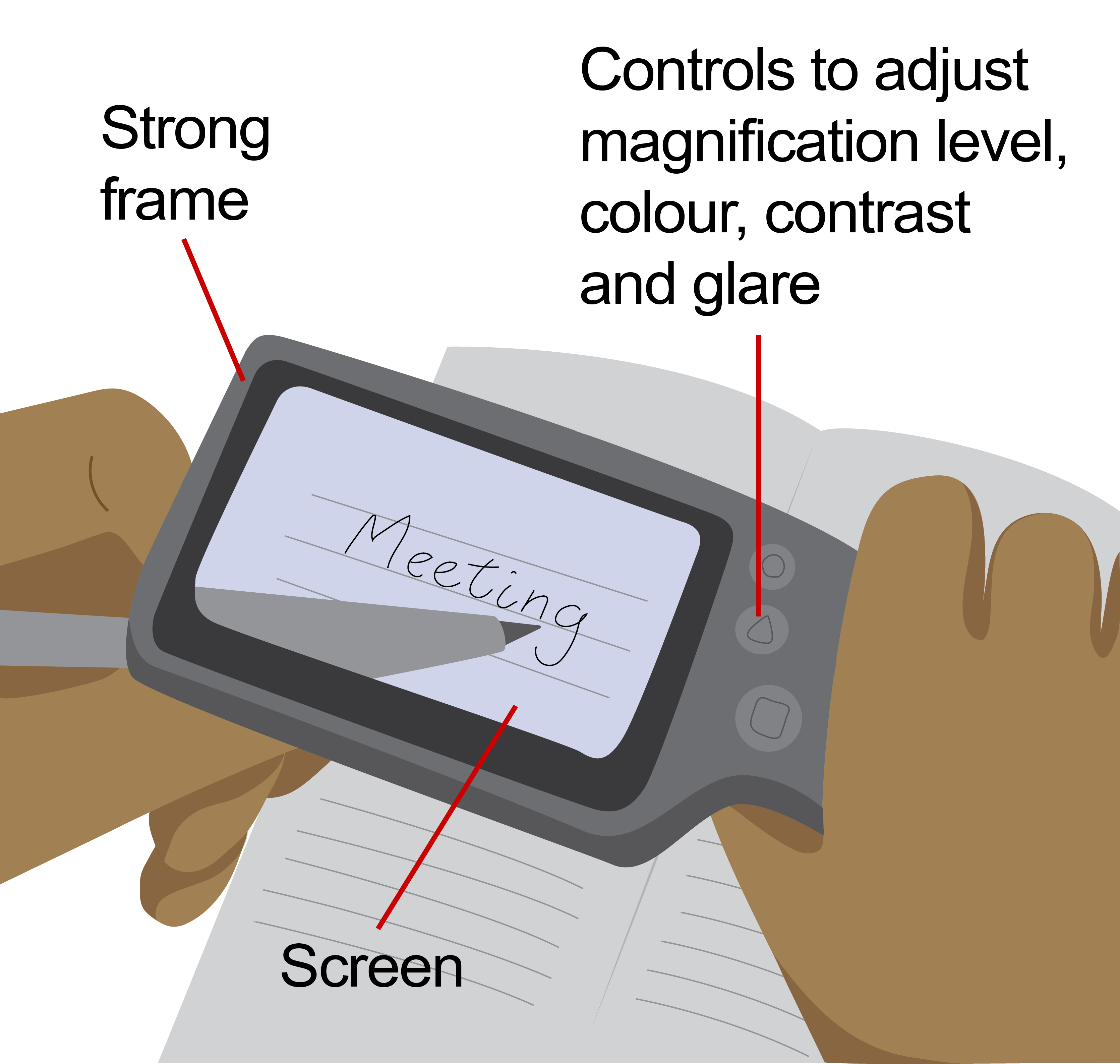
Advantages of digital magnifiers are that they have:
- Greater magnification power
- Adjustable magnification power
- Adjustments for colour, contrast and image brightness.
Disadvantages of digital magnifiers are that they:
- Are more expensive than non-digital magnifiers
- Need batteries, as well as technical support and software updates.
Instruction
The provision of digital handheld magnifiers is not included in TAP.
Mobile (smartphone or tablet) applications for magnifying
There is a range of magnifying applications that can be used on mobile devices, such as smartphones. These can be used to see objects that are close.
Features of mobile applications for magnifying include:
- Adjustable level of magnification
- Auto focus
- Some can also adjust colour.
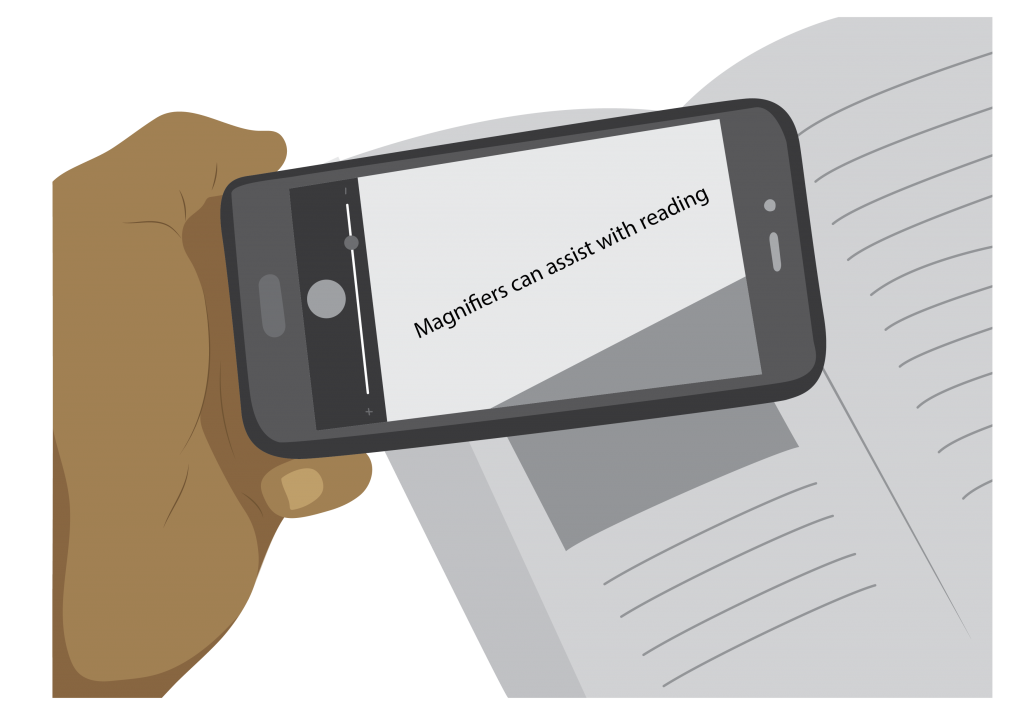
Advantages of mobile applications are that they:
- Can provide an adjustable level of magnification
- Are convenient and portable
- Can photograph magnified images.
Disadvantages of mobile applications are that they:
- Require a mobile device which can be expensive.
- Must have power to charge device.
Instruction
The provision of mobile applications for magnifying is not included in TAP.
Meet Joanna
Joanna has low vision and uses prescription spectacles, however she needs extra assistance to see things up close. Joanna also has arthritis in both hands, which makes it difficult to hold objects. She would like to be able to read the newspaper.
Question
What types of magnifier might be helpful for Joanna?
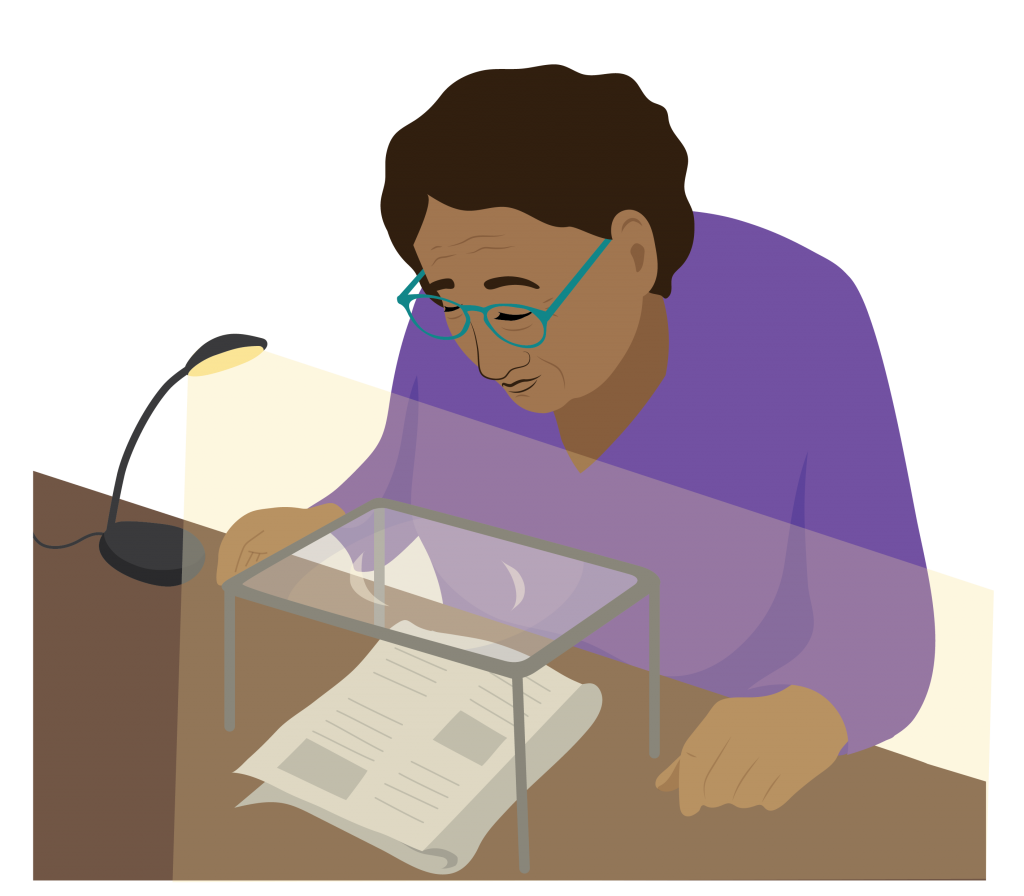
- Joanna may benefit from a stand magnifier as it will help her to see objects up close (reading), and she will not have to use her hands.
- Another option for Joanna is a sheet magnifier on an adjustable stand.
- Joanna could also use a dome magnifier. It will help her to read, and she could push it along the page without having to pick it up.
- Joanna has arthritis in her hands. A handheld magnifier is not likely to be suitable.

Meet Manuel
Manuel has low vision and uses prescription spectacles. He does not have difficulty holding objects. He catches the bus to work each day, but finds it hard to see the number of the bus he uses. On his way home from work Manuel likes to do his grocery shopping. This can be difficult as he finds it hard to read the labels on products.
Question
Could Manuel benefit from a magnifier and/or telescope? If so, which type(s)?
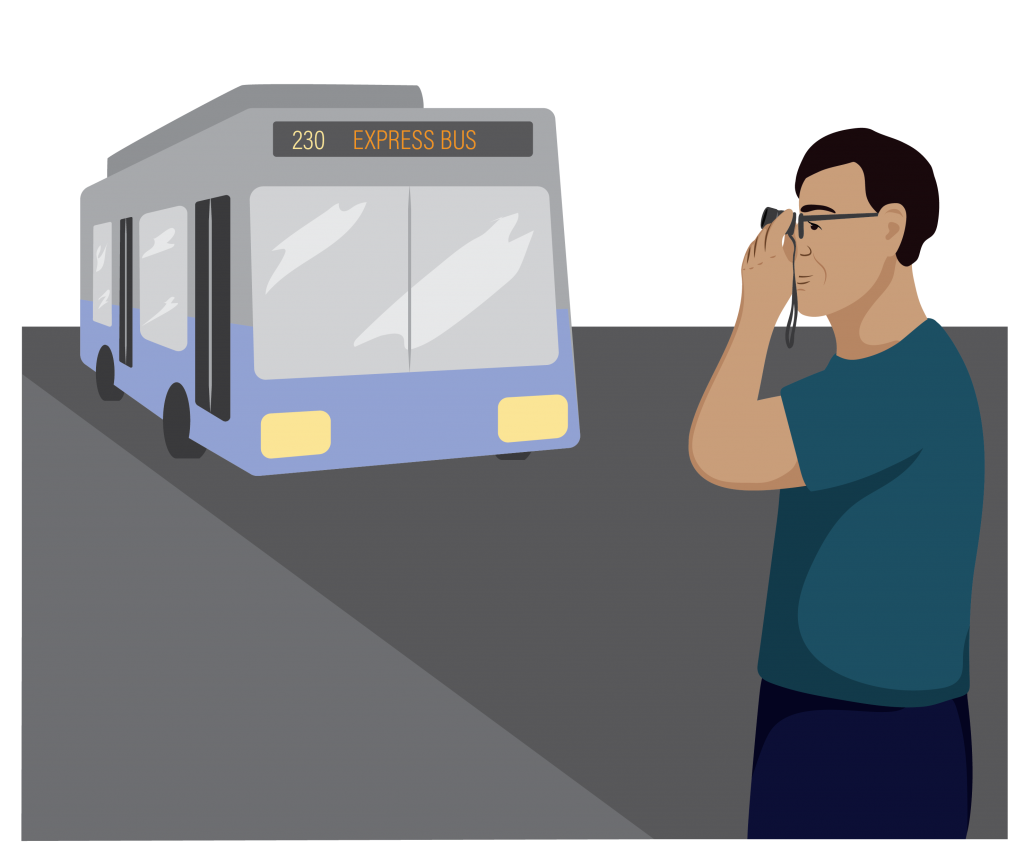

- Manuel may benefit from a handheld telescope to help him see the bus number from a distance.
- He could also use a handheld magnifier to help him read the labels on products at the supermarket.