Use the information gathered from the referral form, assessment and mobility check to make a plan with the person.
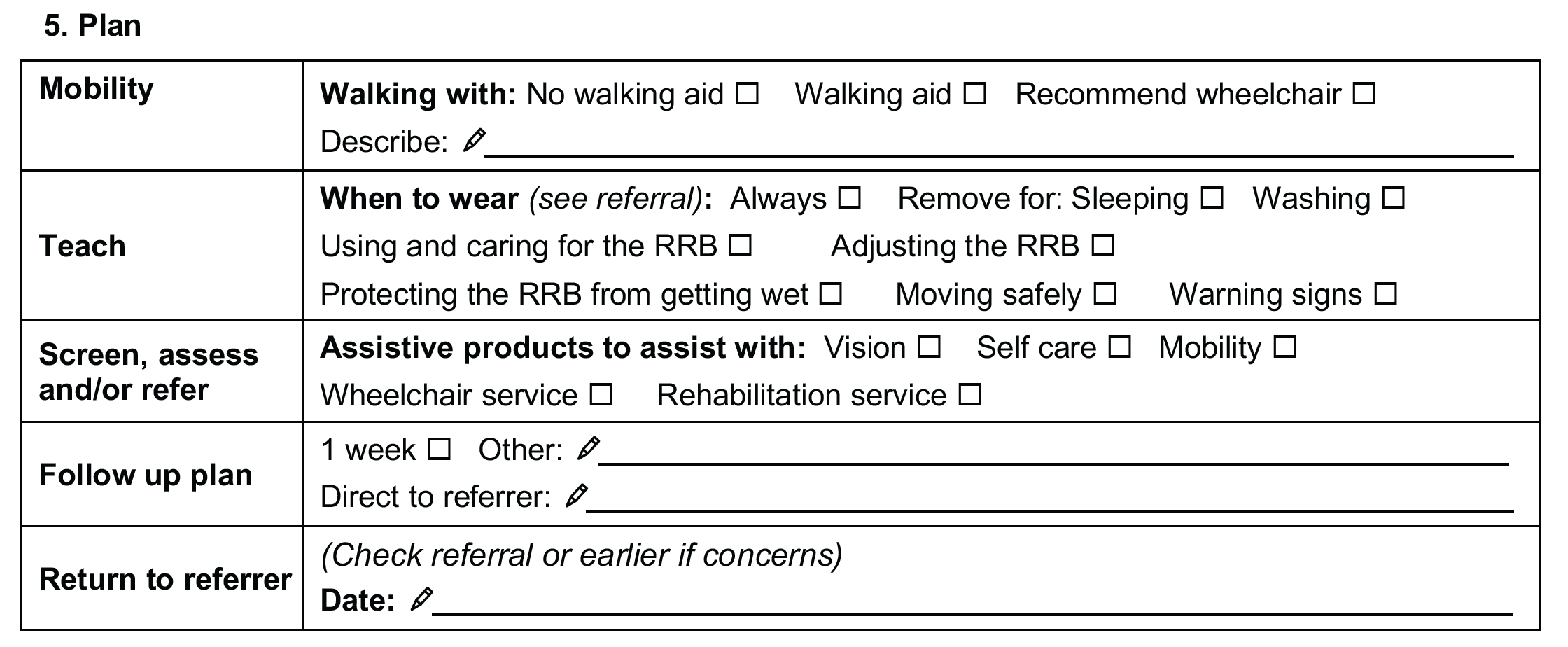
The plan includes:
- Mobility plan: How the person will walk with rigid removable boot
- Teaching plan: What you will teach the person and/or their family or caregiver
- If an assessment, screening or referrals are needed
- Follow up date
- When to return to referrer.
Mobility plan
Use the mobility check to help you plan how the person uses the rigid removable boot.

Teaching plan
- Plan what you will teach the person, their family and caregiver
- Check the instructions for use included in the referral form
- Record the teach plan on the assessment form after discussing with the person.
Question
Read the instructions for use on Wei’s referral form.
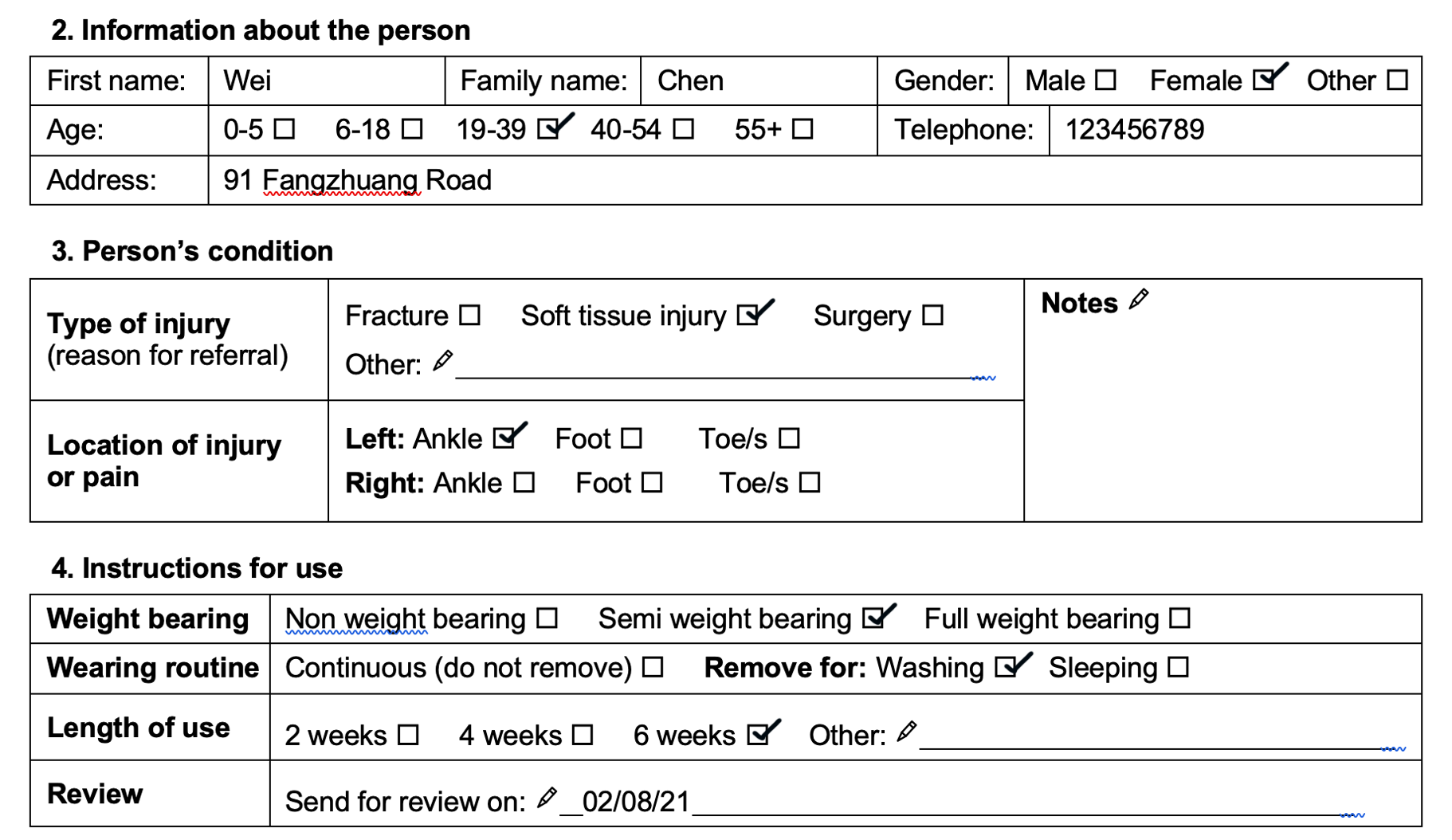
Look at the teach section of the Plan in the assessment form.
1. What would you plan to teach Wei about using her removable rigid boot?
Select all that apply.
If you selected all of the answers, you are correct.
You would need to teach Wei about all of these things so that she can safely use the rigid removable boot.
2. What would you plan to teach Wei about when can she remove the rigid removable boot?
If you selected b, you are correct.
The referral form says that the rigid removable boot can be removed for washing.
If you selected a, c, or d, you are incorrect.
Wei has been instructed to wear her rigid removable boot at all other times.
Screen, assess or refer

You may also decide with the person to screen, assess or refer if they:
- Have problems with vision or self care
- If they need a wheelchair or rehabilitation to use the rigid removable boot safely.
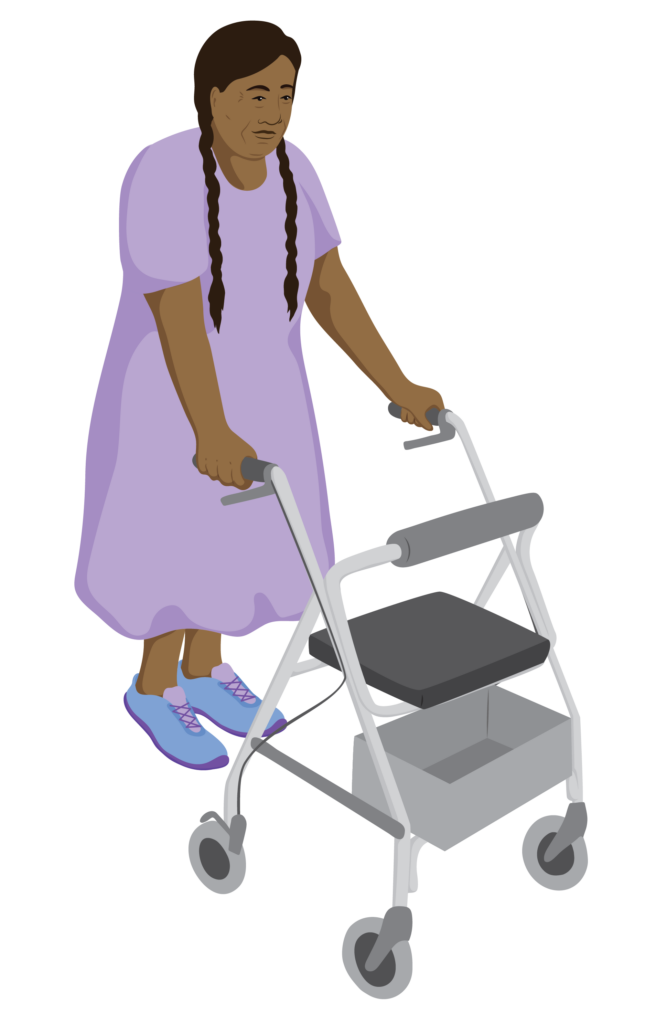
Remember Sofia?
During the assessment Sofia described difficultly seeing and reaching her feet. Sofia also had difficulty walking safely using her rollator during her mobility check. After the assessment you decide together that Sofia could benefit from using a wheelchair.
Sofia has had more than one fall in the last year and is at falls risk. Together you agree to a referral to a rehabilitation service for falls risk, self care and wheelchair assessment and vision screen.
Sofia and her son agree that she will only use her rollator with assistance from her son or another family member for safety.
Follow up

Plan the follow up date.
As a guide:
- Follow up within one week if there are issues of concern about the person, including swelling, skin problems, problems with feeling or unusual feelings (sensation) in their feet, or balance problems
- Follow up at six weeks, if the person will use the rigid removable boot longer than 6 weeks.
The referrer may also suggest another time for following up the person, check the referral details.
You will learn more about follow up in Lesson four.
Return to referrer

Check the referral to see when the referrer would like to follow up the person.
Ask the person to go back to the referrer earlier if they have concerns.
Always check the person has a follow up appointment booked with the referring doctor. The doctor will tell them when they no longer need to use the rigid removable boot.
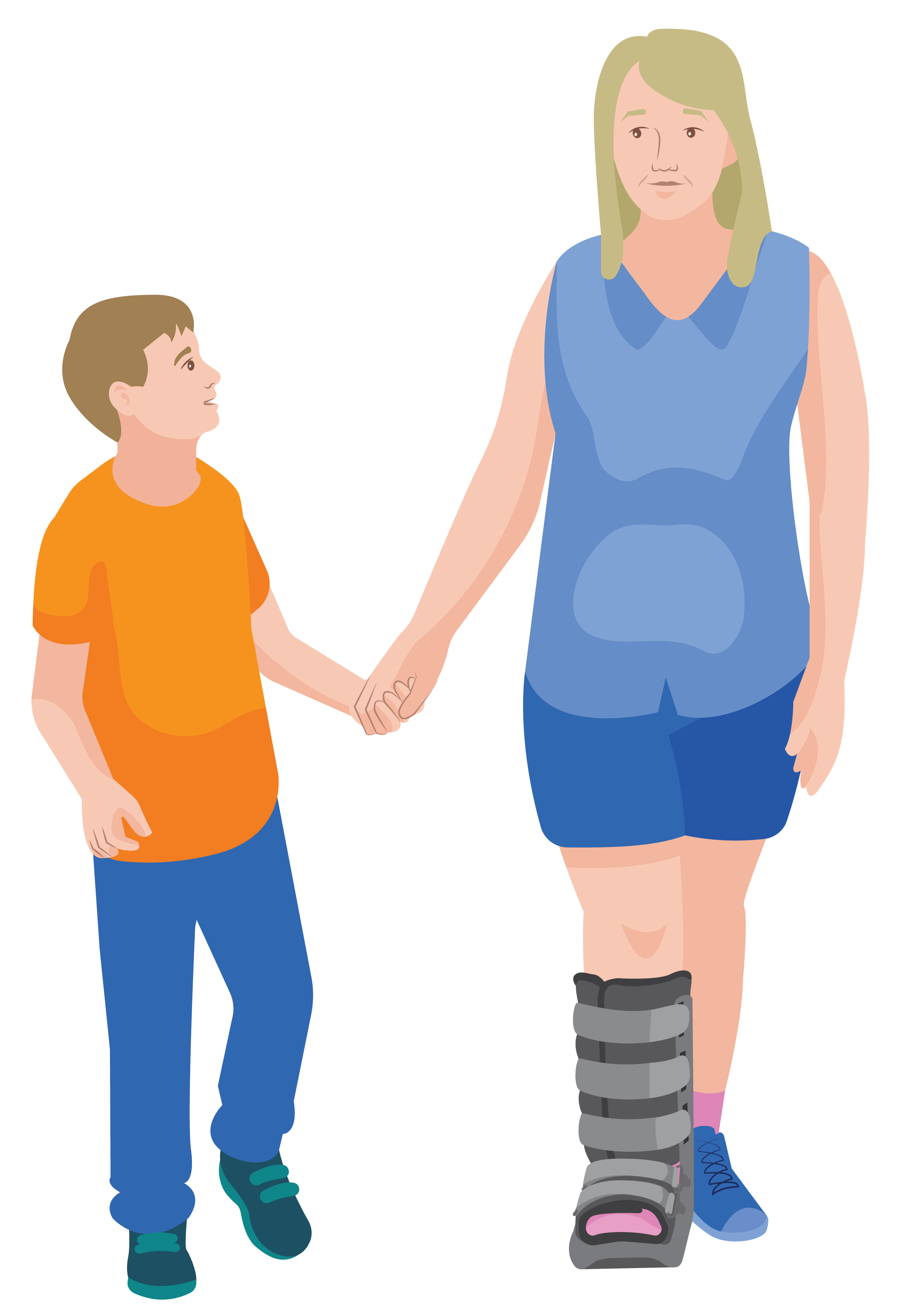
Remember Jess?
Jess had instructions from her doctor only to remove the rigid removable boot when washing. The day after she got her rigid removable boot, she started getting more pain where her injury was. She was very uncomfortable when walking with the rigid removable boot.
Jess contacted her health worker and was advised to see the doctor straight away to review her injury.
Now let’s practice working through a referral and assessment to make a plan.
Activity

Meet Khari
Khari is 28 years old and plays football for a club.
Khari injured his foot and ankle while playing football. The doctor provided a referral for a rigid removable boot to be worn for four weeks.
Look at Khari’s referral form
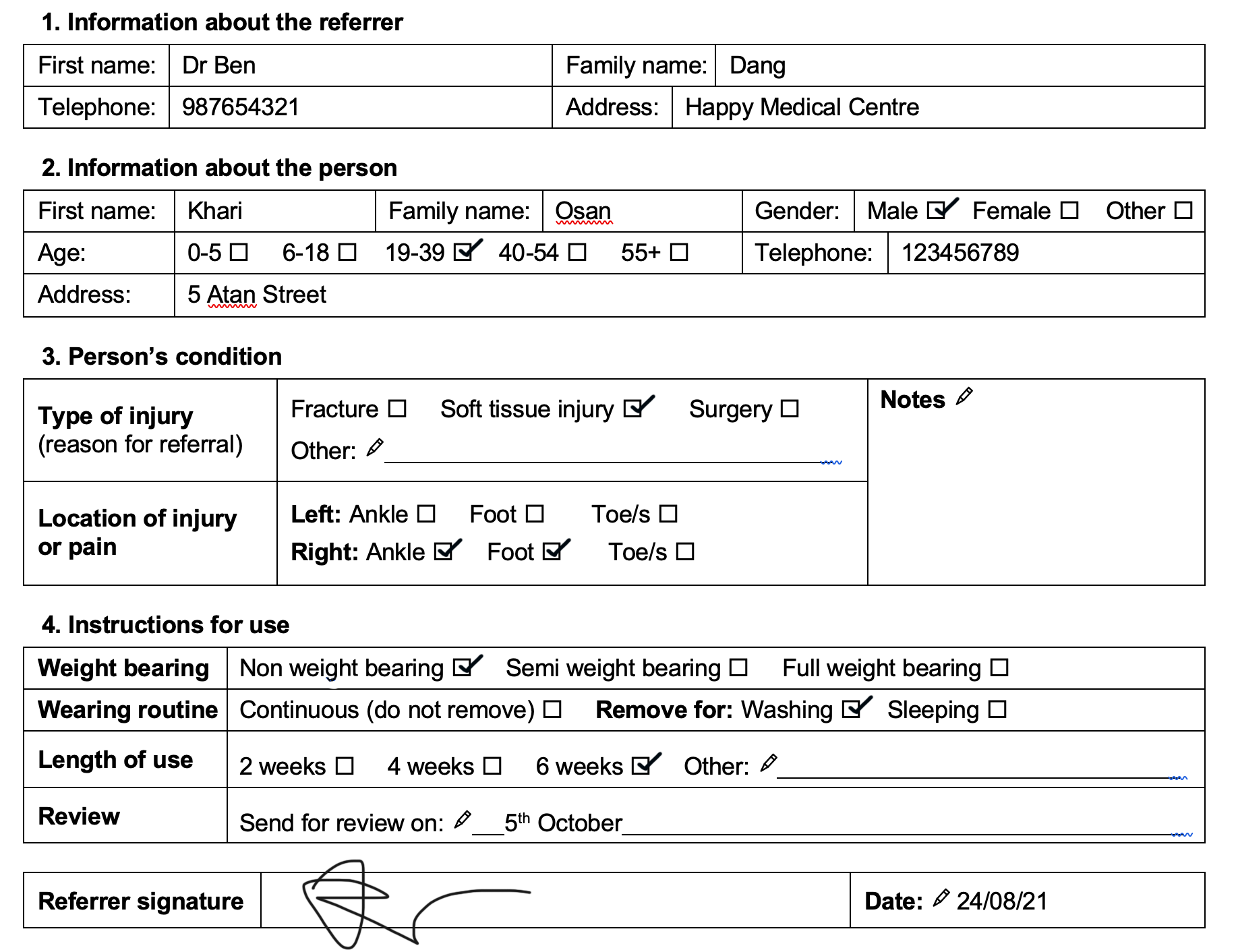
1. Which sections have been completed?
Select all that apply.
All sections are completed fully.
You can continue with the assessment.
Now look at the rigid removable boot assessment form.
2. During the assessment, Khari says he often falls over while playing football. Does this mean he is at risk of falls?
If you selected b, c and d, you are correct.
Khari said he falls over when playing football, which can happen in sport. He would only be at risk of falls if he reported falling over during every day activities.
a is not correct.
Khari is not at risk of falls. He has not described falling over during everyday activities.
3. Khari can easily reach his toes and does not have difficulty with seeing, self care and remembering.
Do you need to include a caregiver in the assessment and when teaching Khari to use the rigid removable boot?
If you selected no, you are correct.
Khari does not need any assistance using the rigid removable boot. You would not need to include a caregiver in the assessment and teaching how to use the rigid removable boot.
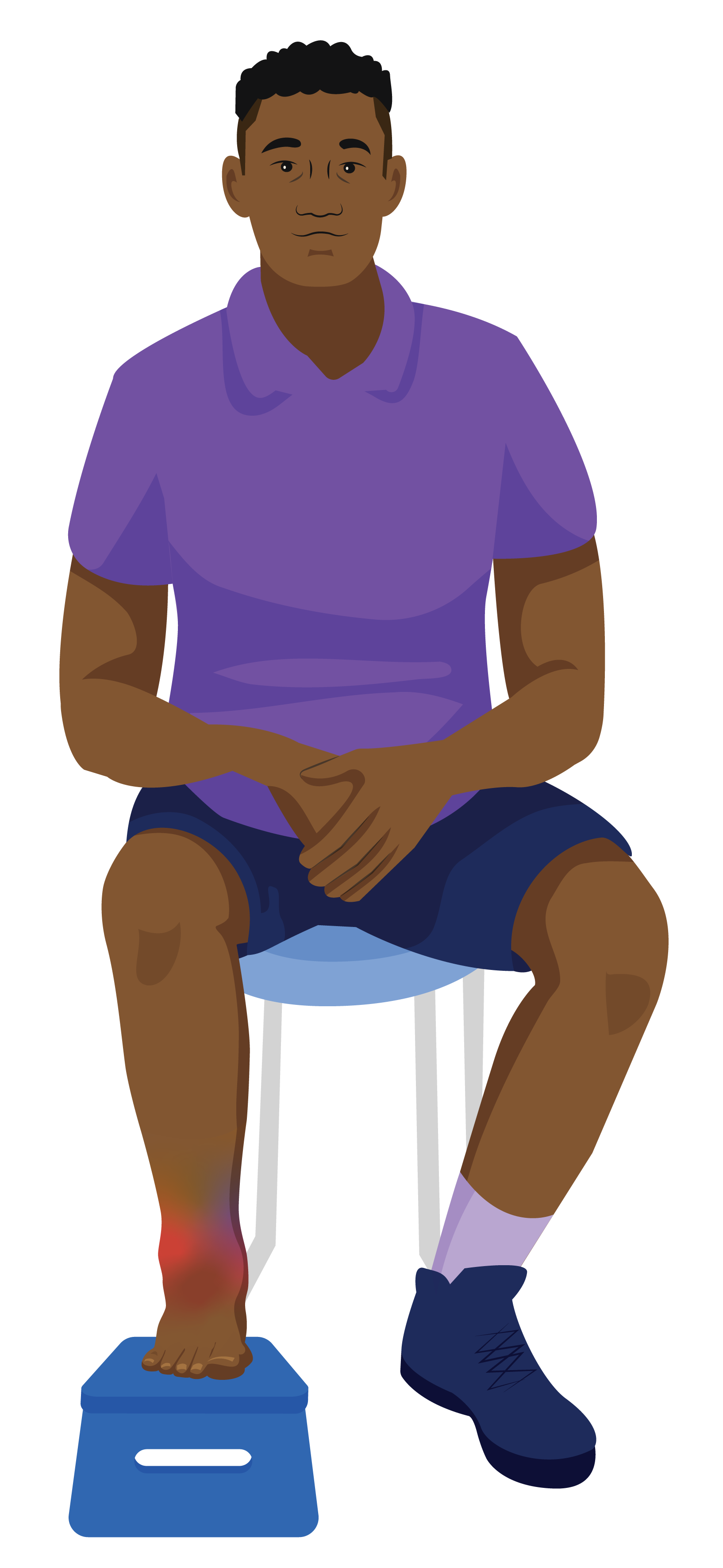
Khari’s ankle is swollen and bruised.
Khari has never had problems with feeling (sensation) in his foot or ankle.
4. Is the rigid removable boot still suitable for Khari with a swollen and bruised ankle?
Select all that apply.
If you selected a and c, you are correct.
The rigid removable boot can be used when there is swelling and bruising or other skin problems. The skin and the fit of the rigid removable boot should be checked regularly.
b is not correct.
A rigid removable boot can be used on a swollen and bruised
5. The completed referral says Khari should walk non weight bearing with the rigid removable boot. What will you do during the mobility check for Khari?
Select all that apply.
If you selected a and b, you are correct.
Khari should use a walking aid to walk safely non weight bearing and be taught how to use it.
c is not correct.
For Khari’s injury to heal he must be non weight bearing. For safety he should use a walking aid.
6. What will be included in your plan for Khari?
Select all that apply.
If you selected b, c, d, e and i, you are correct.
Khari will need to be shown how to safely walk with the rigid removable boot. He will also need to understand the warning signs and how to adjust the rigid removable boot when his swelling goes down.
Khari can remove his rigid removable boot for sleeping and washing and because he has swelling, he should be followed up in one week.
If you selected a, f, g or h, you are not correct.
Khari is not at risk of falls so does not need a wheelchair.
He does not have any problems seeing or need assistance with self care so he does not need a referral for these services.
Khari has swelling of his ankle, so should be followed up within one week to check the fit of the rigid removable boot.