Select the correct size and check the fit
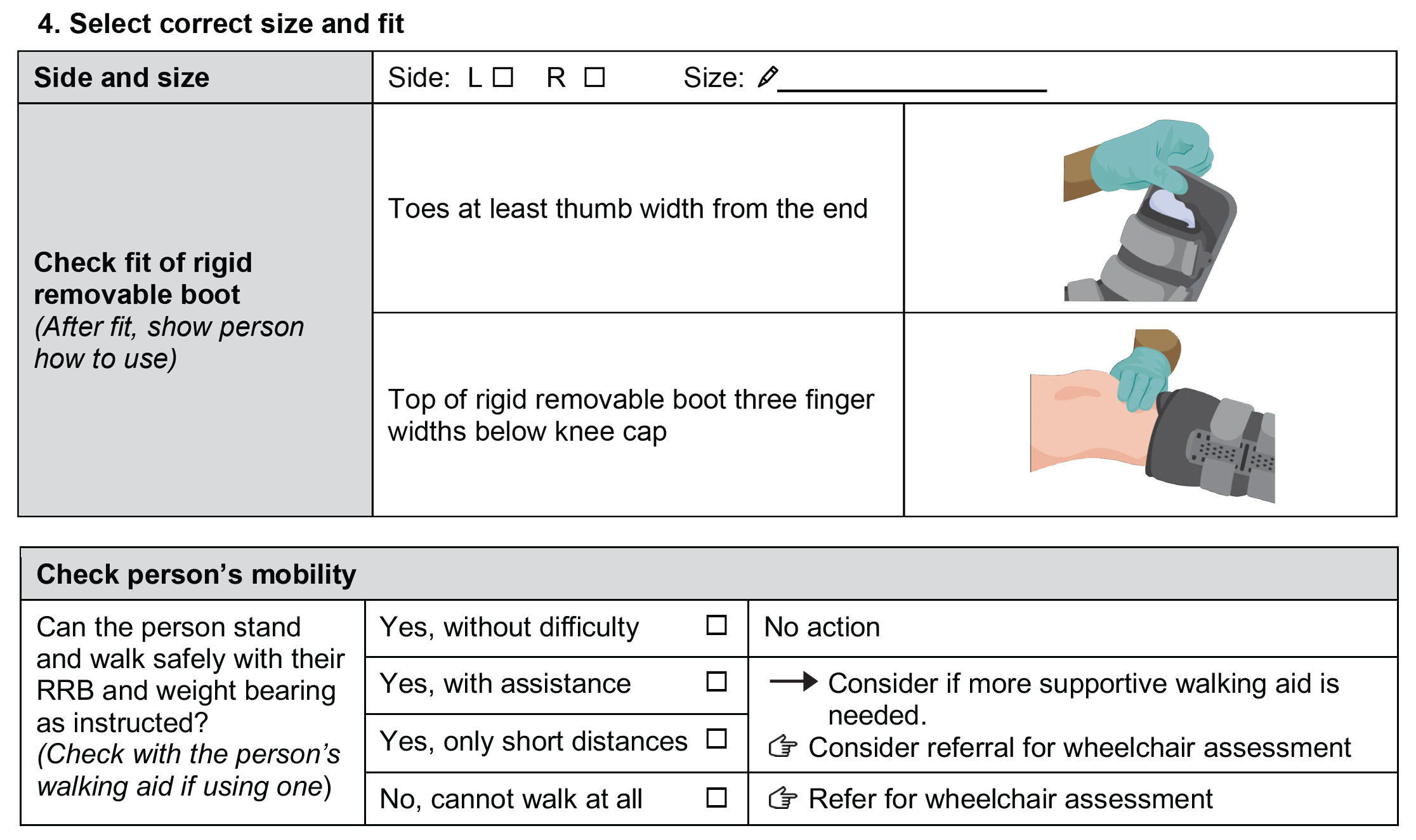
After completing the health and mobility assessment, the next steps are to:
- Select the correct size of rigid removable boot
- Check the fit.
The correct size is important to make sure the rigid removable boot is easy and safe to use.
Side and size

Check whether the person needs a boot for their left or right foot.
Some rigid removable boots are provided with a size chart. Use the size chart and the person’s shoe size to decide which size boot is most likely to fit.
If there is no size chart, hold the boot beside the person’s foot to estimate the size. The boot should be at least 1cm longer than the person’s foot when fitted.
Question
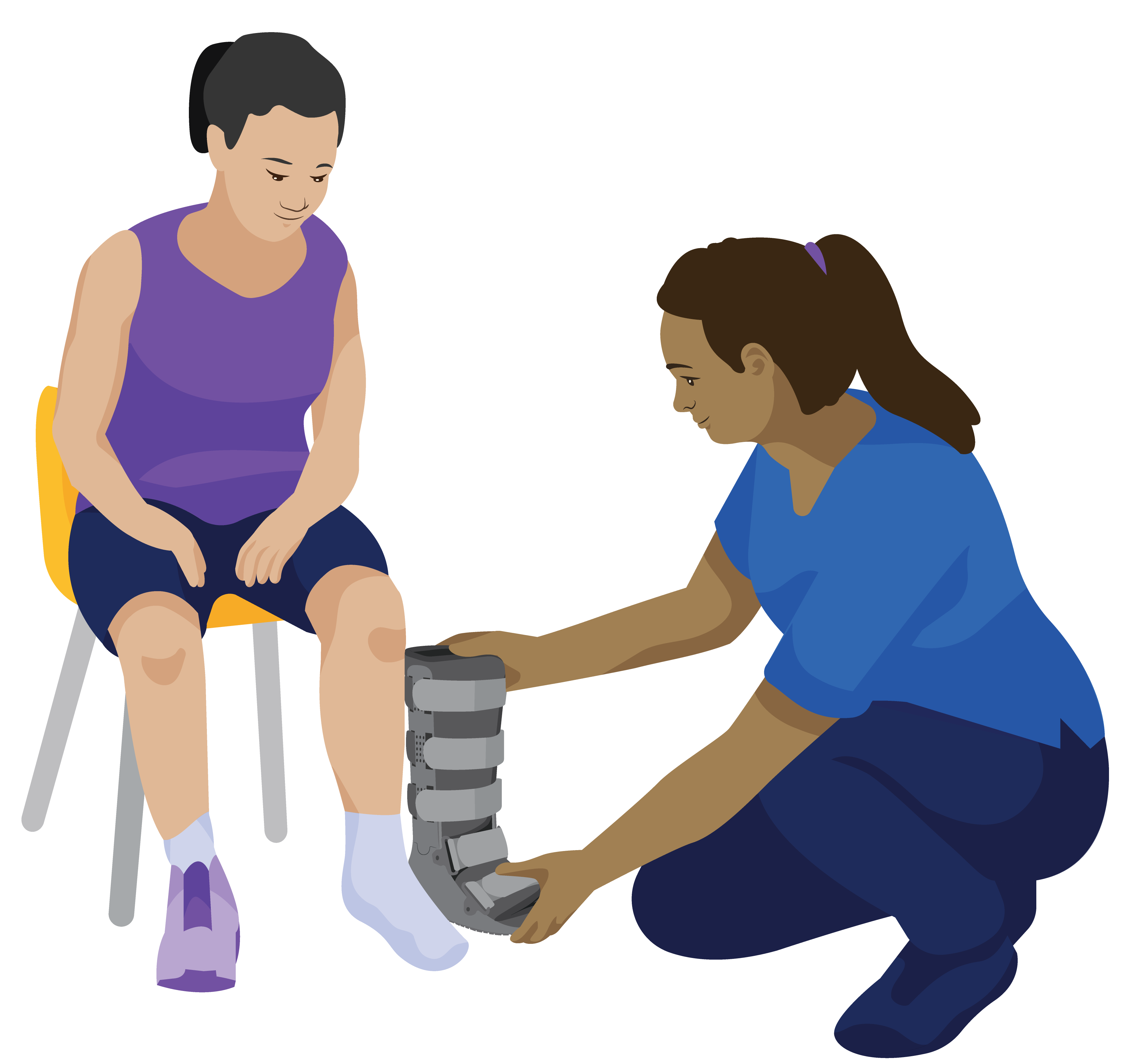
Remember Wei?
How do you know what size rigid removable boot she needs?
Select all that apply.
If you answered a and c, you are correct.
Comparing Wei’s shoe size with the size chart can be used to select the suitable size. It is also possible to hold the boot up to Wei’s foot to estimate the correct size.
b is not correct.
Rigid removable boots come in different sizes and it is important to select the most suitable size for each person.
Never fit a rigid removable boot that is broken or damaged.
Rigid removable boots must not be reused by the service for other people.
Activity
Look at the rigid removable boots available in your service. Is there a size chart with them?
Practice choosing the right size rigid removable boot for a colleague or friend.
Prepare the rigid removable boot for fitting
The uprights on the rigid removable boot may have a cover on the inside, over the sticky patches that attach to the liner.
- Once the uprights are in the correct position, remove the cover so the liner attaches in place.
- If there is no cover on the uprights, it is helpful to cover the sticky areas with tape while fitting so the liner does not get caught.
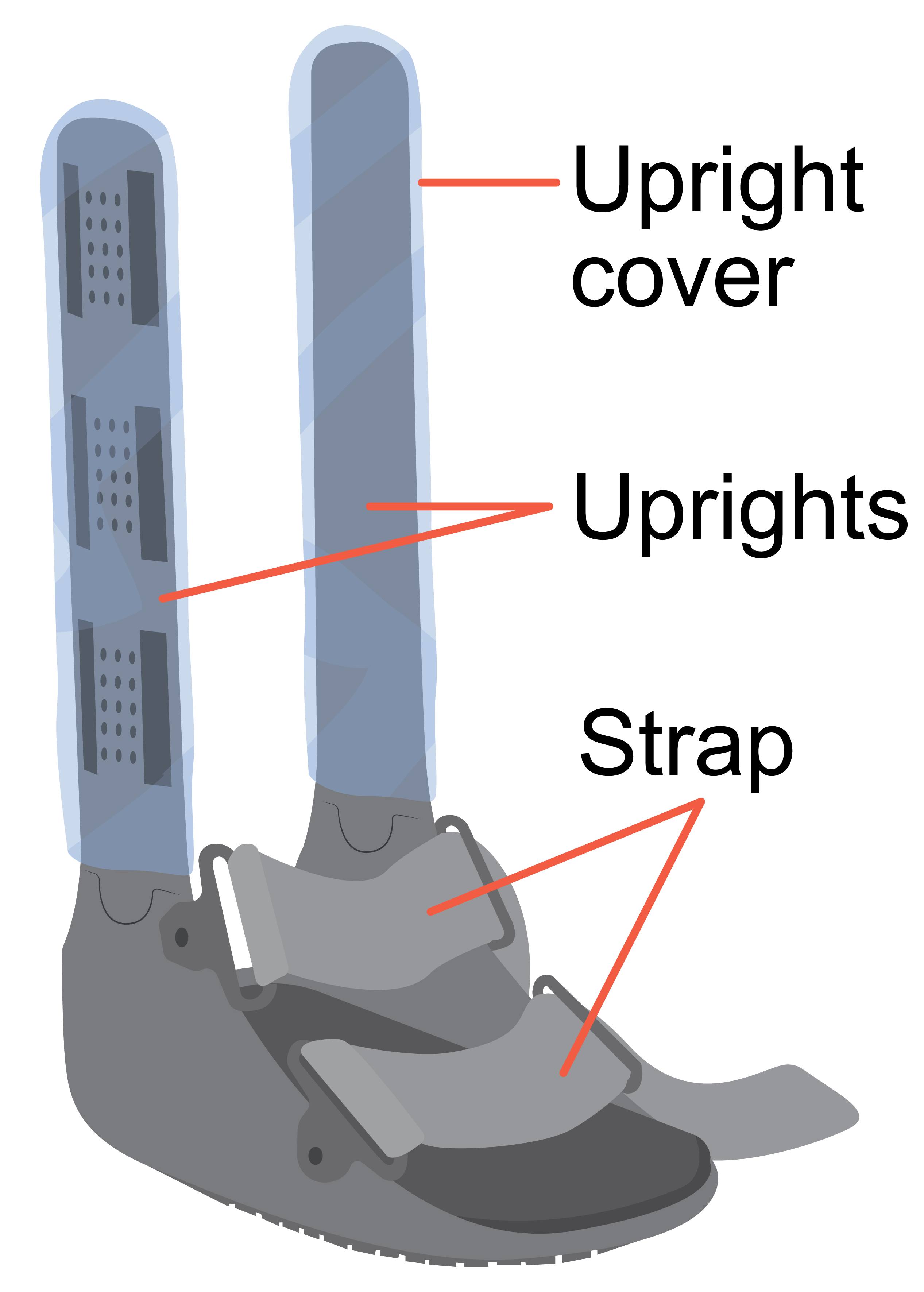
Liner removed ready for fitting
Make sure the person is sitting comfortably on a chair or bed.
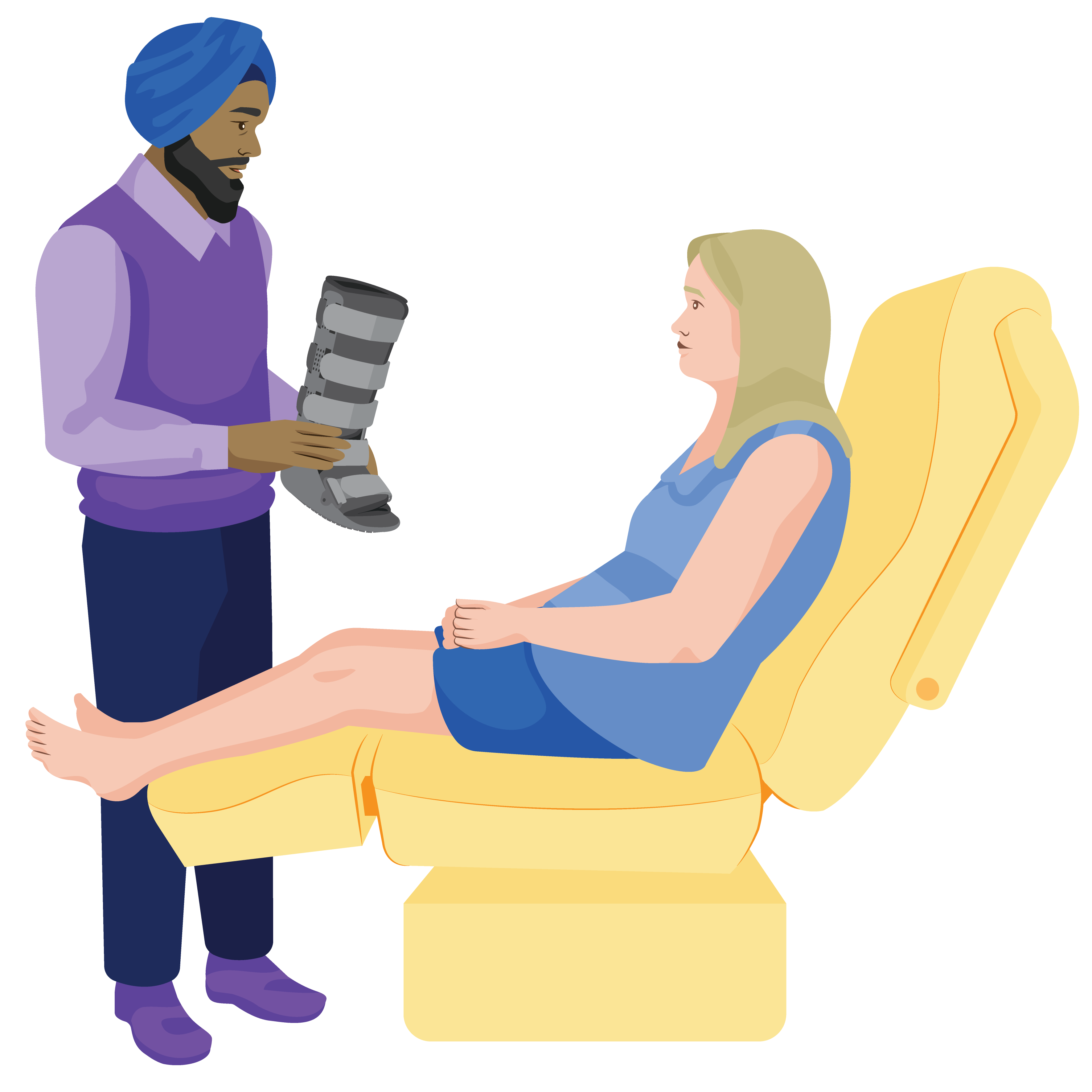
Putting on a rigid removable boot
- Put the liner on first and place foot into the rigid removable boot
- Check the position of foot and side uprights
- Fasten the straps in the correct order.
Watch the video to see how to fit a rigid removable boot.
Question
1. Do you remember the correct order of steps when putting on the rigid removable boot?
Organize the steps into the correct order by numbering them 1 to 3.
The correct steps are:
1. Put the lining over the foot and leg and wrap it around securely.
2. Check there are no wrinkles in the lining.
3. Gently open the uprights and place the foot and leg into the rigid removable boot.
2. Do you remember the correct order for fastening the straps?
Organize the steps into the correct order by numbering them 1 to 3.
The correct steps are:
1. Fasten the straps over the ankle
2. Fasten the straps over the foot
3. Fasten the straps up the leg
Check fit of rigid removable boot
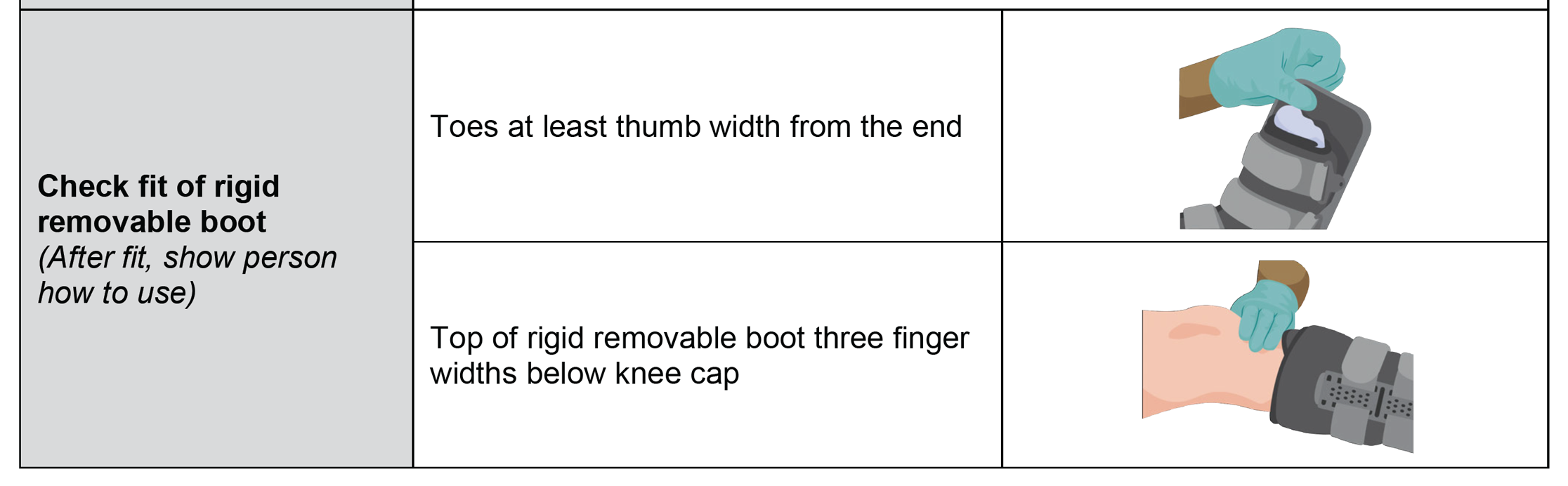
After putting on the rigid removable boot, check the fit.
Check the boot is longer than person’s foot.
Check: Toes at least thumb width from the end.

Check length of boot is below the person’s knee.
Check: Top of rigid removable boot three finger widths below knee cap.
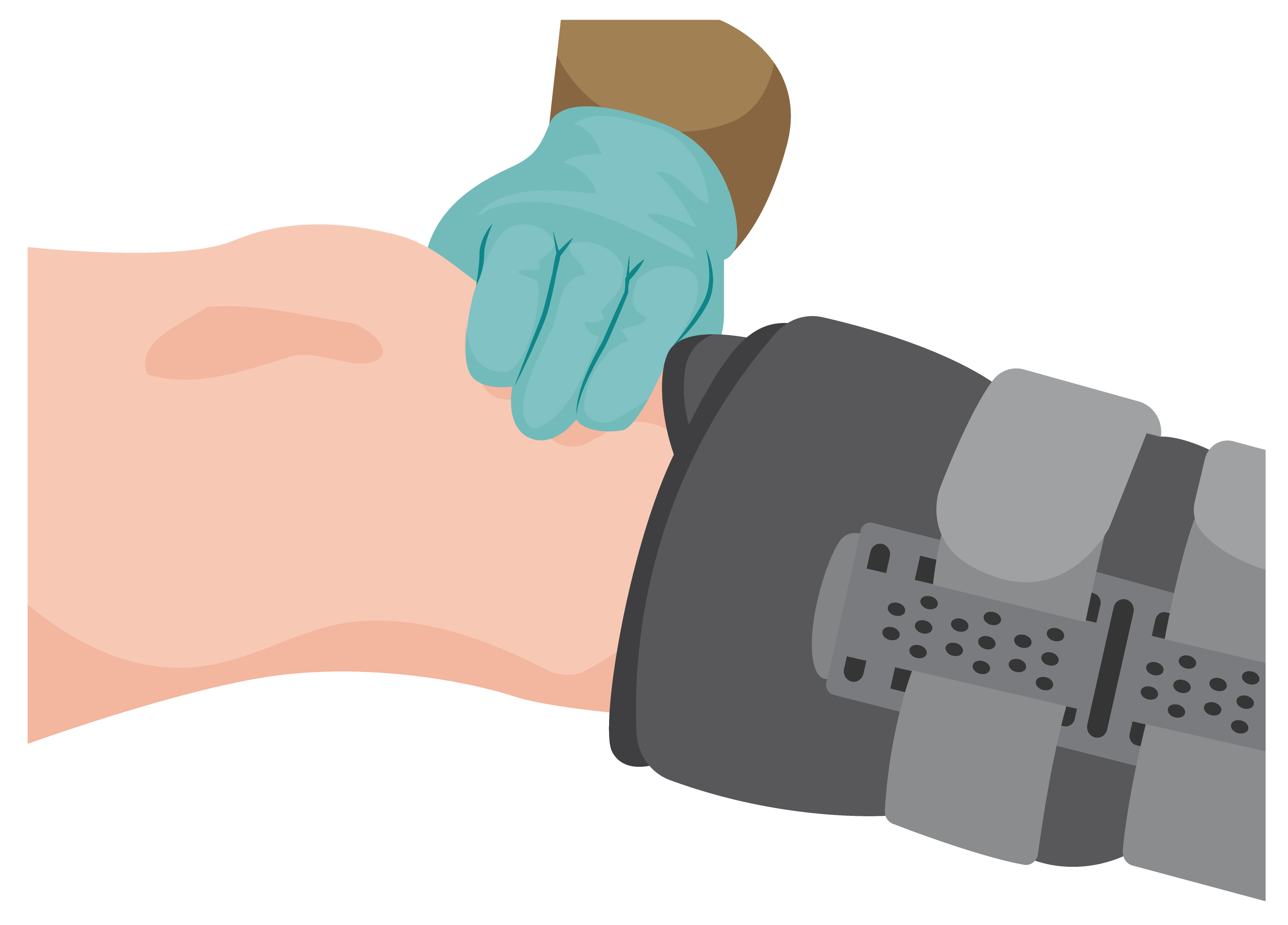
Check the fit sitting or lying
- Check comfort.
- If the fit in sitting or lying is not correct, adjust the fit or change the size before standing.
Check the fit with the person standing
- Before asking a person to stand while wearing their rigid removable boot, check they are wearing a suitable shoe on the other foot.
- When standing, the fit can change slightly. It is important to check the fit again when standing.
Watch the fitting video again to see how to check the fit of a rigid removable boot.
Activity
Look at the pictures below.
Which pictures show a well fitting boot?
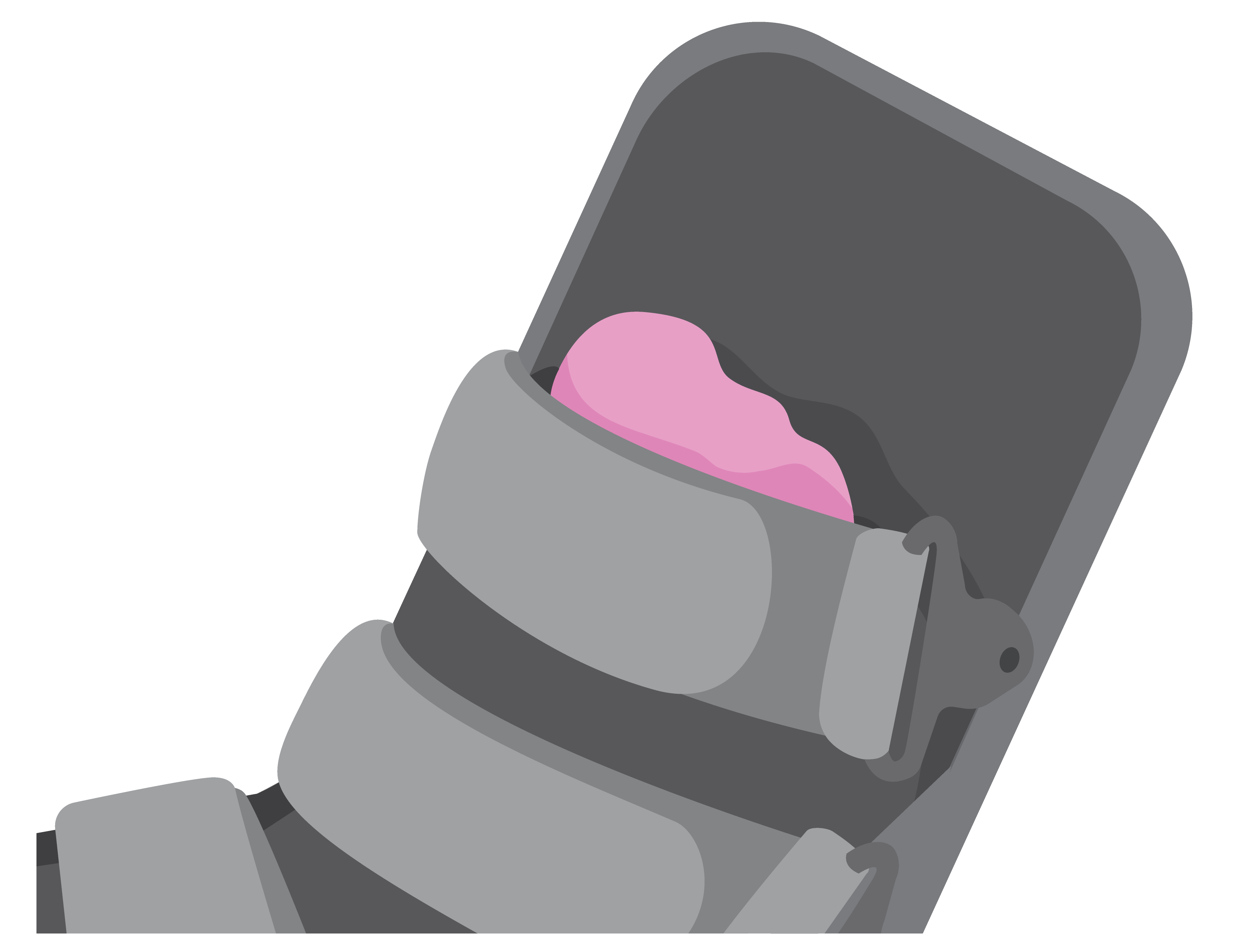
Incorrect.
The rigid removable boot is too big. It will make it more difficult to walk and the person could trip over.
Correct.
This will be the most comfortable fit for the person and will make it easier for the person to walk.
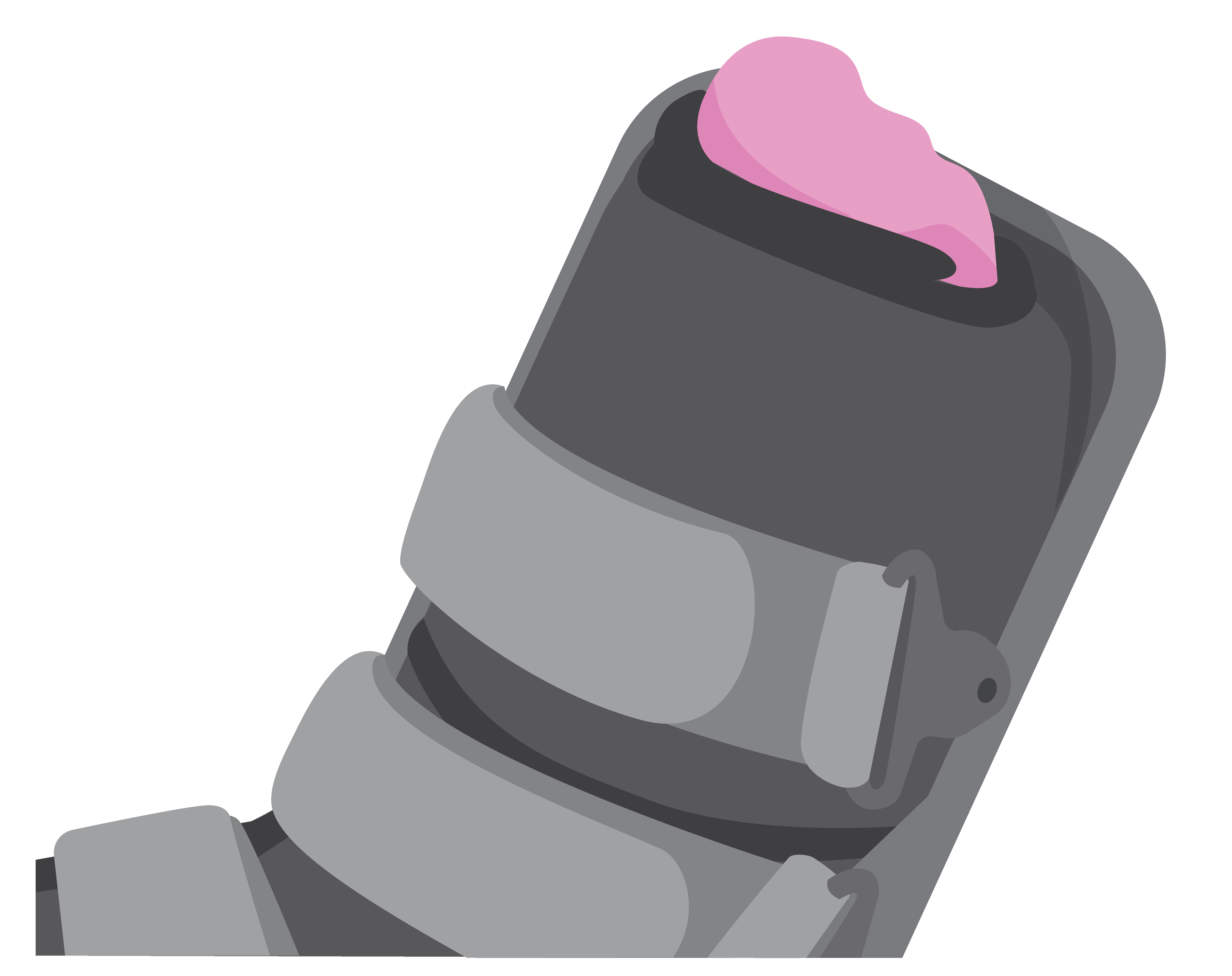
Incorrect.
The toes should not hang over the edge of the rigid removable boot. This will be uncomfortable and could cause rubbing or put the person at risk of developing foot wounds.
Correct.
The rigid removable boot should be about three finger widths below the knee. If it is lower than this, it will not work as well. If it is higher, it will be uncomfortable for the person.
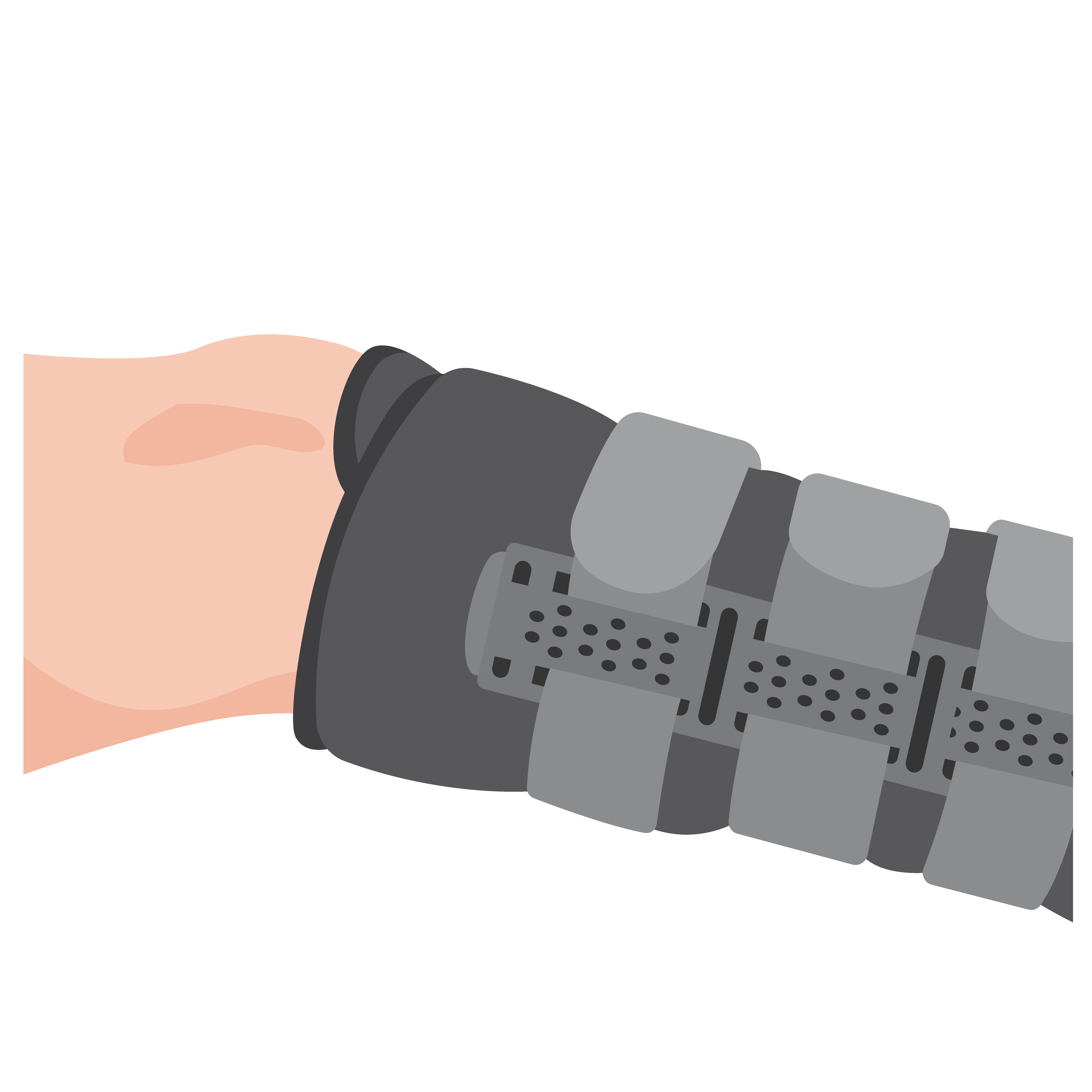
Incorrect.
This is too high and will be uncomfortable for the person.
If you do not have access to a suitable fitting rigid removable boot, talk with the referrer about other options.
Discussion
What questions could you ask the person to check the rigid removable boot is comfortable?
- Does the rigid removable boot feel comfortable around your ankle bones?
- Do you have pain anywhere on your leg and foot?
- Do you have any unusual feelings on your leg or foot?
You may have thought of others.
Practice fitting rigid removable boots
Activity
Practice fitting a rigid removable boot to a friend or colleague.
Select a suitable size from those available at your service.
- Practice putting it on and adjusting.
- Check the fit sitting or lying.
- Check comfort.
- Repeat fitting and comfort checks in standing.
Reflection
What was easy or difficult about fitting a rigid removable boot?
Check the person’s mobility
After checking the fit, check if the person is able to walk safely while wearing the rigid removable boot.
Activity
With a rigid removable boot fitted correctly, practice walking.
Try walking outside and up and down stairs.
Reflection
What did you feel when you were walking while wearing a rigid removable boot?
Question
Is this statement true or false?
It is harder to walk wearing a rigid removable boot than a shoe.
If you selected true, you are correct.
A person may find it harder to balance and need extra support when wearing a rigid removable boot.
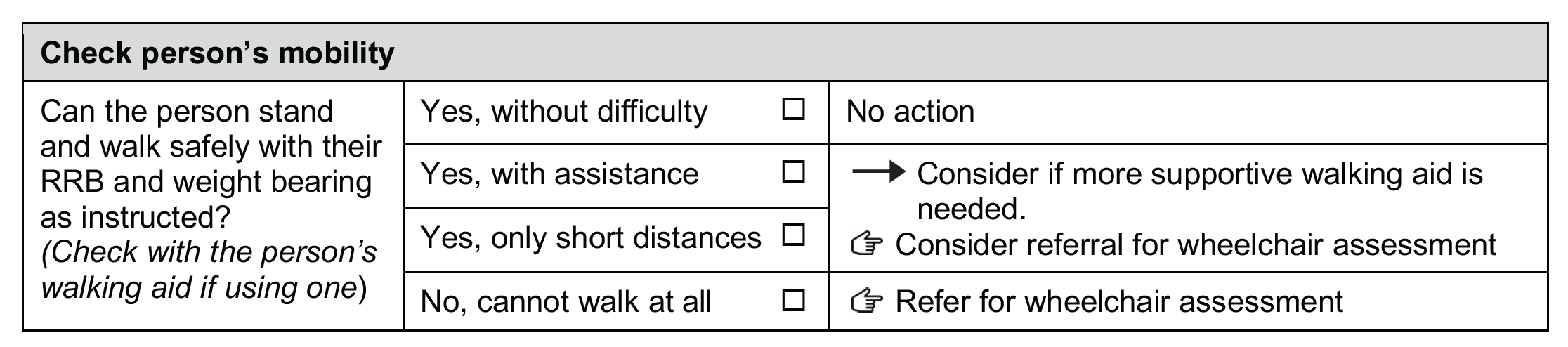
Check: Can the person stand and walk safely with their rigid removable boot and weight bearing as instructed?
Prepare to stand
Warn the person that the leg with the boot on may feel a little longer than the other leg.
First check if the person can stand safely (using their walking aid if required) and weight bearing as instructed.
Next check the person’s mobility when walking.
If the person looks or feels unsafe consider whether they need:
- A different walking aid
- A wheelchair
- Referral for rehabilitation.
Question
A person who has been asked to walk non weight bearing or semi weight bearing should use a walking aid.
If you selected true, you are correct.
To walk safely non weight bearing or semi weight bearing a person should use a walking aid.
Question
 Remember Sofia?
Sofia has a stable fracture of her ankle after a fall in her home and has been referred for a rigid removable boot. Before her fall, Sofia walked with a rollator.
After fitting Sofia’s rigid removable boot, you check her mobility.
1. What would you do before asking Sofia to stand and walk wearing her rigid removable boot?
Select all that apply.
All are correct.
2. Sofia’s referral form says she can walk full weight bearing.
Does Sofia need to use a walking aid while checking her mobility?
If you selected yes, you are correct.
Sofia used a rollator before she had her fall. Even though she is allowed to walk fully weight bearing, she is likely to still need the rollator. It is also important to see if Sofia can walk safely with the rollator while wearing her rigid removable boot.
3. Sofia needs some assistance to stand up and says she feels anxious while walking. She is unsteady and asks to sit down after taking a few steps.
Do you think Sofia’s mobility is safe with her rollator?
If you selected no, you are correct.
Sofia felt anxious and needed assistance to stand. She also had some difficulties with balance and needed to sit down after a few steps.
It is important for Sofia to feel safe and for her mobility to look safe before she goes home. A wheelchair could assist.
Discuss referral for a wheelchair assessment with Sofia.
Learn more about how to walk with a rigid removable boot in Lesson three.