The wheelchair should be fitted for each person. Correct fit is important for the person’s comfort and to make the wheelchair easier to use.
Always check the fit with the person while the wheelchair is stationary.
Check again while the person self-propels or is pushed by an assistant:
- Check wheelchair size and adjustments
- Check posture
- Check fit while wheelchair is moving.
Fitting the selected wheelchair and cushion
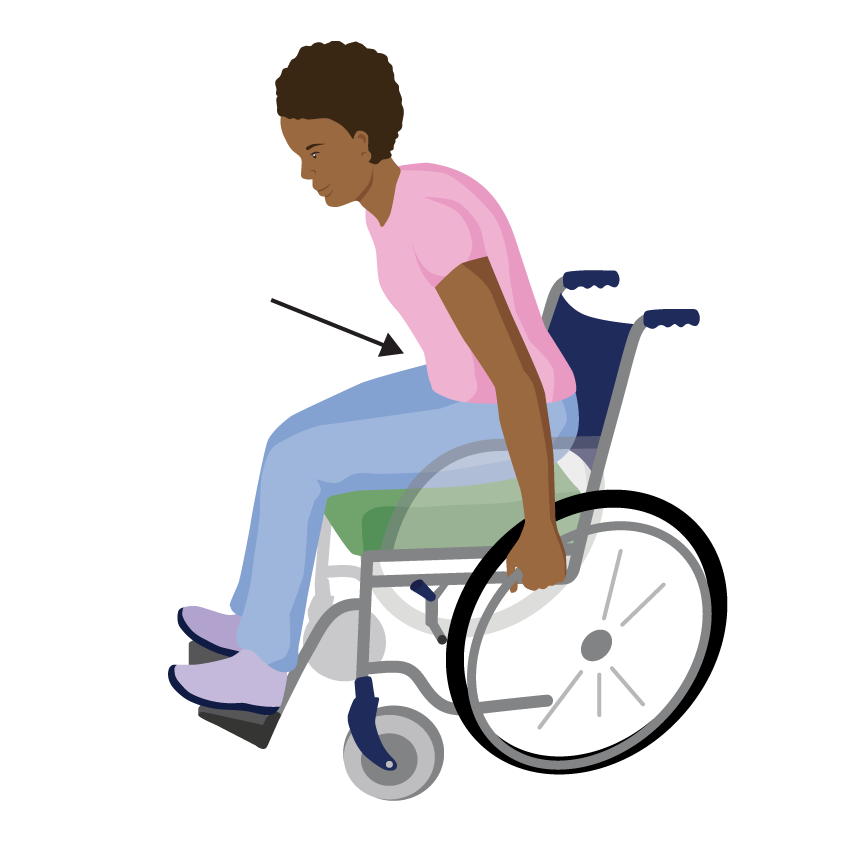
Ask the person to transfer into the selected wheelchair and position their hips to back of seat.
Check wheelchair width
The wheelchair should fit closely:
- If the wheelchair is too wide, select a smaller width wheelchair
- If the wheelchair is too narrow, select a wider width wheelchair.
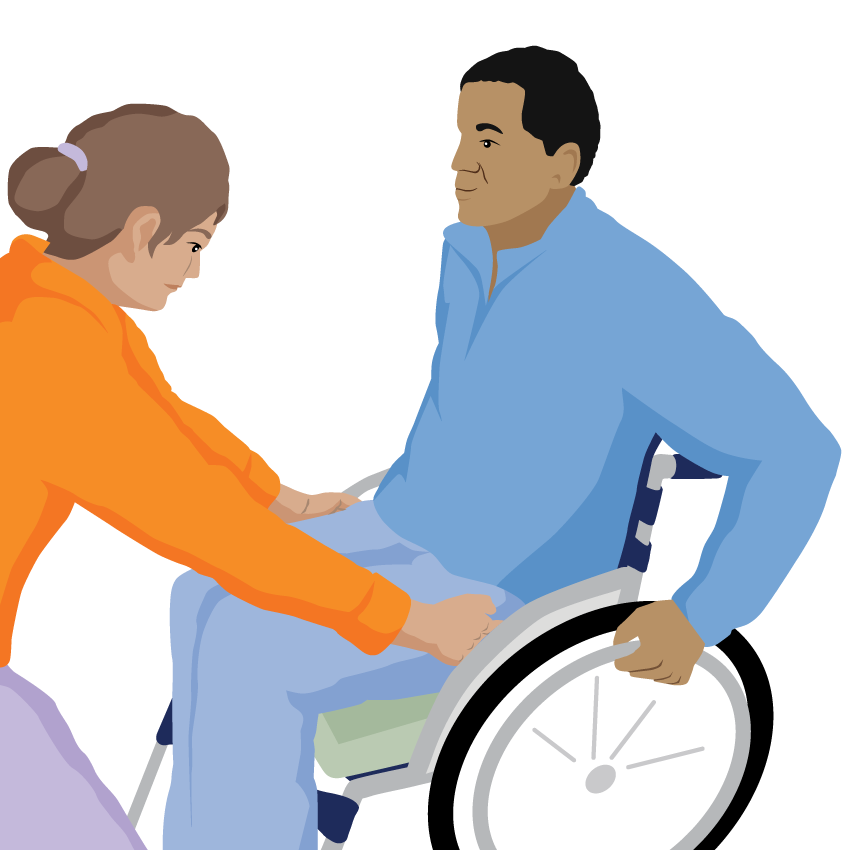
Watch this video to learn how to check wheelchair width.
Question
How do you know if the wheelchair width is too narrow?
Select all that apply.
While testing width:
If you selected a and b, you are correct!
If hands are pinched or do not slide smoothly, the wheelchair width is too narrow. Select a wider width wheelchair.
c and d are incorrect.
The wheelchair should fit closely. There should not be extra room to fit objects like water bottles on the seat.
Activity
In pairs use the fitting checklist to practice checking wheelchair width.
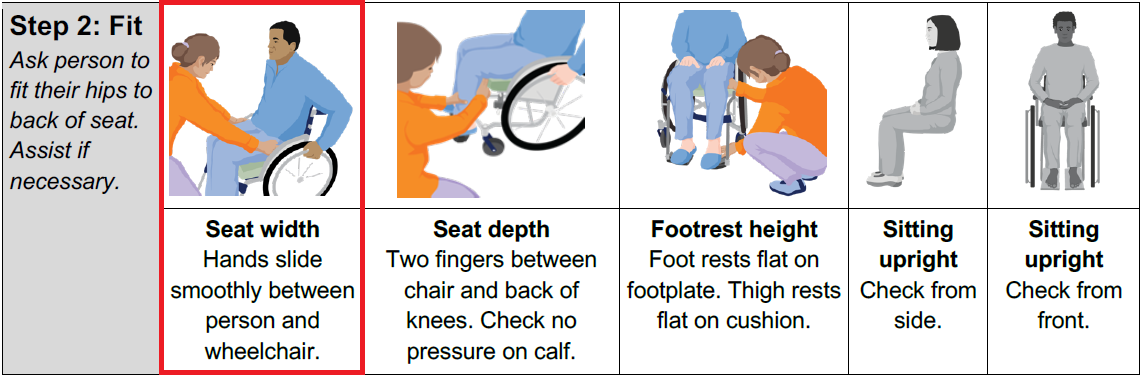
Decide if the wheelchair is the correct width.
Check seat depth
There should be a gap between the back of the person’s knee and the cushion of two to four fingers (30-60mm).
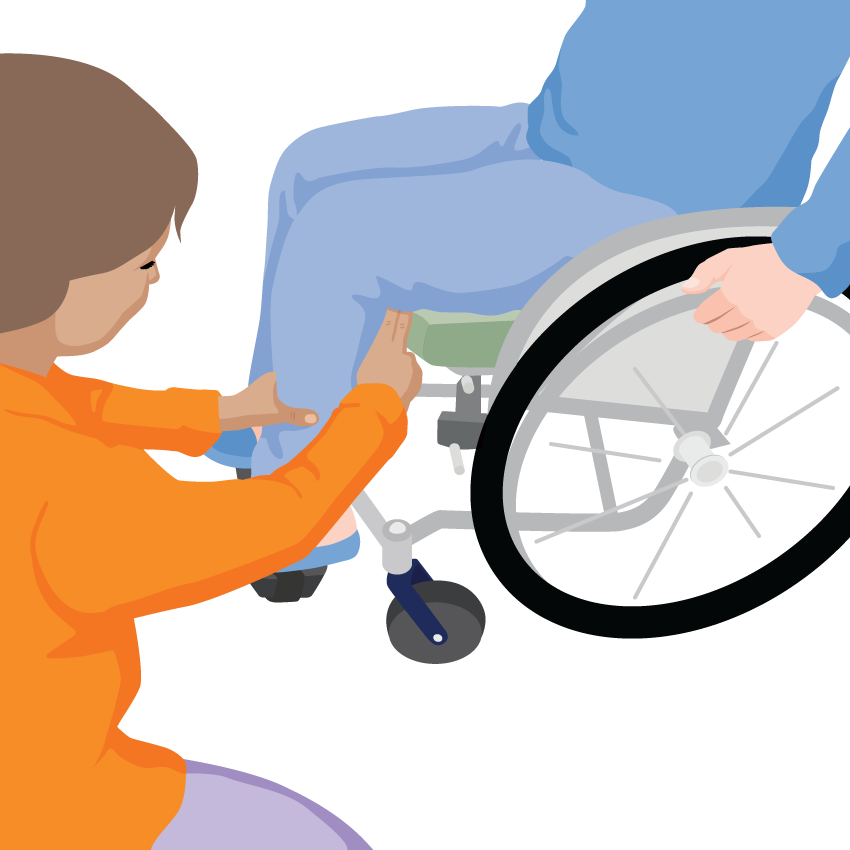
Watch this video to learn how to check seat depth.
Question
1. If the seat depth is too long, how will it affect the person?
Select all that apply.
If you selected b and c, you are correct!
If the seat is too long the person will find it hard to sit with hips against the backrest and sit upright.
a and d are incorrect.
Seat depth does not affect the height of the footrest or a person’s ability to reach the rear wheels.
2. If the seat is too short, how will it affect the person?
Select all that apply.
If you selected a and b, you are correct!
If the seat is too short, this increases the risk of pressure wounds and also makes it harder for the person’s legs to be positioned well on the cushion.
c and d are incorrect.
If the seat is too short, this will not affect the person’s ability to reach the rear wheels or support from the backrest.
Activity
In pairs use the fitting checklist to practice checking wheelchair seat depth.
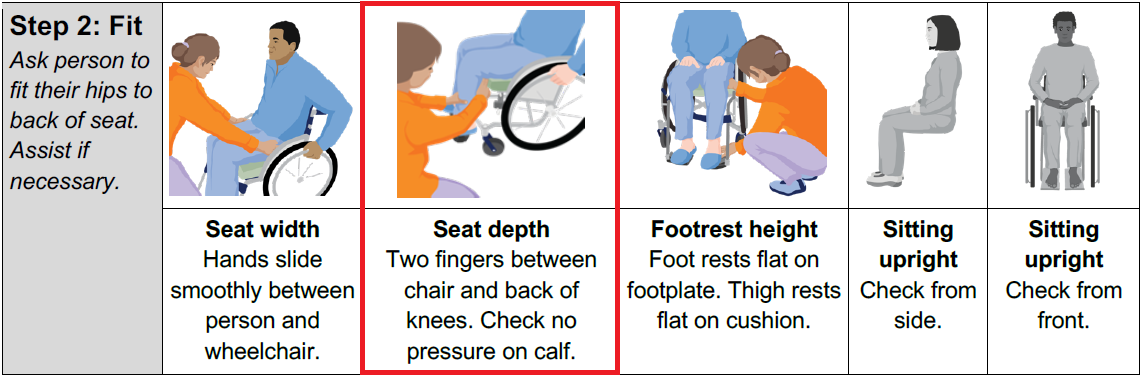
Decide if the wheelchair seat is the correct length. Remember to check both sides!
Check footrest height
- The person’s thigh should be fully supported on the cushion with no gaps
- The person’s foot should be fully supported on the footrest with no gaps.
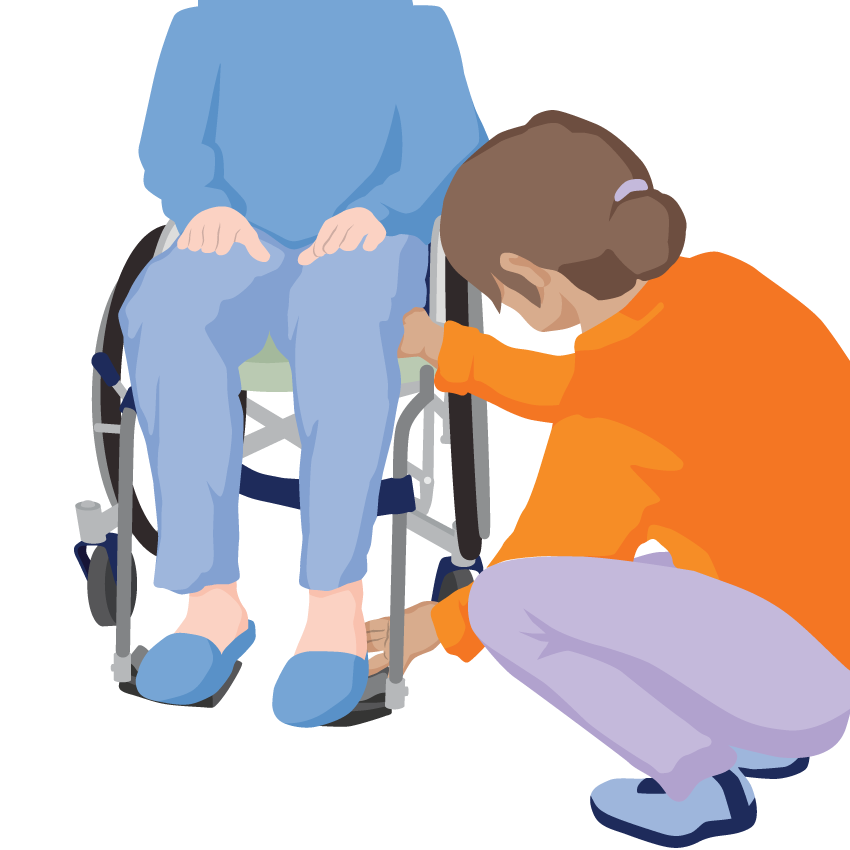
Watch this video to learn how to check footrest height.
Question
1. How do you know if the person’s footrest height is too high?
Select all that apply.
If you selected a and d, you are correct!
If the footrest height is too high the person’s thigh will not be fully supported on the cushion and may move while propelling. The person may feel less stable when propelling the wheelchair.
b and c are incorrect.
If the footrest height is too high, the person’s foot will touch the footrest. However, their thigh will not be fully supported.
2. How do you know if the footrest height is too low?
Select all that apply.
If you selected b and c, you are correct!
If the footrest height is too low the person’s foot will not be fully supported and may slide off the footrest when moving. The person may feel less stable when propelling the wheelchair.
a and d are incorrect.
If the footrest is too low, the person’s thighs will be supported, but their feet may move around.
Activity
In pairs use the fitting checklist to practice checking footrest height.
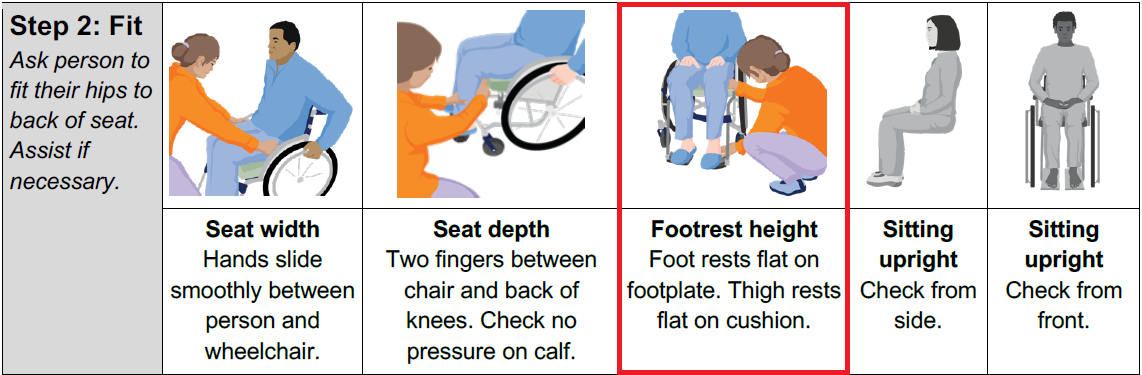
Check the thigh is resting flat on the cushion and foot is resting flat on the footrest. Remember to check both sides!
Check backrest height and comfort
Always check a person’s posture to see if they are sitting upright.
Check from the side, front and behind when the person is:
- Sitting
- Propelling.
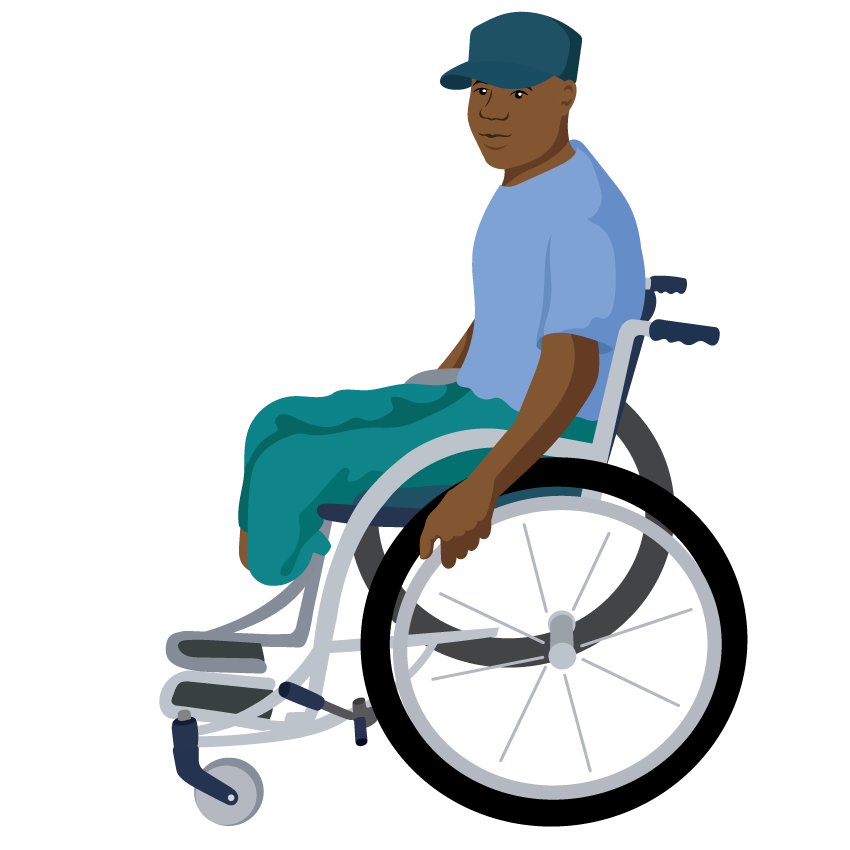
Posture when sitting
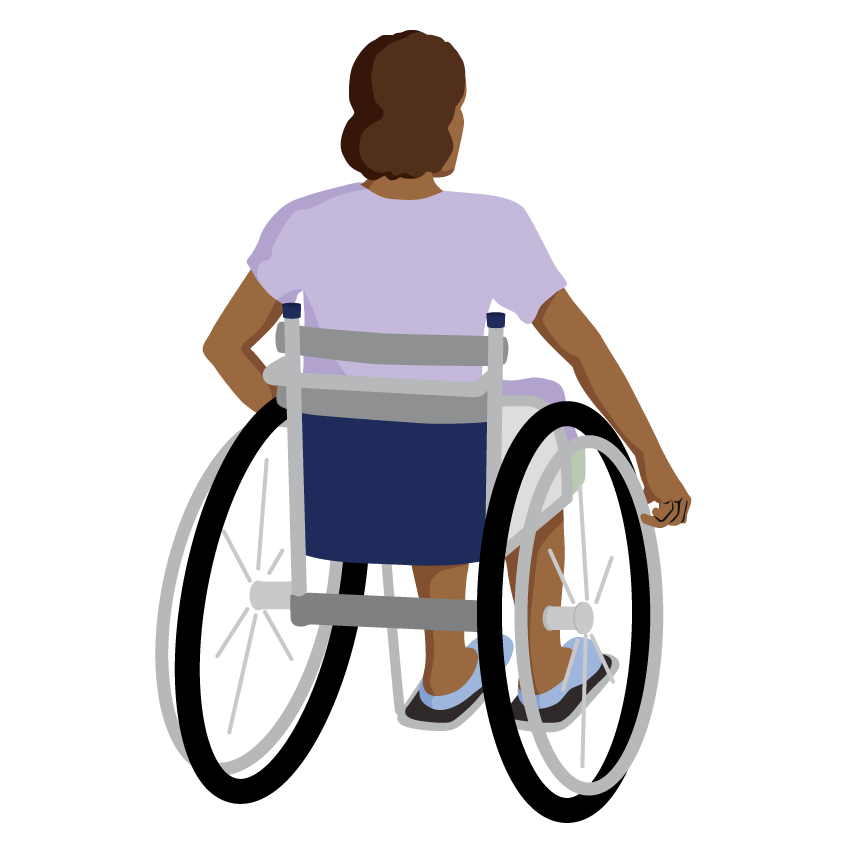
Posture when propelling
Download and check the TAP Wheelchairs in emergencies select and fit table for suggestions about backrest height.
Watch this video to learn how to check the backrest height.
Question
How might you know if the selected backrest is too high?
Select all that apply.
The person may:
If you selected b, c and d, you are correct!
If the backrest height is too high the person may feel pushed forward and uncomfortable. Their shoulders will be less free to move and the backrest may get in the way, making it harder to propel.
a is incorrect.
A high backrest can make it harder to propel the wheelchair. A low backrest gives the shoulders more freedom and makes it easier to propel.
If the person does not feel comfortable or safe while sitting or moving in the wheelchair, do not provide the wheelchair.
Check rear wheel position
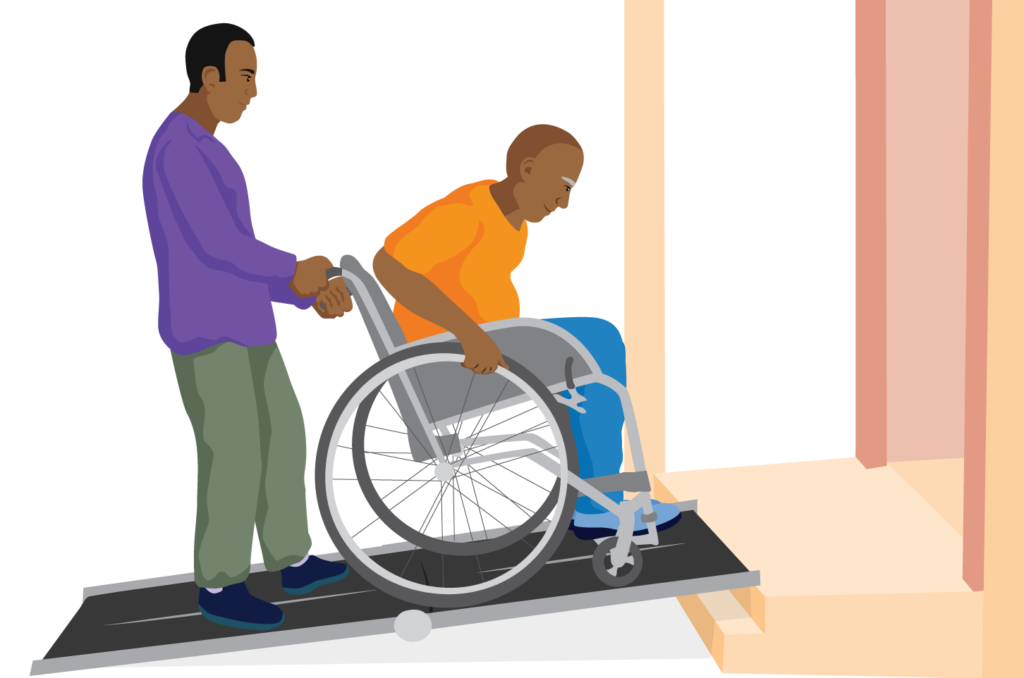
Ask the person to propel up and down a slope:
- Always have an assistant standing behind for safety
- Check the castor wheels do not lift off the ground when the person propels up a slope.
Question
What action would you take if the person feels unsafe or the castor wheels lift up while propelling up a slope?
Select all that apply.
If you selected b and d, you are correct!
Always encourage a person to lean well forward when propelling up a slope. If the castor wheels lift up or the person feels unsafe, select the safe rear position to make the wheelchair more stable.
Encourage the person to ask for assistance until they feel more confident.
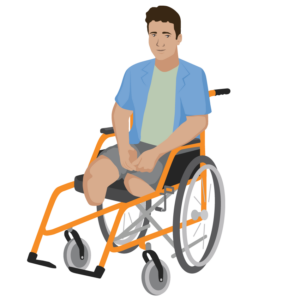
If the person has a double amputation and the wheelchair is not stable with the safe rear wheel position, it may be necessary to add extra weight to the footrest.
a and c are incorrect.
It is important for a person to be able to go up and down slopes safely. Encourage them to ask for assistance if they cannot do this by themselves.
Selecting an active rear wheel position would make the castor wheels more likely to lift up.
Discussion
Did you have difficulty deciding whether the fit of the wheelchair was correct?
If the backrest height or rear wheel position is not correct for the person, adjust the height or position.
Look at the product manual that comes with the wheelchair to learn how to adjust its features.