Personal remote microphone systems
Personal remote microphone systems assist people who use hearing aids or cochlear implants to hear words more clearly in difficult listening situations, which include:
- Noise
- Echo
- Distance.
Noise
Background noise can be inside or outside the room where a person is speaking. The sounds of speech become less clear when there is more background noise.
Echo
Some rooms or buildings echo sounds more than others. Hard walls, high ceilings, windows without curtains and floors without carpets create more of an echo sound. This makes the sounds of speech less clear.
Distance
The sounds of speech become less clear when there is more distance between the person speaking and the person listening.
A personal remote microphone system sends sounds directly to a person’s hearing aids or cochlear implants. This makes the words of the person speaking louder and/or clearer when there is background noise, echo or distance. This improves the effectiveness of hearing aids and cochlear implants in these environments. For example, hearing and understanding a teacher speaking in a classroom
Instruction
Read on to learn about people benefitting from using personal remote microphone systems in different environments.
People who use personal remote microphone systems
People who benefit from using personal remote microphone systems have hearing loss and use hearing aids or cochlear implants. These systems assist people by making it easier to hear and understand speech in difficult listening environments.
Question
Which one of these people is most likely to benefit from a personal remote microphone system?
Click to check answers.
Incorrect.
People with normal hearing usually do not benefit from using hearing assistive products.
Correct!
A personal remote microphone system can improve the effectiveness of hearing aids in noisy environments like classrooms.
Incorrect.
A child with hearing loss should be assessed to check if they would benefit from hearing aids.
Incorrect.
If a child is fully benefitting from hearing aids in different environments a personal remote microphone system may not be required.
Classes
Classrooms may have lots of background noise from inside and outside the classroom.
A child using hearing aids may find it difficult to hear the teacher speak. This can impact on learning.
Meet Basir

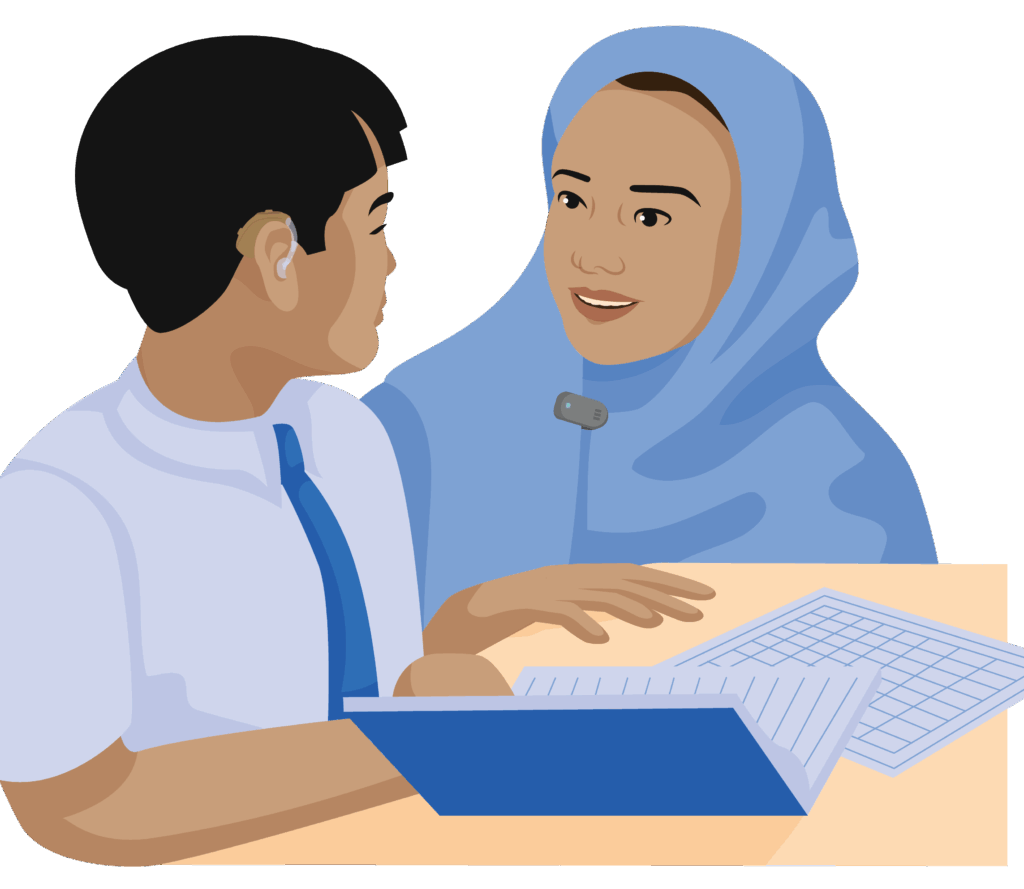
Basir is six years old and goes to school with his sister, Siti. Since getting programmable hearing aids Basir talks more at home and joins in at school.
At his follow up appointment, his parents say the teacher noticed Basir struggles to hear when the classroom is noisy or the teacher moves around.
The health worker suggests a personal remote microphone system to help Basir hear the teacher’s voice better and reduce background noise.
Lectures/presentations
It can be difficult for a person wearing hearing aids to hear a lecture or presentation when the person speaking is further away.
Meet Mahmoud

Mahmoud is 19 years old and studying at college. He has moderately severe hearing loss in both ears and wears hearing aids.
Mahmoud can clearly hear his classmates sitting next to him. He has difficulty hearing lectures even with his hearing aids on.
During his hearing aid follow up appointment his health worker recommended a personal remote microphone system.
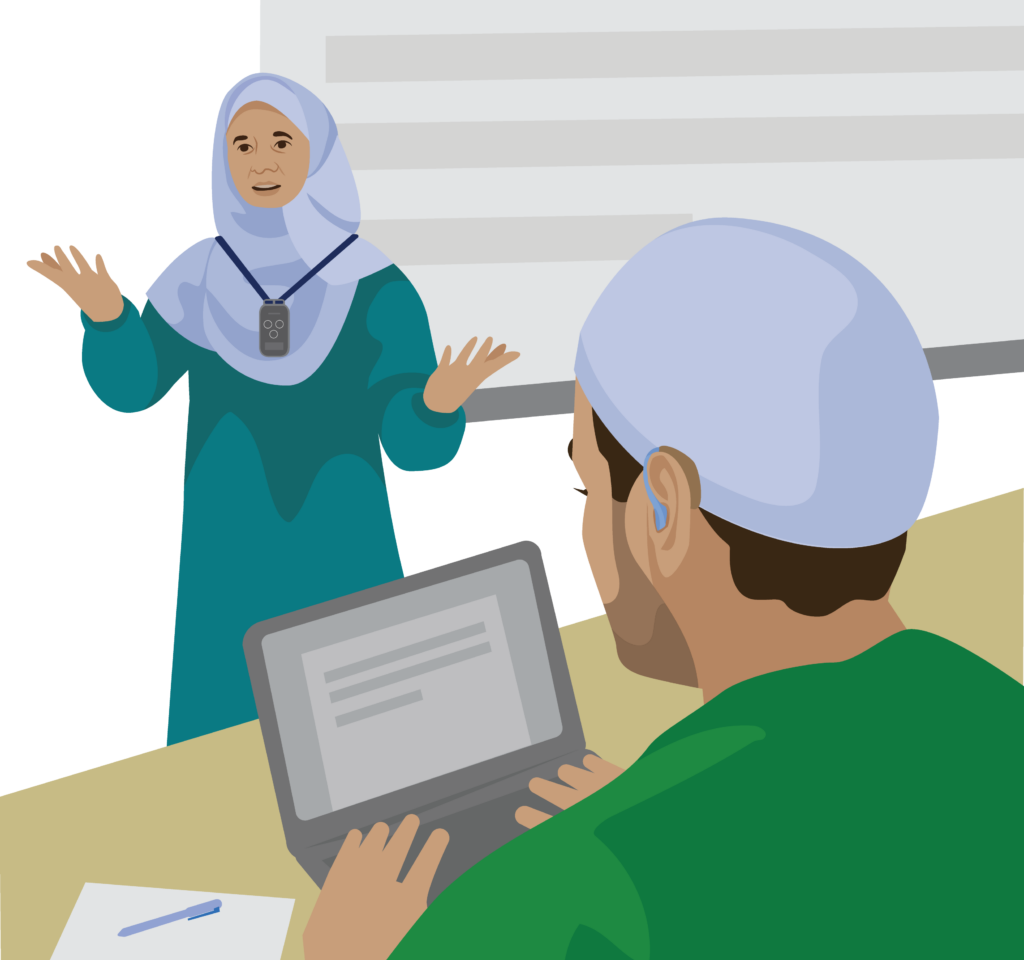
Now during lectures his professor wears a microphone transmitter. This connects to a receiver on Mahmoud’s hearing aids. Now Mahmoud can hear lectures clearly, even when sitting at a distance from his professor.
Group activities/social gatherings
In group activities such as workplace meetings, sports or social gatherings several people may speak at once. There may be frequent changes of the person speaking and background noise. This makes it difficult for a person to clearly hear and understand the words a person is saying.
Meet Eva
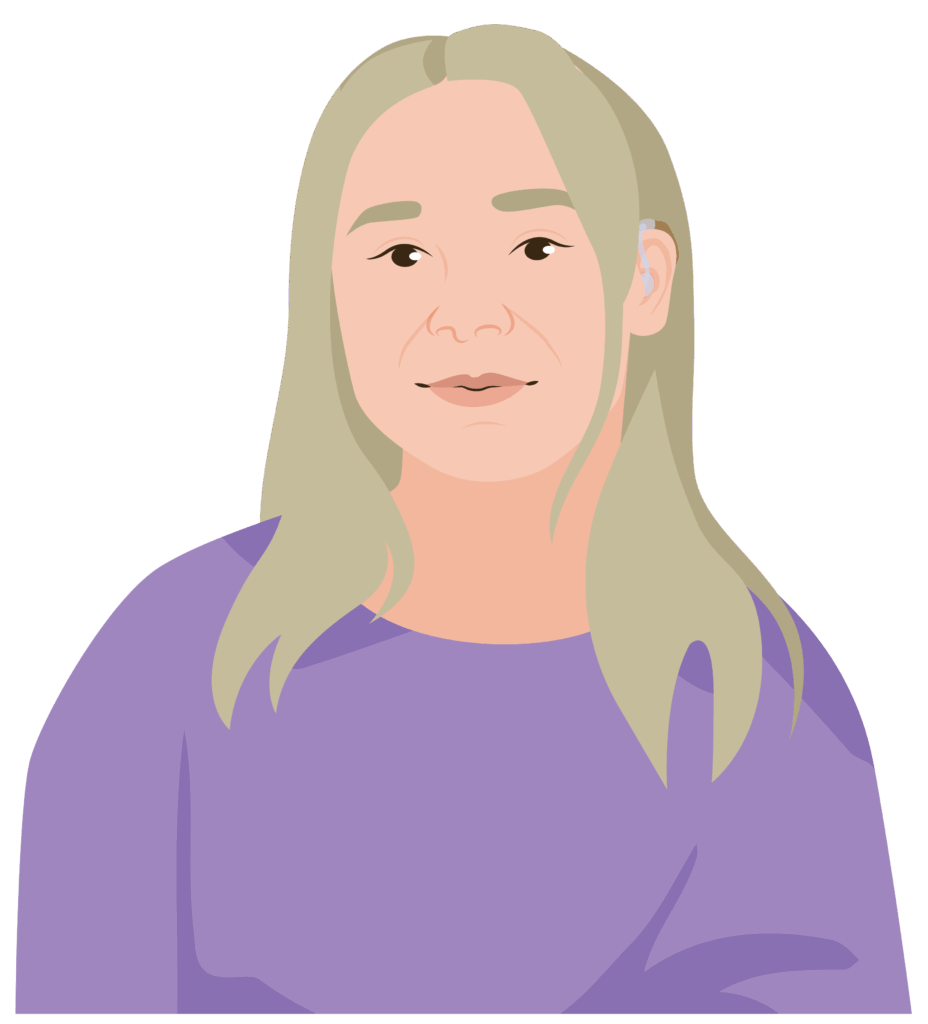
Eva is a 35 year old office worker who manages a team of ten people. Six months ago, she was fitted with preprogrammed hearing aids.
Eva requests a hearing aid follow up appointment at her service. She explains that she can follow one-on-one conversations but has difficulty hearing clearly during team meetings.
The health worker explains that a personal remote microphone system may assist her to hear more clearly in team meetings.
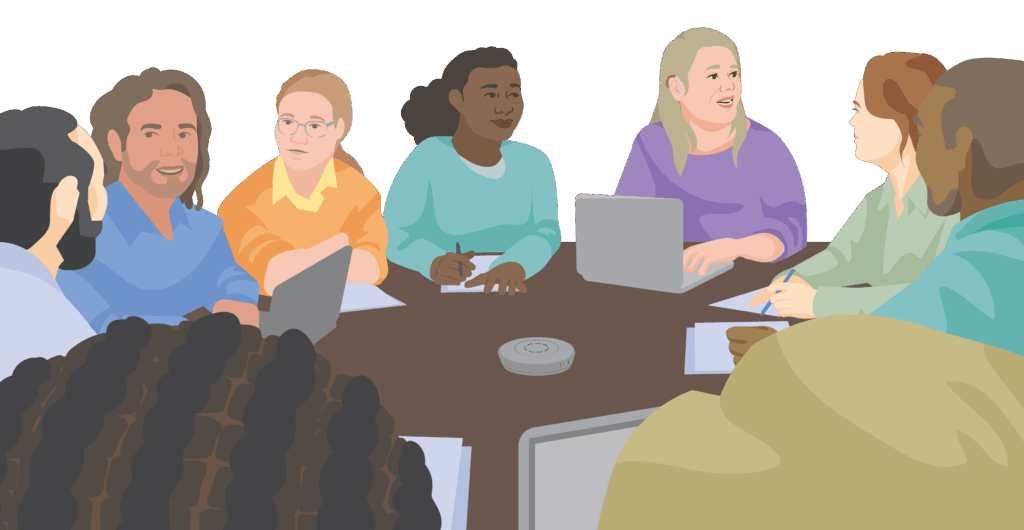
A receiver is attached to her hearing aids and paired with a tabletop microphone transmitter. Now Eva feels more confident at work. She can hear all team members clearly and participates more in meetings.
Places of worship
Places of worship often have difficult listening environments. The leader of worship may be standing at a distance when speaking and their words and sounds may echo. This makes it harder for a person to understand what they are saying.
Meet Malicka
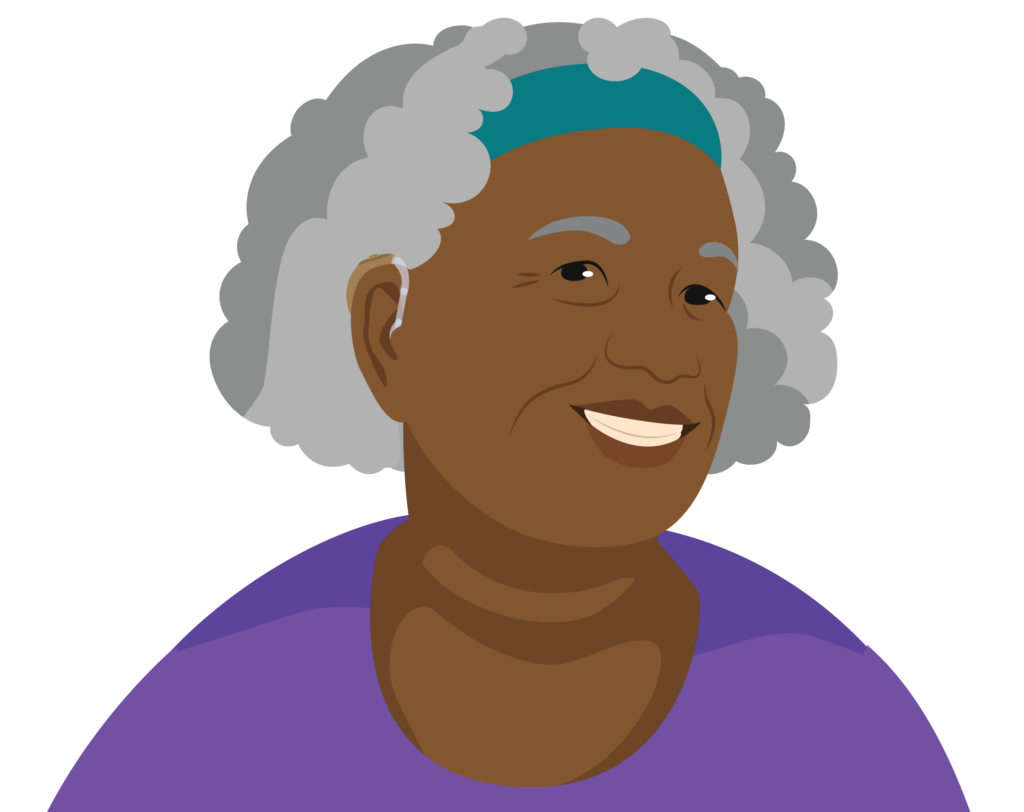
Malicka is a grandmother who lives with her family. Since getting preprogrammed hearing aids she can hear what her family are saying.
At her two year follow up, Malicka explains she has difficulty hearing at her place of worship. She cannot hear what the leader is saying. The health worker suggests using a personal remote microphone system. Now Malicka can hear clearly, even when sitting at a distance.
Instruction
Watch this video where Tichafa talks about how he benefits from using a personal remote microphone system.