There are two simple vision tests that are carried out after the eye health check. These are:
- Simple distance vision test for people 8 years and older
- Simple near vision test for people 40 years and older.
The TAP vision screen E-Charts
The TAP vision screen is to be used only for screening, not for a full vision assessment.
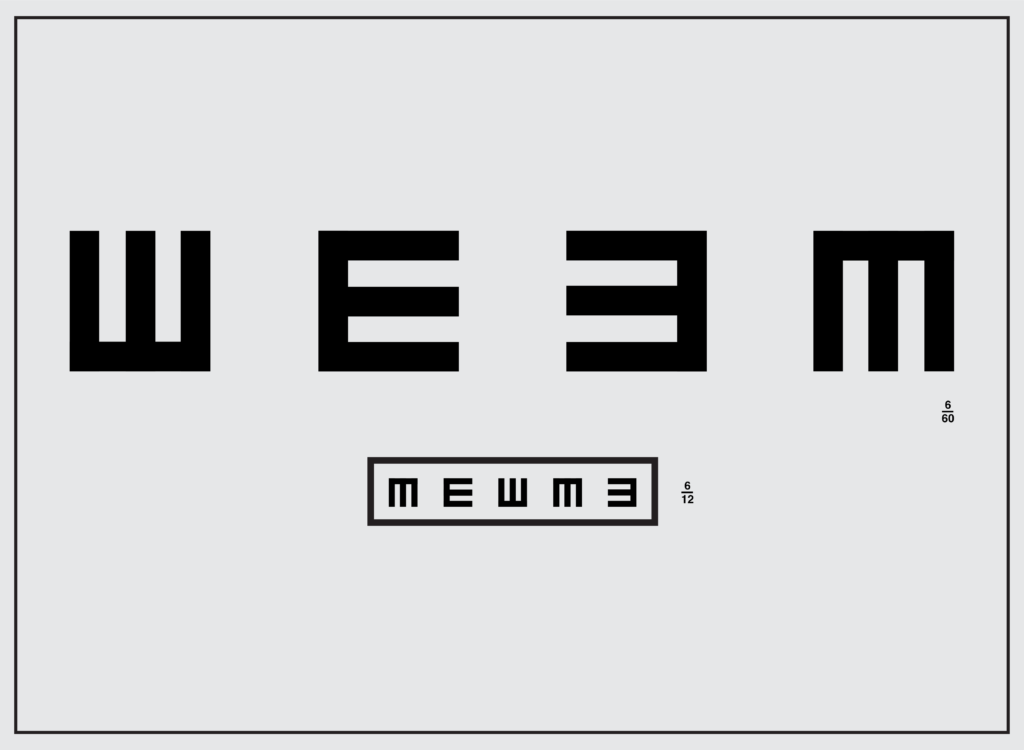
The charts are made up of different sized ‘Es’ facing in different directions.
They can be used to carry out both the simple distance vision test and the simple near vision test.
For each test, people indicate the direction of the ‘open’ end of the E ‘legs’.
If they are correct, it shows that the person can see the E clearly.
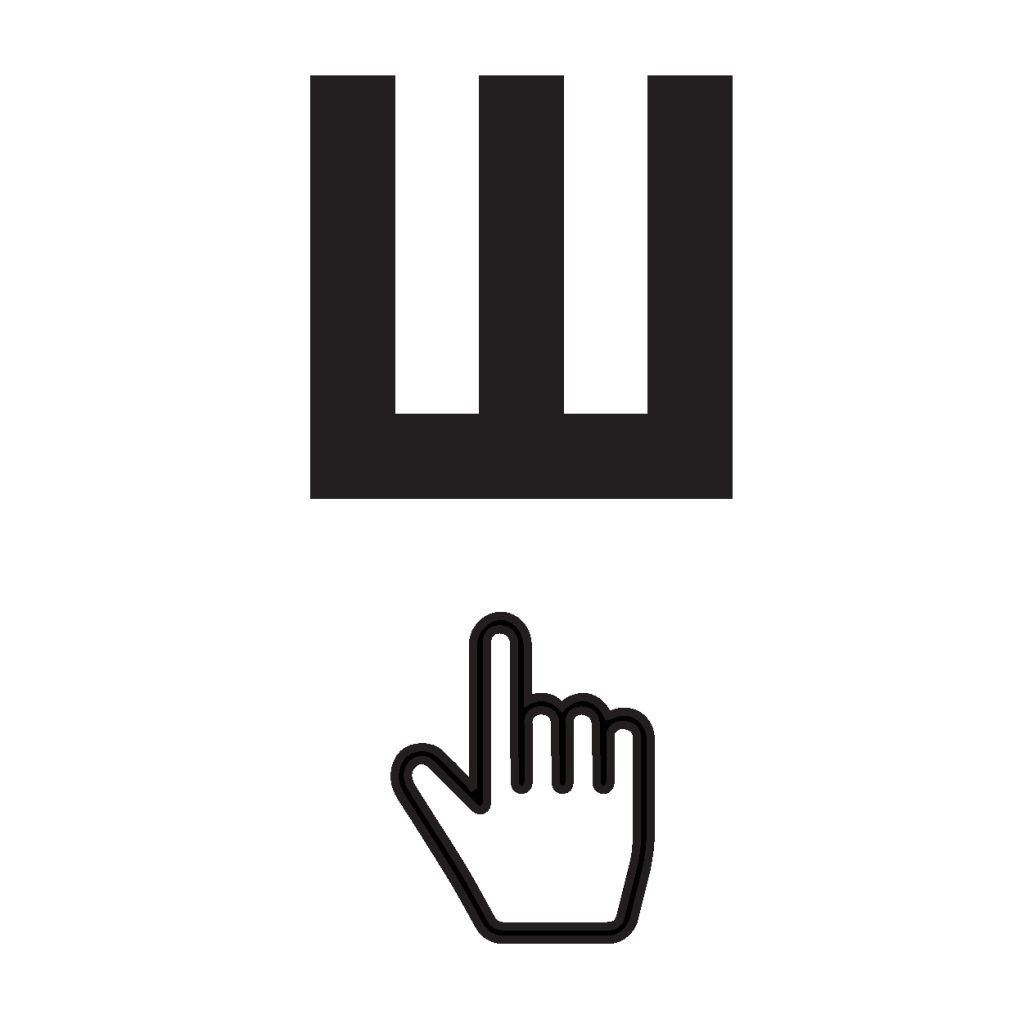
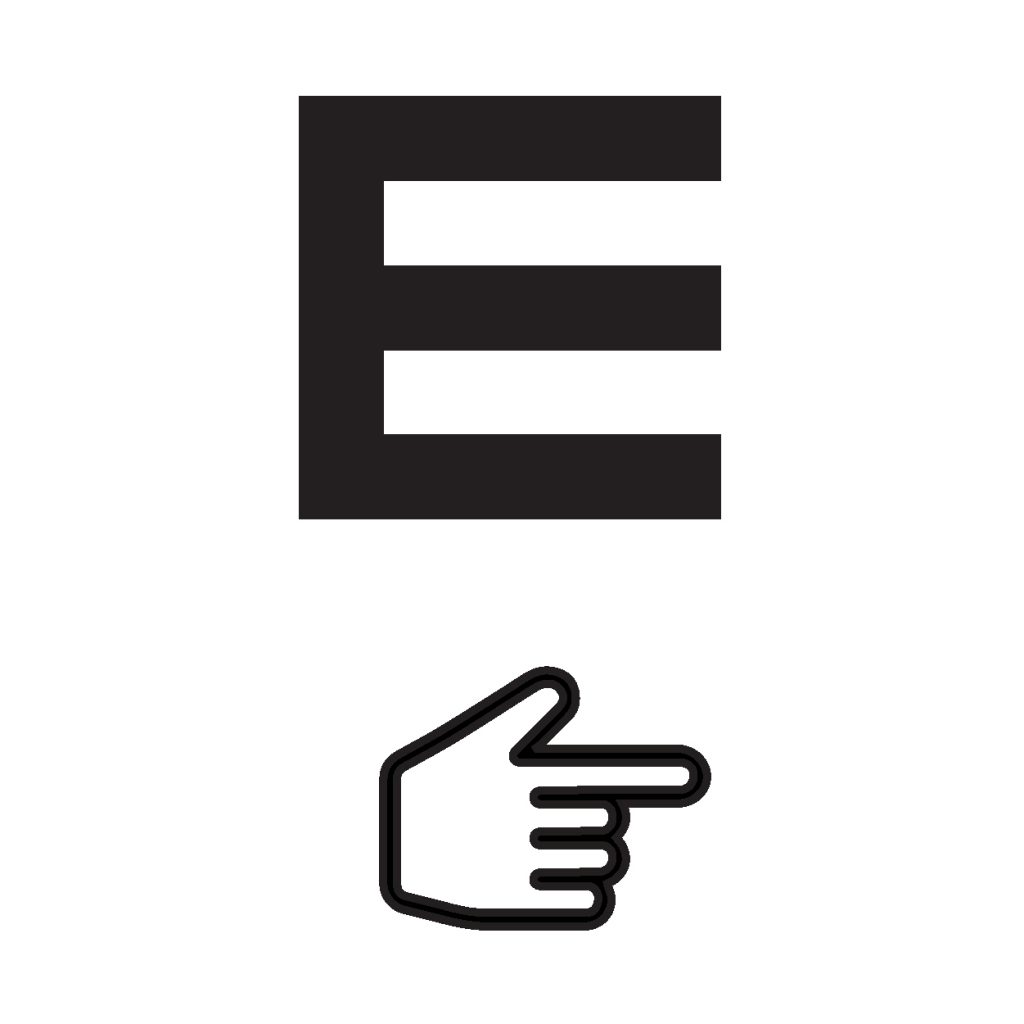
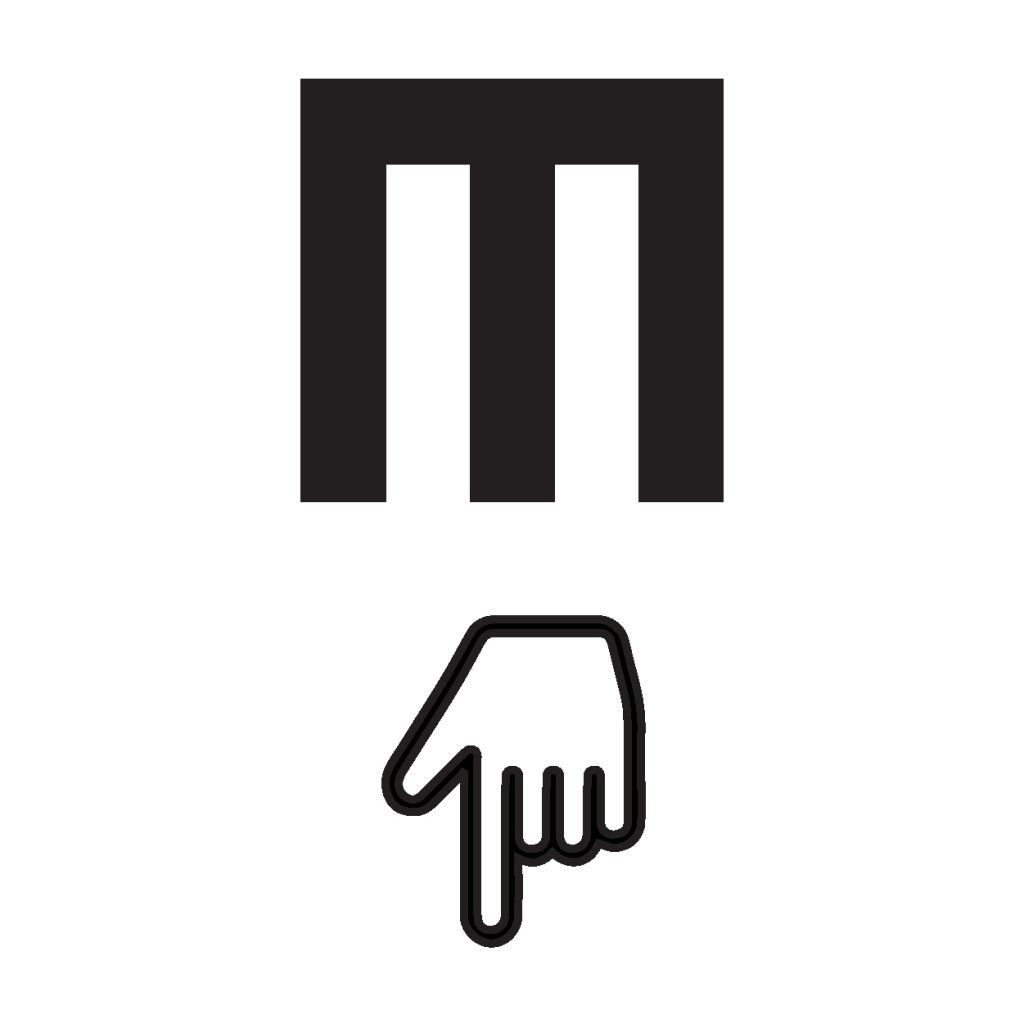
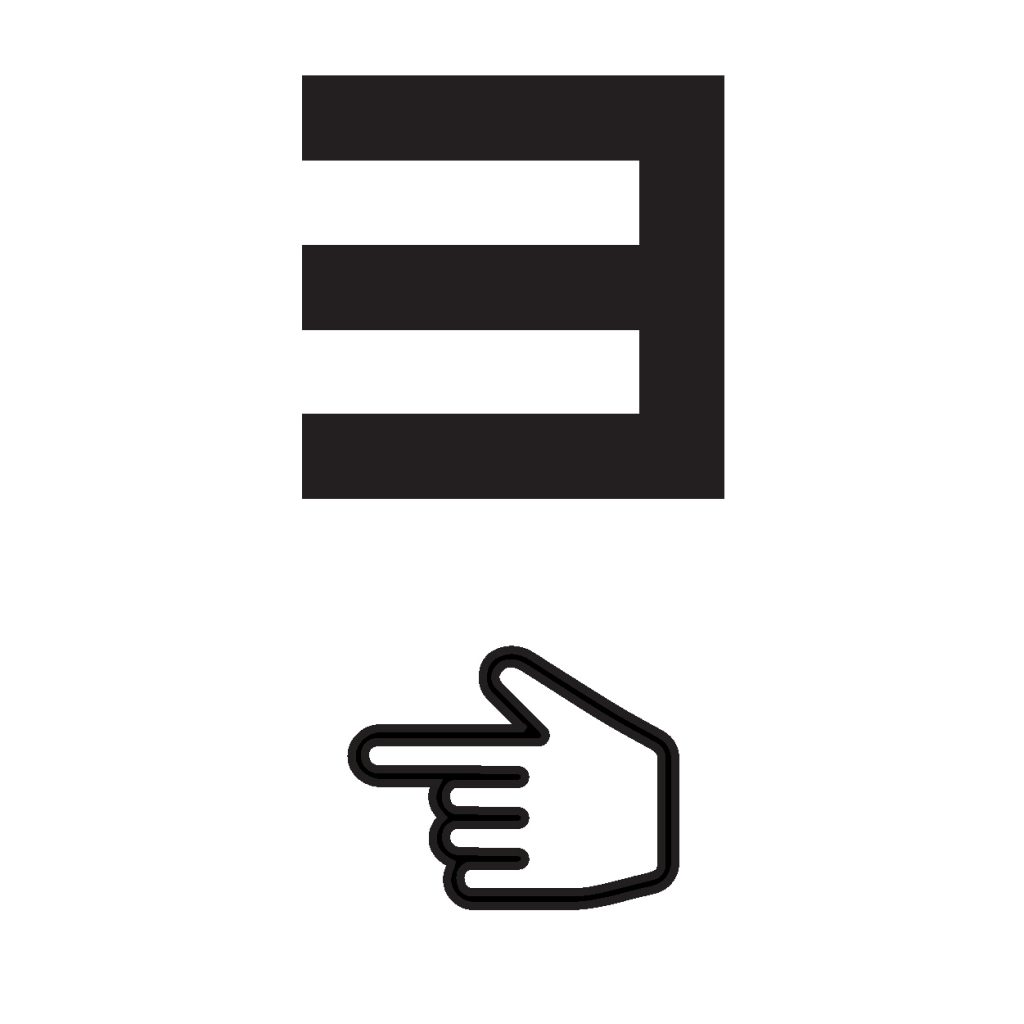
Tip
The numbers next to each row of Es describe the size of the Es.
Prepare the person
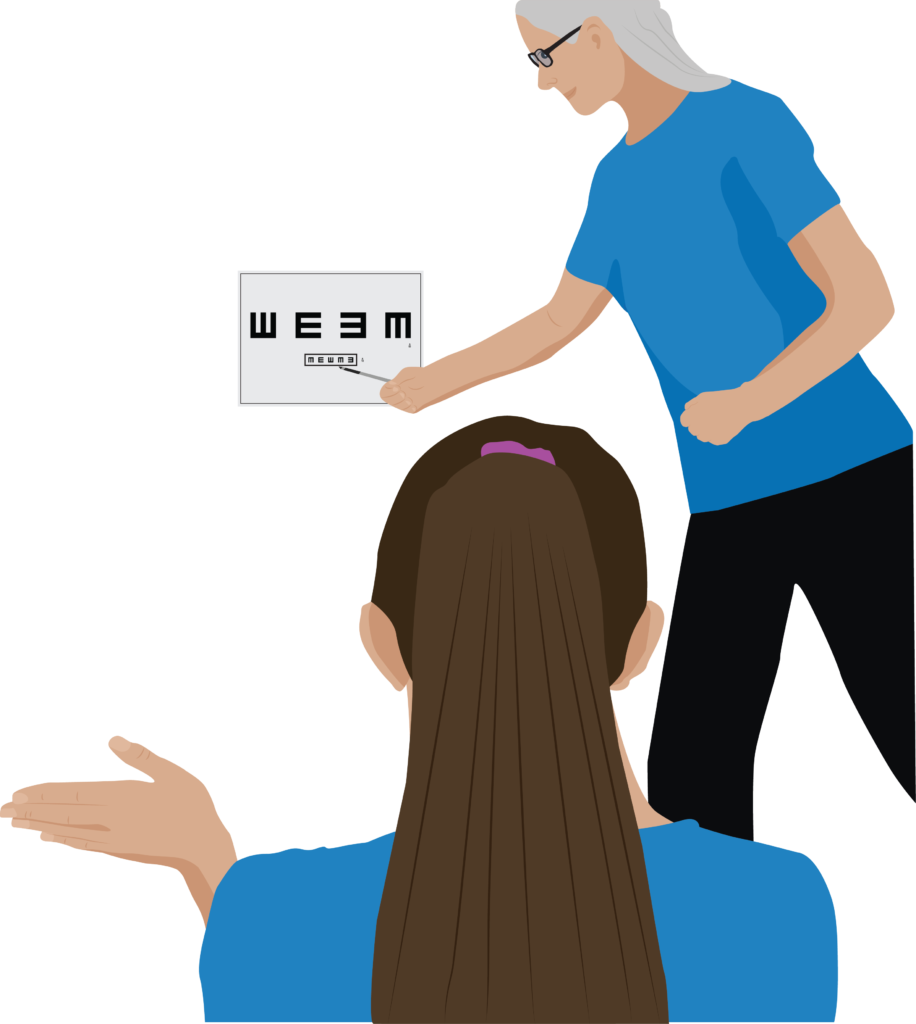
Ask the person to sit on the chair and show them the E-Charts.
Explain to them:
- You will use the charts to find out how well they see into the distance and up close (near).
- For the distance test, you will test one eye at a time, by asking them to cover one eye while you test the other.
- During the test you will ask them to look at E’s on the chart.
- For each E you point to, they need to indicate the direction of the “legs” of each “E”. They can do this with their hands, or words.
Practise with them so you know they understand.
Check if the person has spectacles
Ask the person if they have spectacles that were prescribed for them.
If yes, ask if the spectacles are for:
- Seeing in the distance, or
- Seeing up close (near)
If the spectacles are for seeing into the distance, they should wear these spectacles during the distance vision test.
If the spectacles are for seeing up close, they should wear these spectacles during the near vision test.
If they are not sure, or if the spectacles were not individually prescribed for them, they should not wear them during the test. This could lead to a false test.
Prepare the space
The simple distance vision test is done with the person looking at the E-Chart from 3 metres away.
Either:
- Hold the E-Chart in front of you for the person to see OR
- Pin up the E-Chart on a wall.
The person being tested should be seated.
To prepare the space:
- If you will hold the chart – mark on the floor where you are going to stand.
- If the chart is pinned onto a wall – place it at sitting eye level.
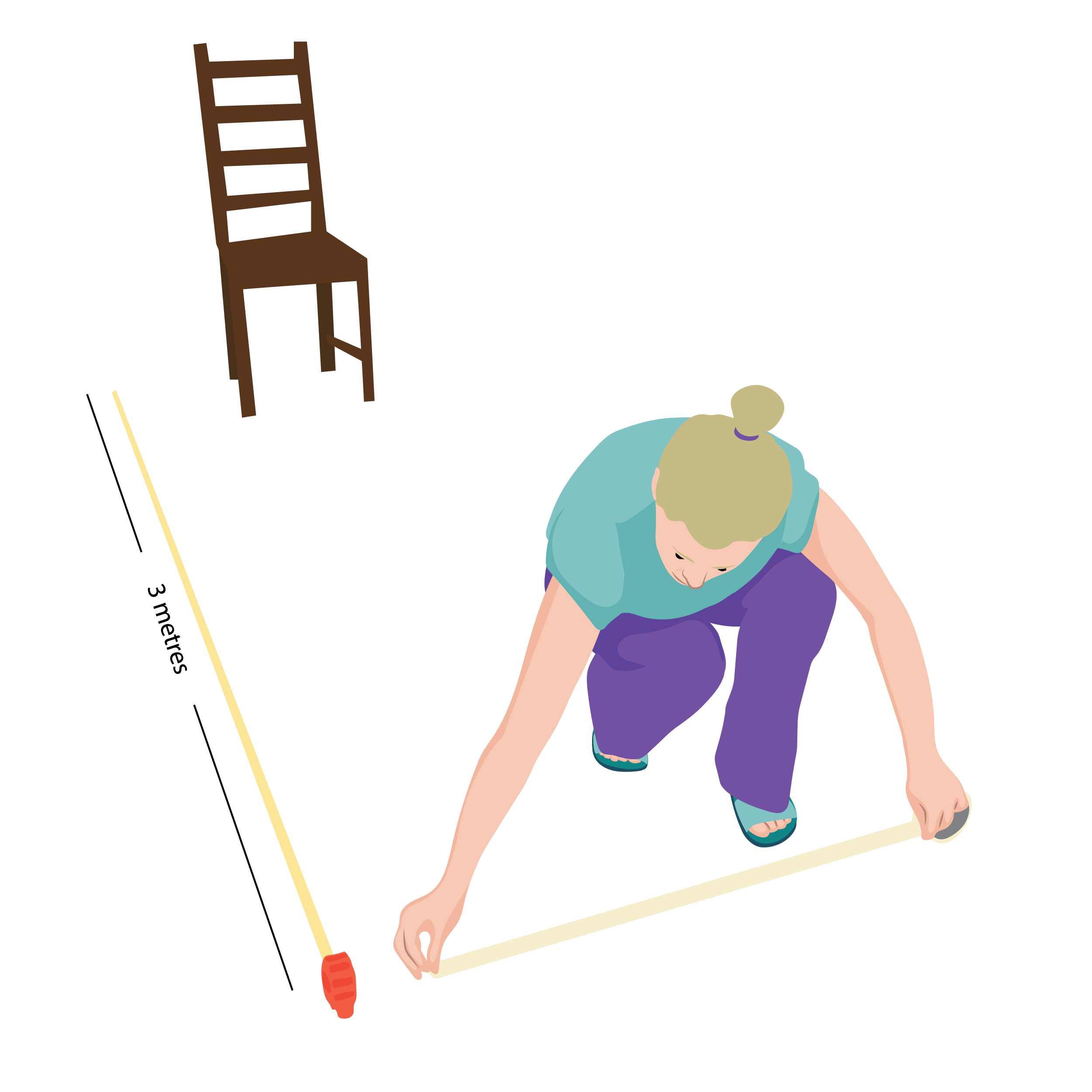
- Place a chair so the backrest is 3m away from the chart.
- Mark on the floor where the chair should be so that if it is moved you can easily place it back in the right spot.
If you are doing vision screening in different locations, have a 3m length of string that you can use to quickly mark out the distance.
Simple distance vision test method
Standing 3 metres away from the person, hold up the E-Chart.
Always test one eye at a time.
1. Test the right (R) eye first.
2. Ask the person to gently cover their left eye with the palm of their hand. Make sure they do not press hard.
3. Point to the top line of E’s. Make sure that you do not cover the E with your hand or pointer. Ask the person to indicate the direction of the E legs.
- If the person can indicate the correct direction of 2 or more of the 4 E’s on the top line, record Yes and continue to the bottom line.
- If the person indicates the correct direction of fewer than 2 of the E’s on the top line, record No and continue to the left eye.
4. Point to the bottom line of E’s. Ask the person to indicate the direction of the E legs.
- If the person can indicate the correct direction of 3 or more of the 5 E’s on the bottom line, record Yes.
- If the person indicates the correct direction of fewer than 3 of the E’s on the bottom line, record No.
5. Repeat steps 1 to 4 for the left eye.
6. Record on the form:
- If Yes to top and bottom lines in both eyes, they have passed the distance vision screen. Check:
- If the person is under 40 years Continue to plan.
- If the person is 40 years or older Continue to near vision test.
- If No to any:
- Top line Refer to eye health professional urgently.
- Bottom line Refer to eye health professional.
- If person has seen eye health professional in last 3 months Assess for low vision assistive products.
If person is not able to understand or carry out the instructions, do not continue with the distance vision test. Record not able to complete distance vision test Refer to eye health professional.
Instruction
Click on the video to see how to perform the simple distance vision test.
Simple near vision test method
Ask the person to hold the E-Chart in front of them. If they cannot hold it easily, you can hold it for them.
The distance between the E-Chart and the person’s eyes should be about 40cm or a distance that is comfortable for them to hold the E-Chart to read.
Test both eyes at the same time (both eyes open).
1. Point to the row of 5 Es (simple near vision test Es). Ask the person to indicate the direction of the legs for each E in the row.
- If the person correctly indicates the direction of 3 or more E’s, they do not require near vision spectacles.
- If the person does not correctly indicate the direction of 3 or more Es, they may require near vision spectacles.
2. Record the results on the vision screen form.
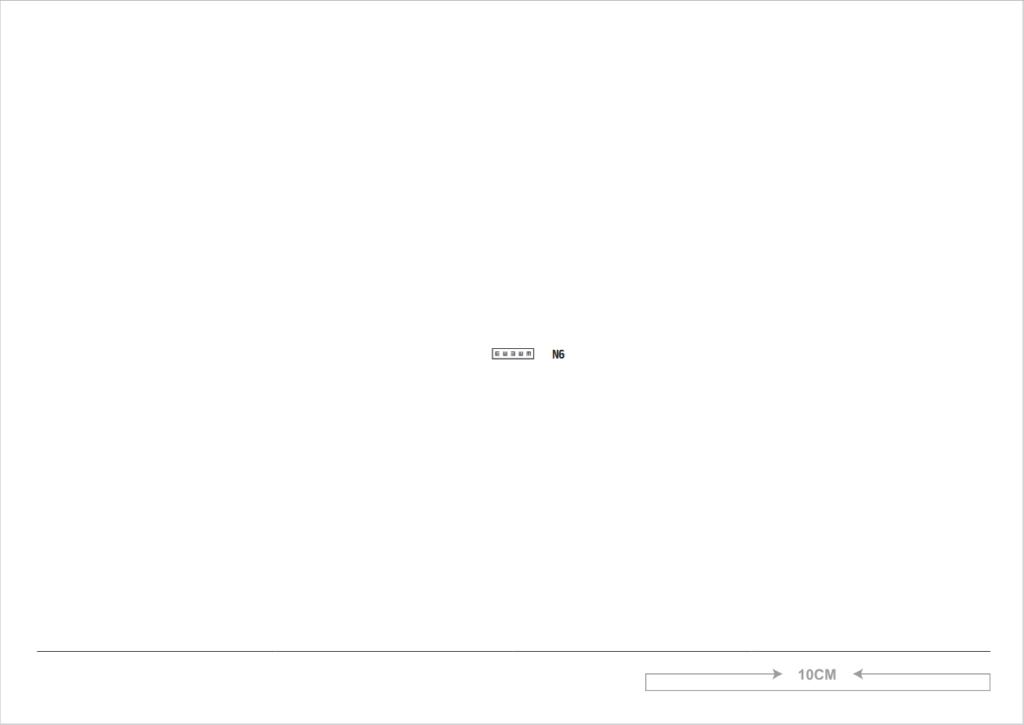
Instruction
Click on the video to see how to perform the simple near vision test.