Hay dos pruebas sencillas de la visión que se realizan después del chequeo ocular. Son las siguientes:
- Simple distance vision test for people 8 years and older
- Simple near vision test for people 40 years and older.
The TAP vision screen E-Charts
The TAP vision screen is to be used only for screening, not for a full vision assessment.
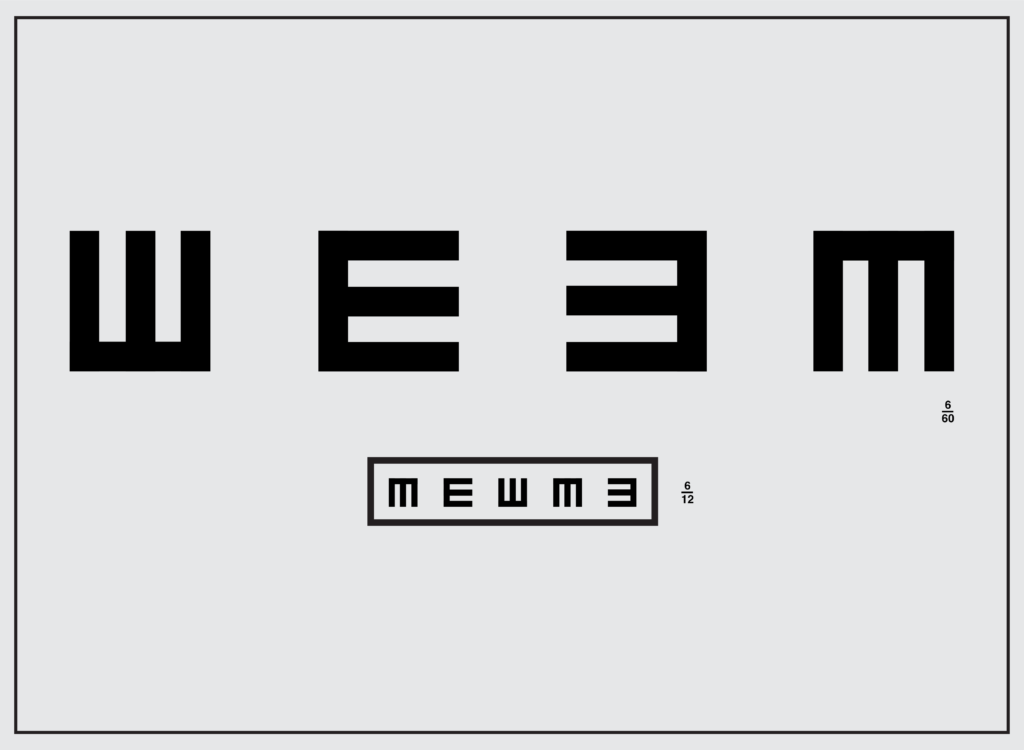
The charts are made up of different sized ‘Es’ facing in different directions.
They can be used to carry out both the simple distance vision test and the simple near vision test.
Para cada prueba, la persona debe indicar la dirección del extremo "abierto" de las "patas" de cada letra E.
Si las respuestas son correctas, demuestra que la persona puede ver la E con claridad.
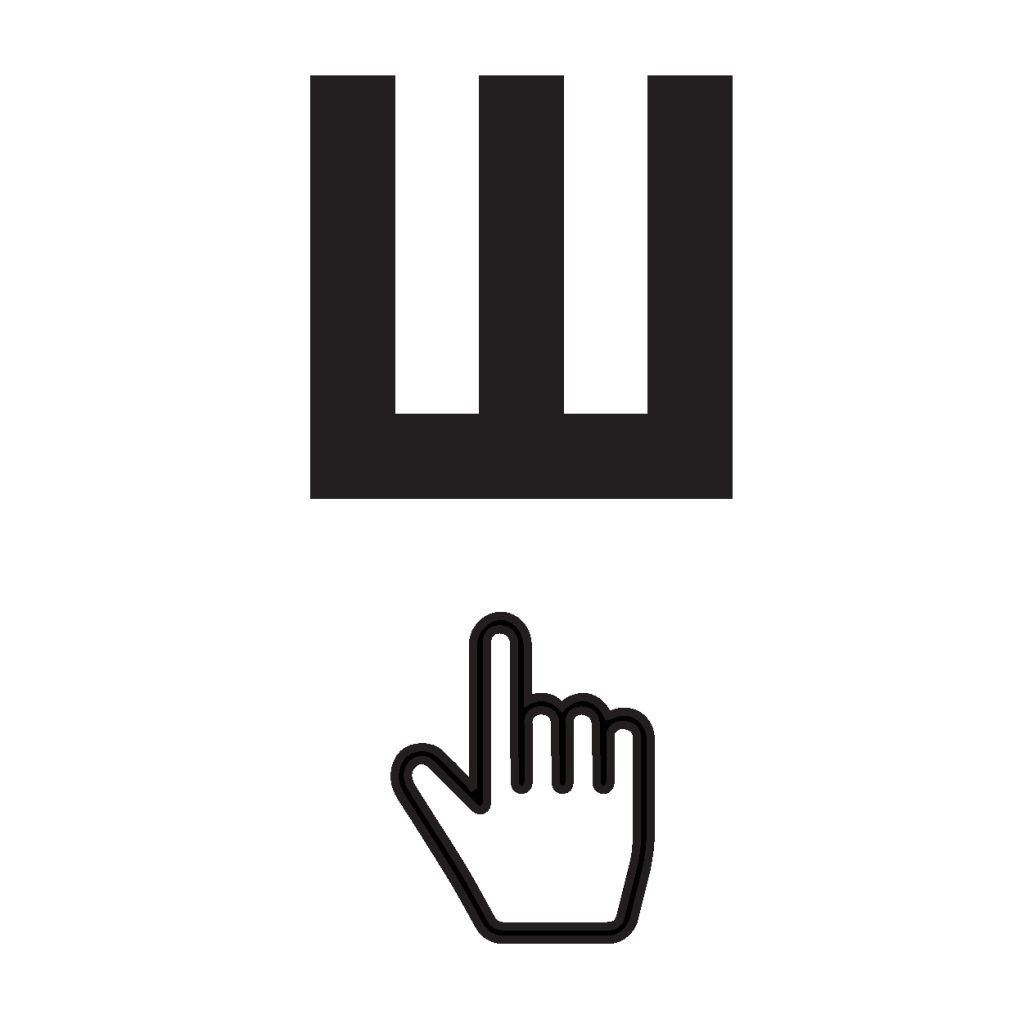
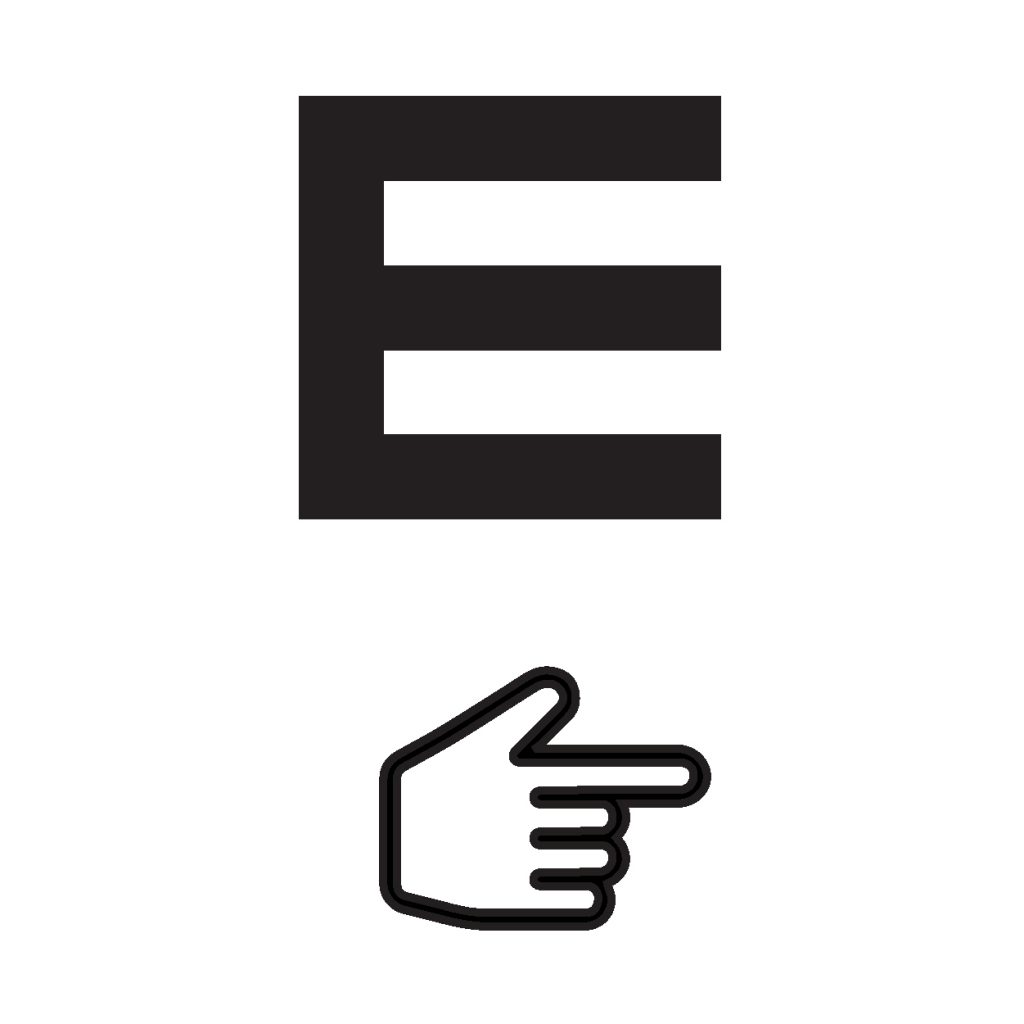
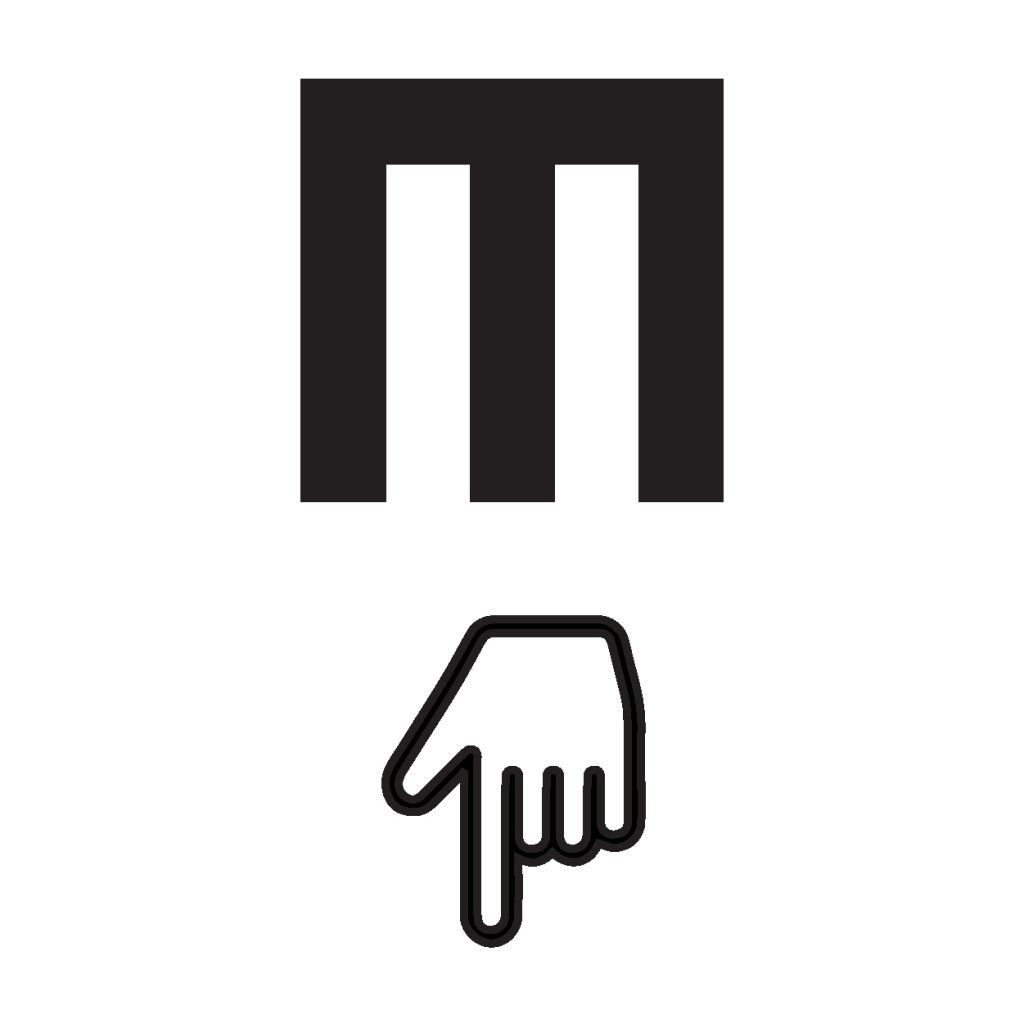
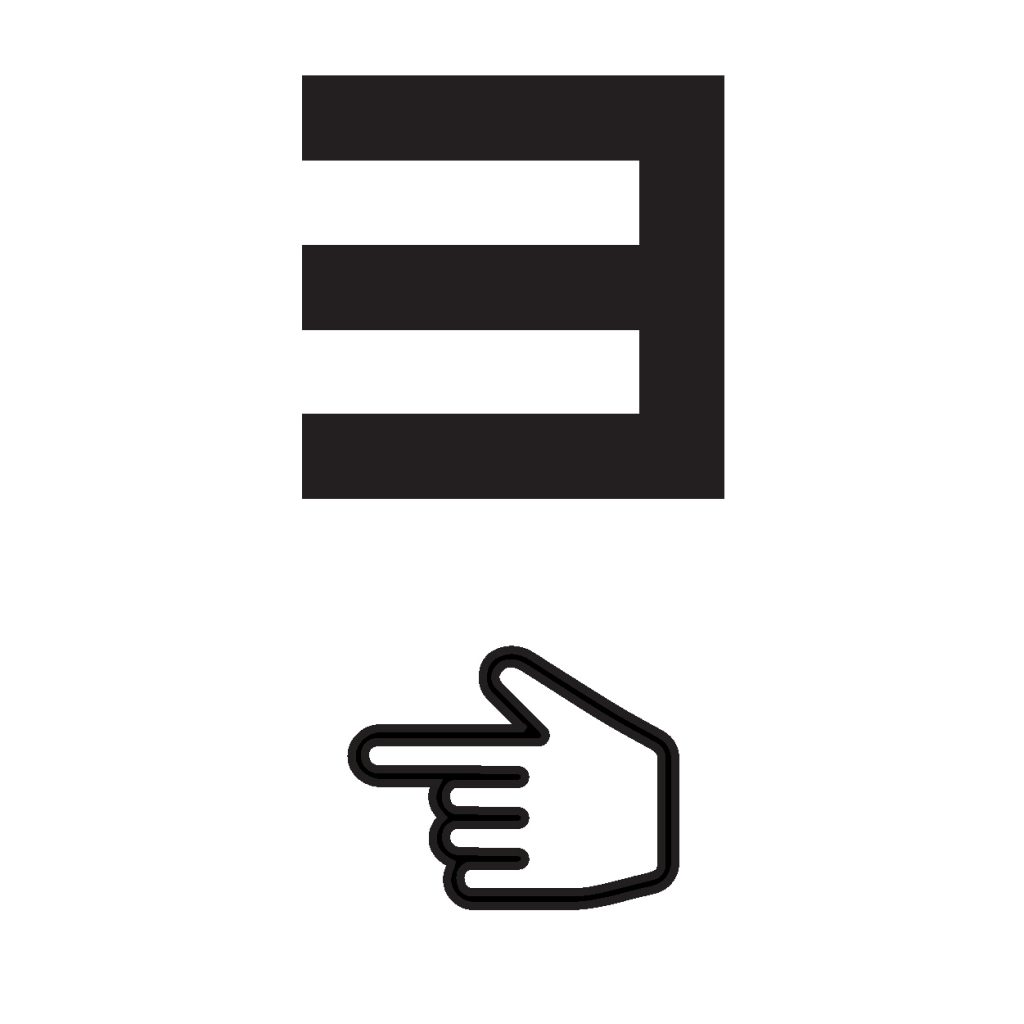
Consejos
Los números que aparecen junto a cada fila de letras E indican su tamaño.
Prepare a la persona
Ask the person to sit on the chair and show them the E-Charts.
Explíquele lo siguiente:
- You will use the charts to find out how well they see into the distance and up close (near).
- Para la prueba de agudeza visual de lejos, se hará la prueba con cada ojo, para lo que le pedirá que se tape un ojo mientras se examina el otro.
- Durante la prueba le pedirá que mire las letras E en la tabla.
- Para cada "E" que señale, la persona deberá indicar la dirección de las "patas" de cada letra. Puede utilizar las manos o indicarlo en voz alta.
Practique con la persona para confirmar que entendió las instrucciones.
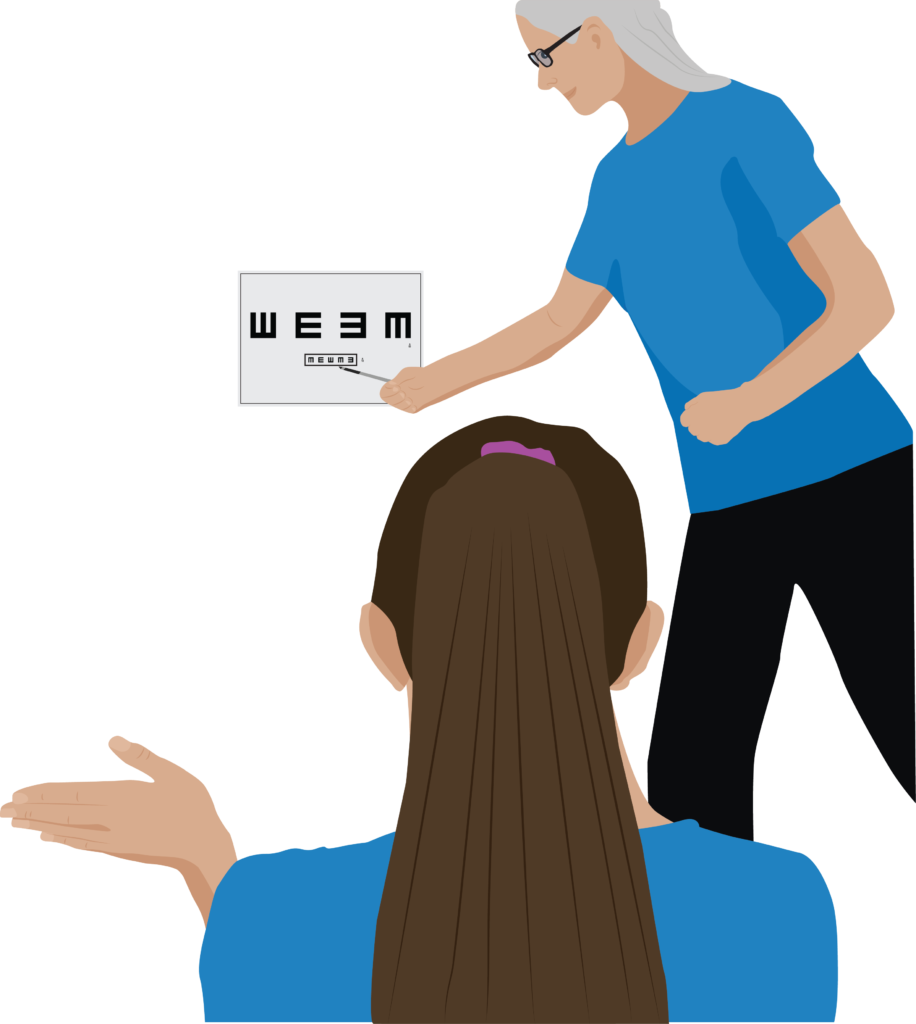
Check if the person has spectacles
Ask the person if they have spectacles that were prescribed for them.
If yes, ask if the spectacles are for:
- Ver de lejos
- Ver de cerca
If the spectacles are for seeing into the distance, they should wear these spectacles during the distance vision test.
If the spectacles are for seeing up close, they should wear these spectacles during the near vision test.
If they are not sure, or if the spectacles were not individually prescribed for them, they should not wear them during the test. This could lead to a false test.
Preparación del espacio
La prueba sencilla de agudeza visual de lejos se realiza con la persona mirando la tabla optométrica con letras E giratorias a 3 metros de distancia.
Alternativas:
- Sostenga la tabla optométrica delante suyo para que la persona la pueda ver.
- Cuelgue la tabla optométrica en una pared.
La persona que realiza la prueba debe estar sentada.
Preparación del espacio:
- Si decide sostener la tabla con las manos, marque en el suelo dónde se ubicará.
- Si decide colgar la tabla optométrica en la pared, hágalo a la altura de los ojos de una persona sentada.
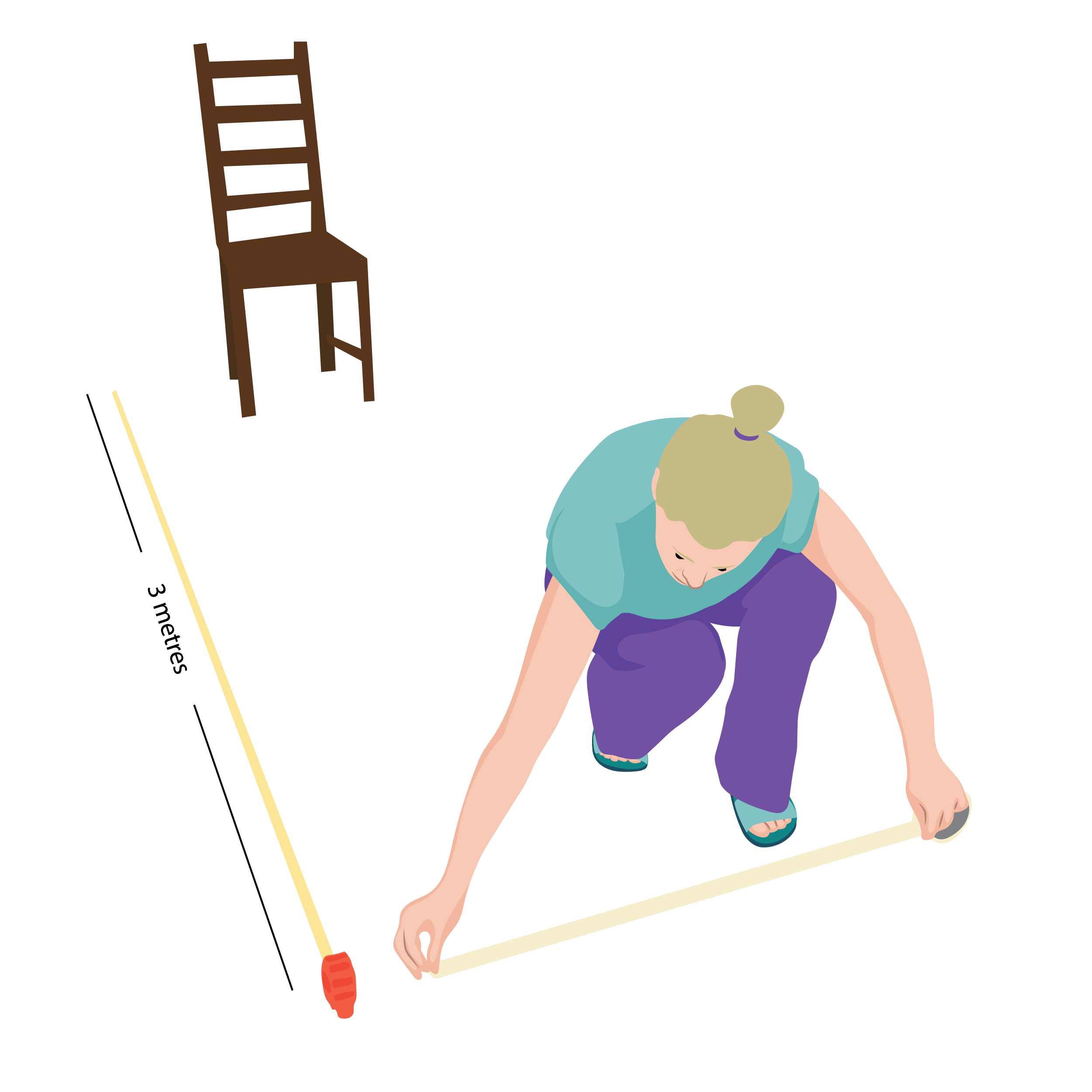
- Coloque una silla de modo que el respaldo esté a 3 metros de la tabla optométrica.
- Marque en el suelo dónde debe ubicar la silla para que, si alguien la mueve, la pueda colocar rápidamente en el lugar correcto.
Si va a llevar a cabo exploraciones para la visión en distintos lugares, lleve consigo un cordón de 3 metros de longitud para determinar rápidamente la distancia adecuada.
Método de la prueba sencilla de agudeza visual de lejos
Párese a 3 metros de la persona y sostenga la tabla optométrica con la letra E giratoria.
Realice la prueba primero con un ojo y luego con el otro.
1. Test the right (R) eye first.
2. Ask the person to gently cover their left eye with the palm of their hand. Make sure they do not press hard.
3. Point to the top line of E’s. Make sure that you do not cover the E with your hand or pointer. Ask the person to indicate the direction of the E legs.
- If the person can indicate the correct direction of 2 or more of the 4 E’s on the top line, record Yes and continue to the bottom line.
- If the person indicates the correct direction of fewer than 2 of the E’s on the top line, record No and continue to the left eye.
4. Point to the bottom line of E’s. Ask the person to indicate the direction of the E legs.
- If the person can indicate the correct direction of 3 or more of the 5 E’s on the bottom line, record Yes.
- If the person indicates the correct direction of fewer than 3 of the E’s on the bottom line, record No.
5. Repeat steps 1 to 4 for the left eye.
6. Record on the form:
- If Sí. to top and bottom lines in both eyes, they have passed the distance vision screen. Check:
- If the person is under 40 years Continue to plan.
- If the person is 40 years or older Continue to near vision test.
- If No. to any:
- Top line Refer to eye health professional urgently.
- Bottom line Refer to eye health professional.
- If person has seen eye health professional in last 3 months Assess for low vision assistive products.
If person is not able to understand or carry out the instructions, do not continue with the distance vision test. Record not able to complete distance vision test Refer to eye health professional.
Instrucciones
Click on the video to see how to perform the simple distance vision test.
Método sencillo de prueba de agudeza visual de cerca
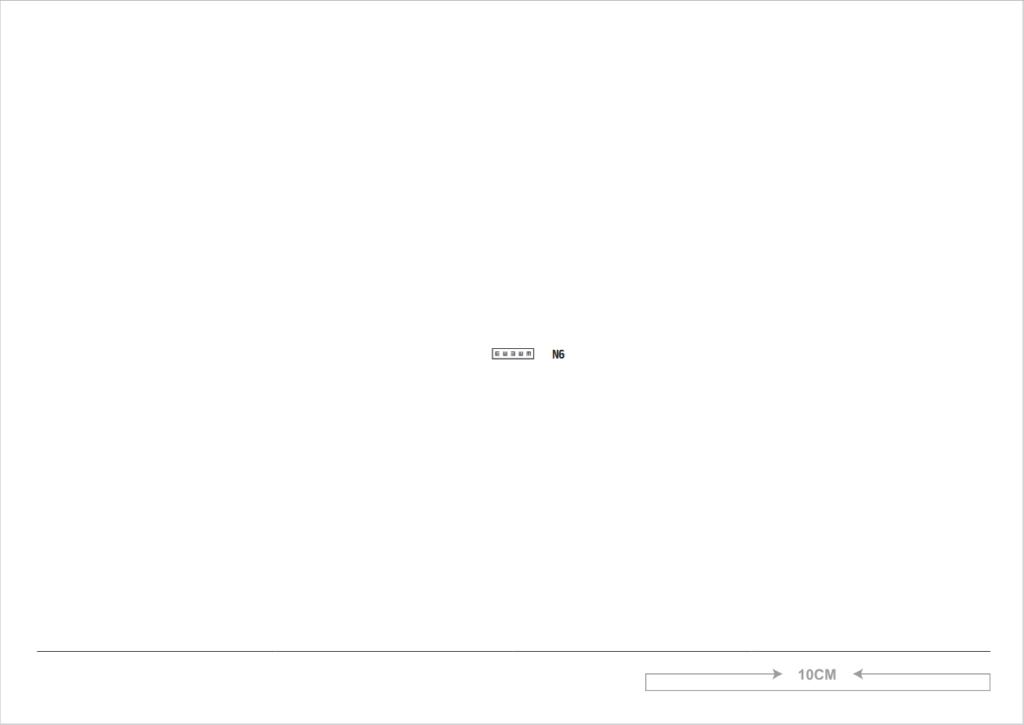
Pídale a la persona que sostenga la tabla optométrica con letras E giratorias delante de ella. Si no puede hacerlo con facilidad, puede hacerlo usted en su lugar.
La distancia entre la tabla optométrica con letras E giratorias y los ojos de la persona debe ser de unos 40 cm o una distancia que le resulte cómoda a la persona para leerla.
Realice la prueba en ambos ojos al mismo tiempo (con los dos ojos abiertos).
1. Point to the row of 5 Es (simple near vision test Es). Ask the person to indicate the direction of the legs for each E in the row.
- If the person correctly indicates the direction of 3 or more E’s, they do not require near vision spectacles.
- If the person does not correctly indicate the direction of 3 or more Es, they may require near vision spectacles.
2. Registre los resultados en el formulario de exploración de la visión.
Instrucciones
Click on the video to see how to perform the simple near vision test.