It is important to teach a person how to use dressing aids.
Explain that it can take time and practice to use dressing aids, particularly if using with one hand.
Encourage the person to do as much as they are able to themselves.
You may also need to teach the person’s caregiver or family member how to assist the person when they first start using it.
What to teach
For a person to use dressing aids more easily, support the person to:
- Select a suitable dressing position
- Consider how to get dressed and undressed
- Consider using different types of clothes and shoes
- Learn how to use the dressing aid.
Changing dressing position
A person will find it easier and less tiring to use a dressing aid if they choose a dressing position where they feel safe and able to balance well.
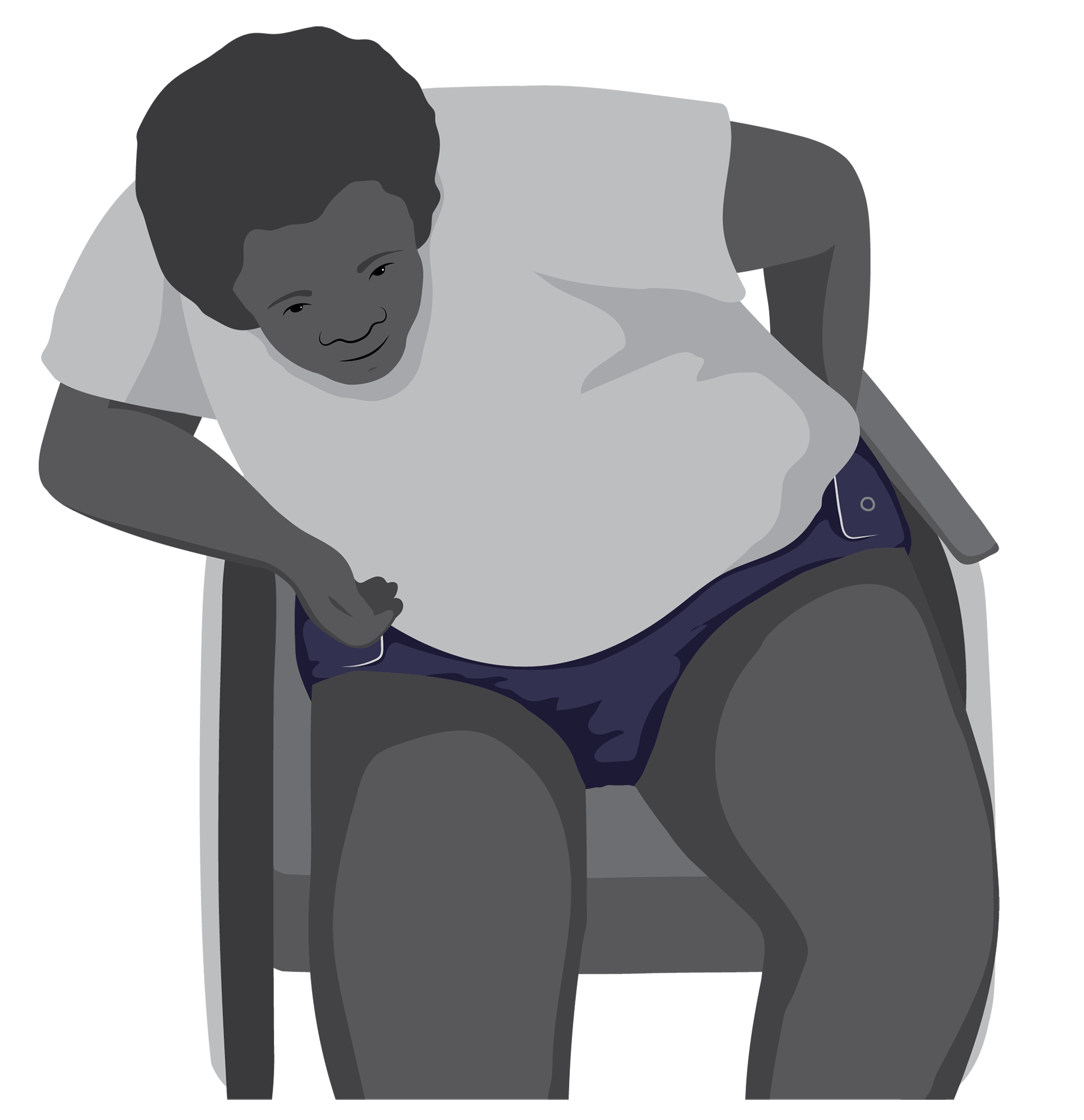
Sitting
If the person gets tired or has difficulty with balance start by teaching them to use the dressing aid while sitting down.
The person must be able to lift their bottom up off the seat to pull on or take off clothes.
Lying down
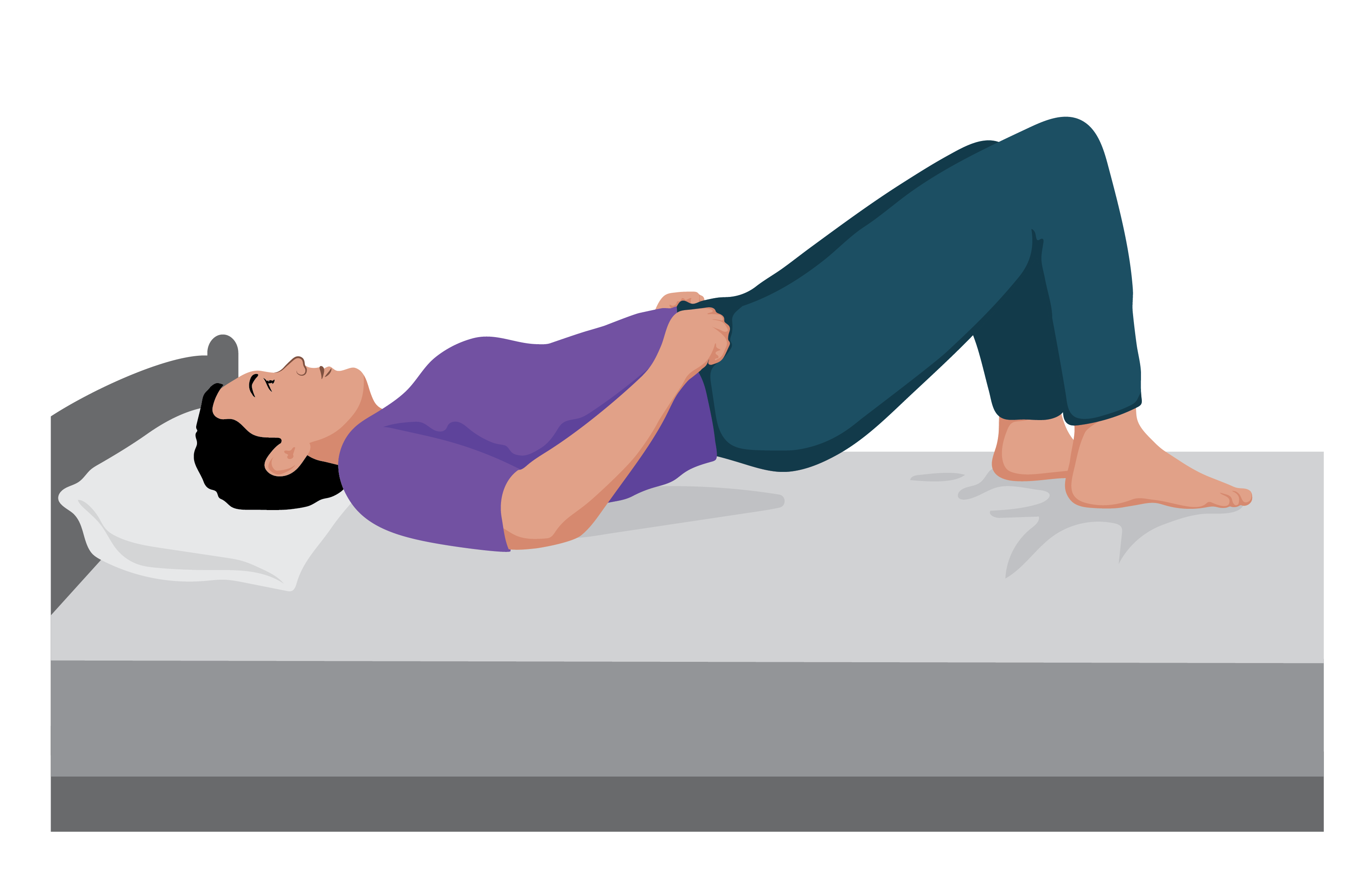
If the person has difficulty standing and sitting, try changing position to lying down.
The person must be able to lift their bottom up off the bed or floor or be able to roll from side to side.
If the person is unable to do this, they may need:
- Assistance to get dressed
- A referral to a rehabilitation service.
Question
Meet Verna
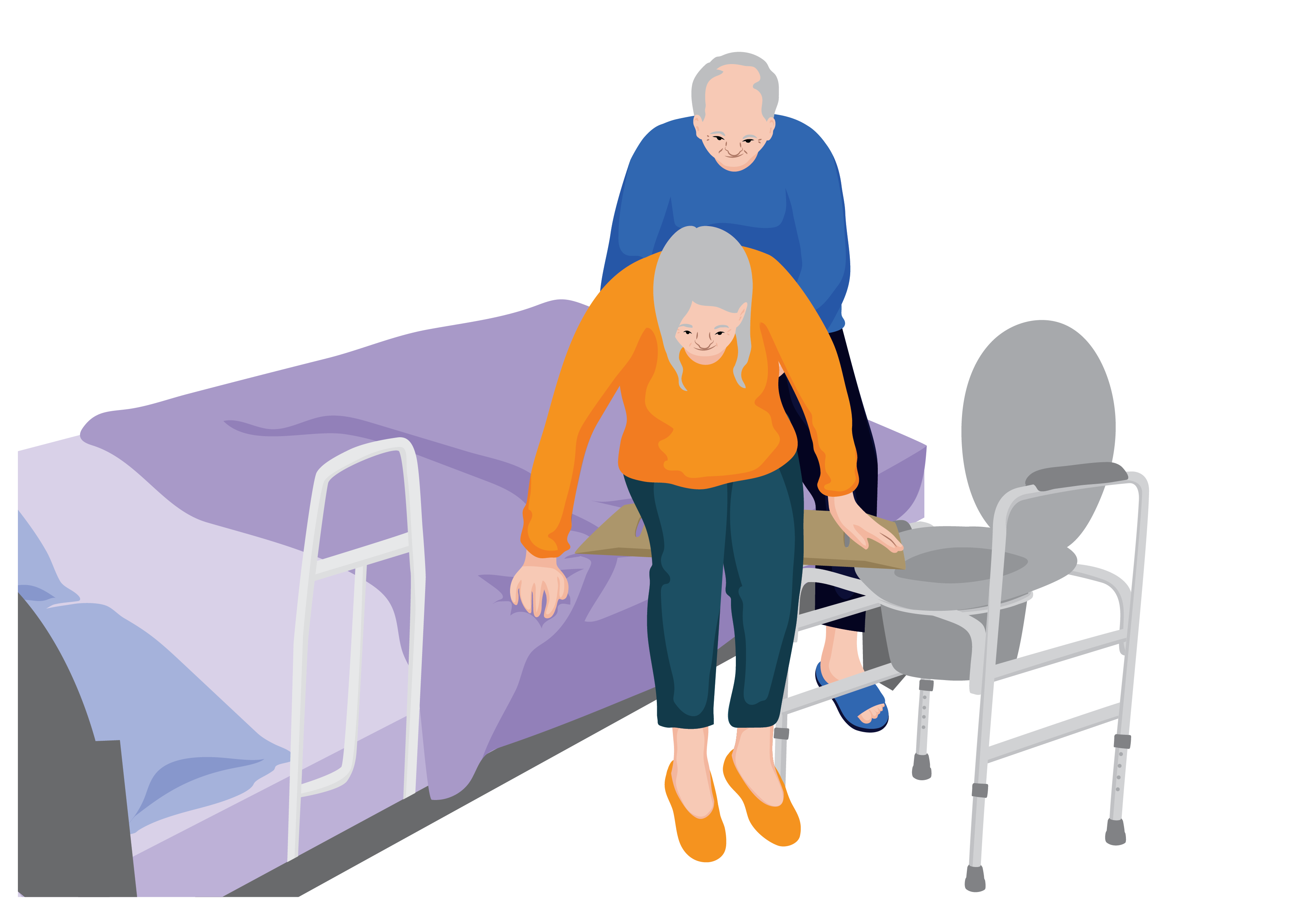
Verna is 89 years old and lives with her husband Leif. Verna is frail, gets tired easily and has difficulty balancing when standing up.
Verna’s husband assists her with self care activities, including getting dressed and undressed.
1. Which dressing position may be easier for Verna?
Select and click to check answers.
Incorrect.
Verna gets tired and has difficulty balancing when standing. Discuss a different position for Verna to get dressed.
Correct!
Sitting may be less tiring for Verna. She may find it easier to balance and get dressed by herself.
Correct!
Start by checking if Verna finds it easier sitting down. If she has difficulty with balance, she could try lying down.
Verna wants to try lying down to dress.
2. What skills does Verna need to be able to get dressed lying down?
Select two.
If you selected a and b, you are correct!
Rolling from side to side or lifting her bottom are important skills if Verna is dressing lying down.
Always discuss which dressing position a person prefers.
Changing how to get dressed
If the person has a weaker or painful side, discuss different ways of dressing before teaching them to use the dressing aid.
For example, a person with weakness in one arm or leg, may find it easier to:
- Put clothes on the weaker side first
- Take clothes off the stronger side first.
Remember Aida?
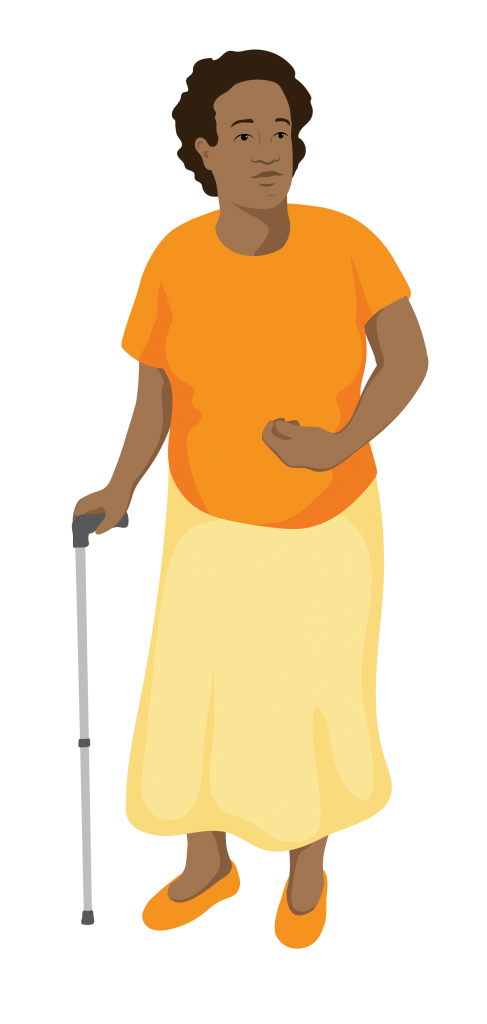
Aida had a stroke and is weaker on her left side. She finds putting her shirt on her left arm first makes it easier to get dressed.
Activity
Dressing without using one arm:
1. Sit in a chair with one arm resting in your lap (keep this arm still throughout the activity).
2. Put on and take off a shirt (over your clothes), without using one arm.
3. Reflect:
- What did you find difficult?
- What helped make it easier?
4. Discuss possible solutions with your colleagues. Then try putting the shirt on again.
- Was it easier this time?
- Why or why not?
- Slide the sleeve on the arm that is not moving first
- Slide the sleeve all the way up to the shoulder to help move the shirt around your back
- Lean forward to reach the shirt behind you
- Put the moving arm into the remaining sleeve last.
Choosing different types of clothes and shoes
Some clothes and shoes are easier to get on and off. For example:
- Clothes that are stretchy or loose
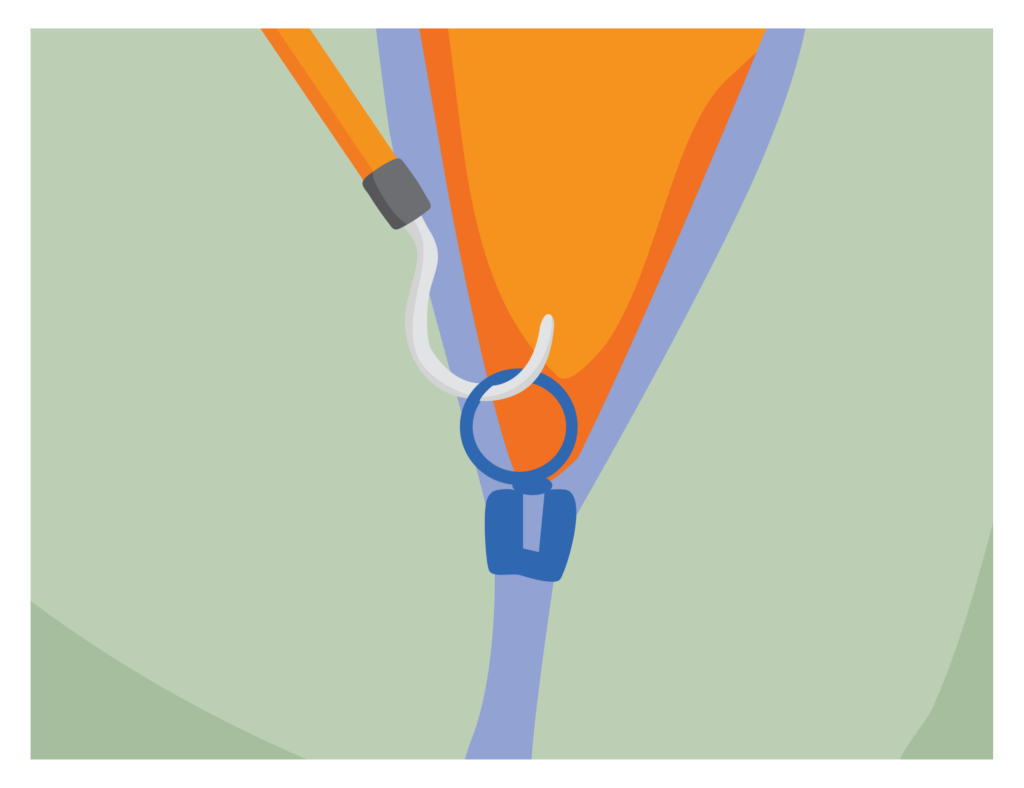
- Clothes with zip pull rings or clothes without buttons or zips
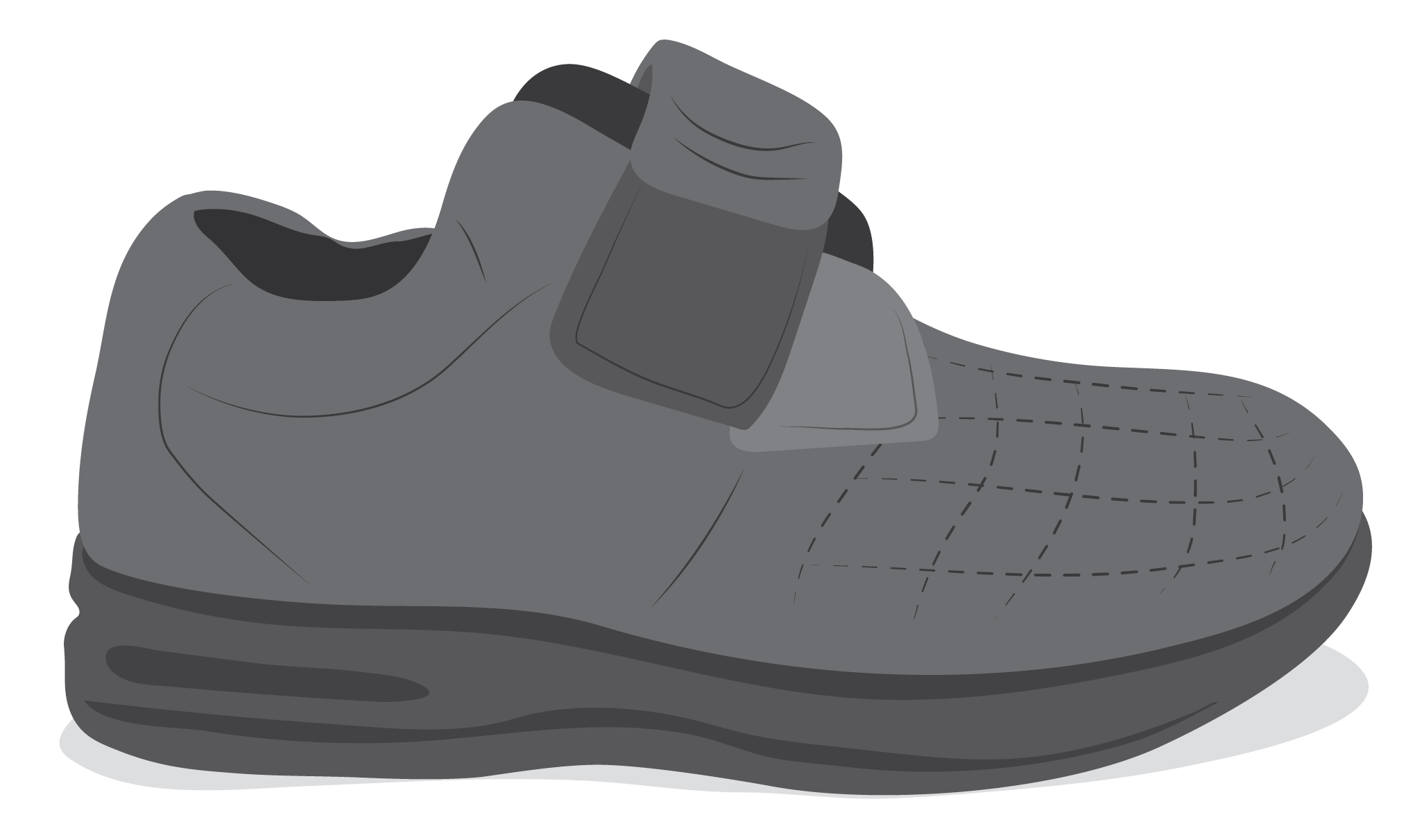
- Shoes without laces, such as slip on shoes or shoes with Velcro closures.
Remember Samuel?
Samuel is a young man who has Down syndrome. When he is getting dressed, he finds it difficult to coordinate the movements of his fingers. This makes tasks such as doing up buttons and tying his shoelaces difficult.
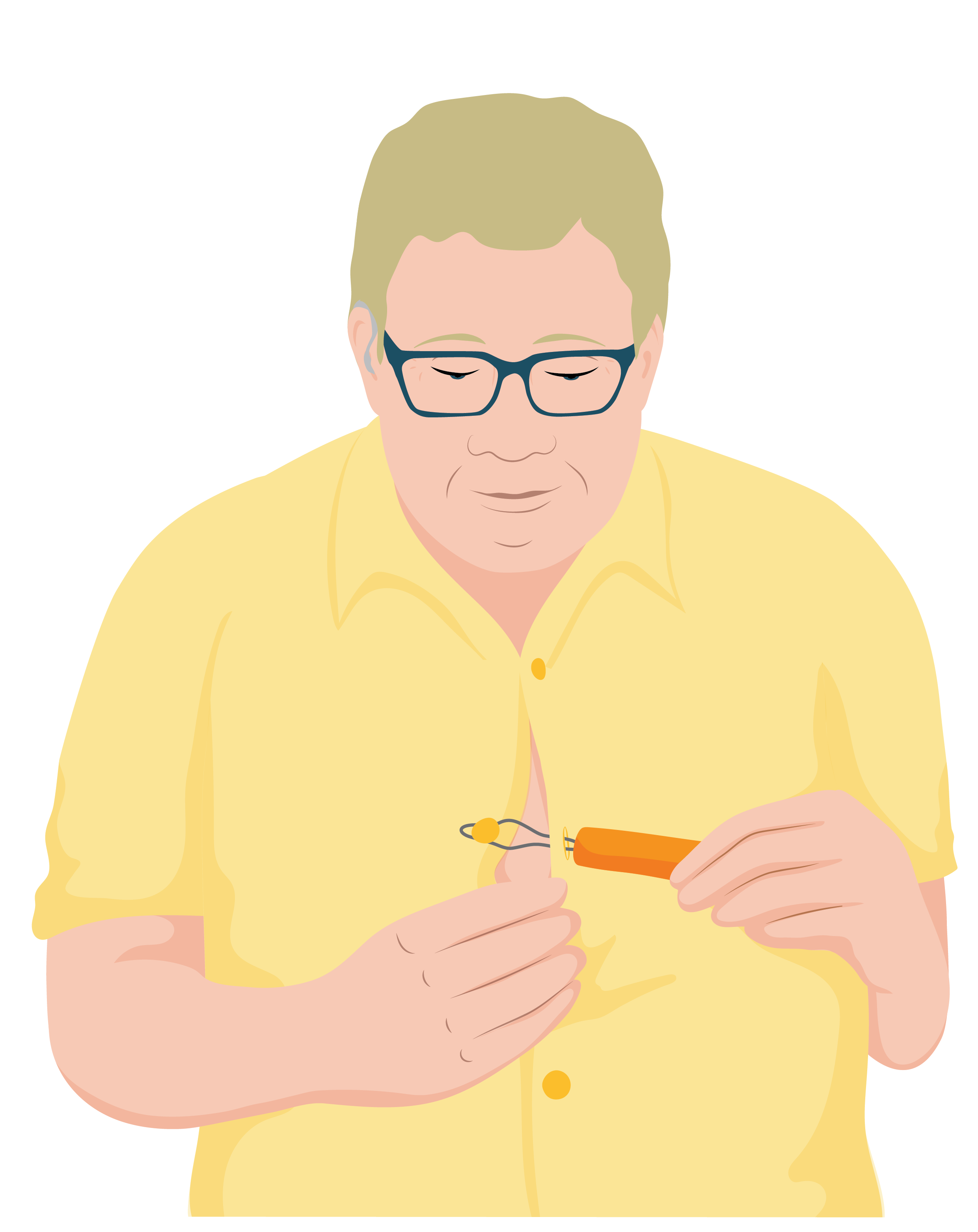
Samuel uses a button hook and zip puller to do up the buttons on his shirt.
Samuel finds laces difficult to do up and undo.
His health worker encourages him to try different kinds of shoes. He finds shoes with adjustable Velcro straps much easier than laces.
Discussion
- Do you know anyone who has adjusted their clothes or shoes to make them easier to get on or off?
- Do you have any ideas on how to make clothes easier to get on or off?
Discuss these questions with your colleagues.
Using dressing aids
Reach and grab tool
Different reach and grab tools may have different features.
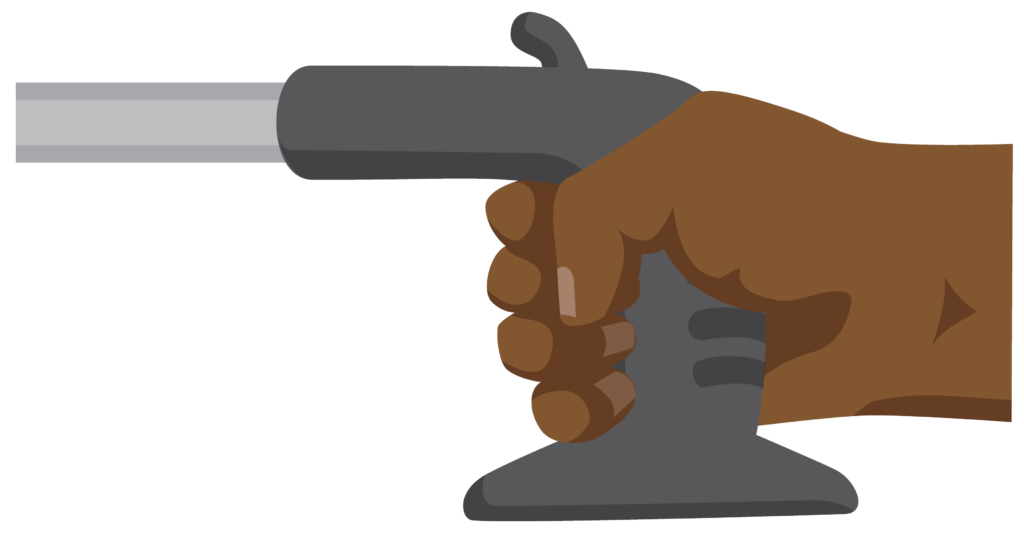
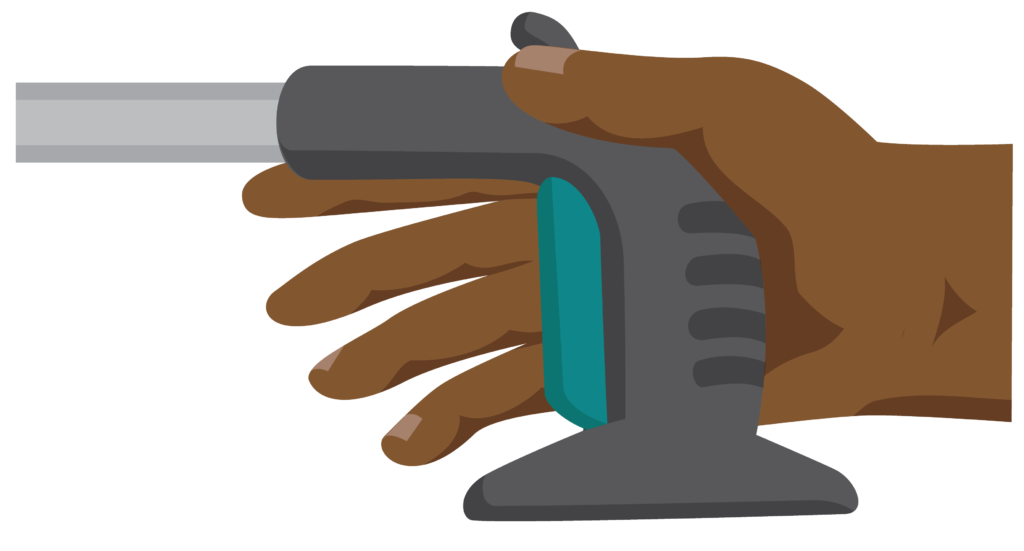
Reach for and pull clothes on/off
A common way to use most reach and grabs tools is:
- Press the trigger handle to close the grasping claw
- Bring the item of clothing to you
- Pull clothing over leg and release the trigger.
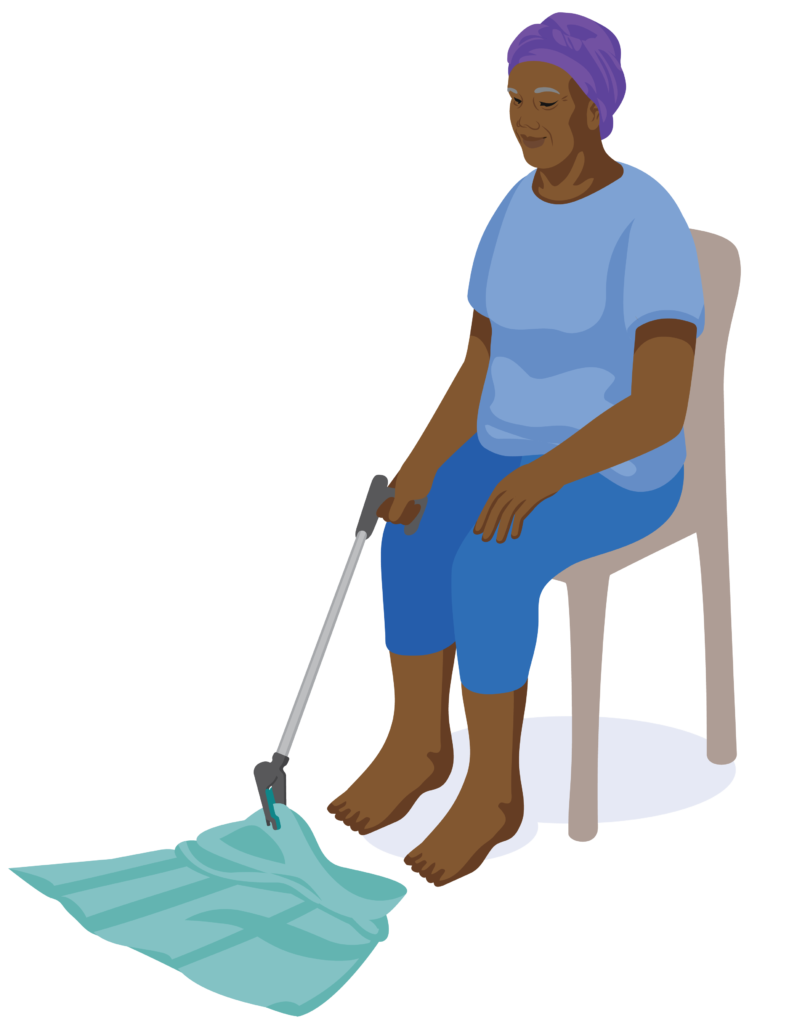
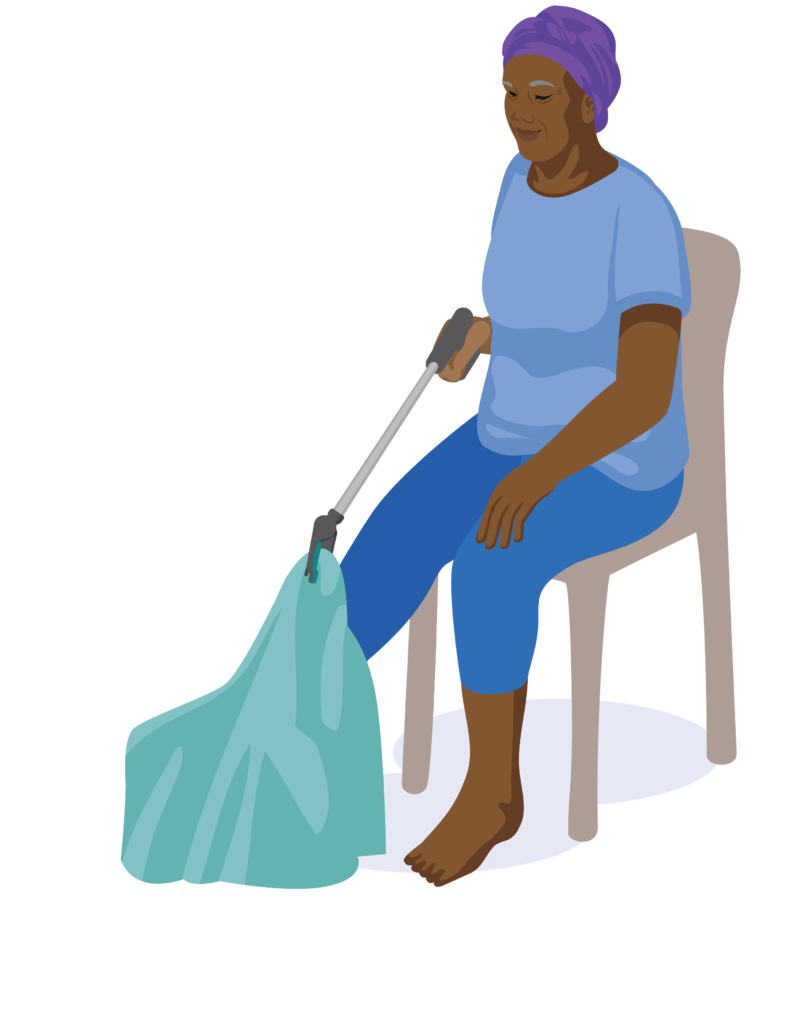
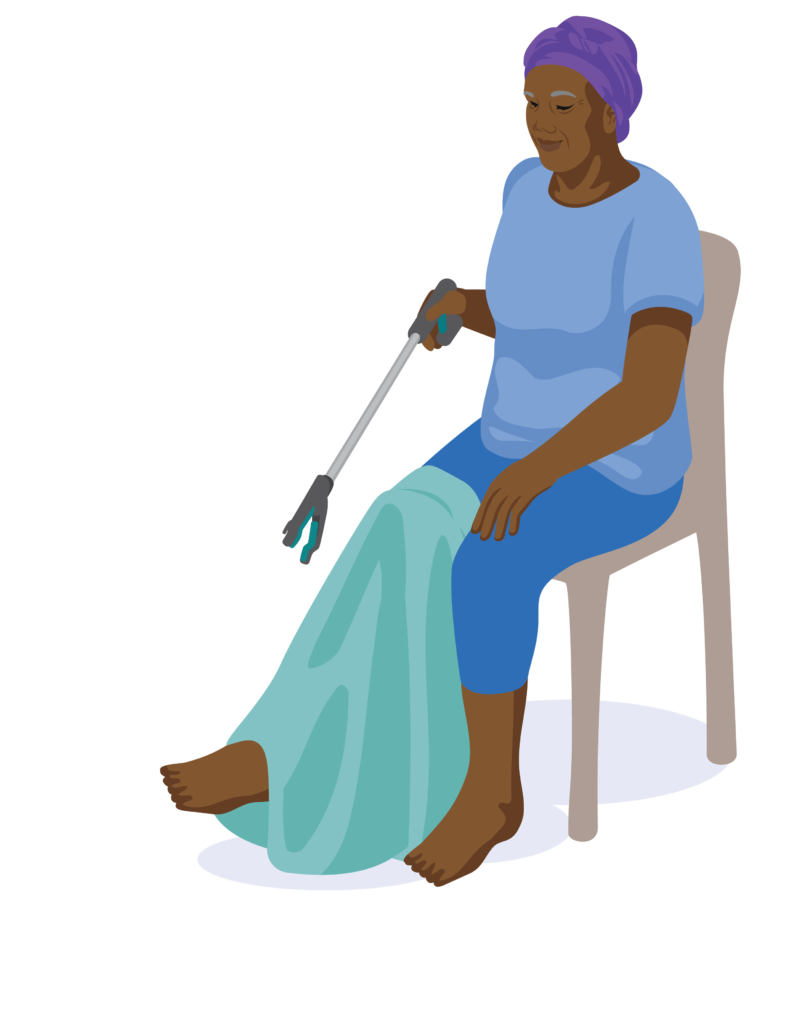
When dressing and undressing:
- Pull clothes on the weaker or less mobile leg first
- Take clothes off the weaker or less mobile leg last.
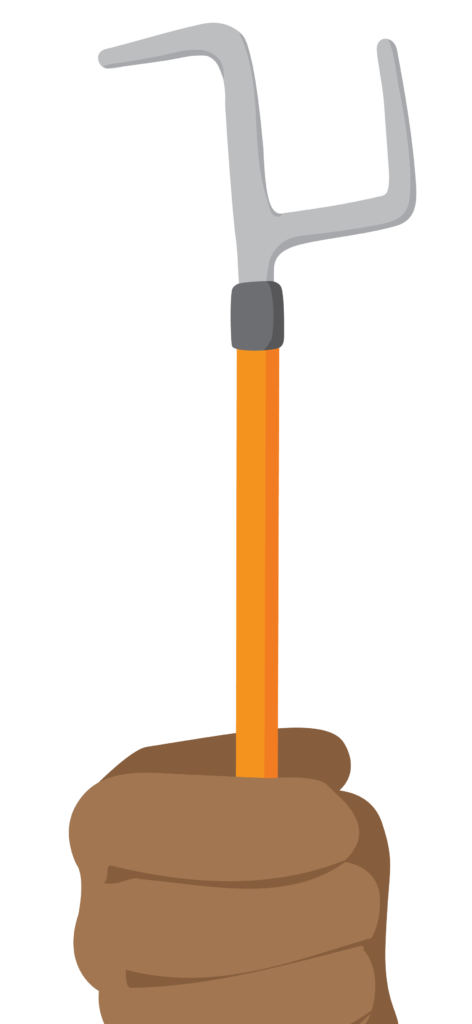
Dressing stick
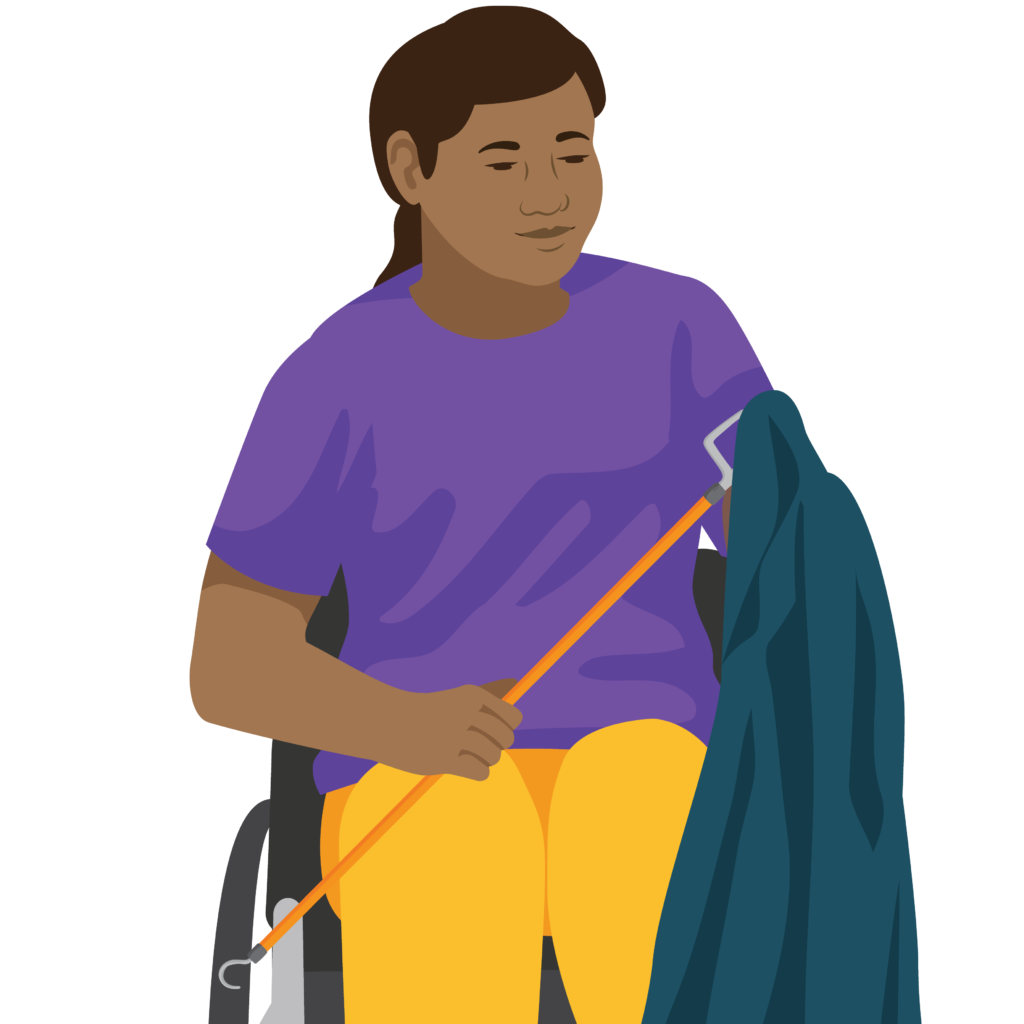
Put clothes on
Use the s shaped hook to bring clothes over the shoulder:
- Guide clothing up your arm
- Rest dressing stick on your shoulder to reach behind
- Hook clothes to bring them over your shoulder.
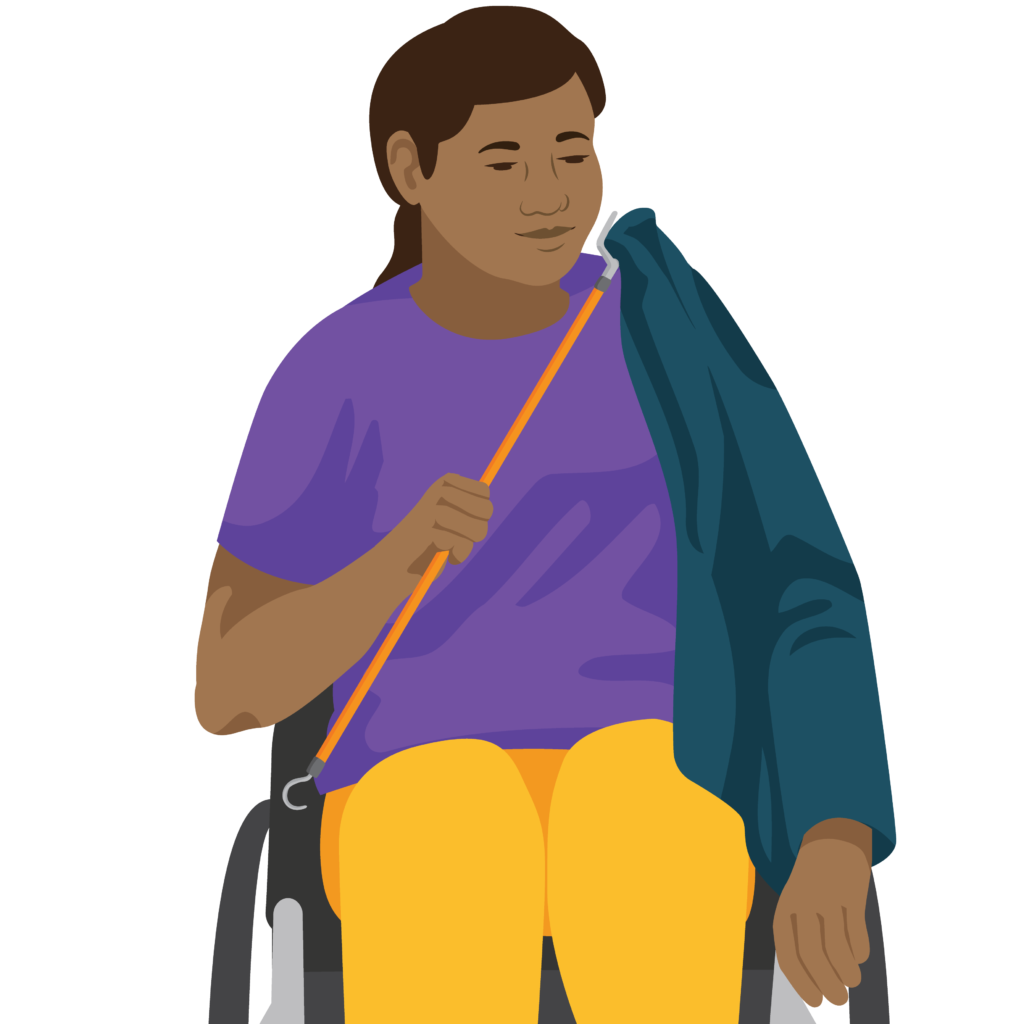
Take clothes off
Use the s shaped hook to:
- Hook the clothing off your shoulder first
- Then remove your arm
- Repeat on other side.
The s shaped hook can also be used to unhook clothes hanging up.
The c shaped hook can be used to pull a zip up or down.
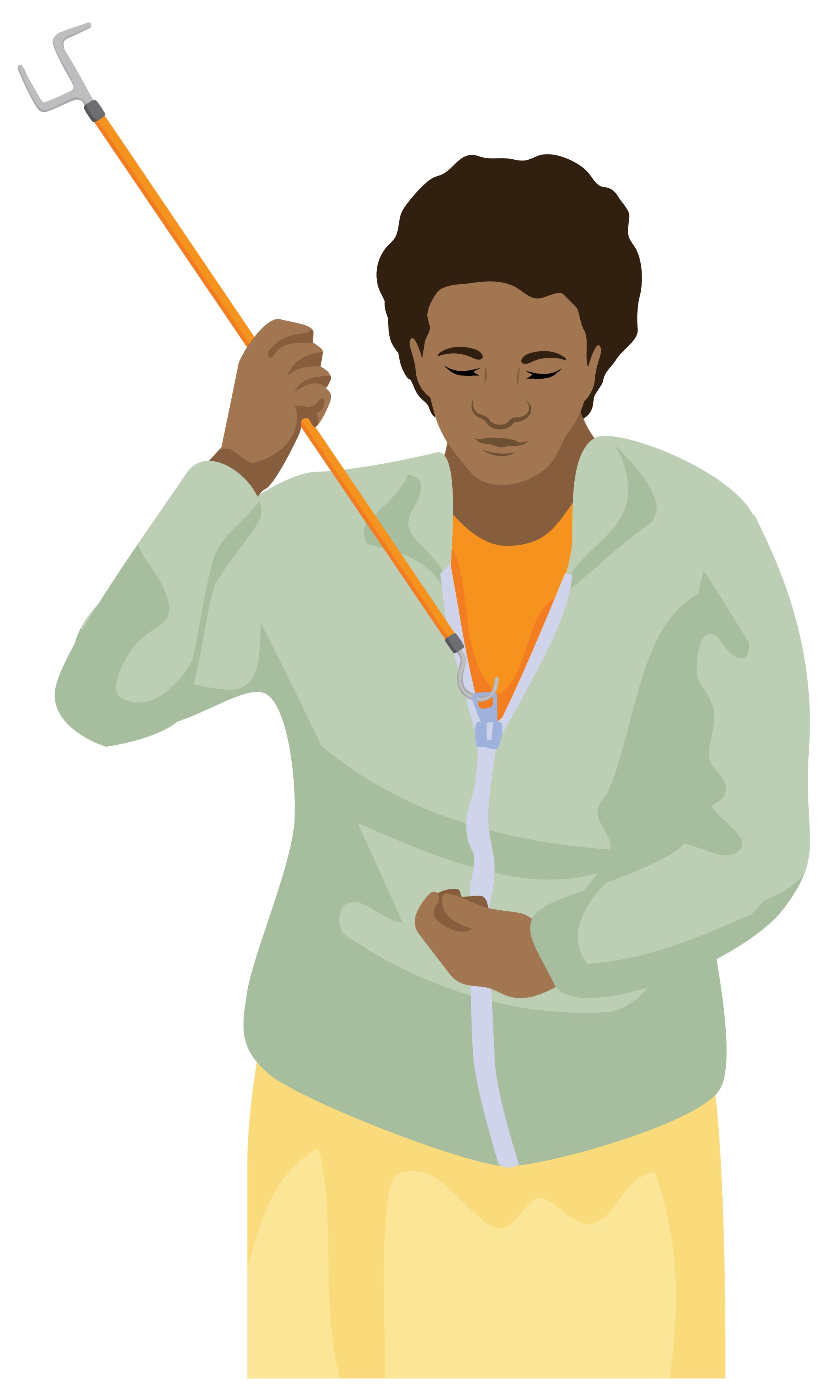
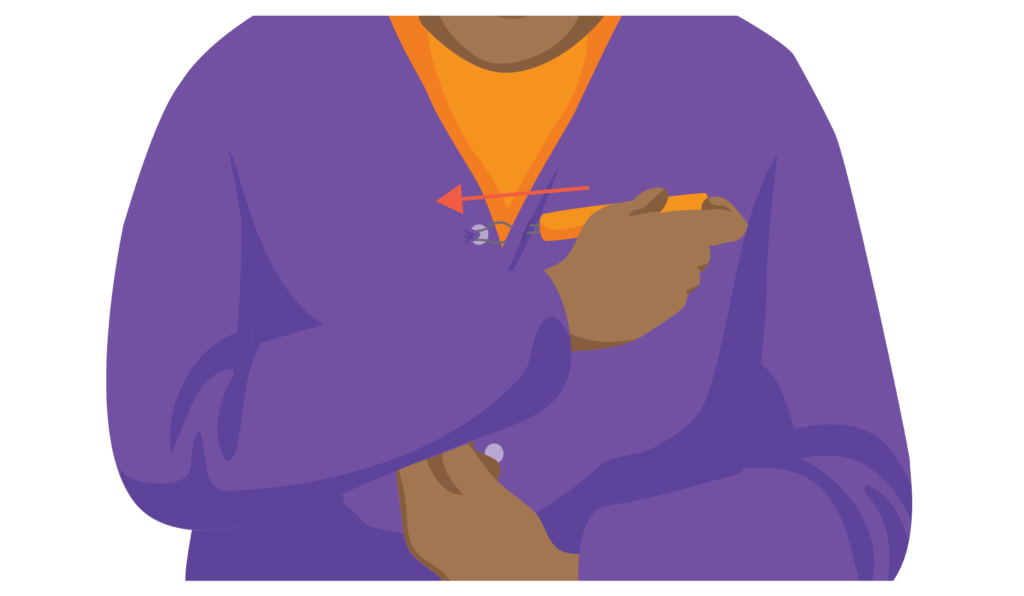
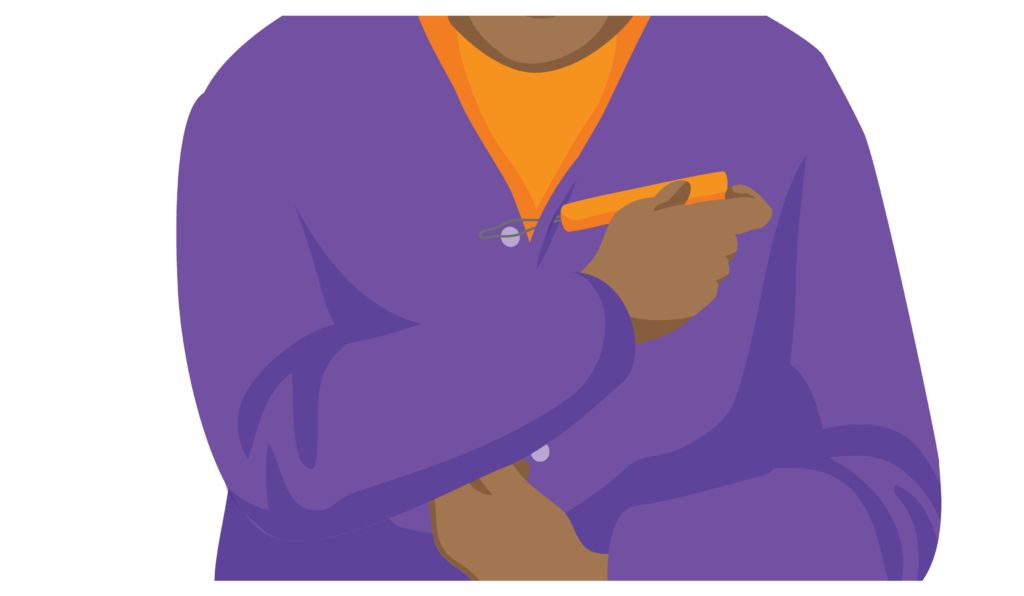
Button hook
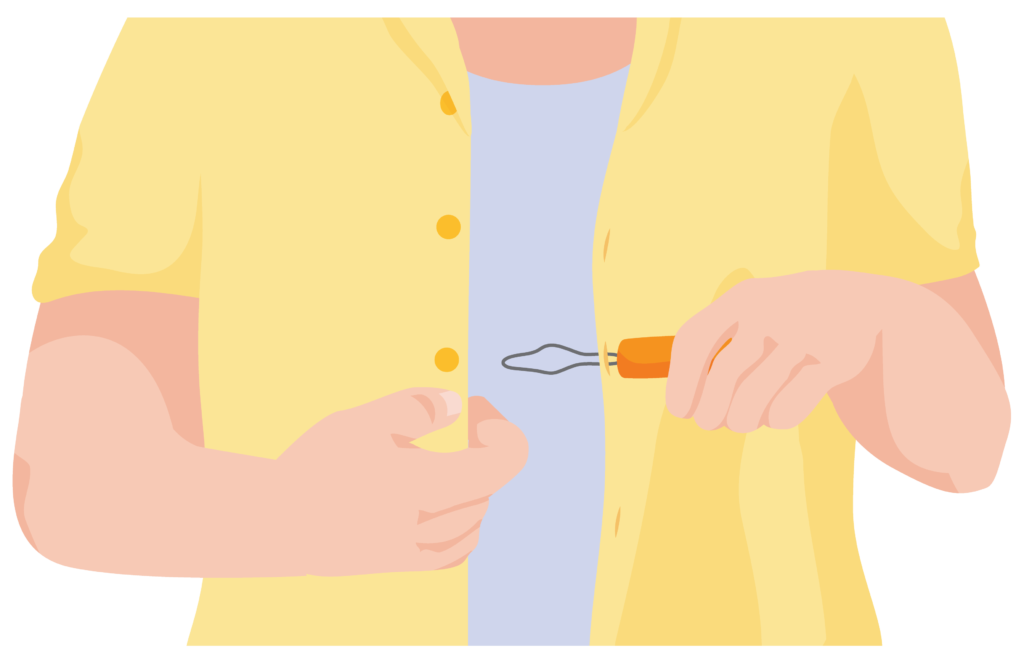
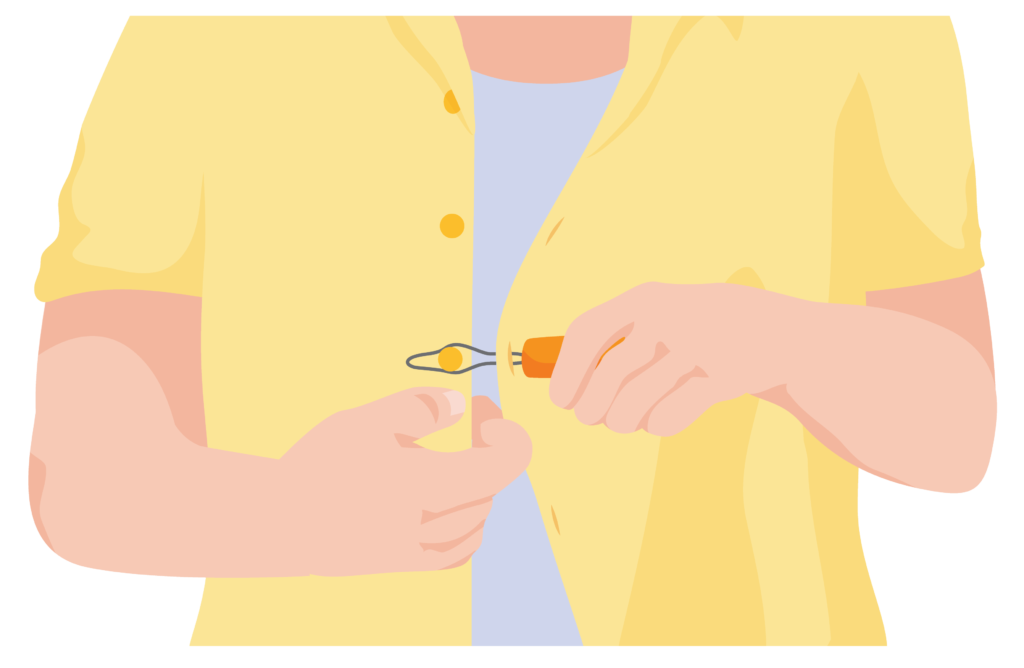
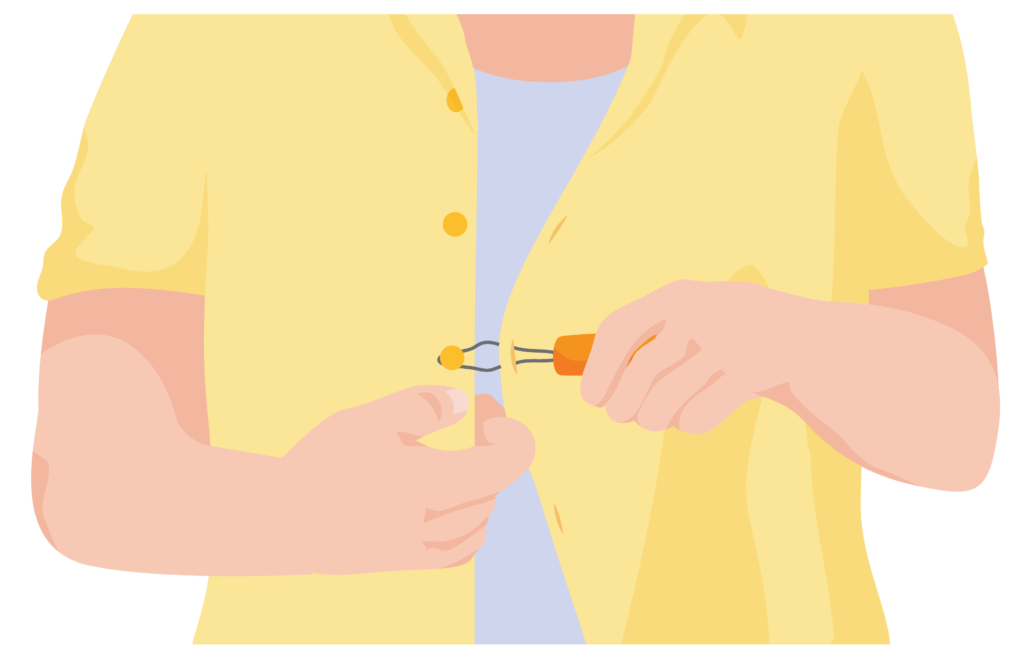
A person may use one or both hands when using a button hook. This depends on their abilities.
Do buttons up
Use the diamond shaped hook:
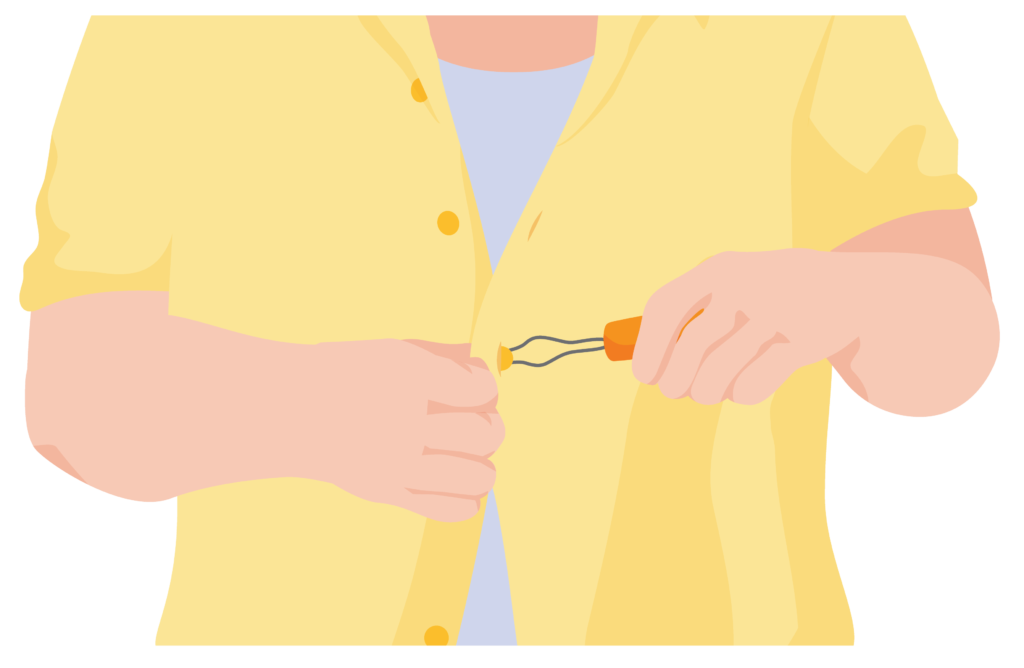
Undo buttons
Use the diamond shaped hook:
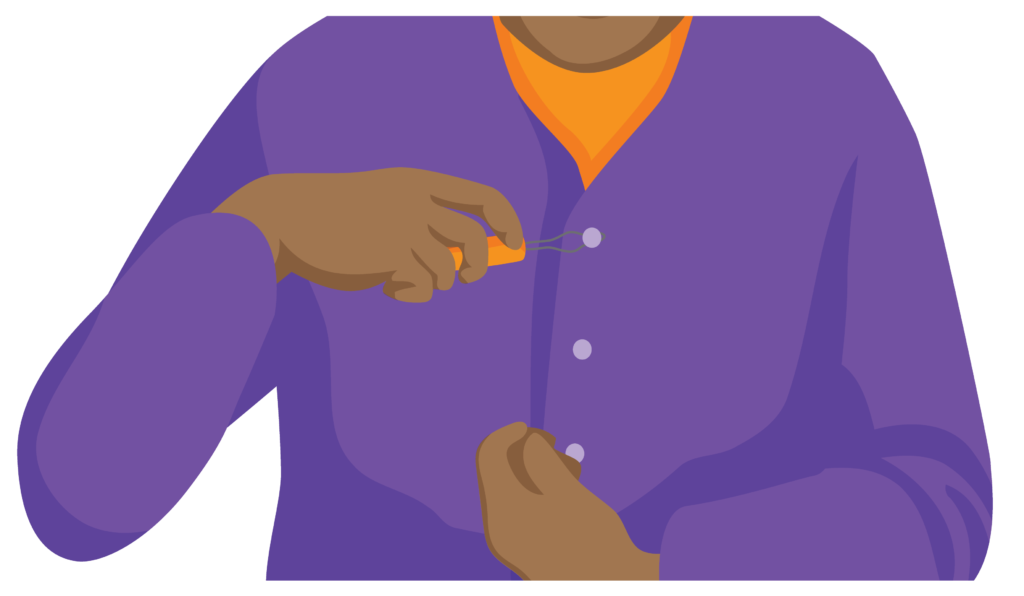
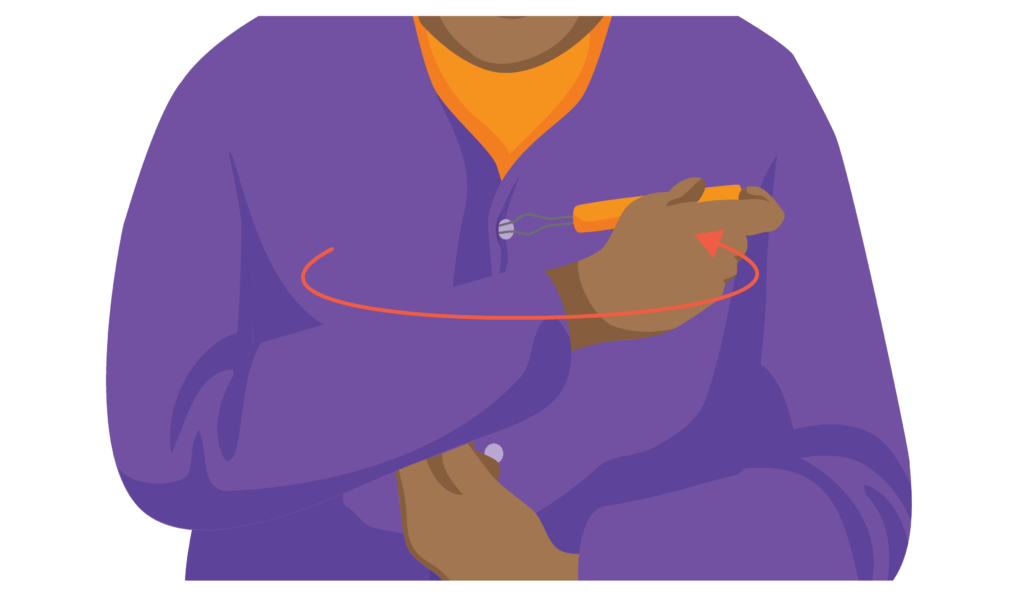
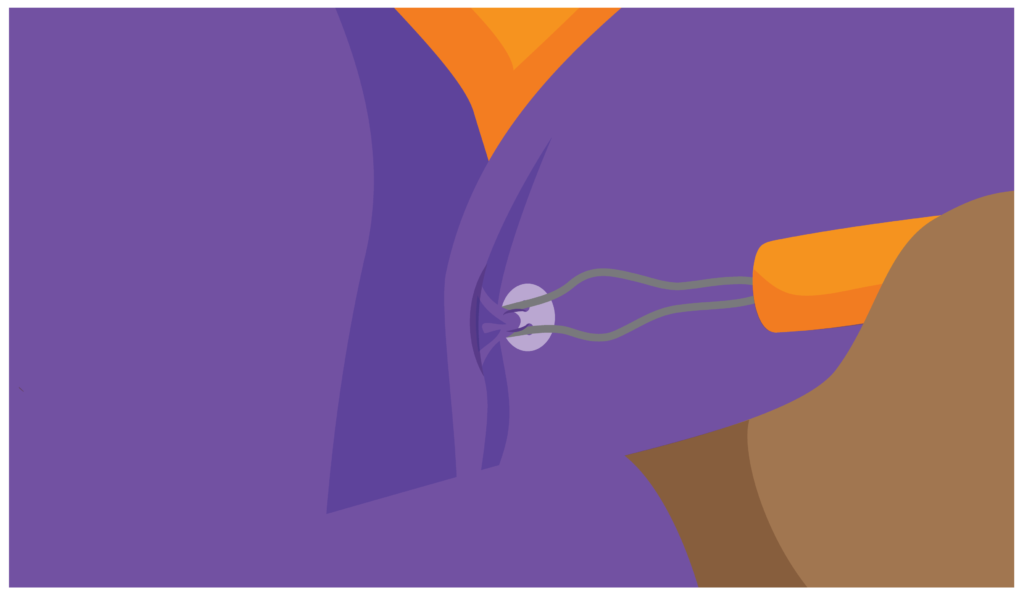
2. Cross your arm over
Zip puller
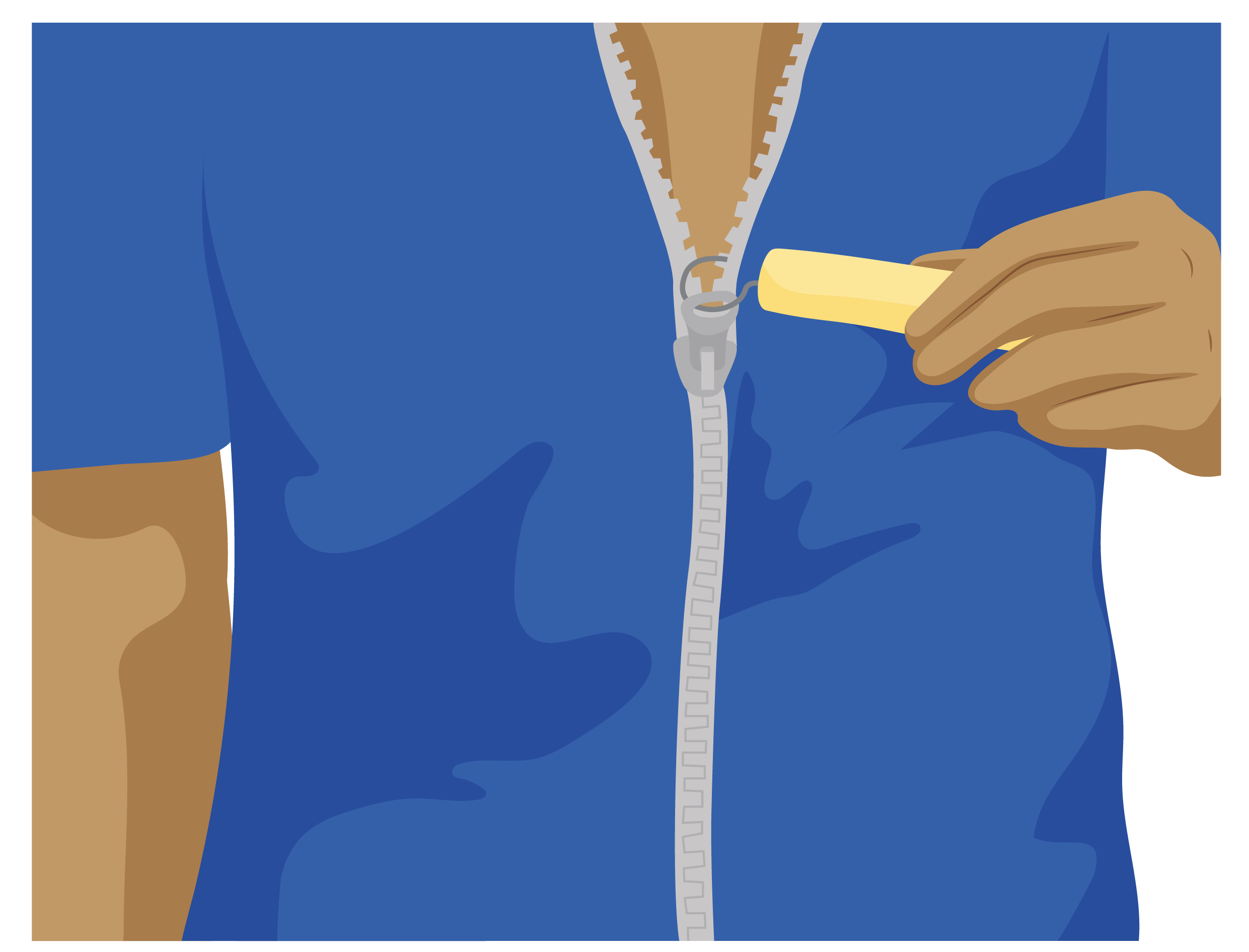
Do up and undo zips
The opposite end of a button hook has a c shaped hook. This can be used to catch and pull a zip up or down.
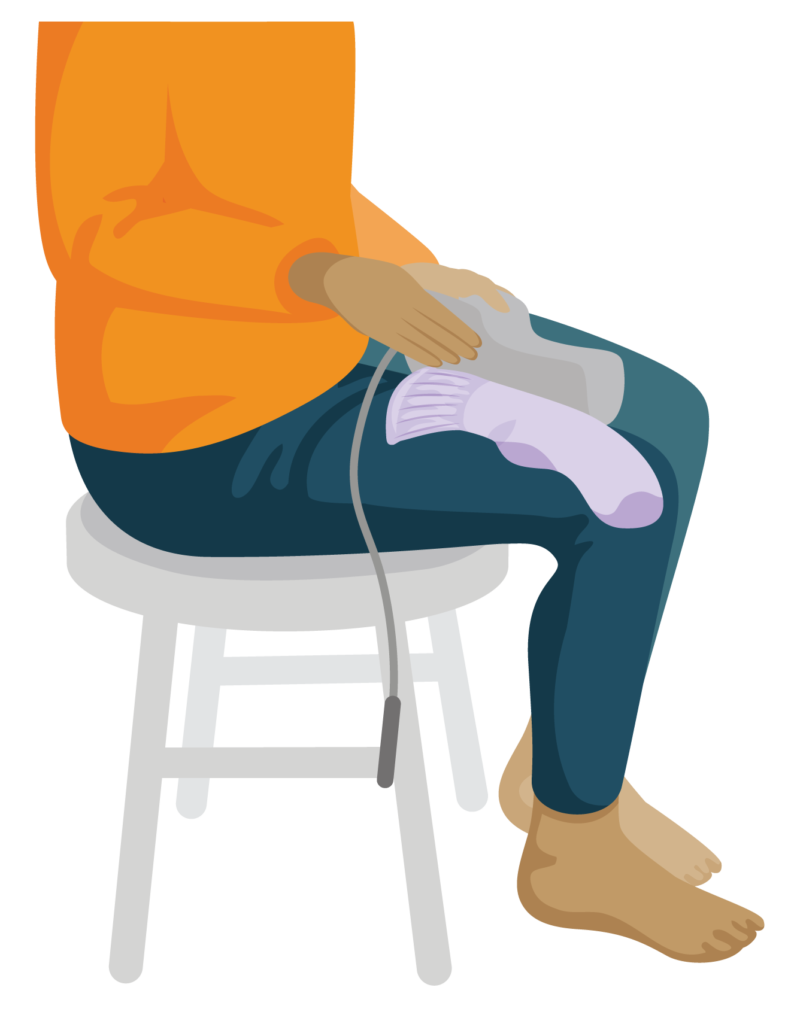
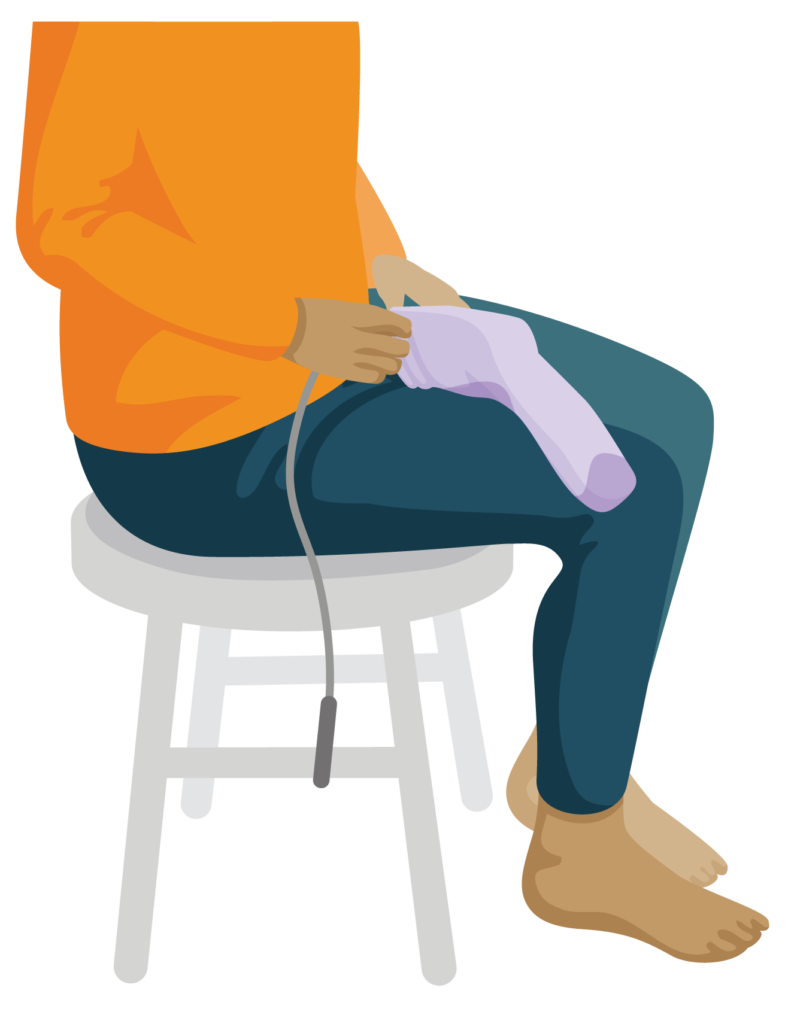
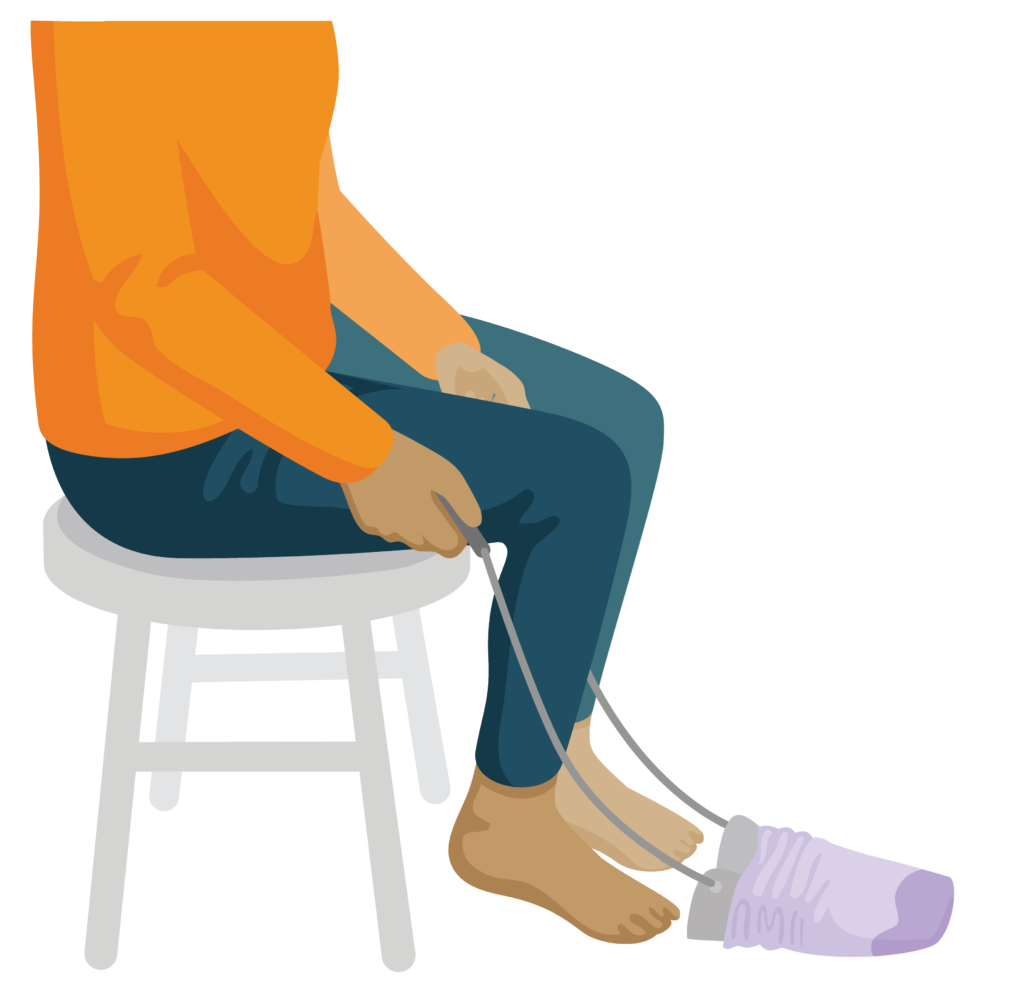
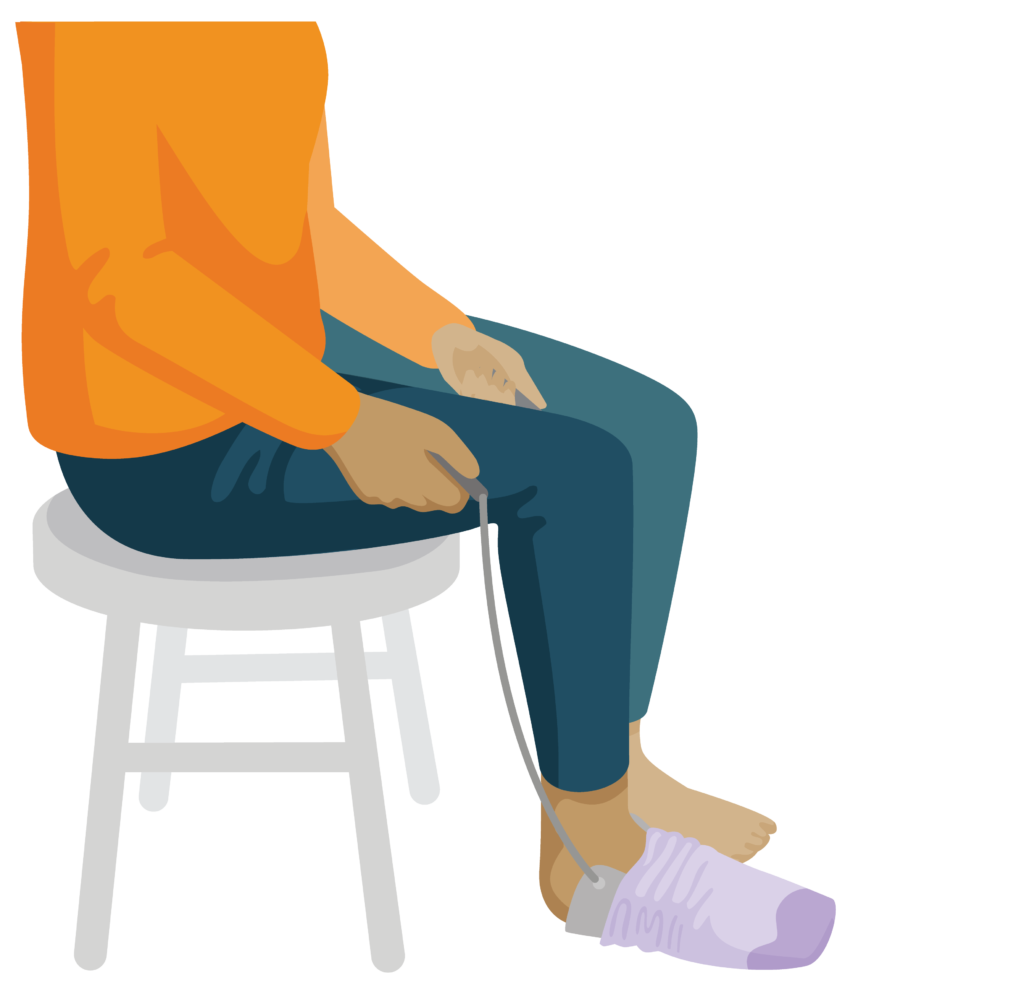
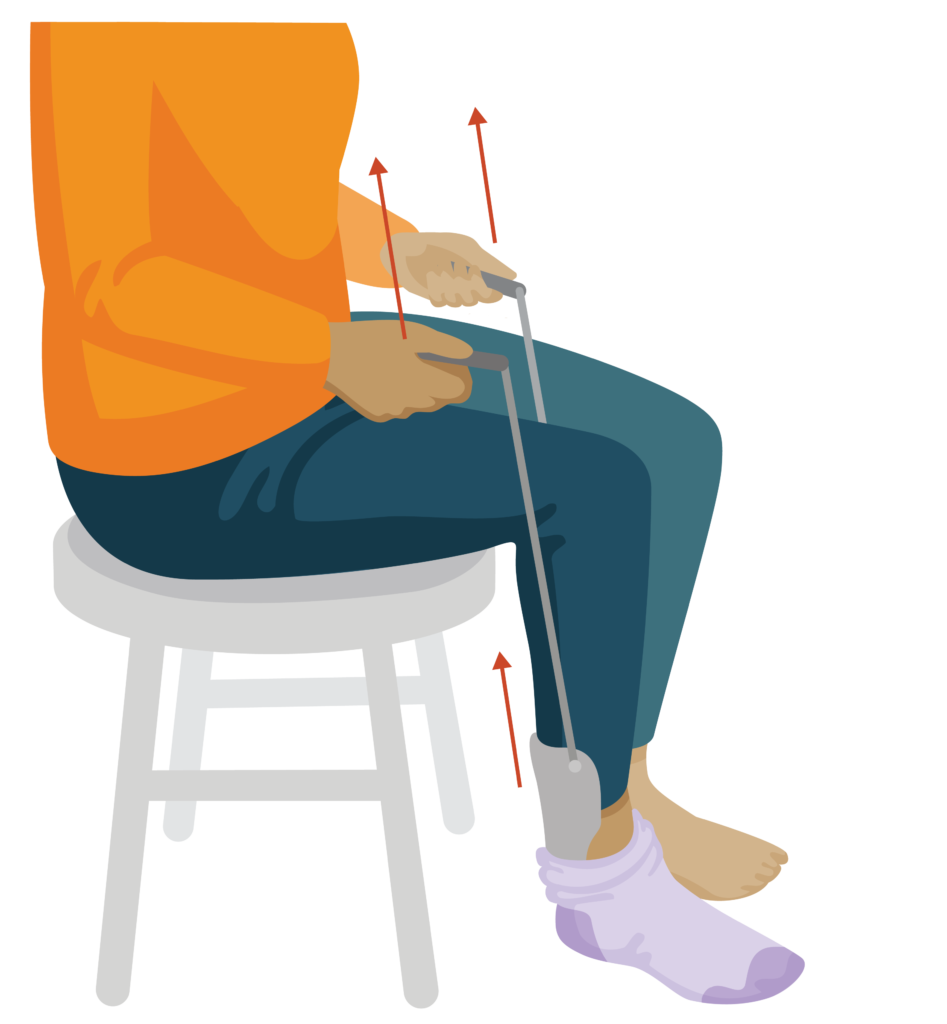
Sock aid
Put sock on
You should sit down:
Tip
If the person can only use one hand, tie the cords together to lower and use the sock aid.
Take sock off
A person may use a different dressing aid to take a sock off. For example, a shoe horn or dressing stick may be used to slide the sock off their foot.
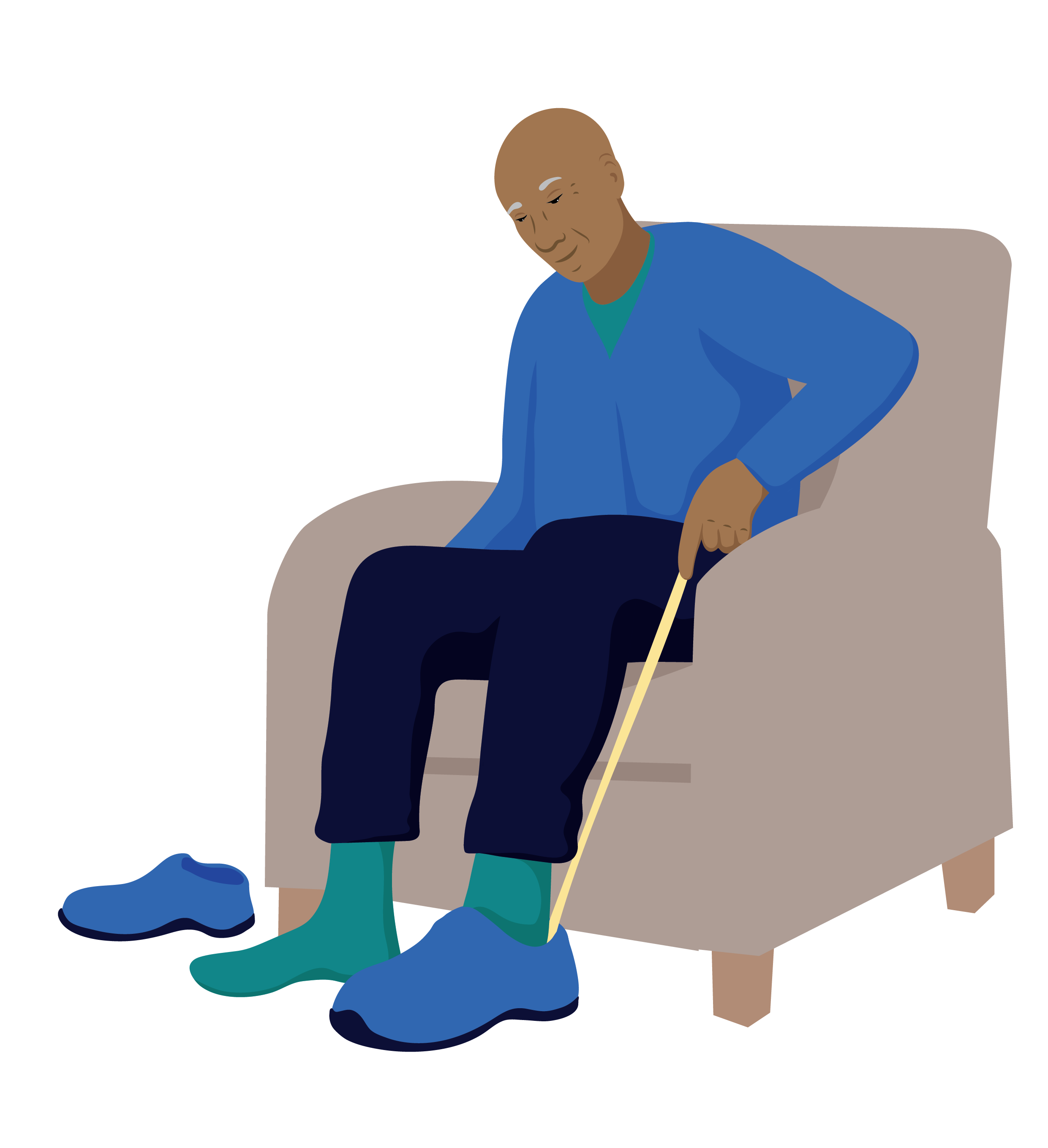
Long handle shoe horn
Put shoe on
- Place shoe horn against back of your shoe
- Rest your heel against shoe horn
- Push down your heel
- Slip your foot into your shoe and remove shoe horn.
Instruction
Watch this video to learn how to use a long handle shoe horn.
Take shoe off
- Place shoe horn in the back of the shoe against your heel
- Slide your heel up against shoe horn to remove your shoe.
Activity
In pairs, take it in turns to explain how to use a:
- Reach and grab tool
- Dressing stick
- Button hook and zip puller
- Sock aid
- Long handle shoe horn.
Next, take it in turns to practice using each dressing aid following the steps.
Instruction
If a person has difficulty getting dressed or undressed after trying dressing aids refer the person to a rehabilitation service.