In this topic you will learn more about the rigid removable boots covered in TAP.
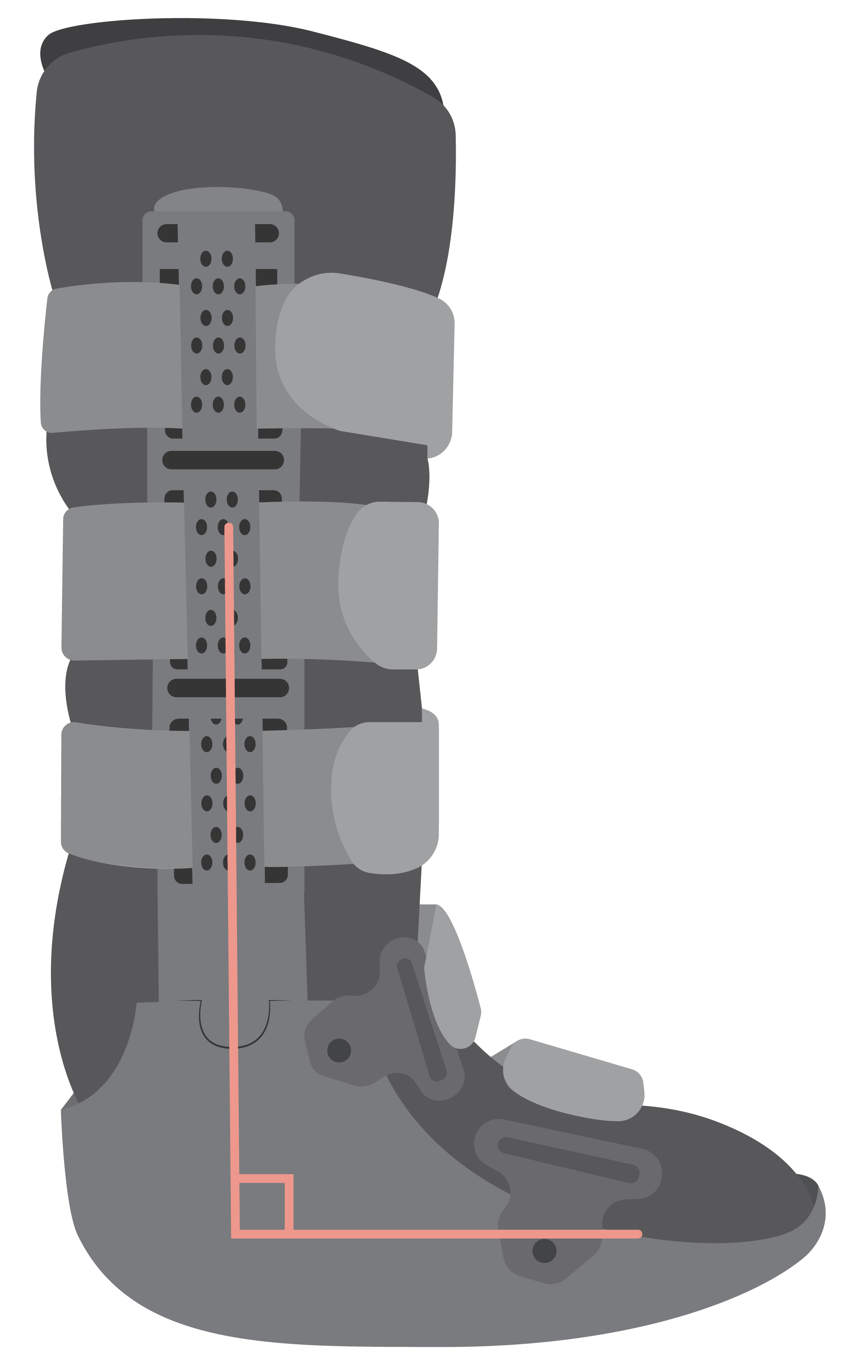
A rigid removable boot holds the person’s ankle in a fixed position of 90 degrees.
Let’s look at the features of rigid removable boots.
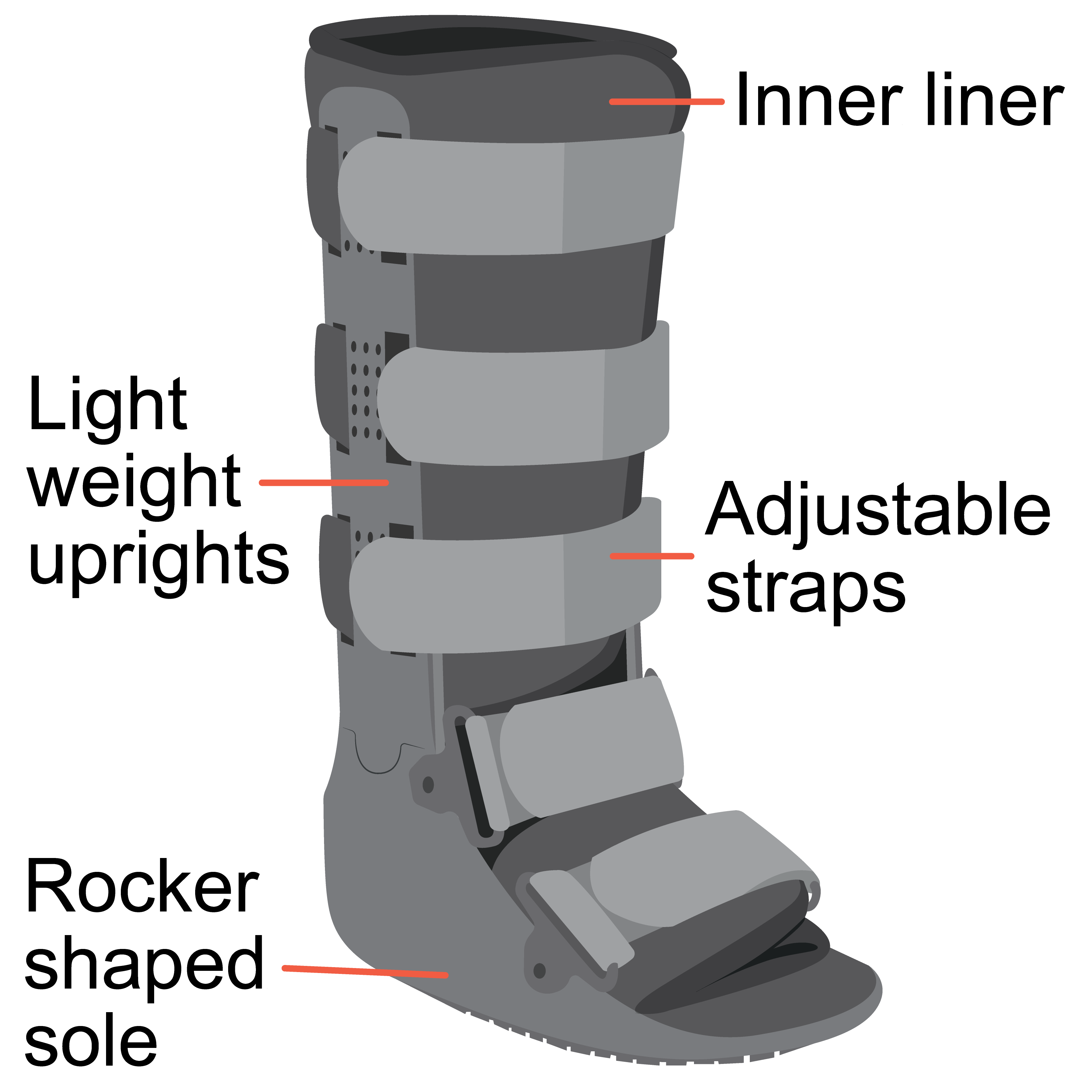
Important features
- Different sizes for adults and children
- Inner liner for comfort and to protect the skin
- Adjustable straps to adjust the fit of the boot
- Rocker shaped sole to assist with smooth walking
- Light weight uprights made from plastic or aluminium.
Some rigid removable boots also have plastic that goes over the front of the ankle for extra support.
Activity
Look closely at the rigid removable boots available in your area.
How many of the important features do they have?
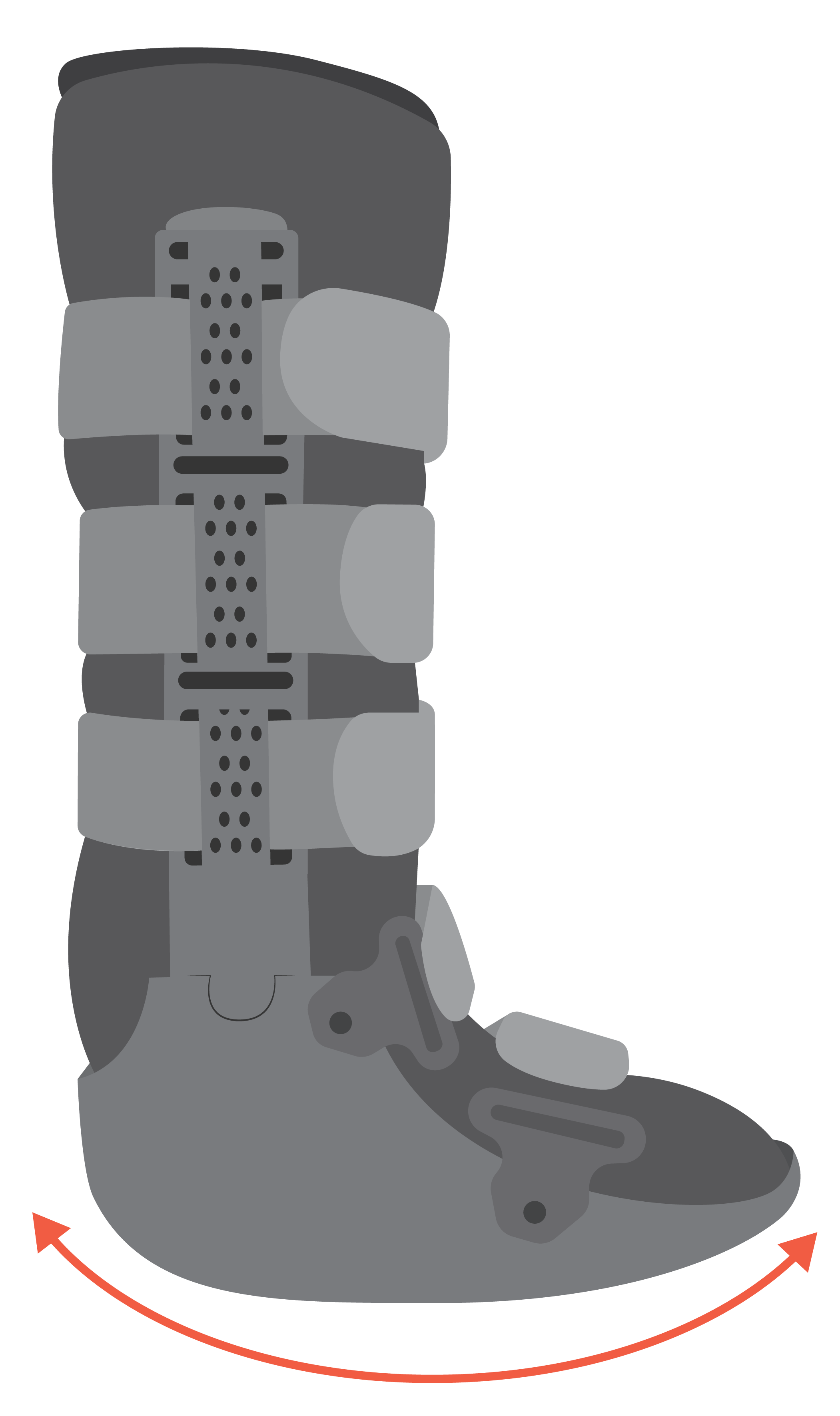
Rocker shaped sole
This means the bottom of the boot is curved to make walking easier while keeping the ankle in a fixed position.
Question
How do you think the rocker shape makes walking easier?
Select all that apply.
If you selected a and b, you are correct.
The shape allows smoother walking than a sole without a rocker and the muscles do not have to work as hard.
c is not correct. The rocker shaped sole does make it easier to walk.
Other features
Some types of rigid removable boots have special features. For example:
- Added protection
- The ability to hold the ankle in different positions.
There are also rigid removable boots that are different heights.
This module does not include information about making casts or rigid removable boots with special features or different height boots.
Choosing between casts and rigid removable boots
Casts can also be used for some of the same injuries that a rigid removable boot is used for.
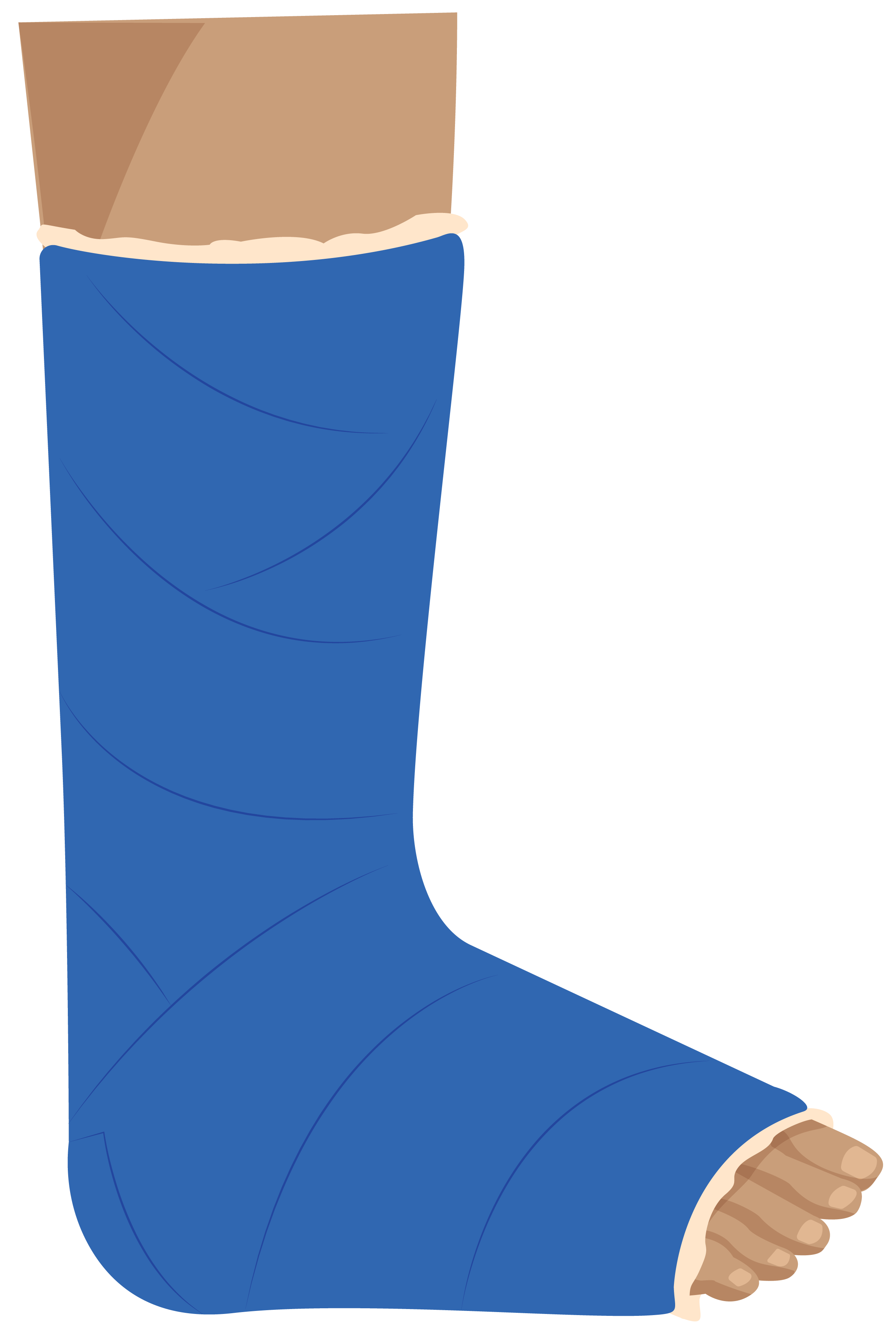
Cast
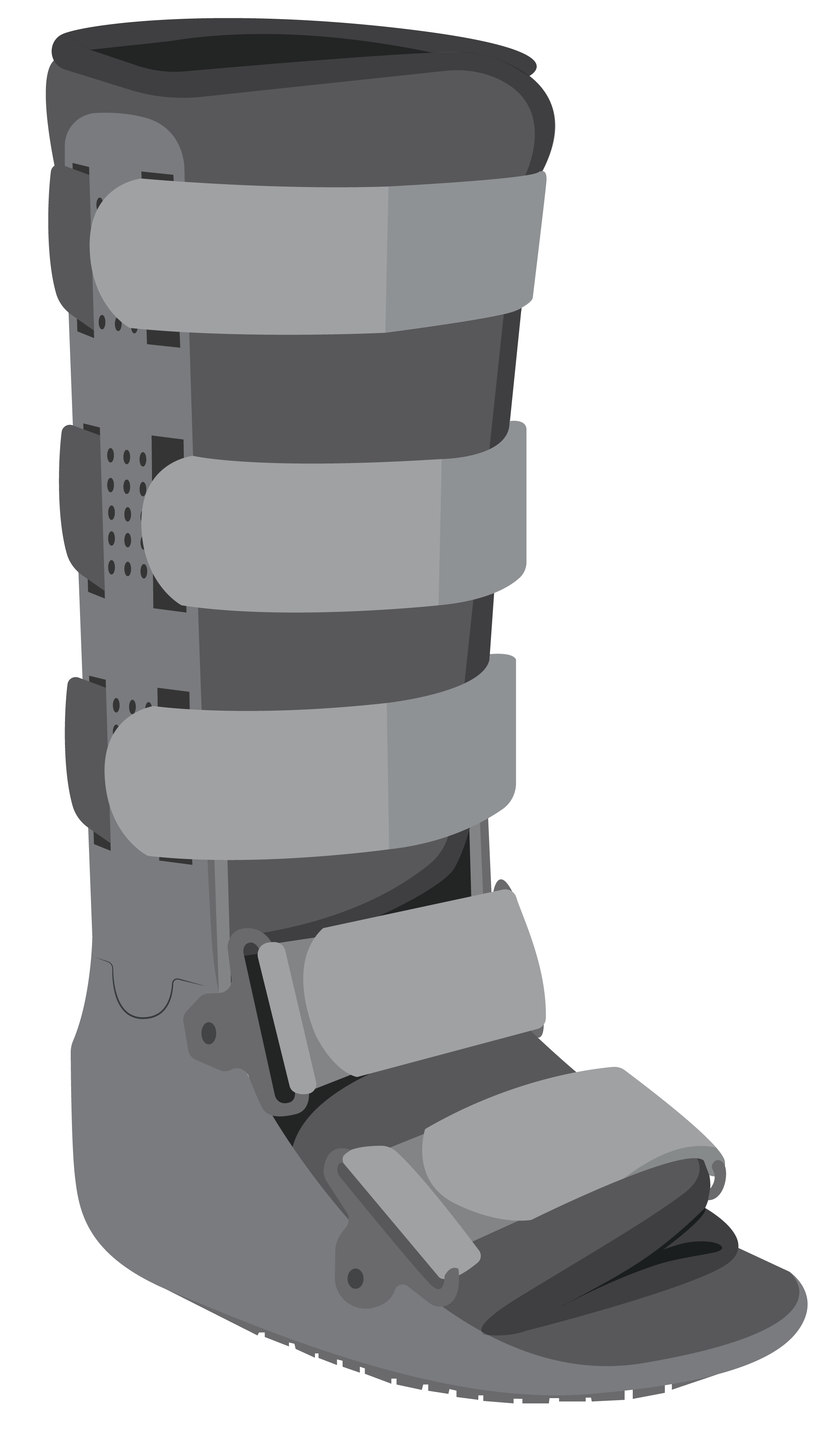
Rigid removable boot
Let’s look at the advantages of each one.
Advantages of rigid removable boots
- Easier to walk in as they have a rocker shaped sole
- Can be removed for the person to wash themselves and check their skin
- Can be adjusted if the foot/leg changes size or shape due to swelling
- Can be fitted more quickly
- Are more durable.
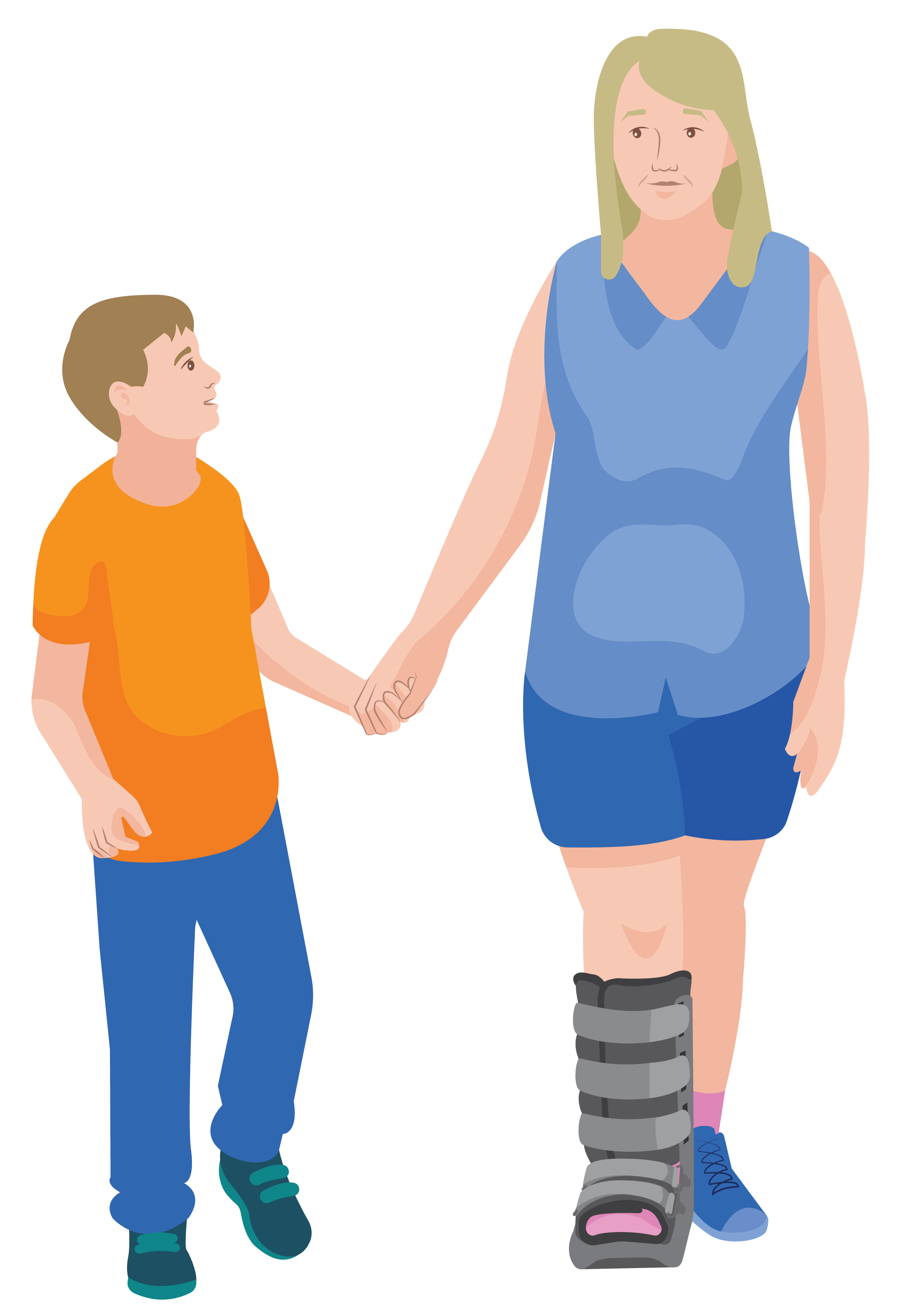
Remember Jess?
Jess’s rigid removable boot has made it easier for her to look after her children and walk with them to school.
Jess finds her foot and leg gets swollen by the evening. This makes the boot feel too tight. When this happens, Jess adjusts the straps to feel more comfortable and rests her leg.
Jess has been given permission to remove her boot when washing herself. It is also an opportunity for her to check her skin.
Advantages of casts
- They can be made to fit any shape of leg/foot
- They are more effective at reducing movement in the leg/foot
- They can hold the ankle/foot in any position
- The wearer cannot remove them, which is important for severe injuries.
The choice of whether to use a cast or a rigid removable boot is always made by the doctor.