Rigid removable boots are boots that fit over the foot and lower leg, below the knee.
Rigid removable boots are used by people who have an injury to their foot or ankle. They help injuries to heal by reducing movement of the foot and ankle.
Some people can continue to walk with the rigid removable boot while their injury heals.
Rigid removable boots can also be called Controlled Ankle Motion (CAM) walkers.
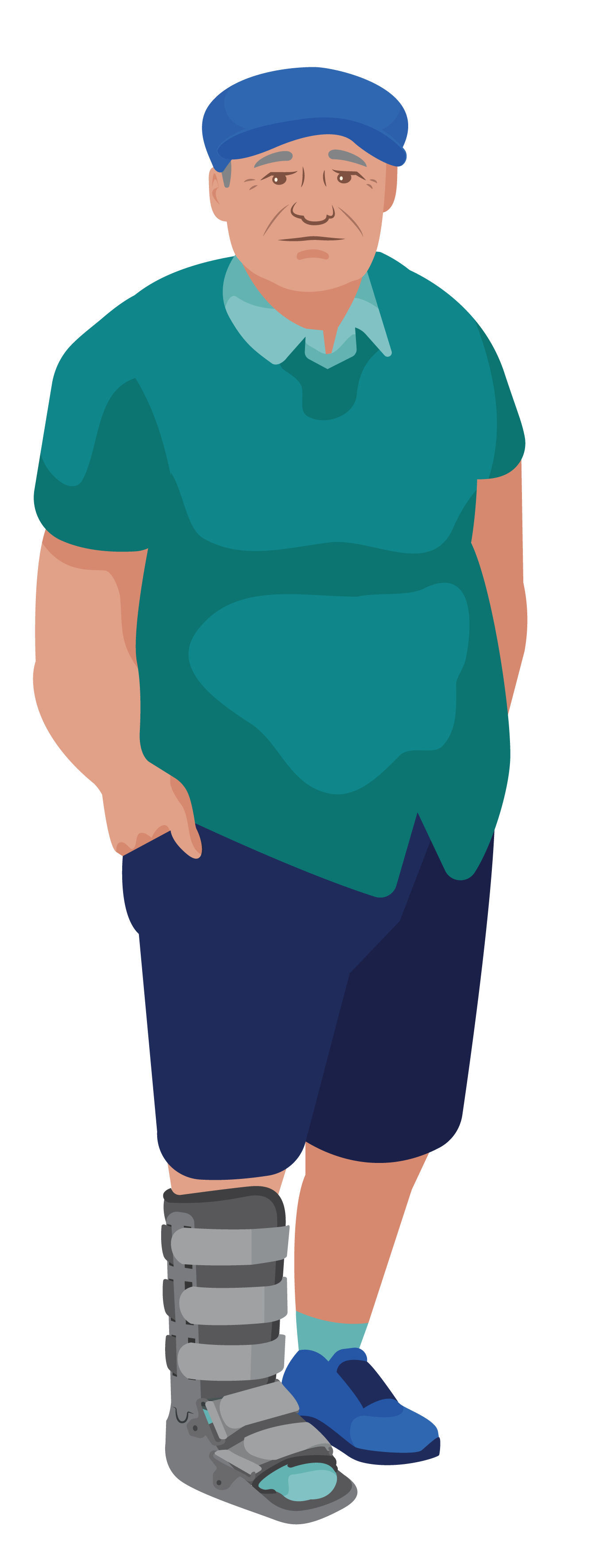
Read on to learn about some common injuries that a person may use a rigid removable boot for.
Broken bones
A broken bone can also be called a fracture. There are many different types of breaks that can happen to bones.
Rigid removable boots are good for some types of broken bones.
Meet Jess
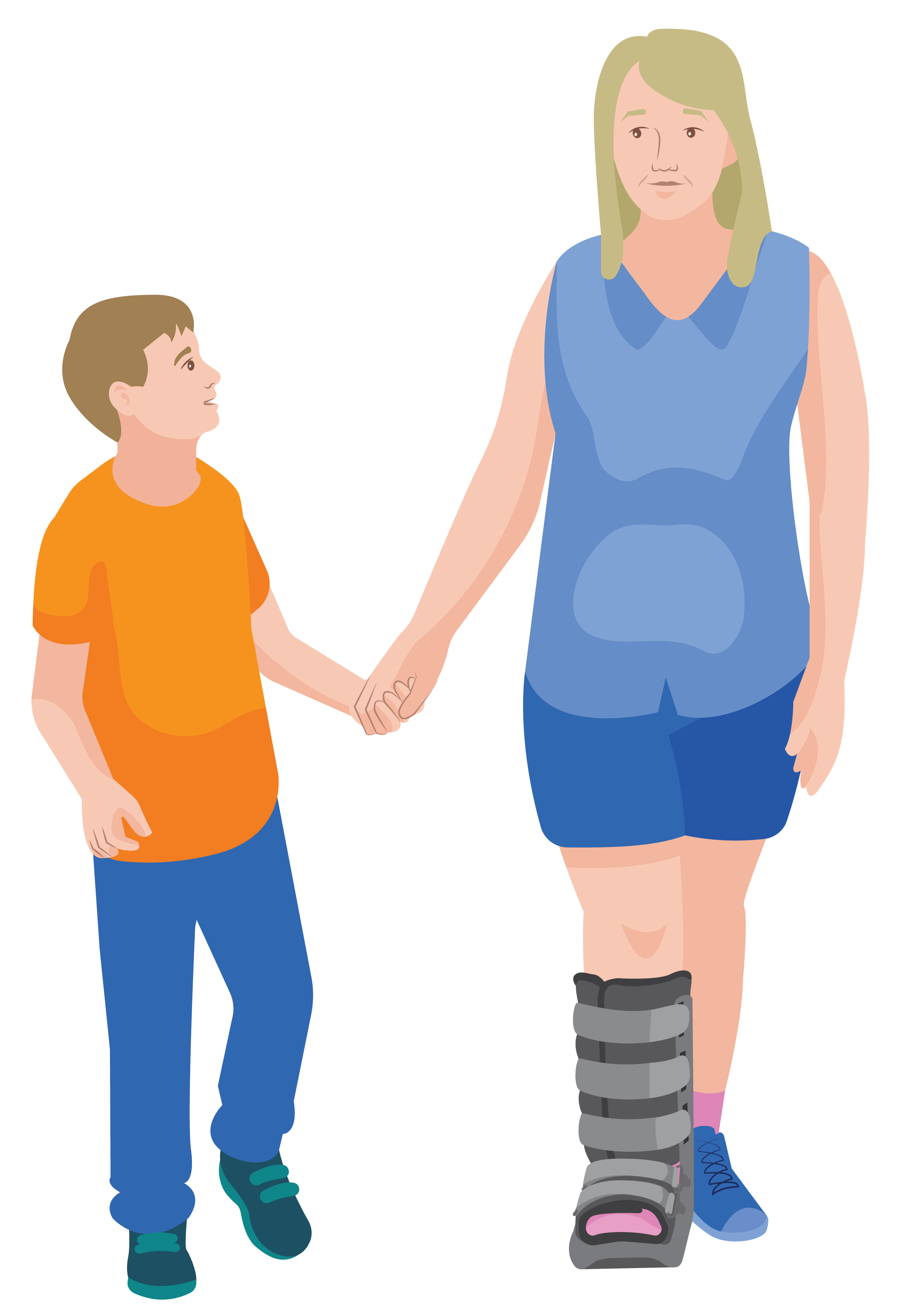
Jess is 40 years old and lives with her husband and three children.
Jess tripped while walking to school with her children. She had a lot of pain. Jess was assessed by a doctor who found she had a broken bone in her foot.
Jess was referred for a rigid removable boot to hold the broken bone in place. With the boot she can safely walk on her foot while it heals.
Soft tissue injuries
Muscles, tendons and ligaments are all soft tissues that connect and support our bones and joints.
A rigid removable boot can help soft tissues to heal by reducing movement of the foot and ankle.
Question
What would be considered a soft tissue injury?
Select all that apply.
If you selected b, c and d, you are correct. These are all types of soft tissue injuries.
a is not correct. Bones are not soft tissue.
Meet Wei
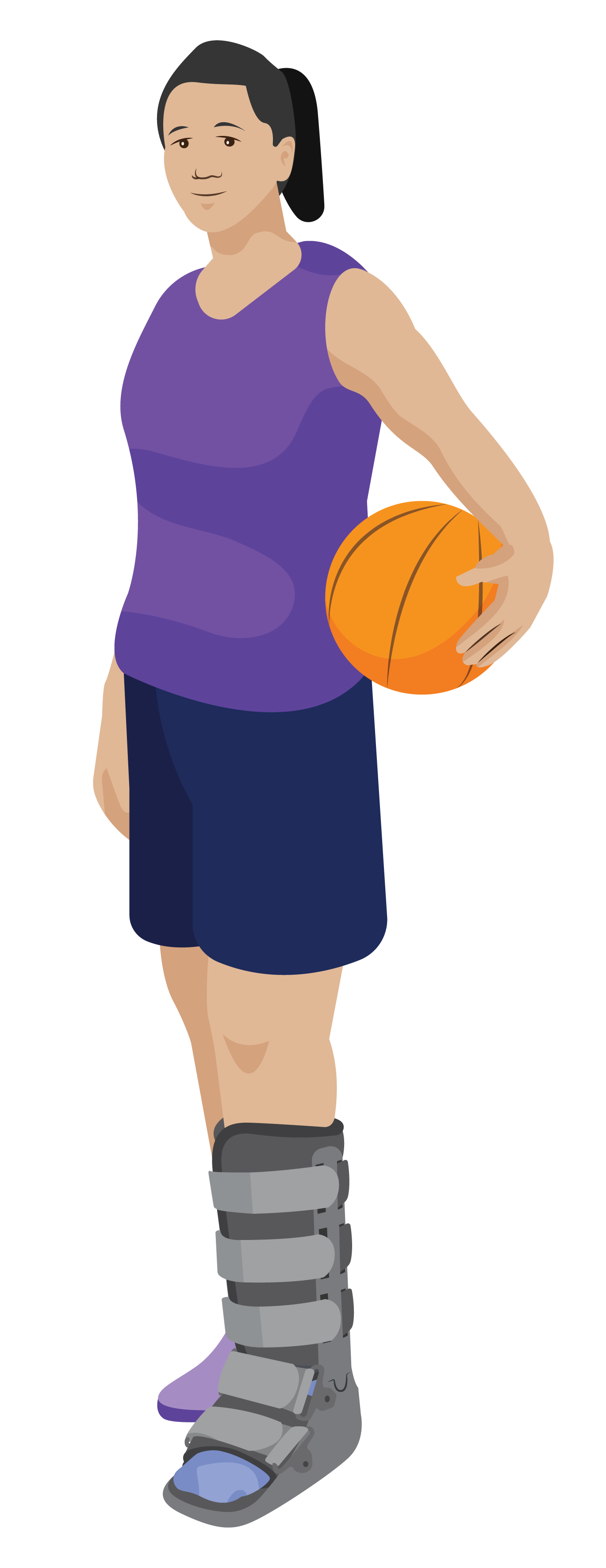
Wei is 22 years old and enjoys playing basketball with her friends on the weekends.
Wei twisted her ankle when playing basketball. She had to stop playing and was unable to walk. Her doctor explained that she had injured the soft tissues around her ankle.
Wei was referred for a rigid removable boot to hold her ankle in a fixed position. With the boot she has less pain and can walk while her injury heals.
After surgery
For people who have had surgery to repair broken bones or soft tissues in their foot or ankle, a rigid removable boot can protect the foot and ankle while it heals.
Meet Mario
Mario is 60 years old and is a builder. Mario has diabetes and problems with feeling (sensation) in his feet.
Mario recently had surgery after injuring the ligaments around his ankle while he was working. Now he wears a rigid removable boot that holds his ankle in a fixed position while the injury and surgical wound heals.
Stable injury
The doctor will assess if the person’s injury is stable. Stable injuries can safely be held in position by the rigid removable boot.
If their injury is not stable, they must not be referred for a rigid removable boot.
This module teaches how to provide a rigid removable boot after a referral has been made by a doctor.
Foot wounds
People with diabetic foot wounds can also benefit from wearing a rigid removable boot.
This must be in combination with wound care and medical management.
Providing a rigid removable boot for a person with a foot wound is not covered in this TAP module.
Providing a rigid removable boot for a person with a diabetic foot wound, without appropriate wound and medical management can make the wound worse.