The following topics explain more about completing the assessment for a rigid removable boot.
Information about the referral

Transfer information from the referral to the assessment form.
If the information is not complete or you have questions about the referral, contact the person who made the referral.
Information about the person

Transfer information from the referral to the assessment form.
Check with the person that it is correct.
Health and mobility check
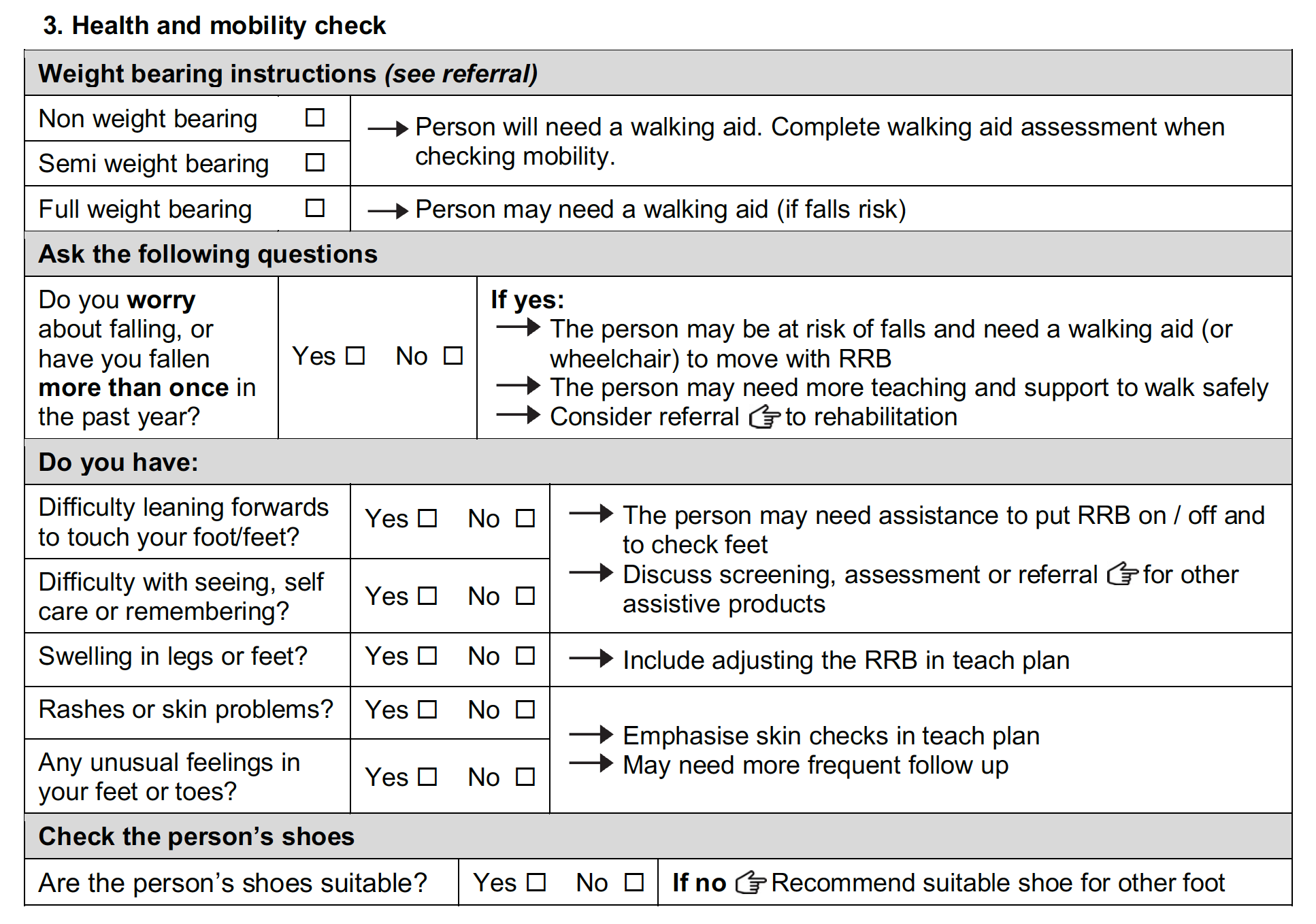
Before providing a rigid removable boot, always check if the person has any mobility or health risks that may need further assessment or referral.
Weight bearing instructions

Question
Look at Wei’s referral form.
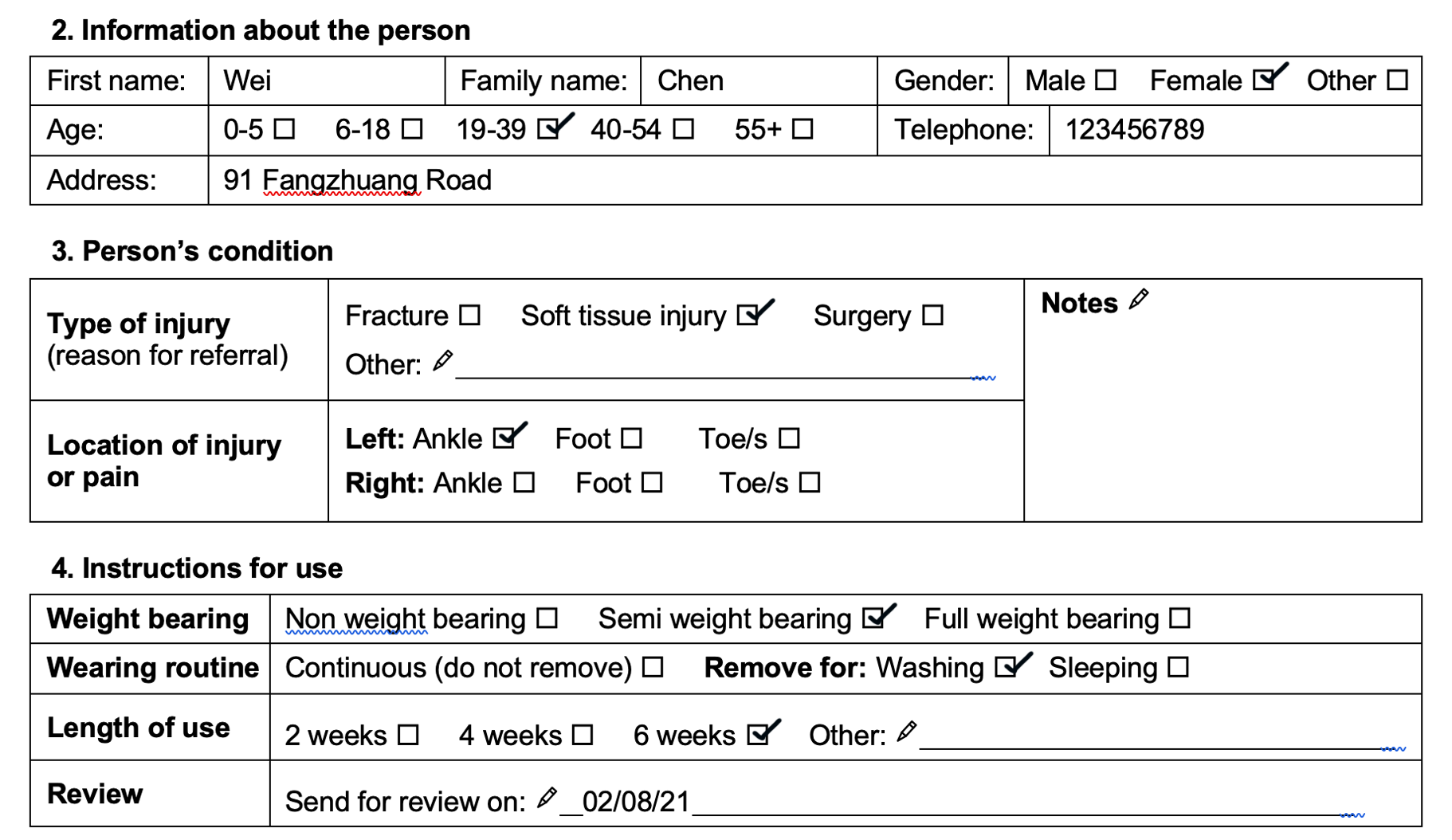
What weight bearing has the referrer instructed for Wei?
If you selected b, you are correct.
The referrer has ticked semi weight bearing on the referral form.
If a person is non weight bearing or semi weight bearing they will need to use a walking aid for their safe mobility.
To select a suitable walking aid, complete a walking aid assessment.
Refer to the TAP Walking aids module to remember how to assess for a walking aid.
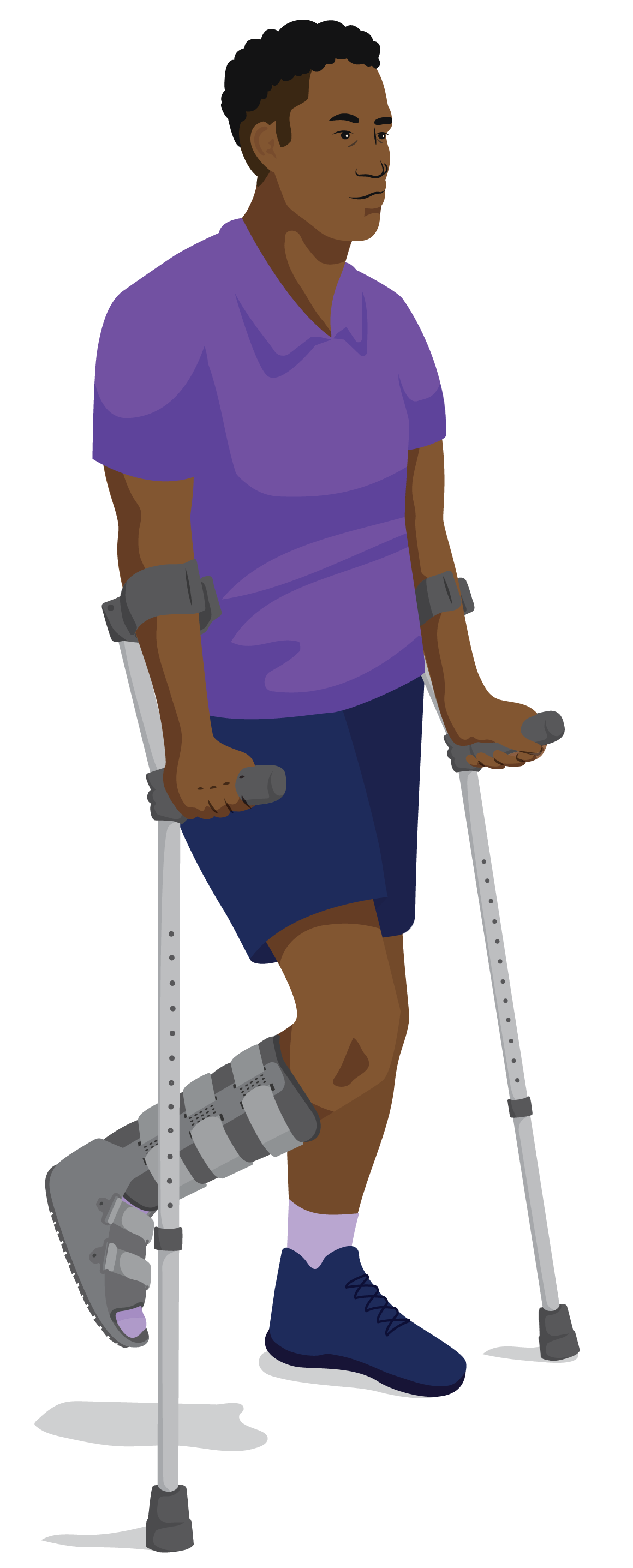
Non weight bearing
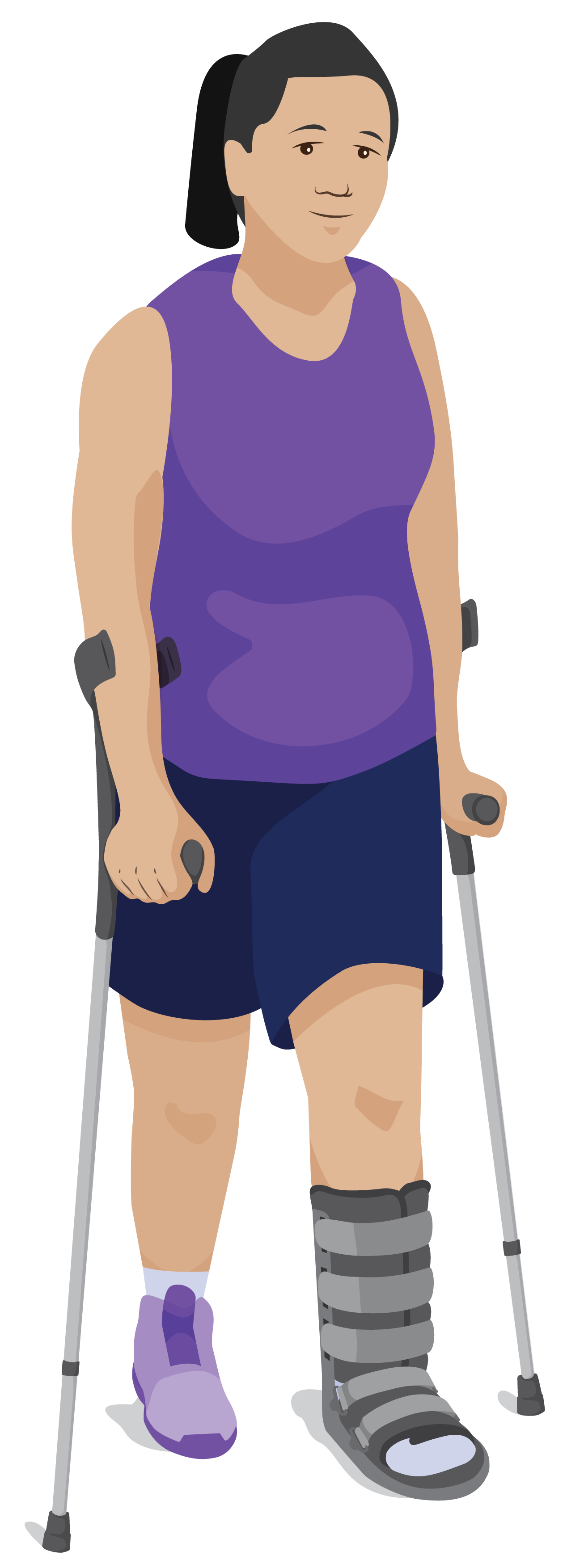 Semi weight bearing
Question
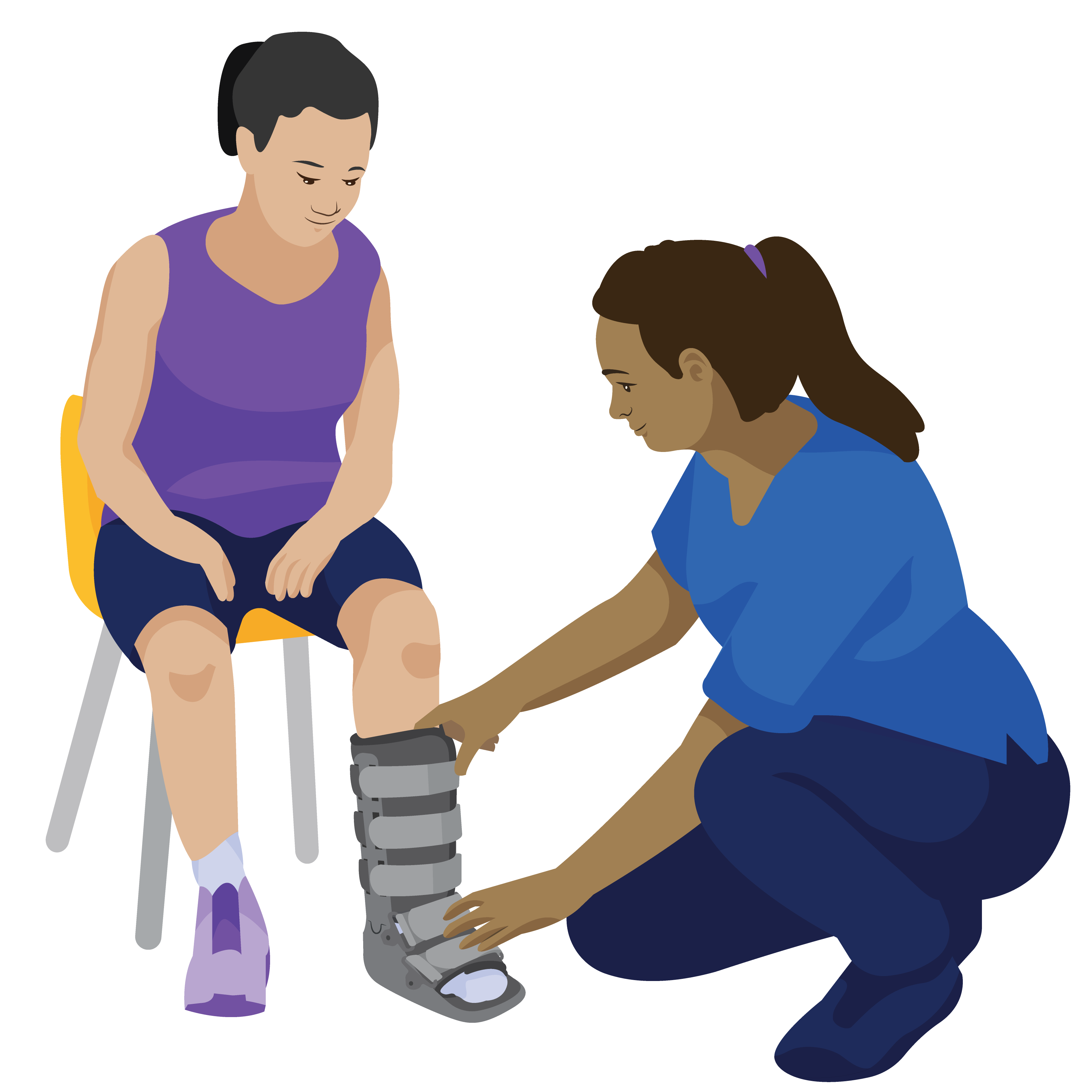
What will you plan to do for Wei so she can safely use the rigid removable boot semi weight bearing?
Select all that apply.
If you selected b, you are correct.
Wei cannot put full weight through the leg with the rigid removable boot so she will need a walking aid to support her.
a and c are not correct.
It will be easier and safer for Wei to use a walking aid with the rigid removable boot. If Wei was hopping without a walking aid, she is more likely to fall. Hopping should not be recommended.
Wei cannot walk as she normally does because she cannot put full weight through the rigid removable boot.
If a person is full weight bearing and not at risk of falls, no walking aid is needed.
Risk of falling
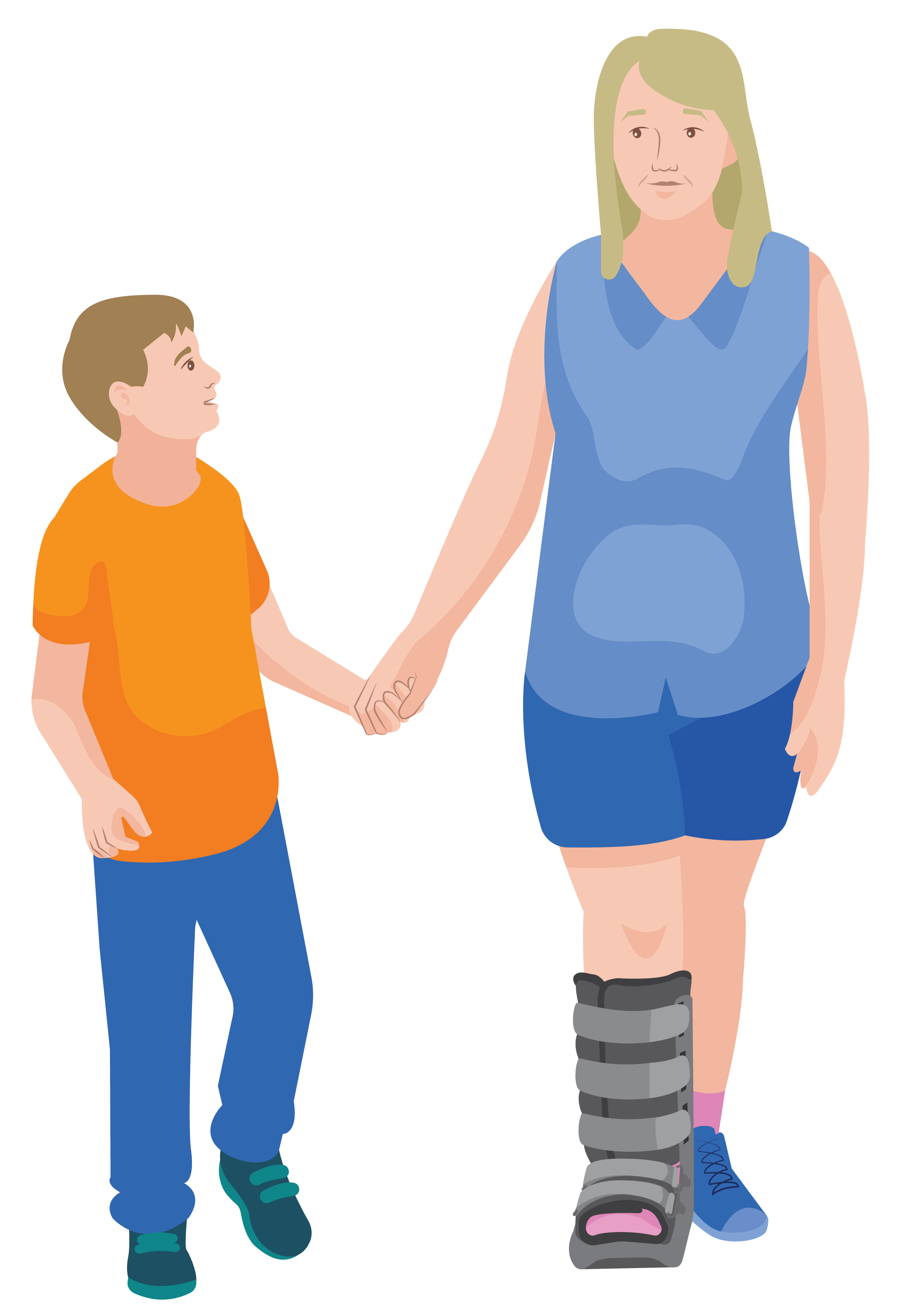
Ask: Do you worry about falling over or have you fallen more than once in the past year?

If a person is at risk of falling, they may need:
- A more supportive walking aid
- More teaching and support to walk safely.
For some people, a wheelchair will be the safest option for their mobility while they are using a rigid removable boot.
If the person needs more assistance with mobility, referral to a physical therapist may be helpful.
Consider referral to a rehabilitation service if you are concerned about a person at risk of falls.
Question
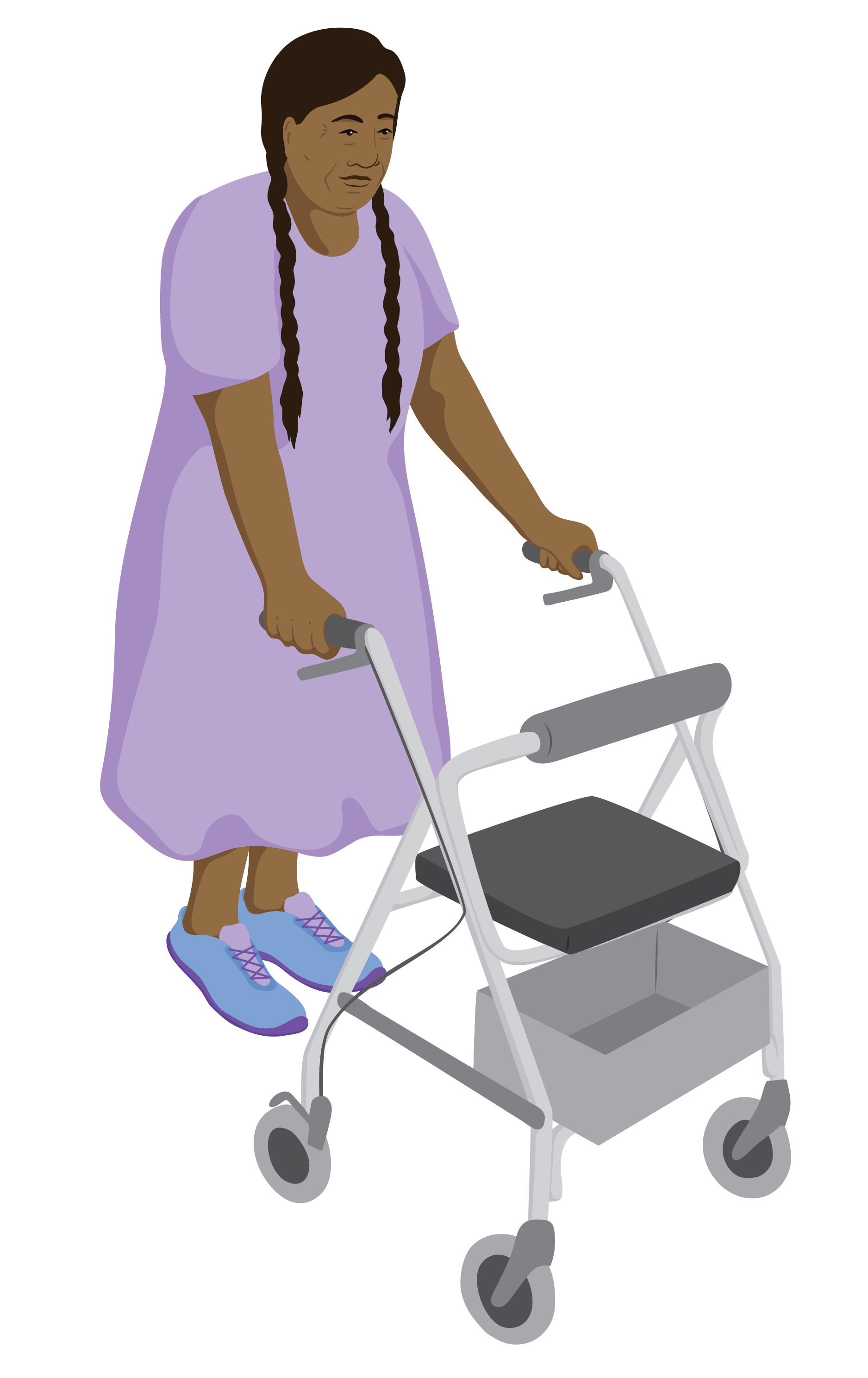
Sofia is 68 years old and recently had falls in her home. After an assessment, Sofia was given a rollator to assist her move around. She has enjoyed walking to the local shops.
However, Sofia has fallen again going to the toilet at night and hurt her ankle. At the hospital she found out she has broken her ankle. Sofia has a stable fracture and has been referred for a rigid removable boot.
1. Has Sofia fallen more than once in the past year?
If you selected yes, you are correct.
Sofia is at risk of falls. She had falls in her home and recently fell again at night when going to the toilet.
2. What are possible actions to discuss with Sofia?
Select all that apply.
If you selected a and b, you are correct.
c is not correct.
A rigid removable boot makes it harder for a person to balance.
Difficulty leaning forwards
Ask: Do you have difficulty leaning forwards to touch your foot/feet?

Some people cannot reach their feet to put the rigid removable boot on or take it off.
If they have difficulty, they may need assistance from a caregiver or family member.
If they have difficulty leaning forward, this could also mean they have problems with balance and are at risk of falls.
Difficulty with seeing, self care or remembering
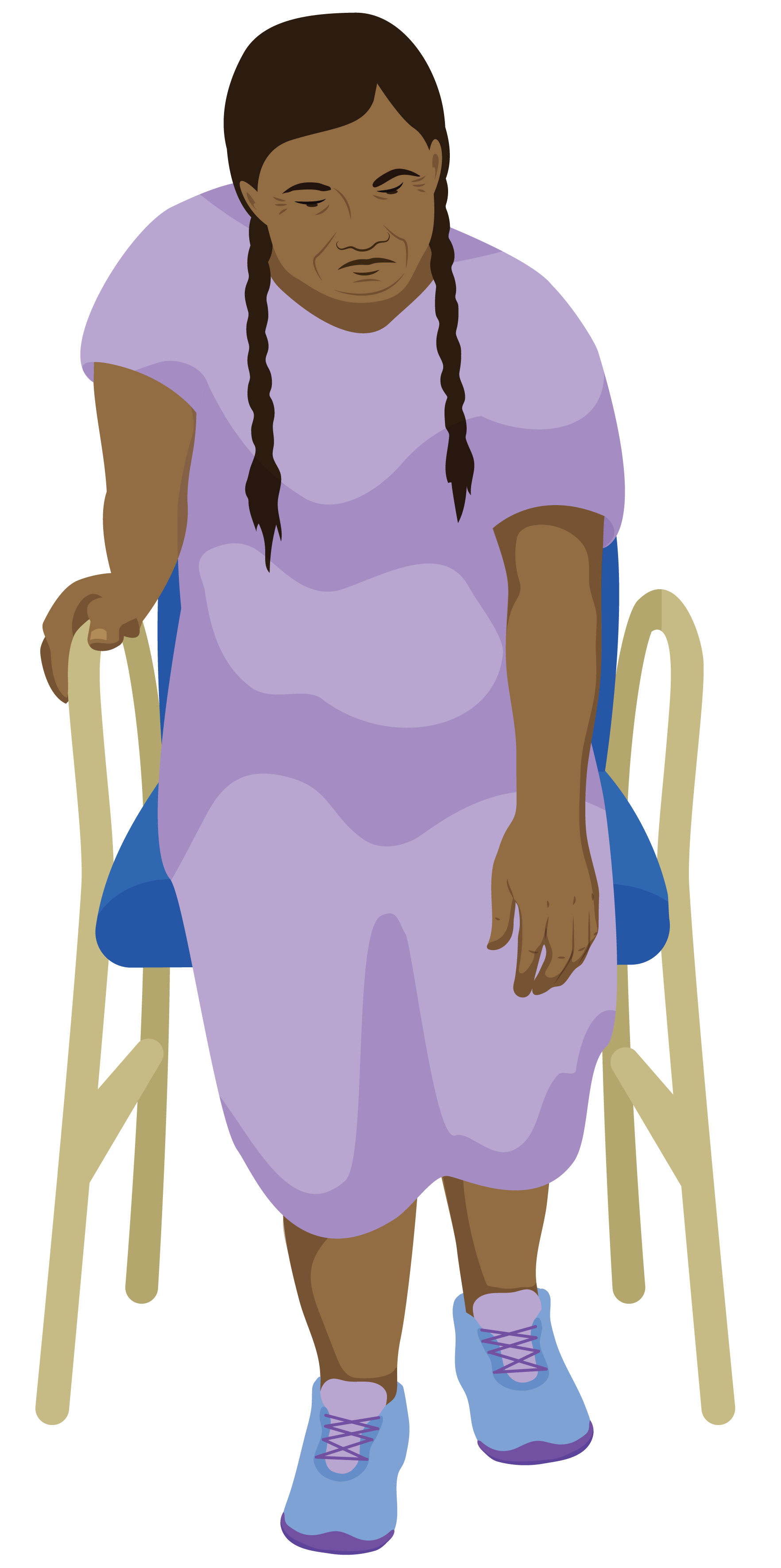
Ask: Do you have difficulty with seeing, self care or remembering?

If a person has difficulty with seeing, self care or remembering, they may need assistance from a caregiver or family member to use the rigid removable boot safely.
Also consider if screening, assessment or referral is needed for other assistive products.
Question
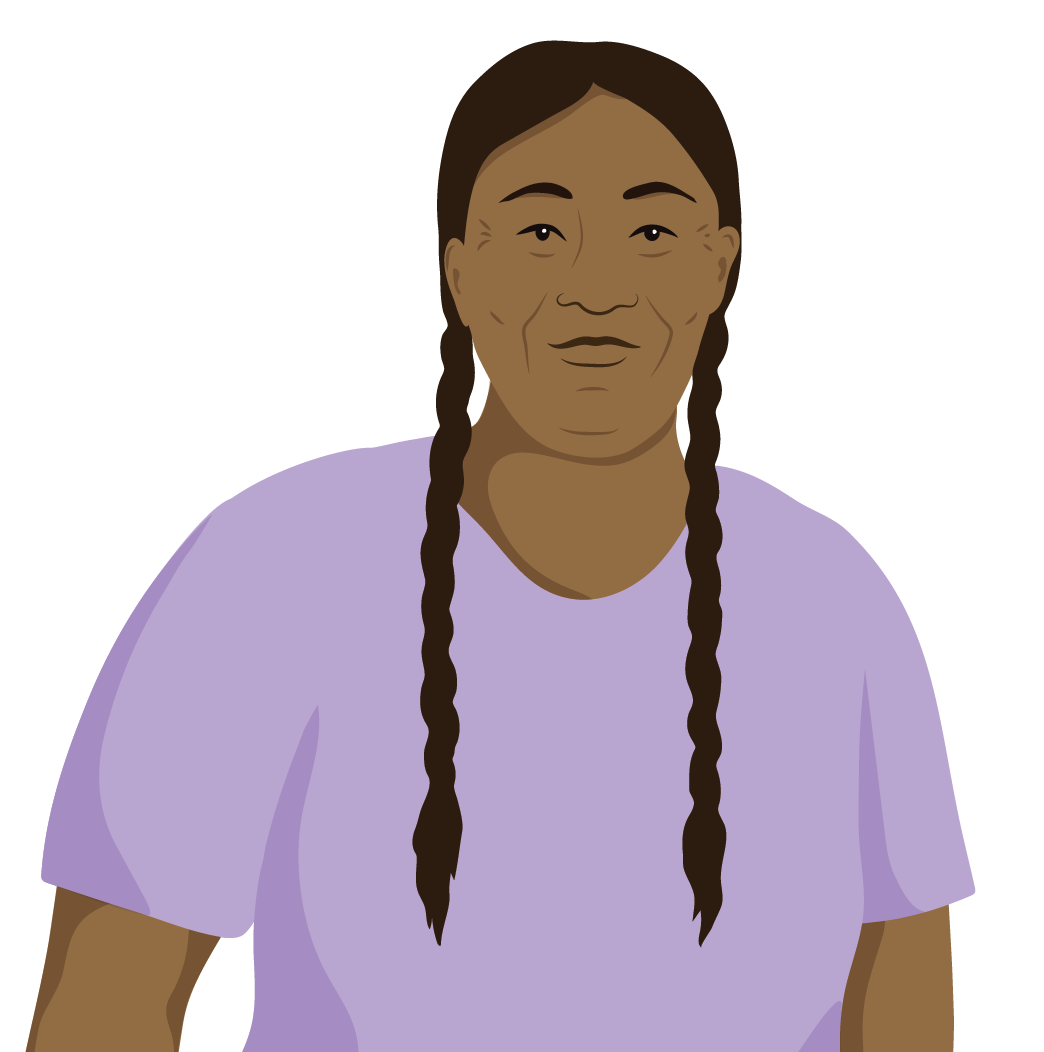
Remember Sofia?
Sofia has been referred for a rigid removable boot after a fall and breaking a bone in her ankle.
During the assessment interview Sofia explains that it isn’t easy for her to lean forward to reach her feet.
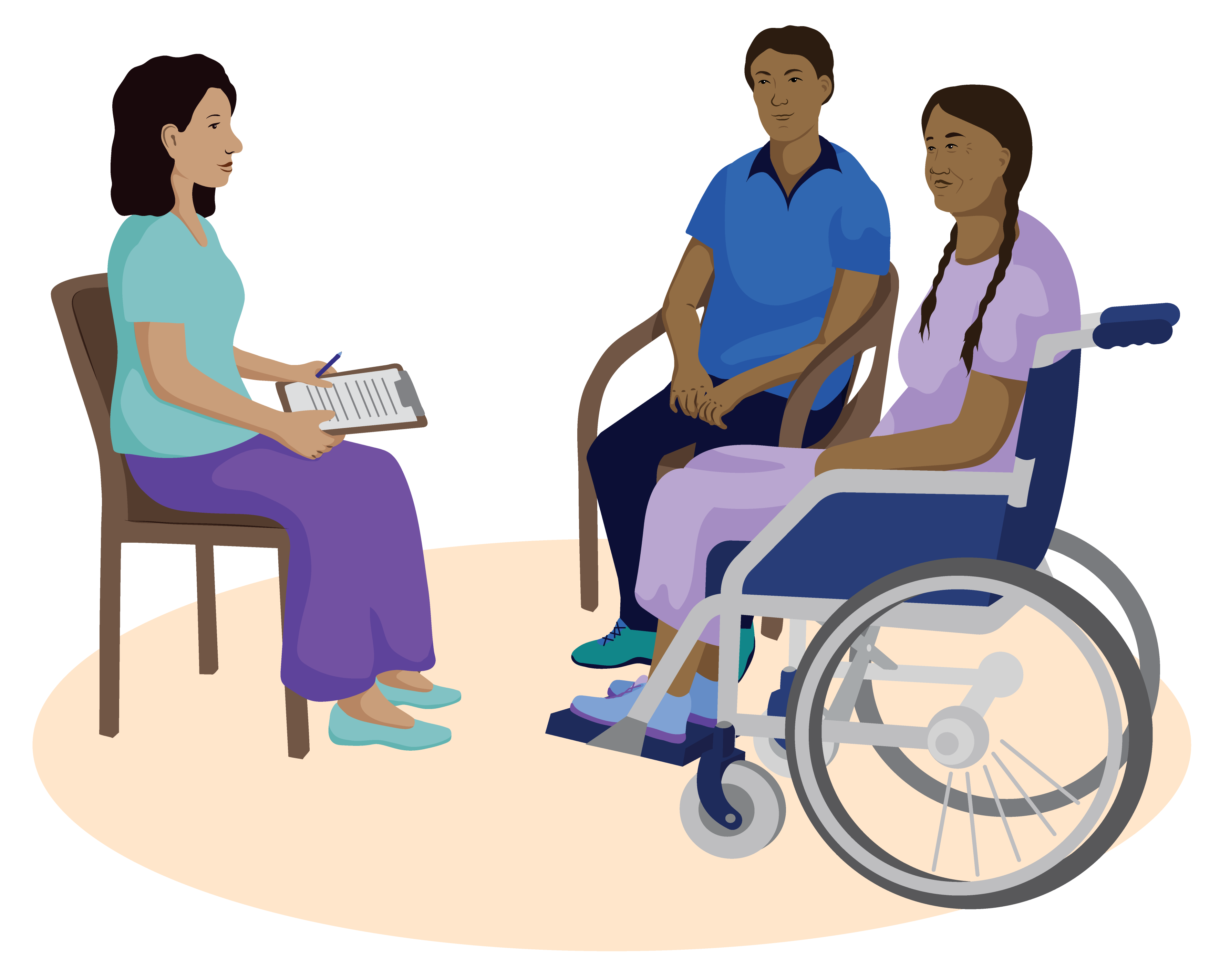
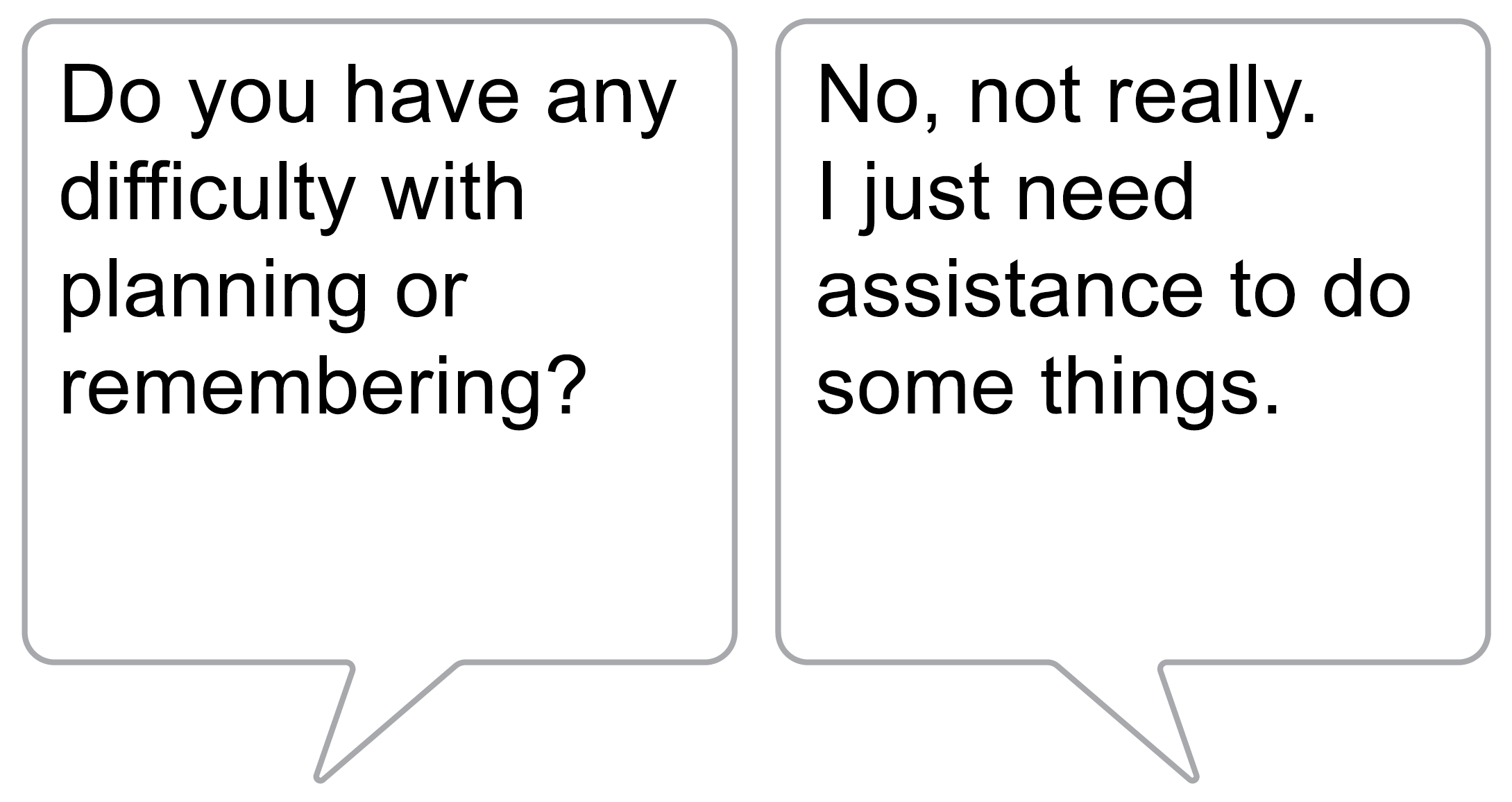

1. Do you think Sofia needs assistance to put on and take off her rigid removable boot?
If you selected yes, you are correct.
Sofia has described difficulty leaning forward to touch her toes. A person who has difficulty leaning forward to reach their foot will need assistance from a family member or caregiver to put on and take off their rigid removable boot.
2. Does Sofia have difficulty with seeing, self care or remembering?
Select all that apply.
If you selected a and b, you are correct.
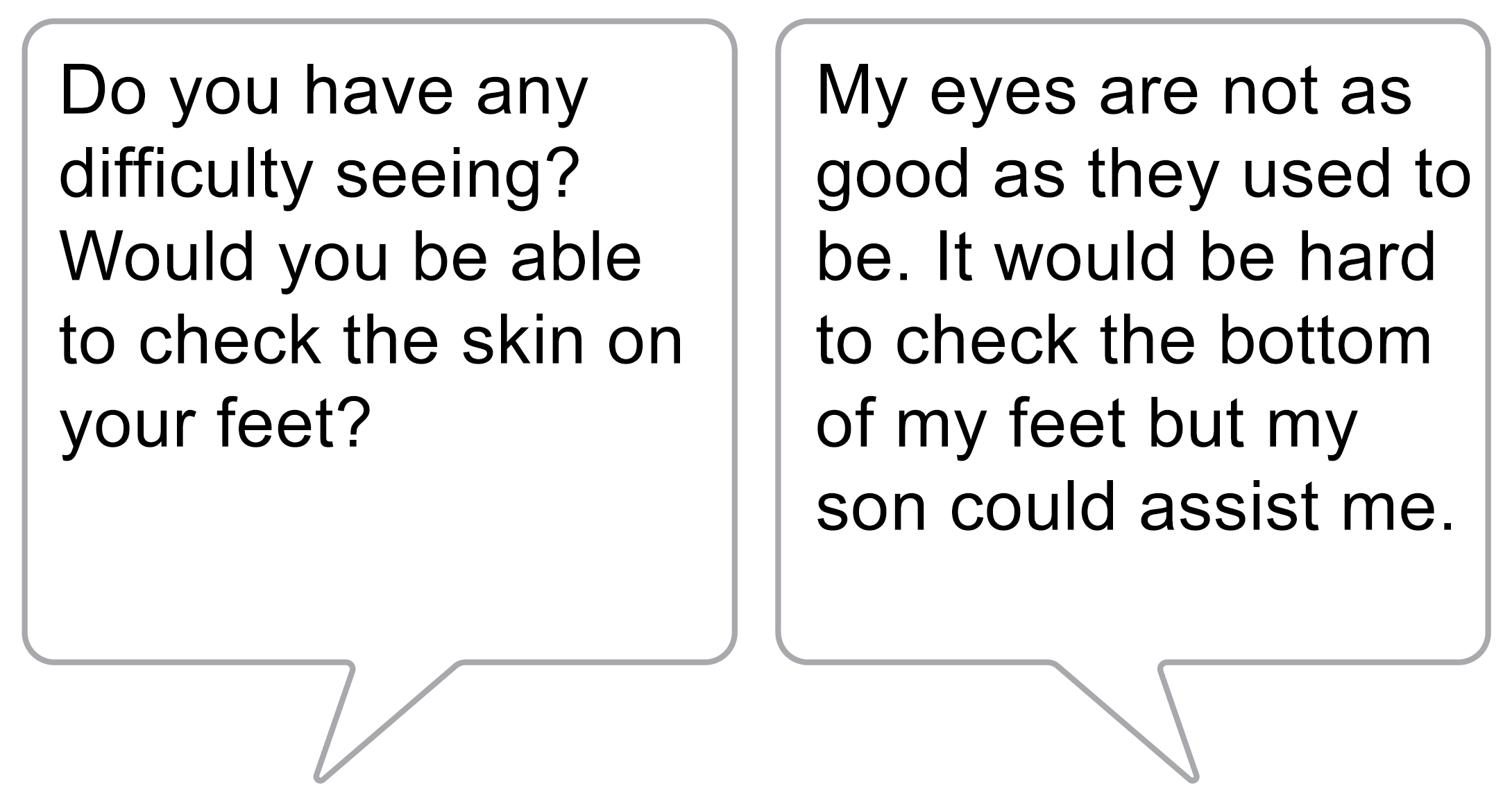
Sofia described not being able to see as well as she used to. This may make it harder to do up the straps of the boot and check the skin on her foot for signs of rubbing.
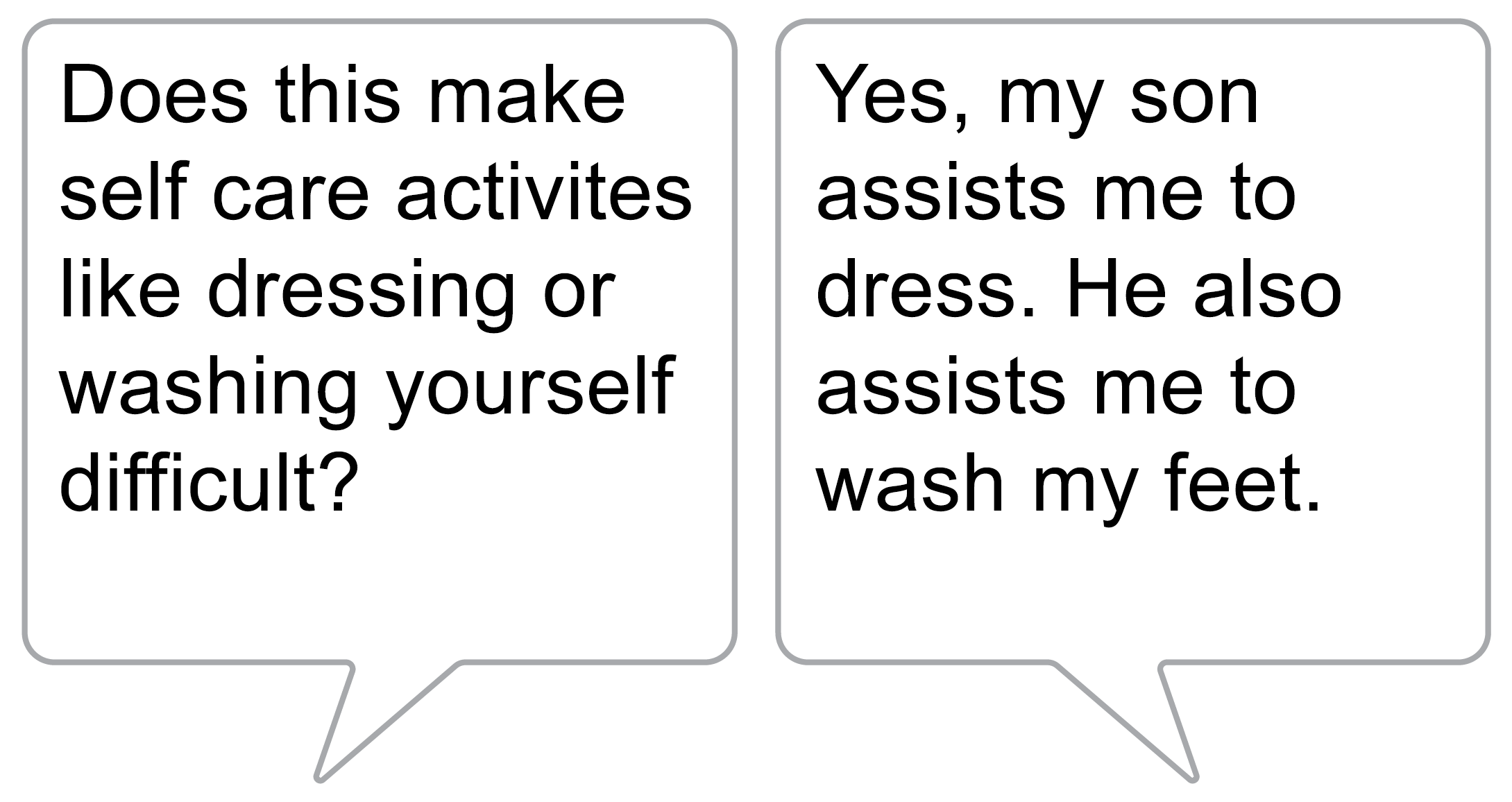
Sofia also described difficulties with dressing and washing herself. She may benefit from other assistive products for vision and self care.
c is not correct.
Sofia and her son did not describe any thinking or remembering difficulties.
A person who has difficulty with thinking and remembering may need assistance to know when it is safe to remove the boot and remembering when to put it on.
Swelling
Ask: Do you have swelling in your legs or feet?

If the person has swelling, they should check the fit of their rigid removable boot regularly.
If the person’s foot or ankle changes size during the day the boot may not always fit comfortably. Adjusting the straps will help.
Include teaching adjusting the rigid removable boot in the plan.
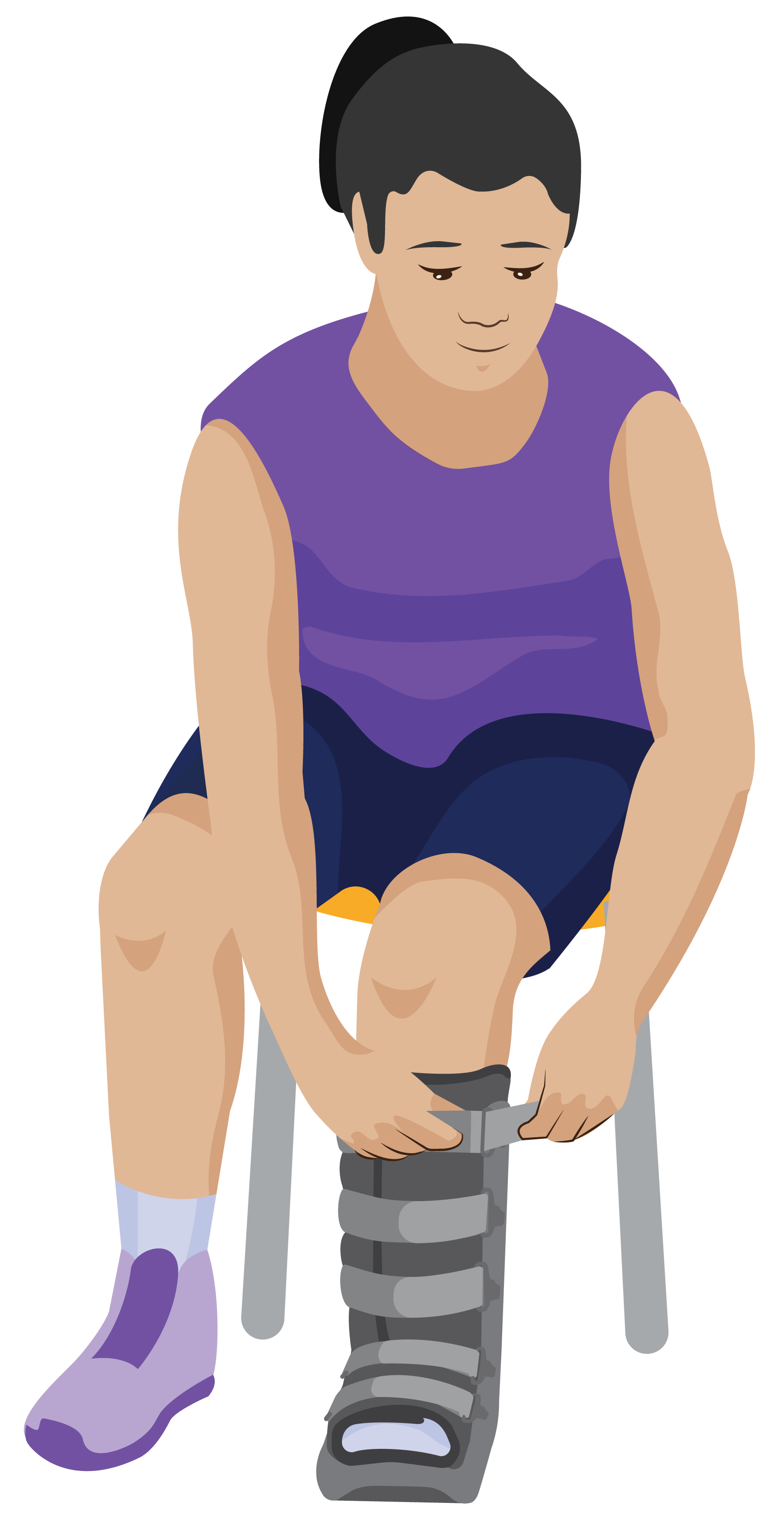
Remember Wei?
When Wei first had her injury, her ankle was very swollen. The rigid removable boot was adjusted to fit.
After a few days, the swelling had gone down and the boot felt loose. Wei adjusted the straps again so the rigid removable boot would stay fitting well.
Rashes or skin problems
Ask: Do you have rashes or skin problems?

Sometimes when the skin is covered in a boot, it can make rashes or other skin problems worse.
Regular skin checks are important.
Discussion
Can you think of any common skin problems that might get worse in the rigid removable boot?
Unusual feelings in feet or toes
Ask: Do you have any unusual feelings in your feet or toes?

Some people may have unusual feelings in their legs, feet or toes. They may not feel rubbing on their skin or pain.
Regularly checking the leg and foot for wounds, or areas of skin that have changed colour is important.
The person may also need more frequent follow up to check for skin problems.
You will learn more about regular skin checks in Lesson three.
Question
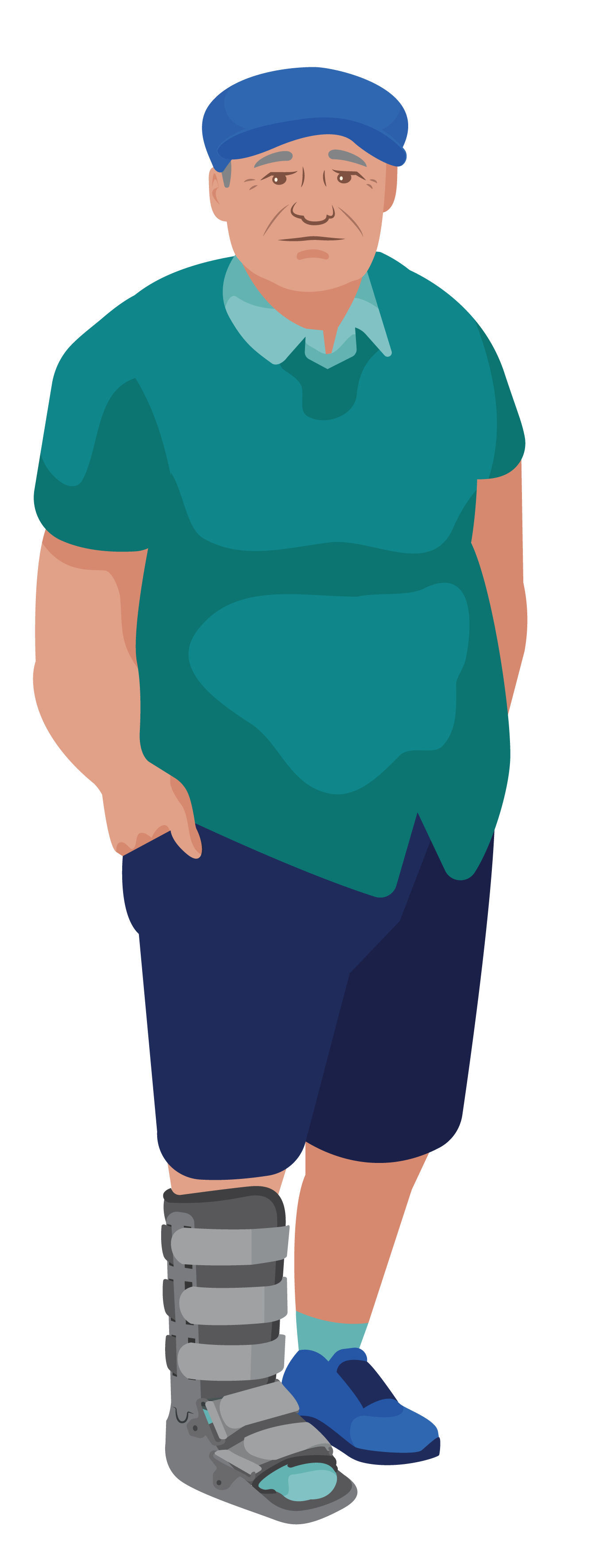
Remember Mario?
Mario is using a rigid removable boot while his ankle injury heals. He has diabetes and problems with feeling (sensation) in his feet. Mario sometimes gets rashes on his legs when he gets hot.
What actions would you recommend for Mario?
Select all that apply.
If you selected b and c, you are correct.
It is very important for Mario to check his foot and leg because he may not feel if there is a problem.
a is not correct.
The rigid removable boot could cause a problem on the foot or leg if it is not put on properly.
You will learn more about follow up in Lesson four.
Check the person’s shoes
Observe: Are the person’s shoes suitable?

Rigid removable boots have a thick sole.
Wearing a suitable shoe with a thick sole on the other foot will help the person feel balanced when they walk.
A suitable shoe will also protect the person’s other foot from injury.
Test your knowledge of suitable shoes by answering the following question.
Question
This is the shoe that Mario usually wears.
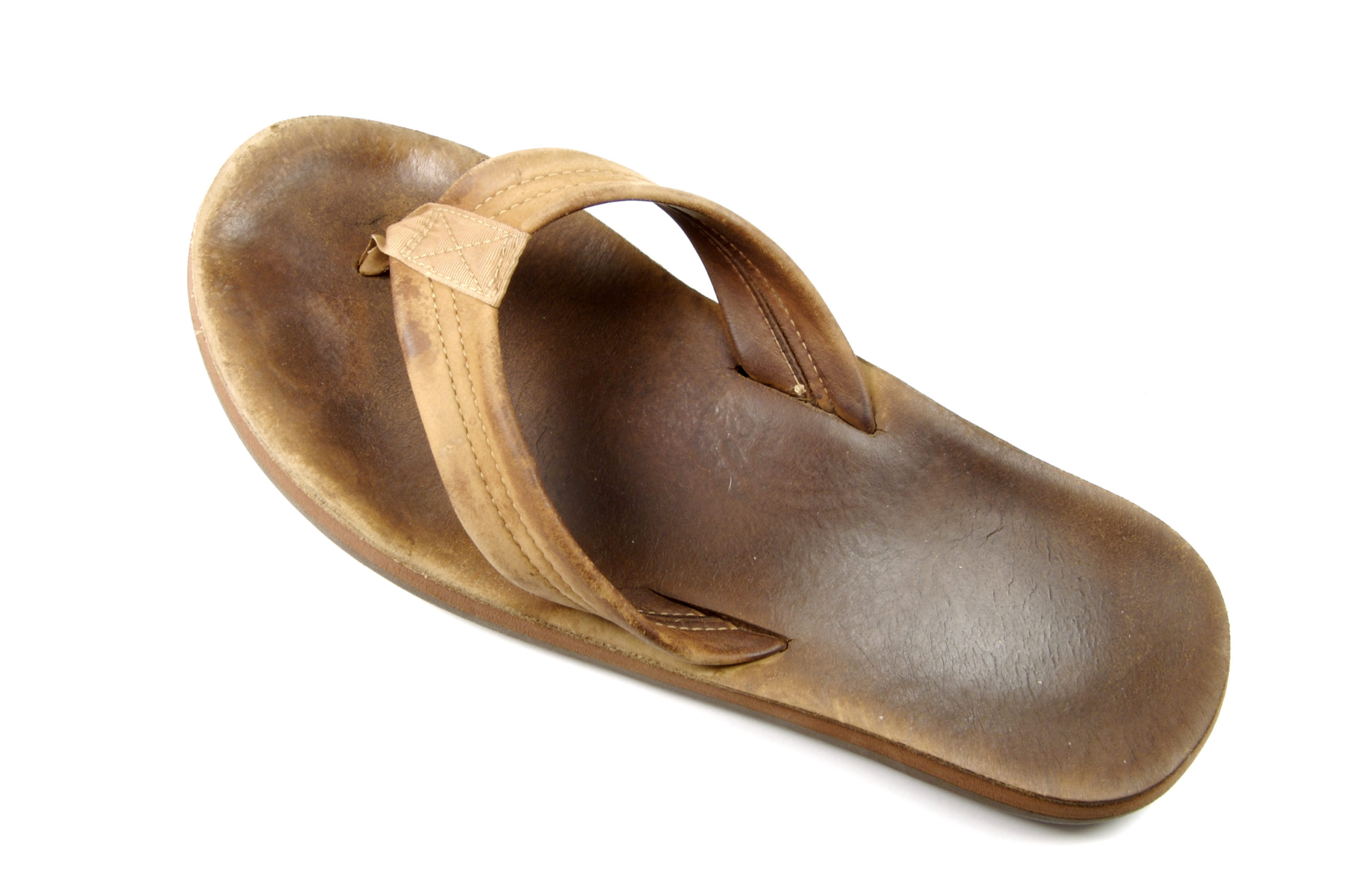
Is Mario’s shoe suitable?
If you selected no, you are correct.
Mario’s shoe is not suitable. There is no firm support for his foot, which increases the risk of falling. This shoe will not protect his foot from injury.
Mario needs suitable shoes so that he is safe using the rigid removable boot. He is at higher risk of injury because he has problems with feeling (sensation) in his feet.
Mario should be given advice on suitable shoes.
If you did not get the question right, or were not sure, go back and review the Teach topic in the TAP Mobility assistive products module.