The person’s physical condition will affect the best choice of walking aid for them.
In this topic we will look at some common health problems that may affect a person and the selection of the most appropriate walking aid for them. The health problems included in this topic are on the assessment form.
下肢骨折
脚に骨折(骨の折れ)がある場合、骨が治癒するまで脚に体重を完全に載せられないことがあります。
The length of time depends on the doctor’s recommendation.
Select a walking aid that can be used with one leg.
質問
Think back to the different types of walking aids.
Tip – click on the question to view feedback
クラッチ、松葉杖、歩行器。
後方歩行器、歩行車 歩行杖 、片足のみで体重を支えている人が安全に使用することは歩行杖
Stroke or brain injury
Stroke and brain injury are conditions where the brain has been injured or damaged. The affects of a stroke or a brain injury vary for each person. People may experience:
- Difficulty balancing and coordinating their movement
- Weakness overall, and/or weakness on one side of their body
- Stiff arms, legs and body
- Difficulty remembering things
- Difficulty speaking and communicating
- Difficulty seeing things
Selecting the right walking aid will depend on how the person’s balance, coordination, strength, weight bearing and thinking skills are affected.
次のトピック「活動性と能力」では、これらの事柄についてさらに詳しく論じます。
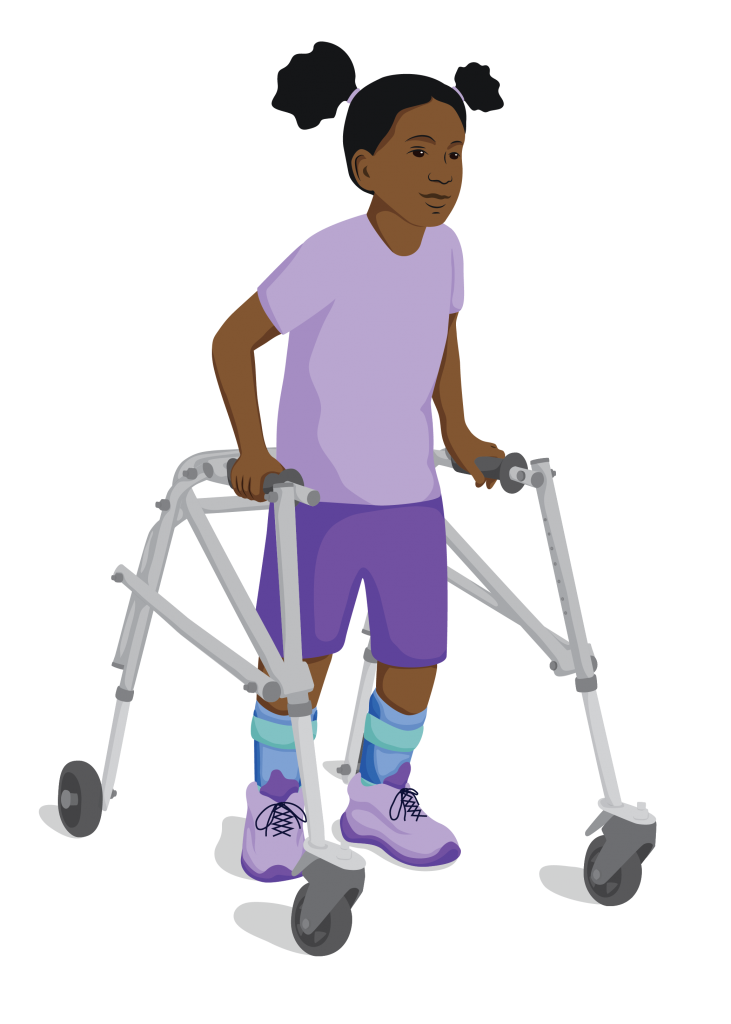
Cerebral palsy
A person with cerebral palsy may have difficulty with balance, coordination and strength; and this can affect their mobility. Some people with cerebral palsy are able to walk with assistance. A walking aid can help by providing support and reducing the energy needed. The most useful type of walking aid, particularly for children, is a posterior walker.
Remember Dinah, who has cerebral palsy?
Dinah finds it hard to keep her balance. Without her walking aid, she falls backwards after a few steps because her muscles are tight (high tone). She also gets tired when moving around a lot.
Dinah’s posterior walker helps her to stand upright, walk more naturally and stops her from falling backwards. She finds it is much easier to use than a walking frame.
下肢切断
The best choice of walking aid for a person with an amputation depends on:
- The level of amputation
- Whether their amputation is on one or both sides
- Whether they use a prosthesis.
質問
Tip – click on the question to view feedback
A person with a high level amputation who is using a prosthesis may need a walking aid for extra support. This is because more strength, balance and energy is needed to use a high level prosthesis.
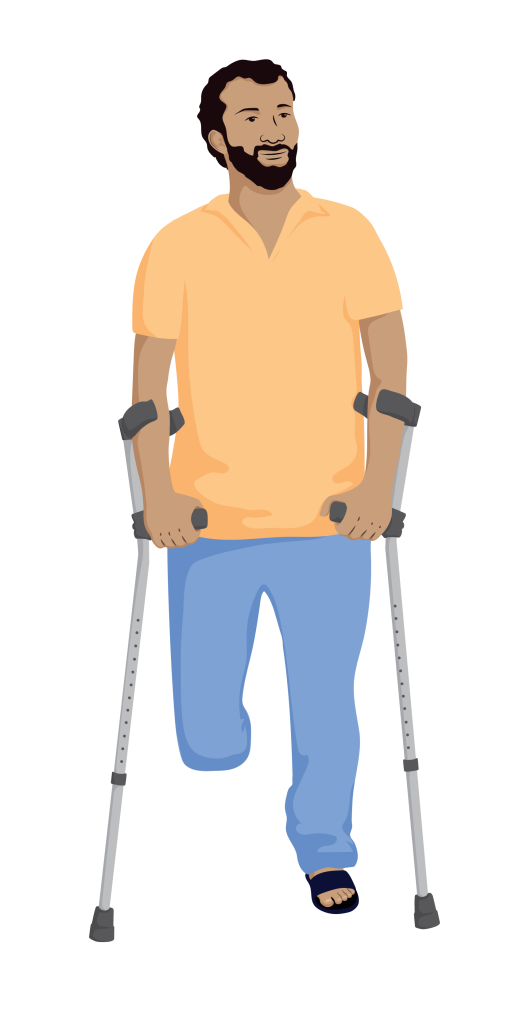
Remember Asif, who has a lower limb amputation?
質問
Tip – click on the question to view feedback
歩行杖 は、アシフが義足を装着している際に多少の支えとなる歩行杖 ただし、義足を装着していない状態では歩行杖 。歩行杖 は両足で体重を支えられる場合にのみ使用歩行杖 。
質問
Tip – click on the question to view feedback
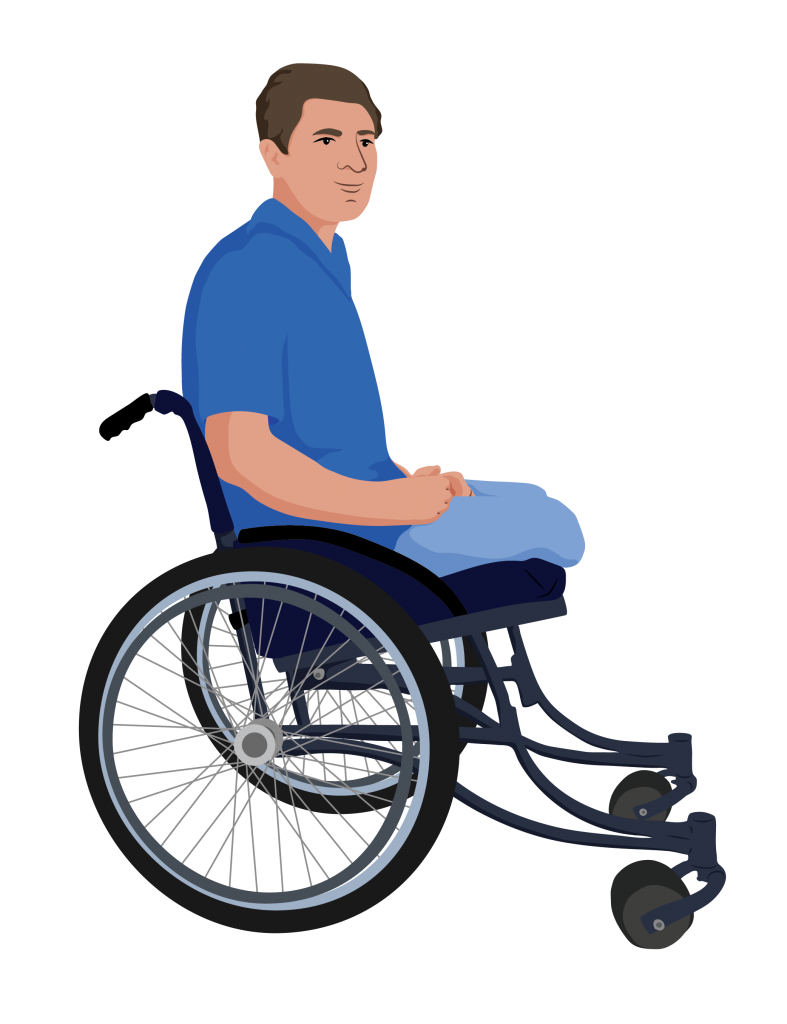
A person with both legs amputated usually needs a wheelchair when not using prosthetic legs. If they have prosthetic legs, they may also use a walking aid. This is because walking with two prosthetic legs takes a lot of coordination, strength and energy.
糖尿病
Diabetes can affect:
- Balance
- 視覚
- Memory
- Feeling (sensation)
Diabetes also increases the risk of foot ulcers. This should be carefully considered when providing a walking aid.
Foot ulcers are discussed more, later in this topic.
関節炎
Arthritis can cause pain and muscle weakness.
If a person has arthritis, ask how much weight they can comfortably put through their legs and hands. This will affect the type of walking aid selected and how it is used.
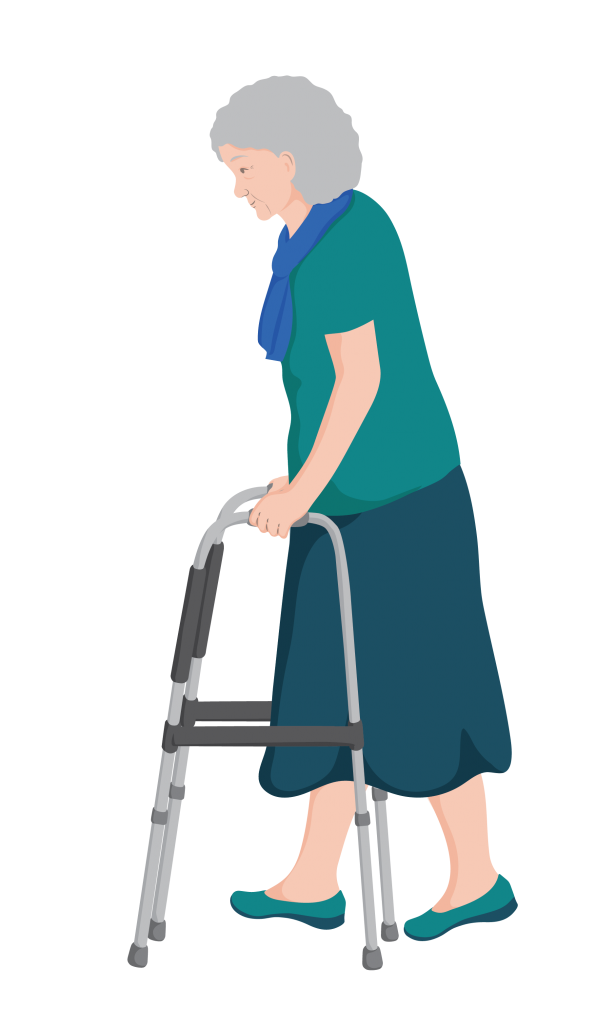
カリを覚えていますか?
Cali has arthritis and pain in her knees and hips when she walks. Using the walking frame helps to take some weight off her legs. This makes walking less painful.
フレイル (虚弱)
A person who is frail may have poor balance, strength and coordination. They are likely to need a walking aid that provides more support such as a walking frame.
Health condition not known
Many people may have health conditions that affect what walking aid they could use and how they would use it, but they do not know what their health problems are called.
ディスカッション
What other health problems are common in your area or service, that can lead to a person needing a walking aid?
Now let’s look at some other physical problems a person may have. Gathering information about any physical problems will help you understand more about what the person can do and which walking aids would be most suitable.
Foot ulcers
Foot ulcers that do not heal can get infected and lead to amputation. They are a serious health risk.
People at most risk of developing a foot ulcer include those who:
- Have diabetes
- Have had a foot ulcer before
- Have an amputation (particularly if caused by a foot ulcer)
- Experience odd sensations in the feet or legs
- Have stiff toes and joints, bunions or other foot deformities
足潰瘍がある人は、潰瘍が治癒するまで、歩いたり患部に荷重をかけるべきではありません。患部への荷重を軽減するために、歩行支援用品を使用できます。
ただし、足潰瘍が発生・悪化する危険がある人は、片足で跳ねるべきではありません。これは片足に過度の圧力をかけ、足潰瘍の一因となる可能性があります。したがって、片足のみに体重がかかる足潰瘍が発生・悪化する危険がある人に、歩行支援用品の供与は避けるべきです。
ディスカッション
Are foot ulcers common in your area?
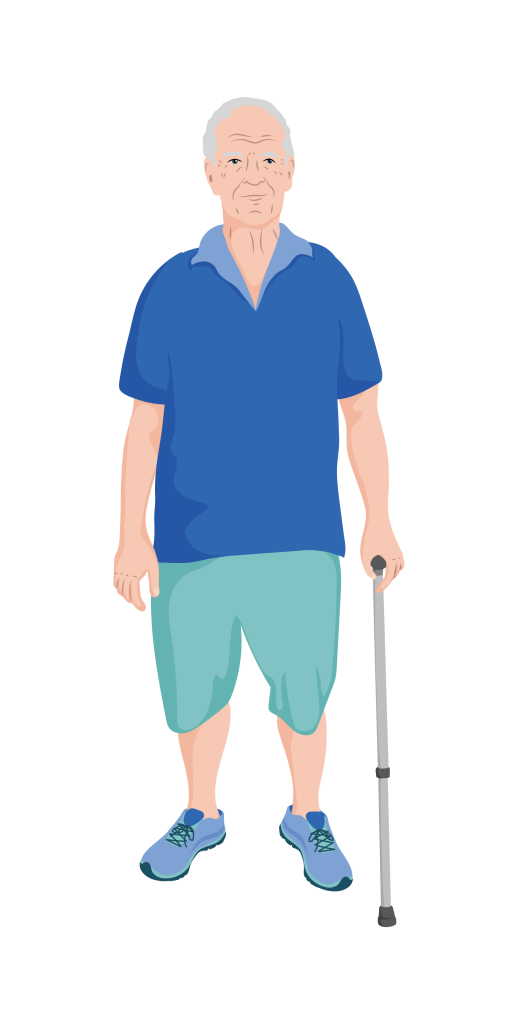
イェンセンに出会う
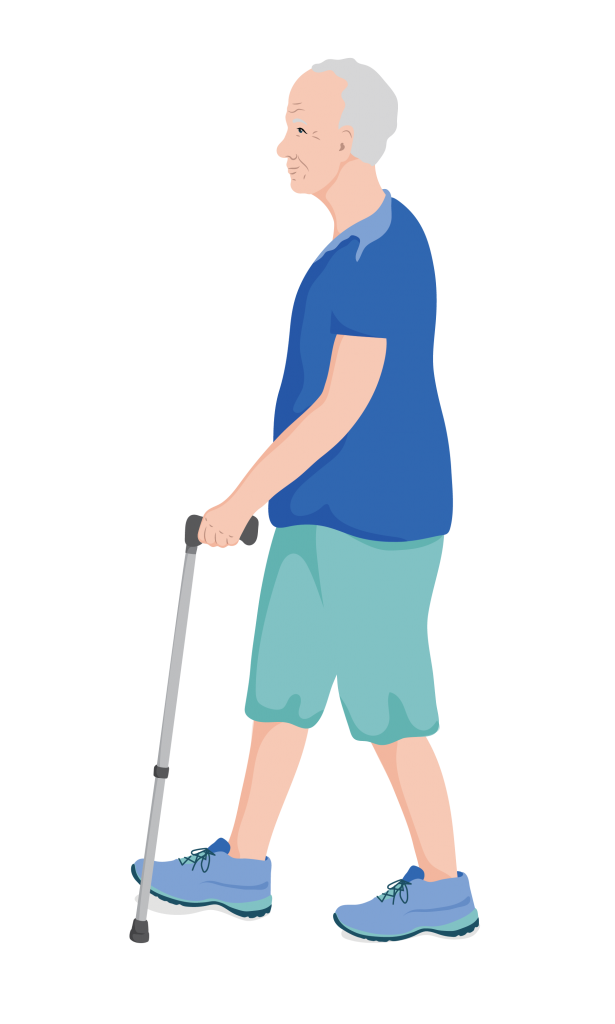
イェンセン 、野菜畑での作業が大好きだ。最近、糖尿病と診断された。昨年、岩で足の指を切った後、足に潰瘍ができた。その潰瘍は今は治癒し、彼は糖尿病の管理をしている。
イェンセンは最近、自宅や買い物中に転倒しました。医師は、歩行時の安全を確保するため、歩行支援用品の使用を勧めました。
質問
Tip – click on the question to view feedback
はい、イェンセンは糖尿病を患っており、以前に足潰瘍を経験しているため、危険があります。
質問
Tip – click on the question to view feedback
これらはすべて、イェンセンの足潰瘍が再発する危険を減らすのに役立つ可能性があります。
- 歩行支援用品を用いた正しい歩き方
- To always wear appropriate shoes
- To check his feet every day for any sores
- To see a doctor straight away if he gets a sore
Sensation
If a person does not have feeling (sensation) in the hands or feet, they may not recognise if there is an injury. For people who have problems with sensation, providing protection to avoid damage to their skin is a good idea.
質問
ヒント – 各質問をクリックすると関連するフィードバックが表示されます
Wear appropriate shoes.
Avoid heavy weight bearing on the at risk foot (for example no hopping).
Provide soft hand grip materials to prevent injury.
Remind the user to check their hands daily for any injuries.
痛み
痛みは、その人が歩行支援用品をどのように使用するか、またどの歩行支援用品が最も適しているかに影響を与える可能性があります。
If a person says that they experience pain, find out where the pain is and how it affects what they can do.