The TAP Wheelchairs in emergency user information leaflet contains essential information to teach a person about how to use their wheelchair safely.
If you haven’t already, download the TAP Wheelchairs in emergency user information leaflet and print a copy.
When introducing the leaflet, explain to the person that it includes important information for their:
- Health
- Mobility
- Looking after their wheelchair.
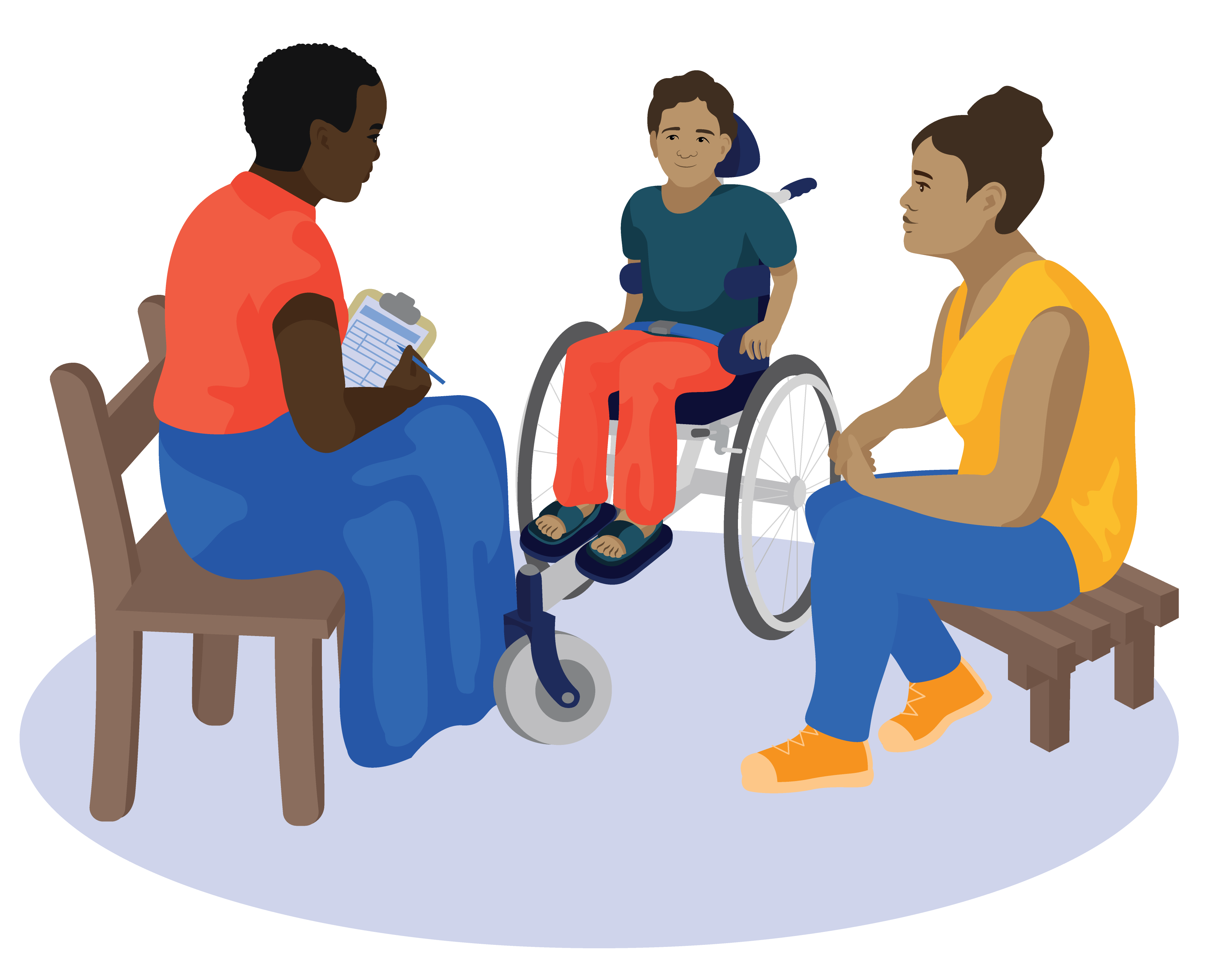
To make teaching successful:
- Find out what the person already knows, particularly if they have had a wheelchair before
- Explain, demonstrate and then allow the person to practice
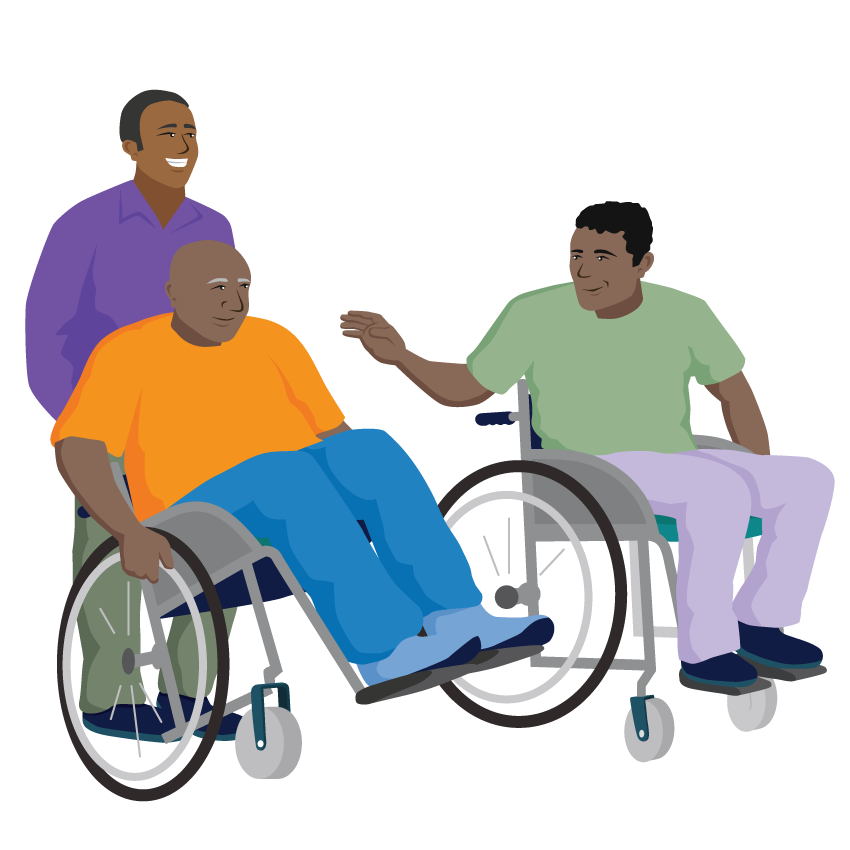
- Have experienced wheelchair users teach other wheelchair users
- Encourage the person to include a caregiver when learning any new wheelchair skill.
Priority follow up
Encourage the person to ask for priority follow up if they:
- Develop any sign of a pressure wound
- Are uncomfortable
- Do not feel safe when using their wheelchair.
If they are moving to a different place after receiving their wheelchair, encourage the person to ask if they can be referred to a wheelchair service in their new location.
How to fold and unfold the wheelchair
Some wheelchairs fold.
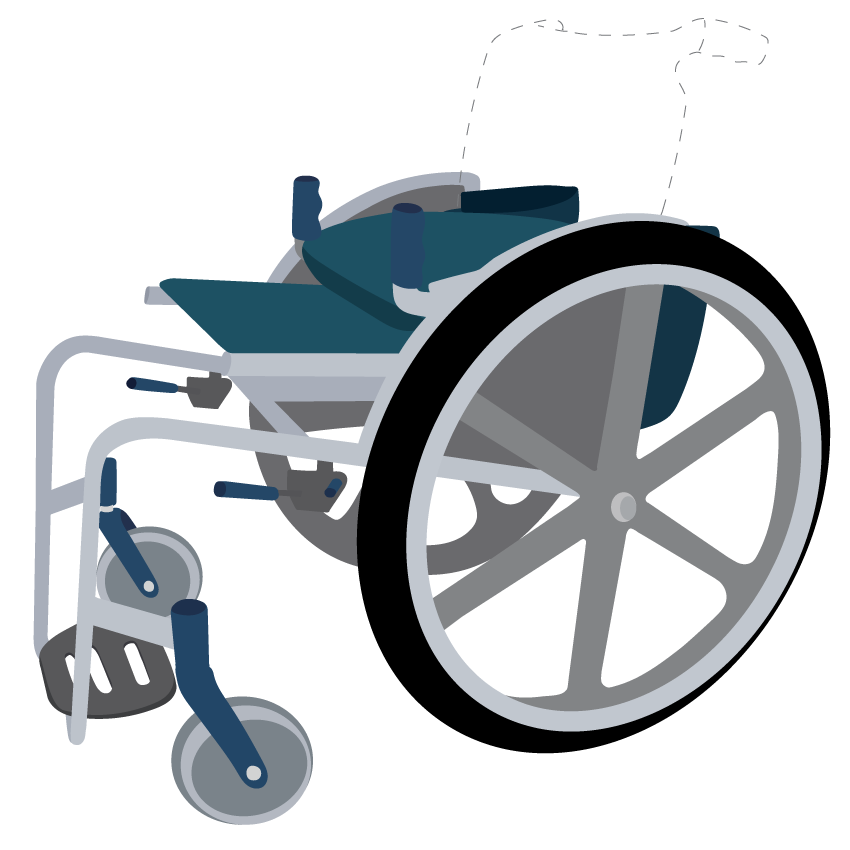
Folding the wheelchair
- Tip the wheelchair towards you to raise one wheel off the ground
- Lift the seat.
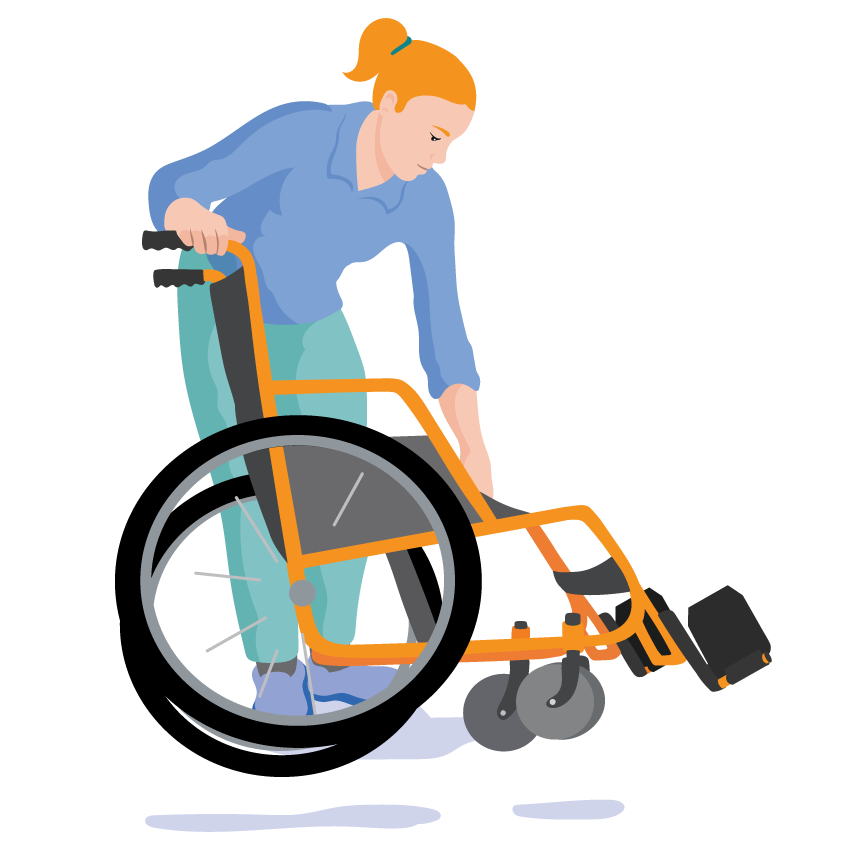
Some backrests fold forwards.
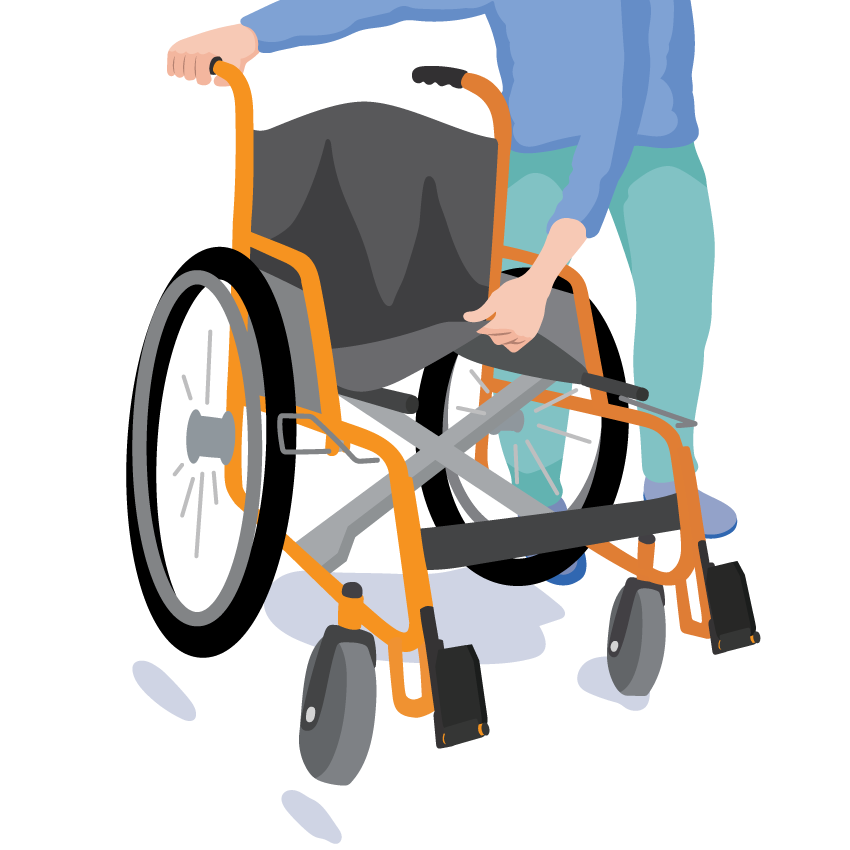
Unfolding the wheelchair
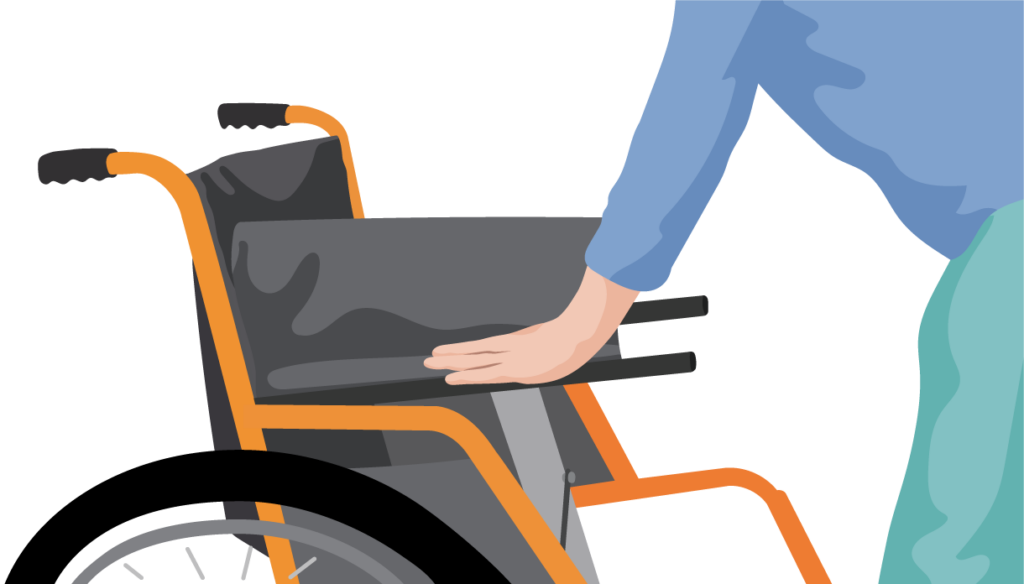
- Press your hands down on the seat rails to unfold the wheelchair
- Do not wrap your fingers around the seat – your fingers may get trapped!
Watch the video to learn how to fold and unfold a wheelchair.
Preparing for transport
Folding the wheelchair is useful for transport. Some wheelchairs have removable wheels. This makes it easier to get the wheelchair in and out of a car.
Take brakes off before removing or replacing rear wheels.
Question
Are the following statements true or false?
1. You should unlock the brakes to remove the rear wheel.
True is correct!
The brakes must be unlocked to slide the rear wheel on and off.
2. When attaching the rear wheel, always check that it is locked in place.
True is correct!
When putting on a rear wheel, always check it is locked in position.
3. A rear wheel that is not locked in position is dangerous.
True is correct!
If a wheel comes off while a person is in the wheelchair they may fall and have a serious injury.
4. There is only one way to lock a rear wheel in place.
False is correct!
Wheelchairs have different methods for locking rear wheels in place. Not all rear wheels are removable.
Always check the manual to find out.
Watch the video of Ryan showing how he folds his wheelchair to put inside his vehicle.
When replacing rear wheels, always check they have clicked or locked back in position. A loose rear wheel is very dangerous!
Activity
In pairs:
- One person explains and demonstrates how to prepare a wheelchair for transport
- Ask the second person to practice.
How to check the cushion is correct
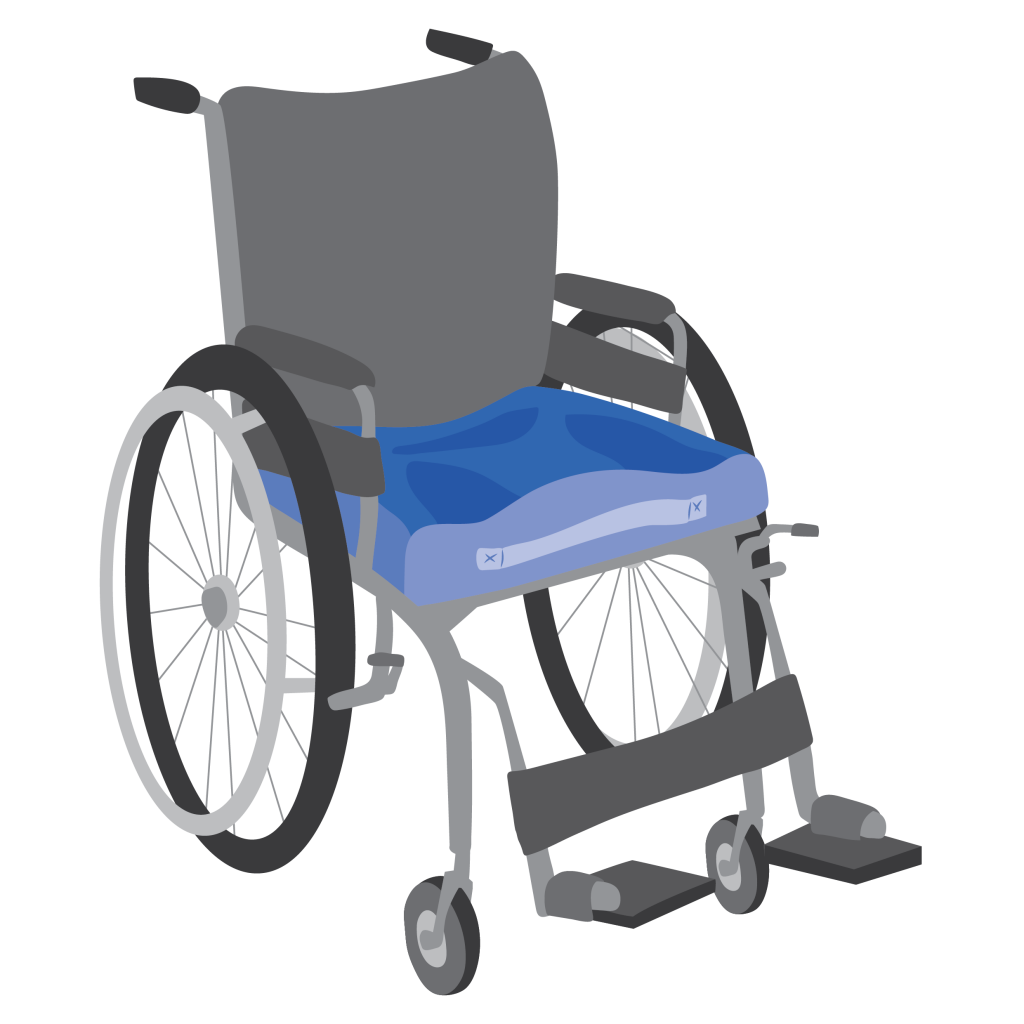
Check that the:
- Front of the cushion is positioned at the front of the wheelchair seat
- Cushion is the right way up
- Cover is positioned correctly on the cushion.
If the cushion or cushion cover is not positioned correctly on the wheelchair seat, it may increase the person’s risk of pressure wounds.
Always check the cushion position before using the wheelchair!
Question
Are the following statements about cushions true or false?
1. You can put a cushion cover on a cushion wrong.
True is correct!
You can put on a cushion cover incorrectly. This will affect how the cushion works. Always check the cover is on correctly.
2. A cushion can have shaping at the front and back.
True is correct!
Cushions may have a shaped front and back. Always check the manufacturer’s information to make sure it is positioned correctly.
3. It is important that cushions do not slide on the wheelchair seat.
True is correct!
A person must be confident that the cushion will not slide when they are sitting or propelling the wheelchair.
Some cushion covers have Velcro on the bottom of the cover to help attach to the wheelchair seat. Check the wheelchair seat also has Velcro.
Activity
In pairs:
- One person explains and demonstrates how to put the cushion cover on and off and position the cushion correctly on the wheelchair.
- Ask the second person to practice.
How to avoid pressure wounds
Check skin for signs of pressure wounds
A pressure wound can develop very quickly but take a long time to heal.
Explain to the person that it is important to avoid pressure wounds by checking their skin every day before getting up and going to sleep.
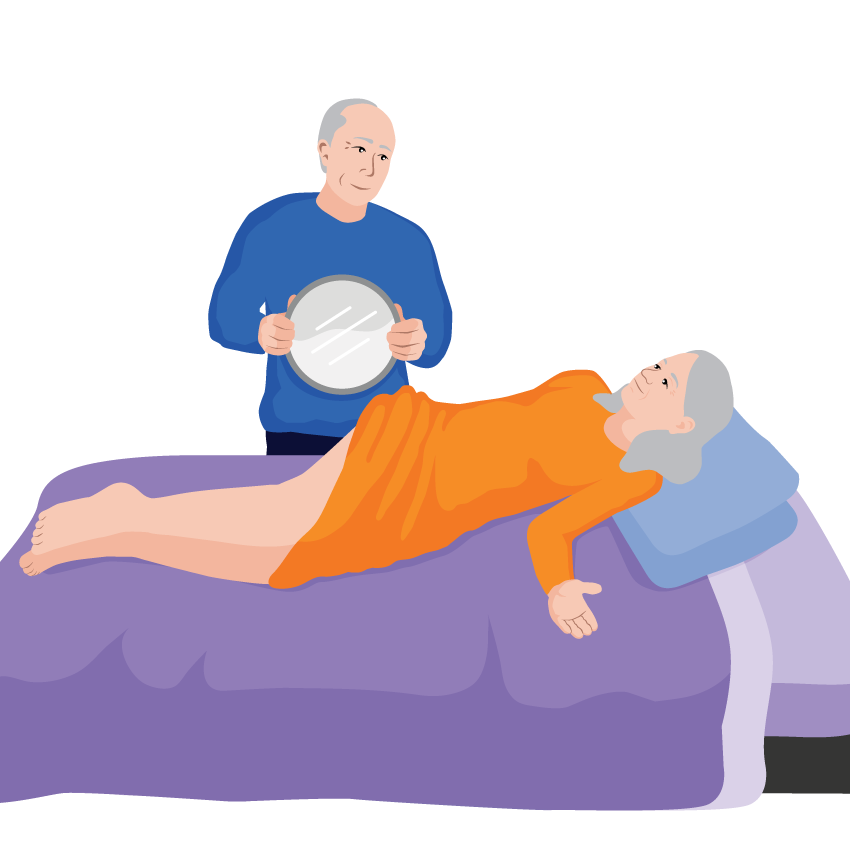
Use a hand mirror or mobile phone. If they have difficulty, they can ask a family member or caregiver to hold the mirror or take a photo to show them.
Activity
In pairs, with one person lying on their side.
- One person holds a mirror in a position where the second can see their bottom for skin checking
- Ask the second person to check if the mirror is positioned correctly.
How to relieve pressure
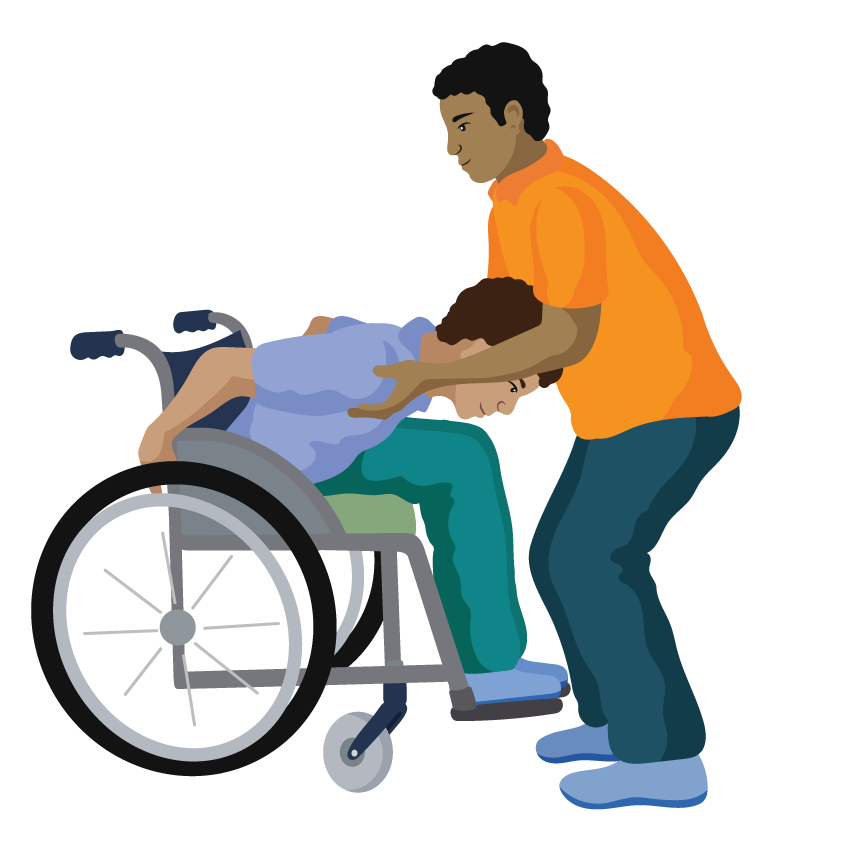
Relieving pressure while sitting in the wheelchair is one way of avoiding pressure wounds.
Choose a method that works best for you:
- Leaning forward until weight comes off your sitting bones. Hold for 30 seconds.

- Lean to each side until weight comes off each sitting bone. Hold for 30 seconds.
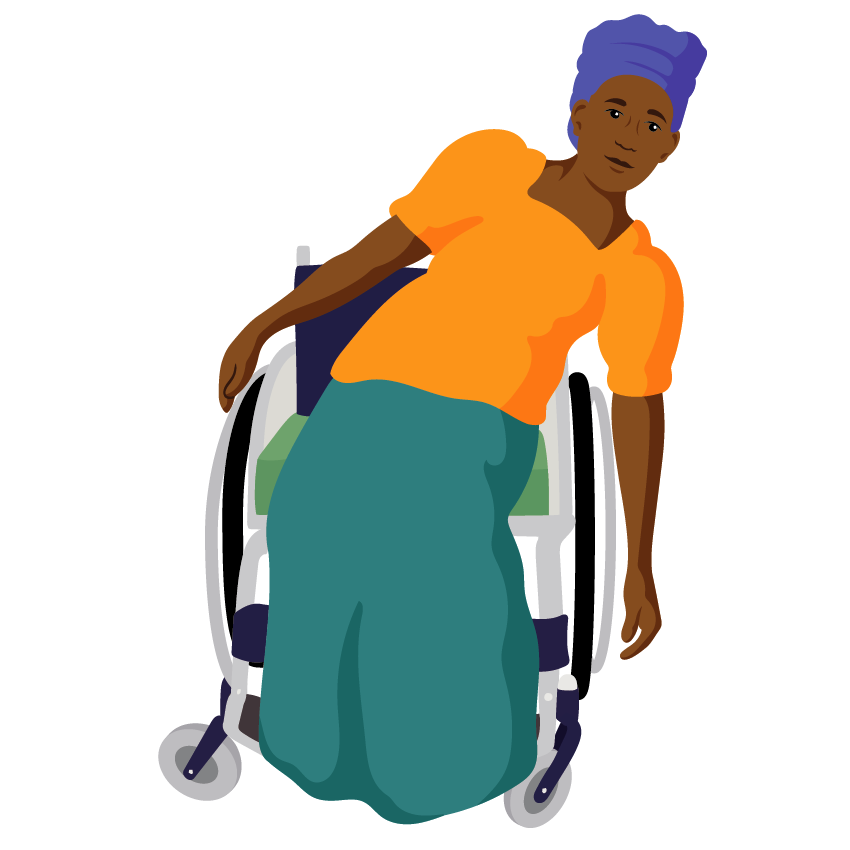
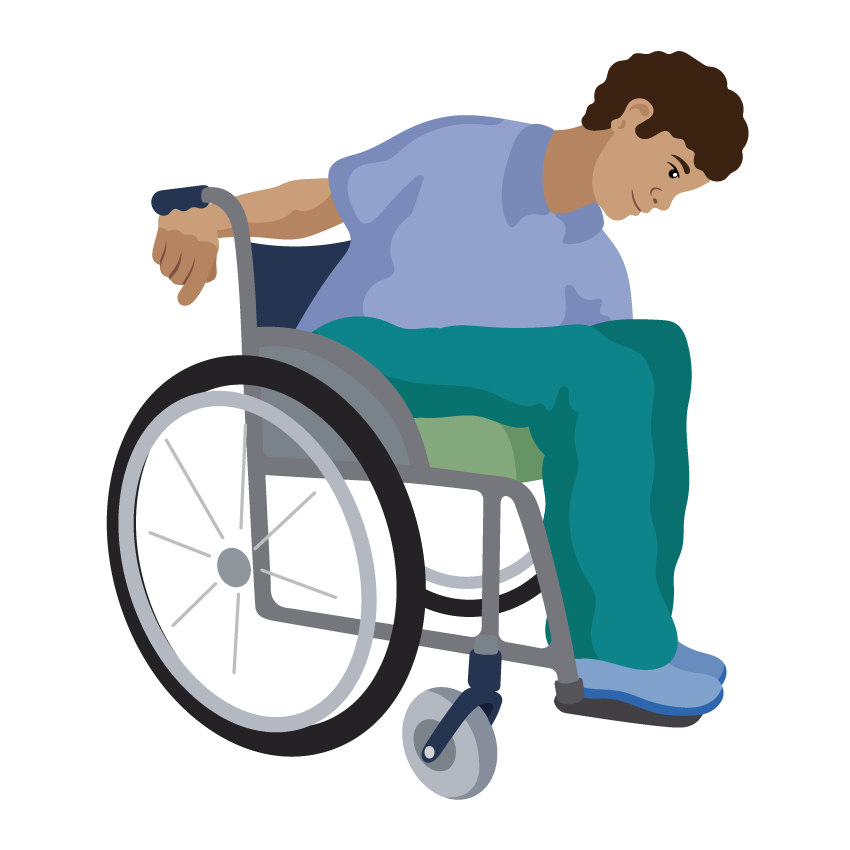
When learning for the first time, ask a person to assist.
Watch the video to see a person try the sideways pressure relief technique.
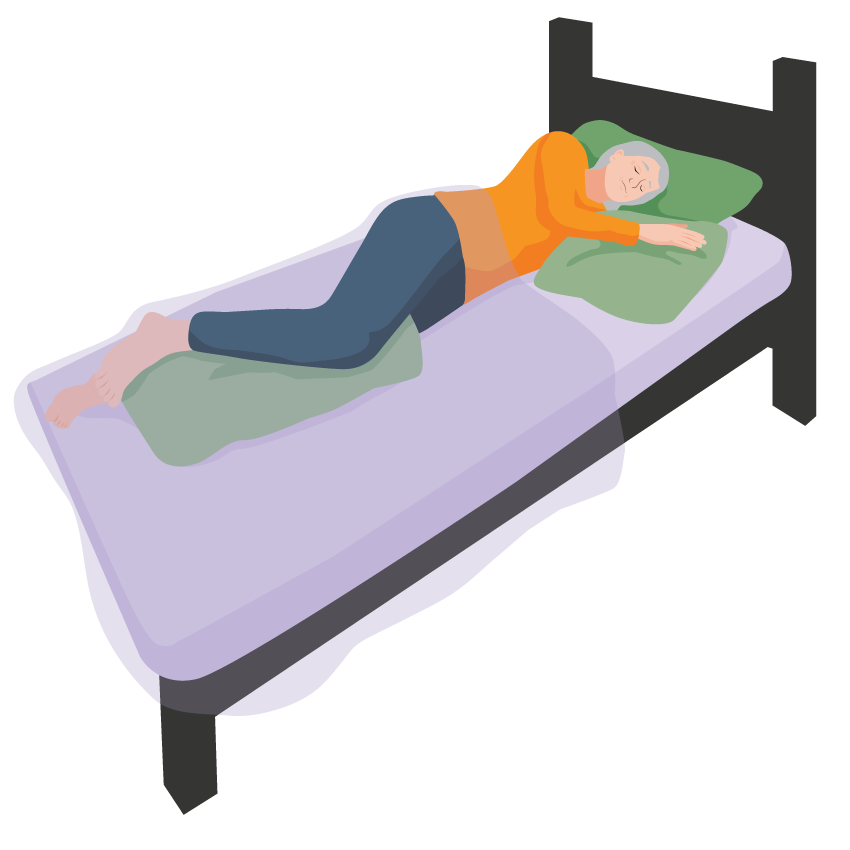
Changing position
Sitting for too long can cause pressure wounds. Encourage the person to start sitting for one hour and build up slowly.
Lying down and changing position to remove pressure from hips and buttocks can help.

Activity
In groups of three:
- Explain, demonstrate and practice each method
- Take turns to practice assisting pressure relief techniques.
Question

Remember Verna?
Verna is thin and frail and has difficulty moving and changing position.
Her husband Leif is looking after her.
1. Which type of cushion would you select for Verna?
Pressure relief cushion is correct!
Verna is thin and frail and has difficulty moving and changing position. She is at risk of developing pressure wounds and needs the extra protection of a pressure relief cushion.
Comfort cushion is incorrect.
2. What would you teach Verna and Leif about the cushion?
Select all that apply.
If you selected a, c and d, you are correct!
A cushion or cushion cover positioned incorrectly can increase the risk of a person developing pressure wounds. Always show how to position the cushion and cover correctly.
b is incorrect.
A plastic cover changes how a cushion and the cover work. Always remove any plastic cover.
3. Look at the list of skills below. What would you teach Verna?
Select all that apply.
If you selected b, c and d, you are correct!
Show both pressure relief techniques to Verna and Leif. Encourage them to choose which works best for them.
Show Verna and Leif how to change position in bed to remove pressure from her hips and buttocks.
Create a private space and demonstrate where and how to check Verna’s skin. Observe Verna and Leif practicing and correct if necessary.
a is incorrect.
Work with Verna and Leif to choose a pressure relief technique that works best for them.
How to propel the wheelchair
Pushing
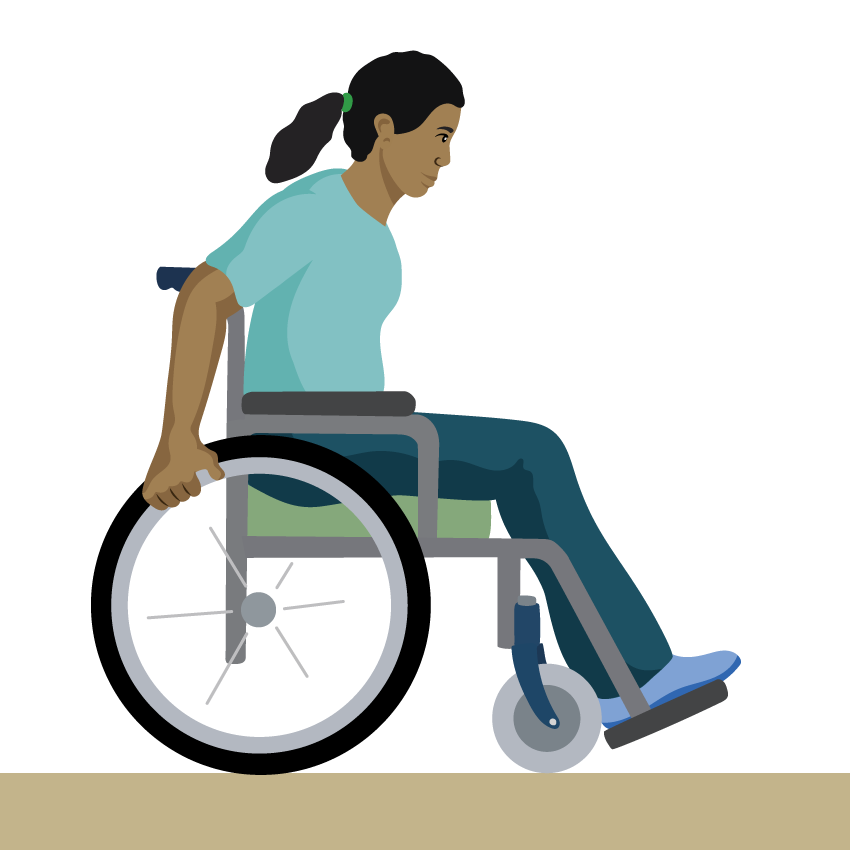
There are three ways to make propelling more effective:
- Lean your head forward before pushing
- Aim for long smooth pushes
- Let your arms relax and swing back after each push.
Turning
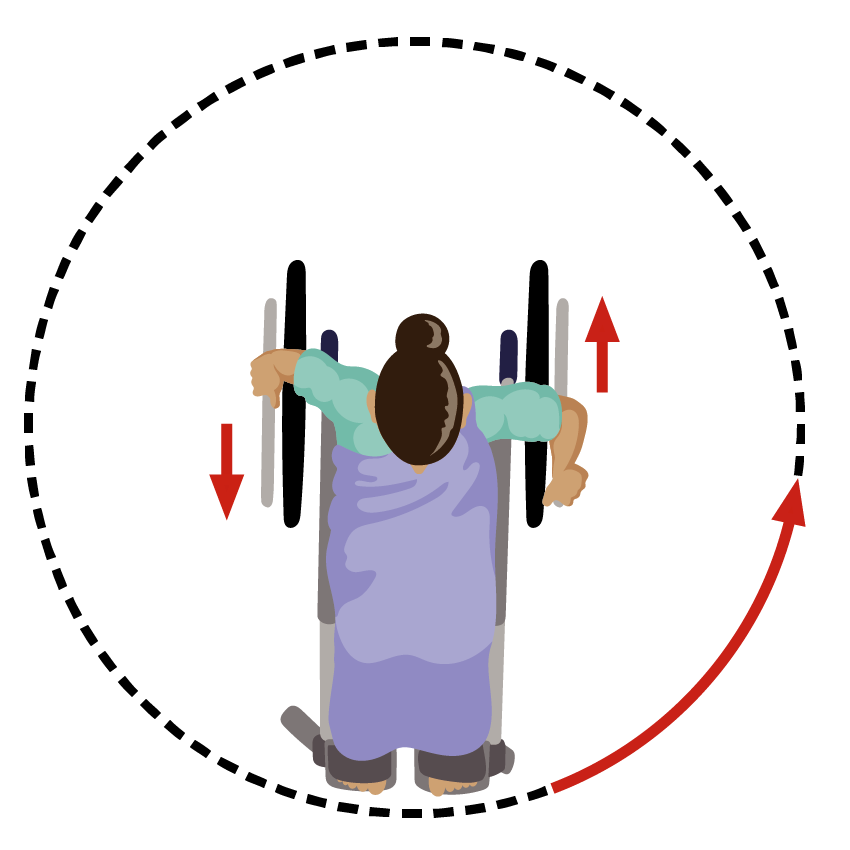
To turn, push one hand forward and the other hand backward.
Watch this video to learn how to propel a wheelchair.
Activity
Work together in pairs.
1. Mark a distance of 10 metres on the ground.
2. Use the three ways to make your propelling more effective.
3. Count how many pushes you used to:
- Travel 10 metres
- Turn a full circle.
How to go up and down slopes
Propelling up and down slopes
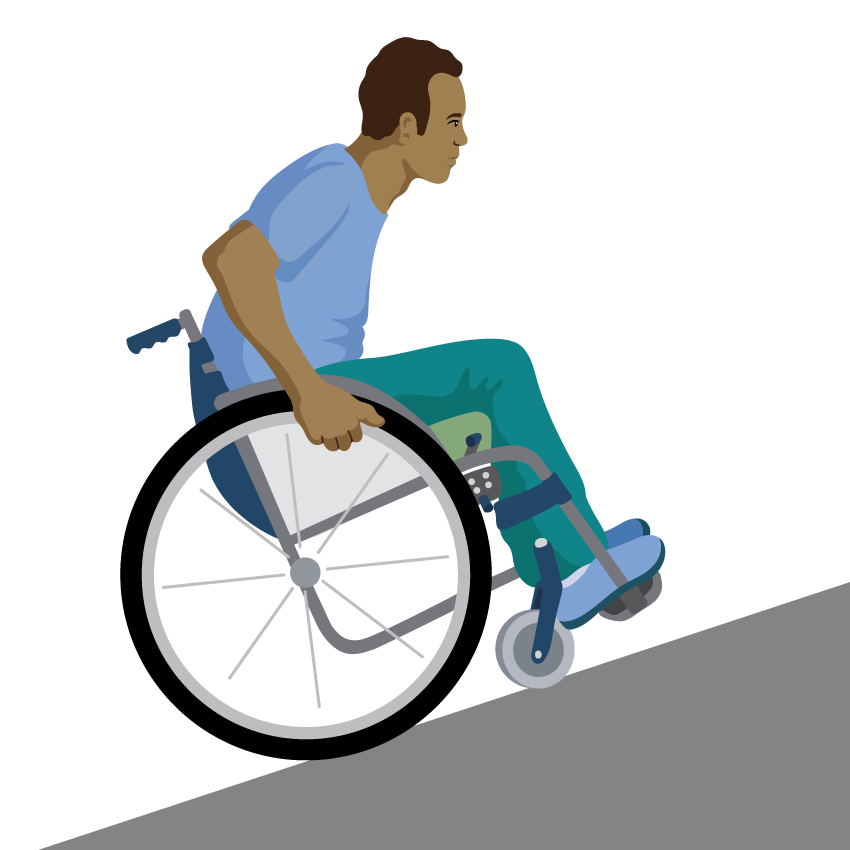
- Lean forward to go up slopes
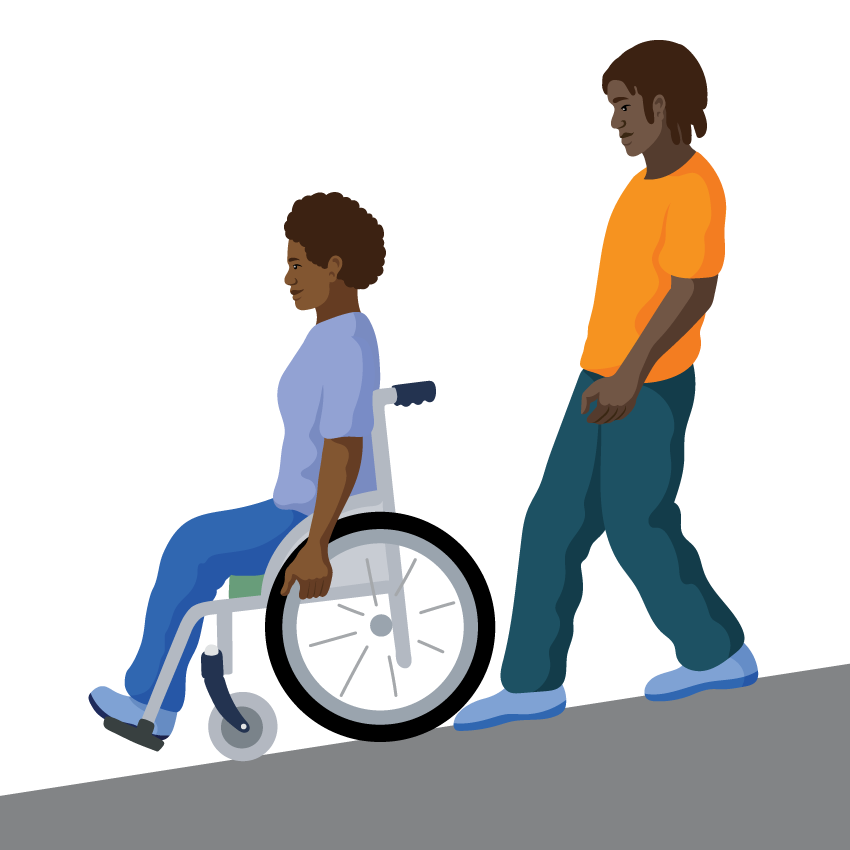
- Lean backwards to go down slopes.
A person with double amputation may find the wheelchair less stable on slopes.
If the castor wheels lift up, an extra weight can be added to the footrest to increase stability.
When practicing going up and down slopes, encourage the person to have an assistant behind them until they feel confident.
Watch this video to learn how to propel up and down slopes.
Question
What can you do if you need a rest when going up a slope?
If you selected c, you are correct!
Turning the wheelchair sideways and then putting on the brakes is a safe way to stop and rest on a slope.
a and b are incorrect.
Leaning forward and holding on to the rear wheels is hard work and not restful.
Leaning backwards when going up a slope is dangerous. The wheelchair may tip over.
Activity
Work together in groups of three.
- One person explains and demonstrates how to propel up and down a slope.
- Another person uses the wheelchair to propel up and down the slope.
- The last person walks close behind with hands resting on push handles.
Take turns to practice.
How to move on rough ground
The person may find it easier to move over rough and uneven surfaces if a person assists them to balance on the rear wheels.
With experience it is possible to balance on the rear wheels independently.
A wheelchair designed for rough ground can help.
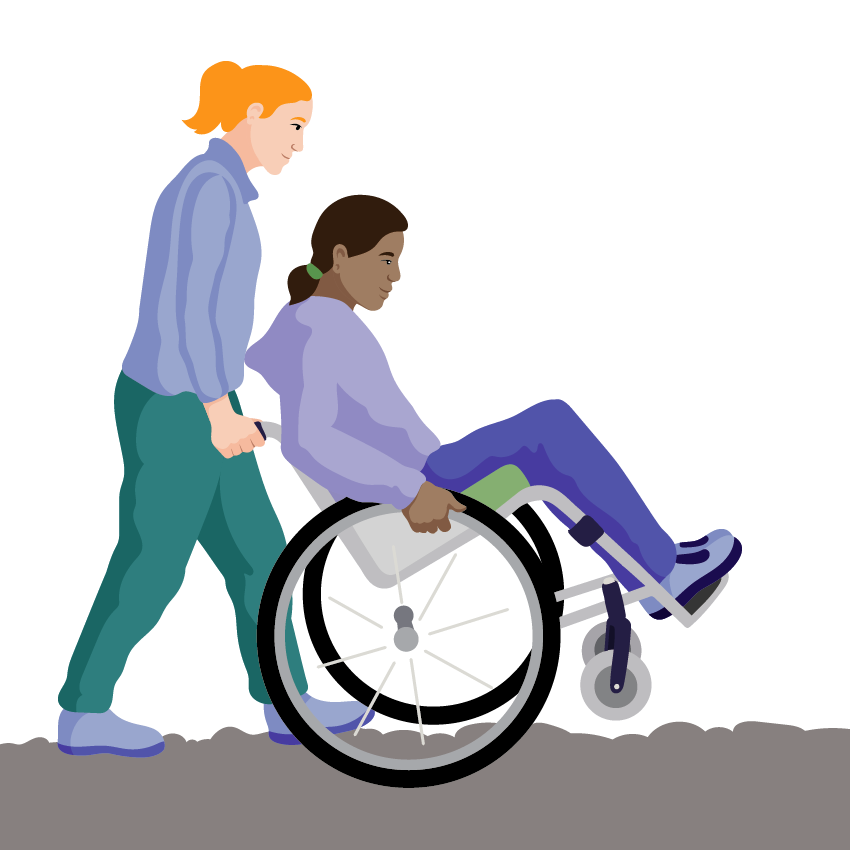
Balancing on the rear wheels is not taught in this module.
Watch this video to learn how to move over rough ground.
Watch this video to learn how to assist a person in a wheelchair over rough ground.
Activity
Work in pairs.
1. One person explains and assists the person to balance on the rear wheels while moving over rough ground:
- Find the balance point
- Always have an assistant holding the push handles.
2. The second person practices.
Tip: Focusing on the height of your knees can help when finding your balance!
Reflection
- How did it feel when you tipped back on the rear wheels?
- Did you find a point where you felt balanced?
- What did you find useful?
How to go up a single step
To safely go up a single step with assistance:
- Tip the wheelchair onto the rear wheels
- Roll the rear wheel to touch the step
- Lower the castor wheels onto the step
- Roll the rear wheel up on to the step.
Watch this video to learn how to assist a person using a wheelchair up a single step.
How to go up and down stairs
To safely go up and down stairs with assistance:
- Go up backwards
- Down forwards
- Count “one, two, three, lift” so you and your assistant move together.
Going up
Pull the rear wheel back when going up.
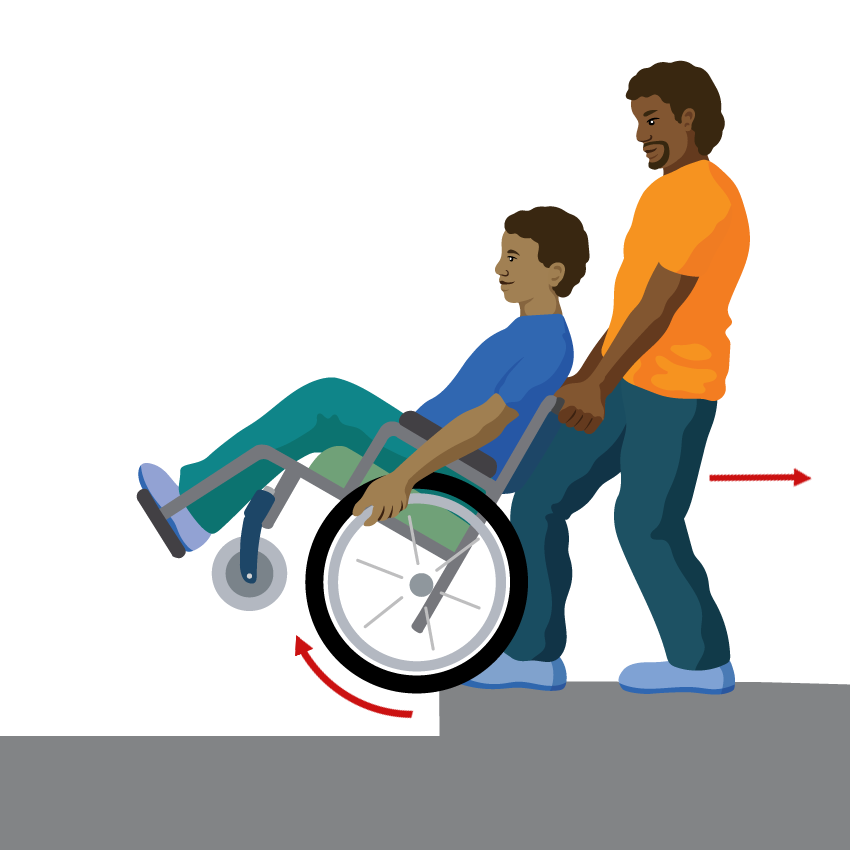
Up stairs with one assistant
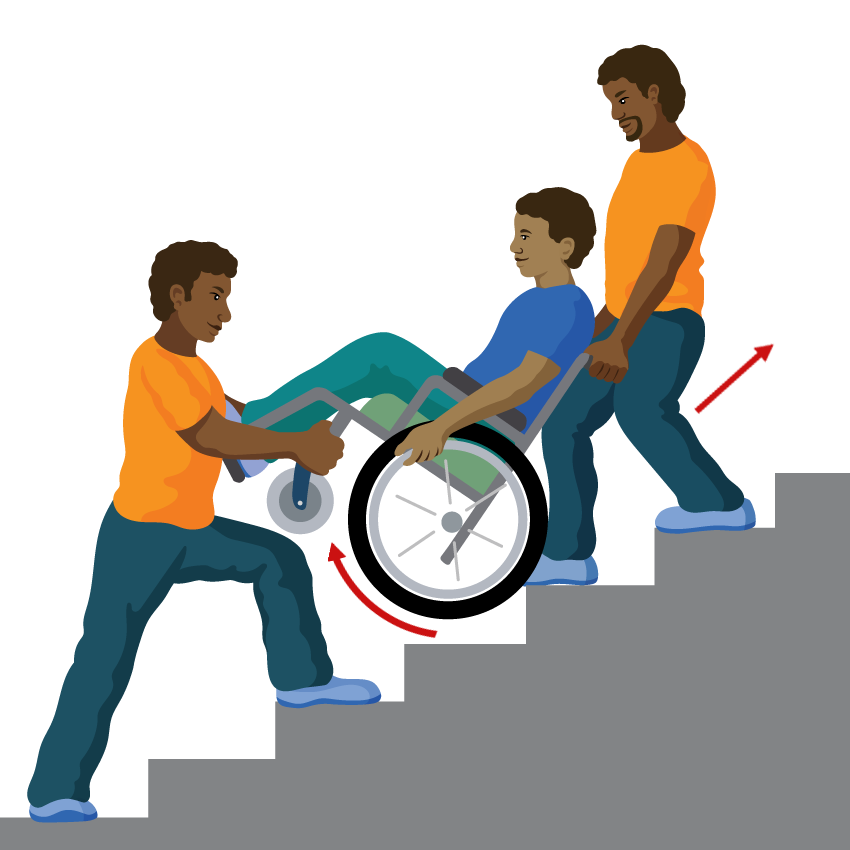
Up stairs with two assistants
Coming down
Squeeze the push rim to gently roll the rear wheel down each step.
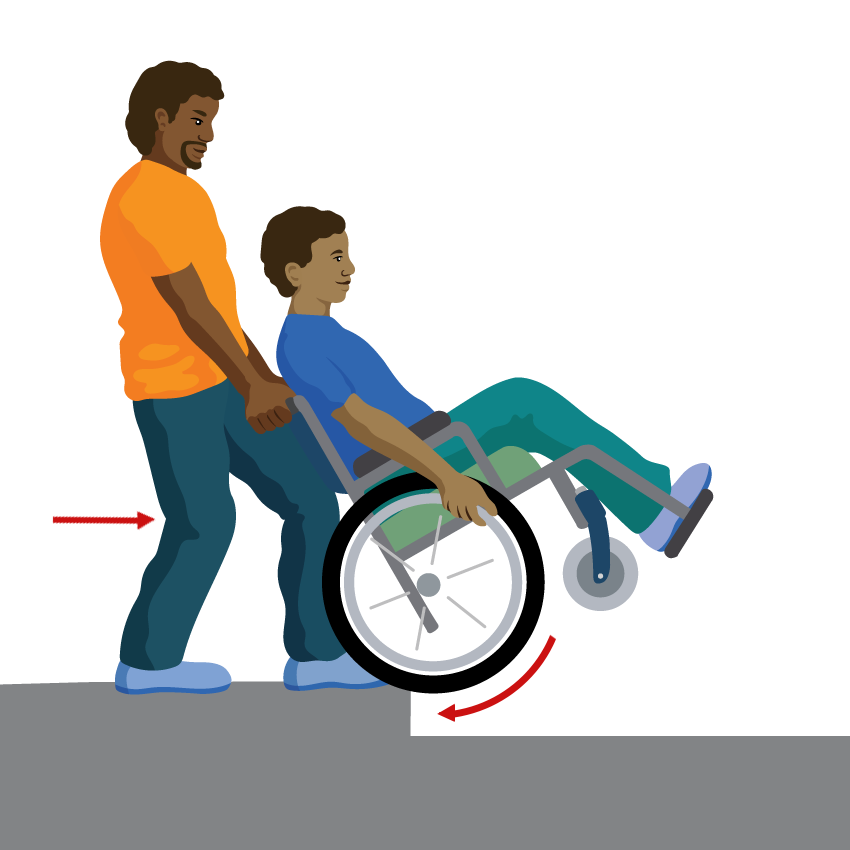
Down stairs with one assistant
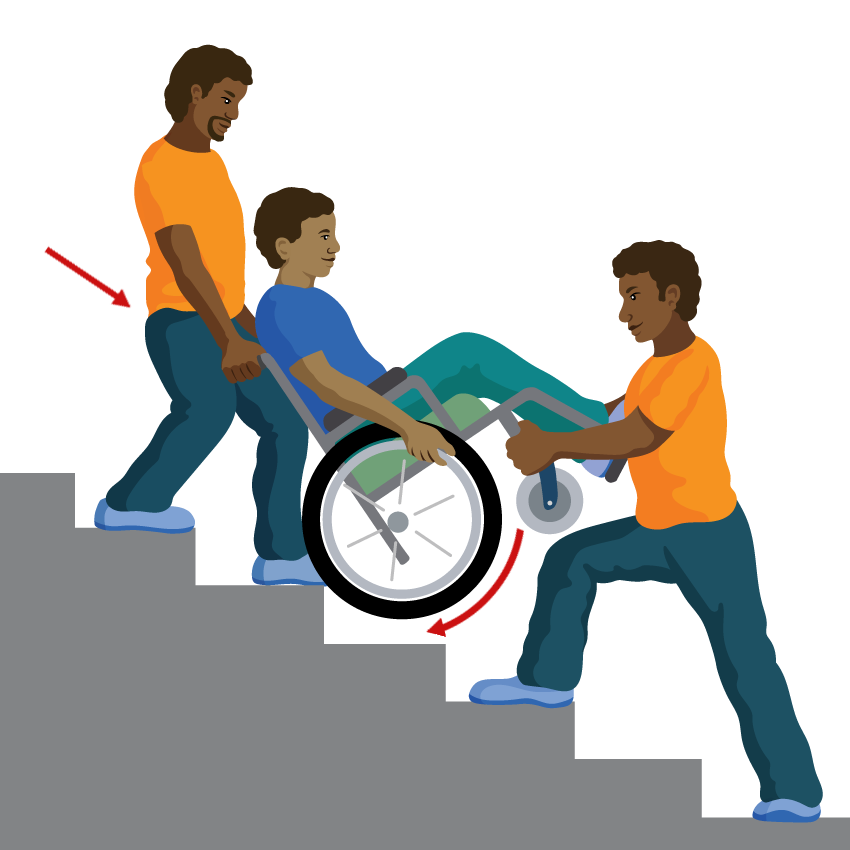
Down stairs with two assistants
Watch this video to learn how to go up and down stairs with assistance.
Going up or down a step/s without first balancing on the rear wheels is dangerous.
Do not assist a wheelchair user up and down steps unless you are sure you are able to control the wheelchair safely.
Activity
Work together in groups of three. One person will use a wheelchair and two people will assist.
Explain and demonstrate going up and down stairs:
- Always check the person feels confident to assist and bends their knees to protect their back
- Always have feet on different steps when the wheelchair is moving to help balance.
How to transfer to and from wheelchair
There are three different transfer methods:
- Sitting
- Sitting with transfer board
- Standing
If a person cannot stand safely without assistance to transfer, they should sit.
Sitting
- Check the person can lift their hips
- If the person has difficulty doing the transfer in one lift, a transfer board can help
- Flipping up or removing footrests and armrests can make a sitting transfer easier.
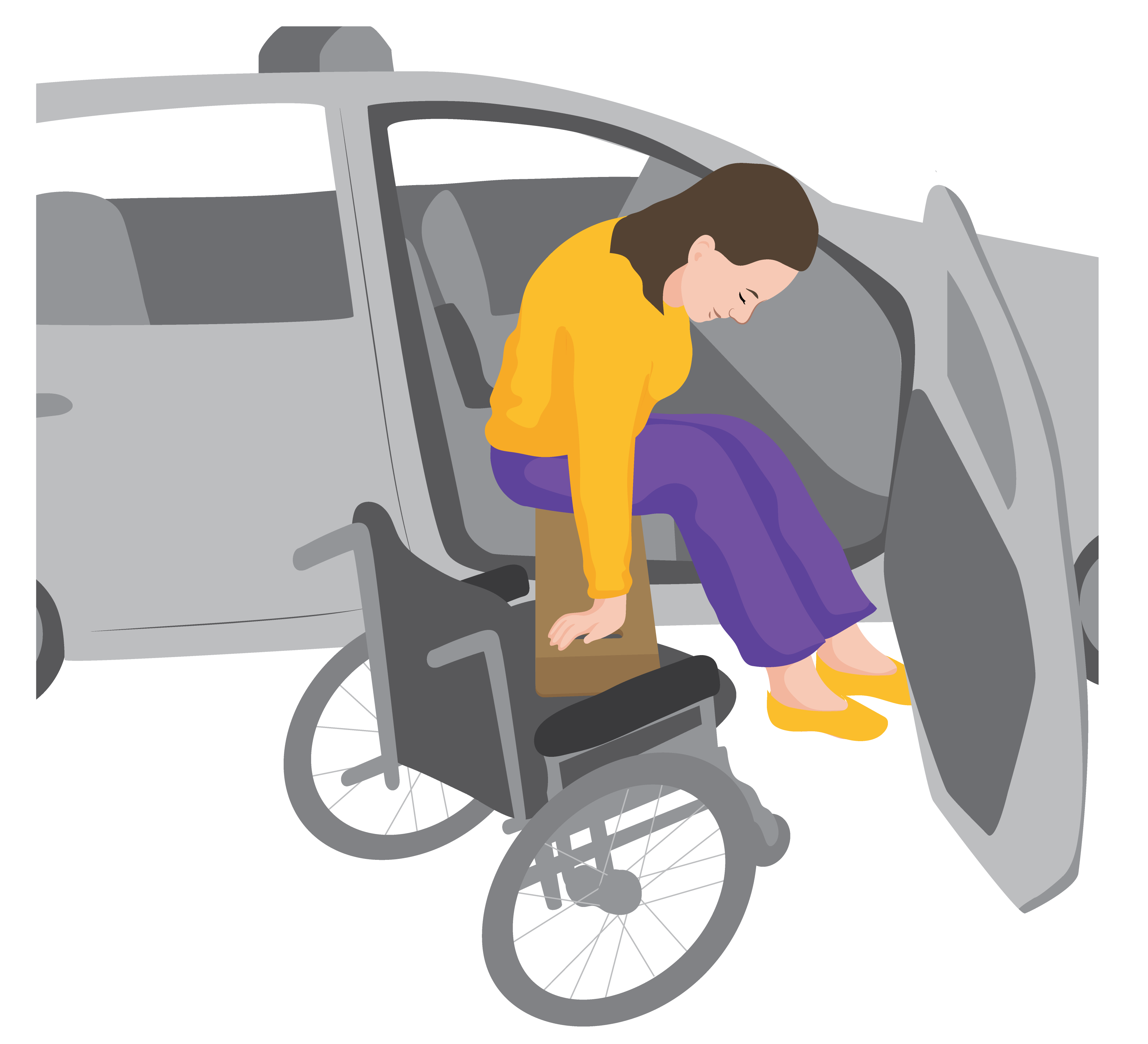
Sitting with transfer board
A person can use a transfer board with or without assistance.
Learn more about how to safely use a transfer board in the TAP Transfer boards module.

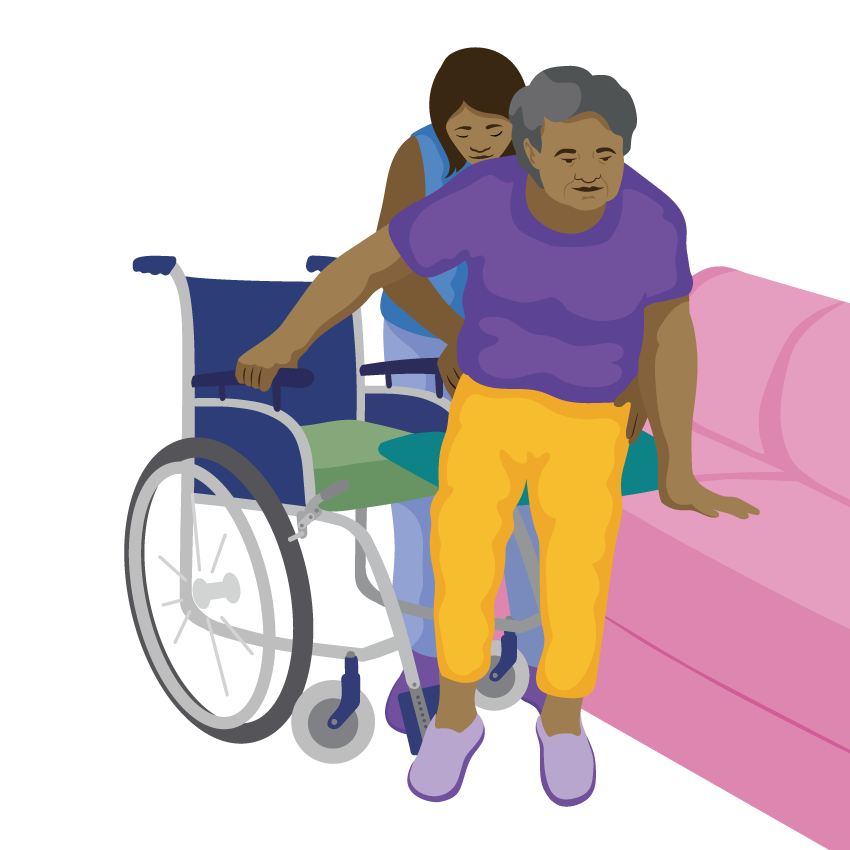
Standing
- Check the person can take weight through their legs
- Flip away the footrest so the person’s feet are on the ground
- If a person needs extra assistance, a second person can assist from behind by supporting their hips.

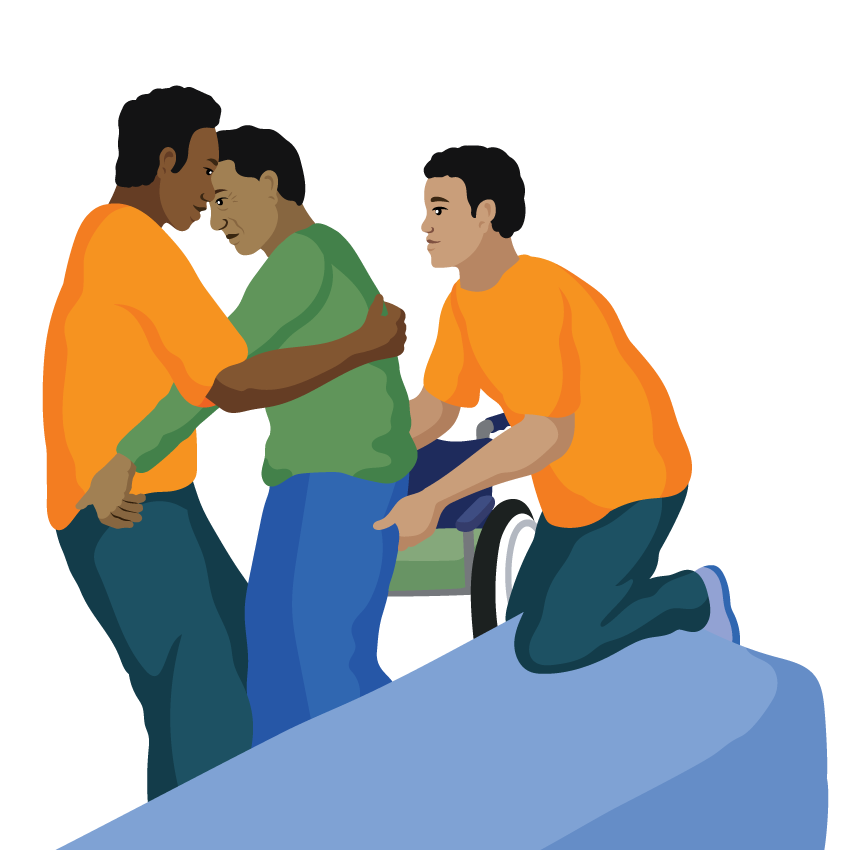
Question
Select a transfer technique to match the person’s ability.
Remember Verna?
Verna is 89 years old and frail. She can stand up with assistance from Leif.
What transfer technique would be most suitable for her?
If you selected c, you are correct!
Verna is able to transfer standing up with assistance from her husband Leif. Verna will get stronger faster if she stands to transfer.
a and b are incorrect.
However, if Verna or Leif feel unsafe, Verna should transfer sitting down. A transfer board would make it possible to transfer using small lifts.
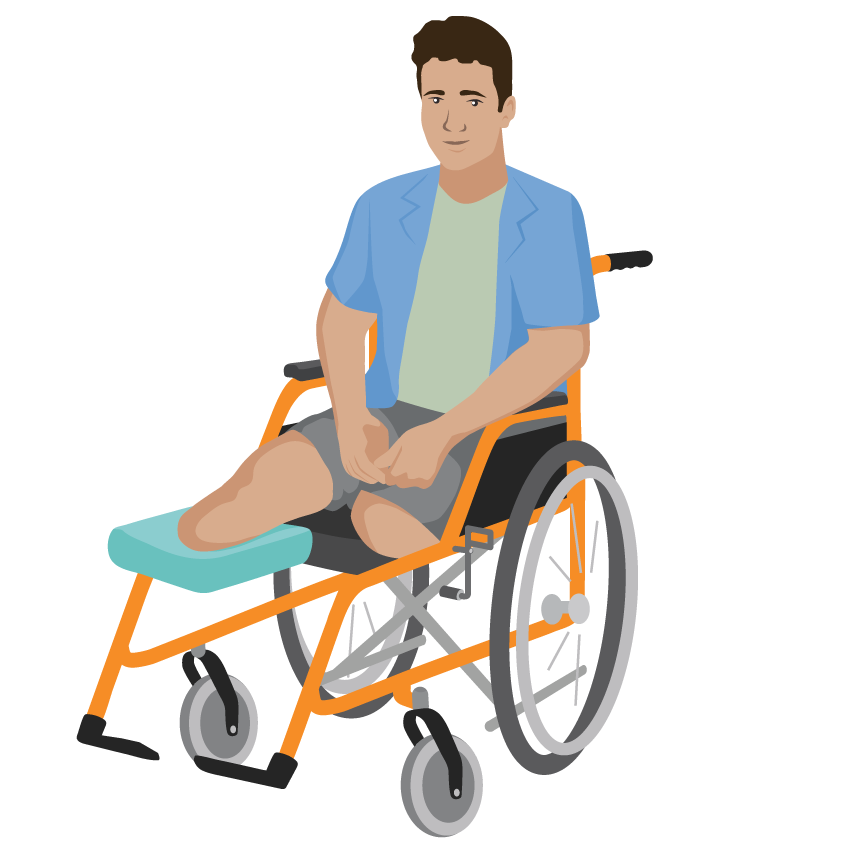
Remember Jalus?
Jalus is 23 years old and had an above knee and below knee amputation after being injured in an earthquake. Jalus is young and strong and can lift his hips.
What transfer technique would be most suitable for him?
If you selected a, you are correct!
Jalus cannot stand. He is young and strong and can lift his hips and transfer by himself sitting down.
Watch the transfer techniques and refer to the wheelchair user information leaflet.
Pause the video after each transfer to practice.
Activity
Work together in pairs.
- Explain and demonstrate how to do each transfer technique
- Ask the person to practice.
How to transfer to and from a vehicle
There is more than one way to transfer in and out of a vehicle. People with experience of using a wheelchair long term may be able to help teach these skills.
Prepare
- Open the vehicle door fully
- Position the seat as far back as possible
- Position the wheelchair as close as possible.
Sitting down
- Lift bottom onto vehicle seat first
- Then lift legs into vehicle.
When transferring out of the vehicle, lift legs out first.
Learn about vehicle transfers using a transfer board in the TAP Transfer boards module.
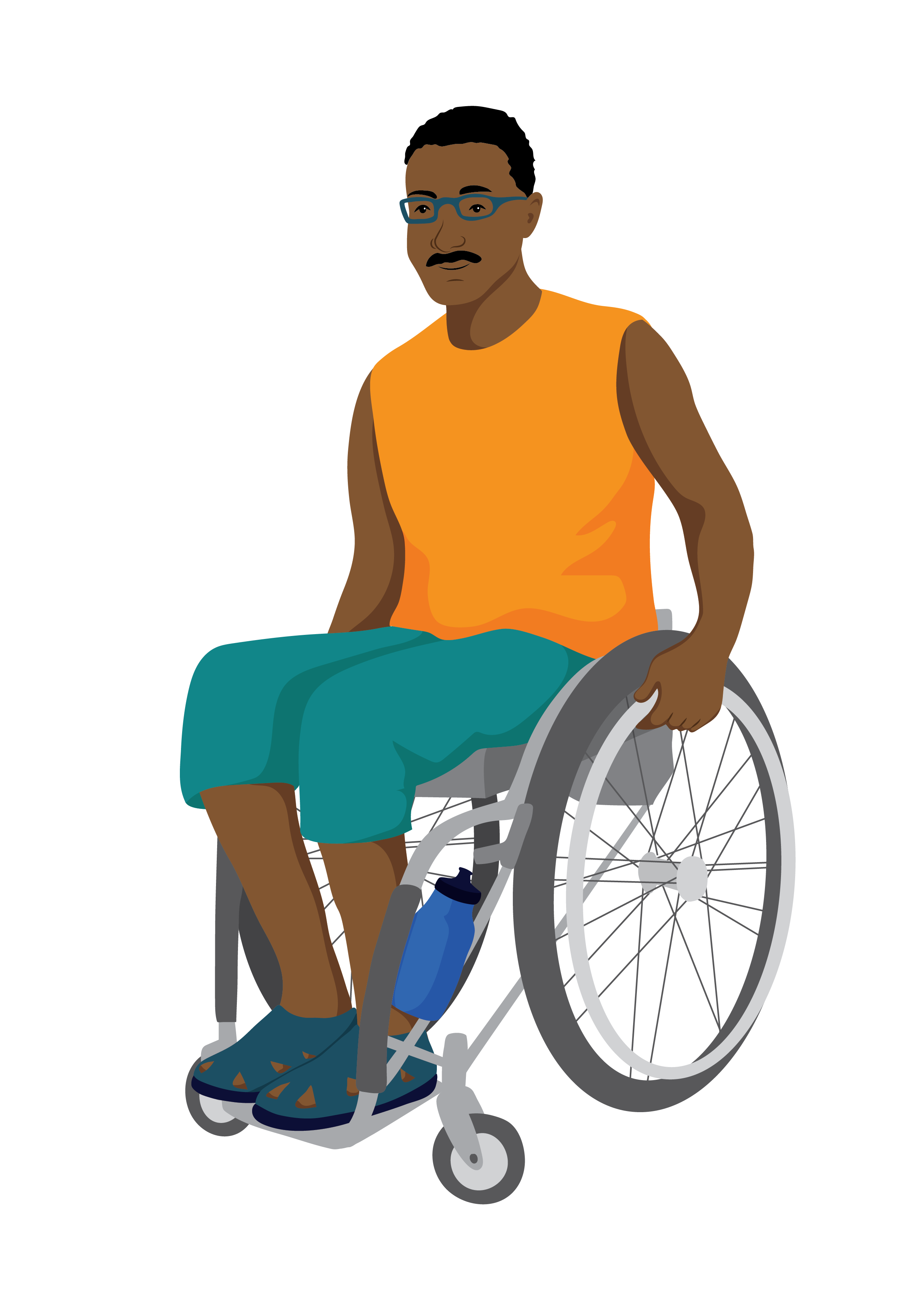
Remember Peter?
Peter has a spinal cord injury and cannot use his legs to assist his transfer.
Peter uses a different method to transfer in and out of his vehicle.
When Peter transfers to a vehicle, he uses his arms to place his feet inside the vehicle first. When transferring out, he removes his feet last.
Assisted standing
- Lower bottom on to vehicle seat first
- Then assist the person to lift their legs in to vehicle.
When transferring out of vehicle, assist person to lift their legs out first.
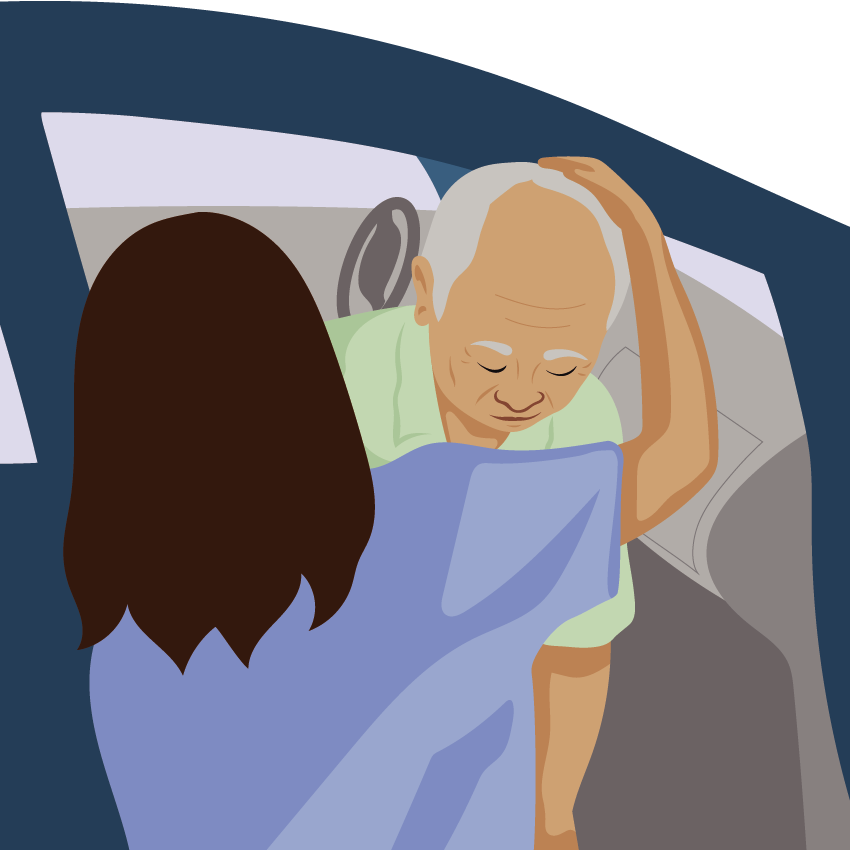
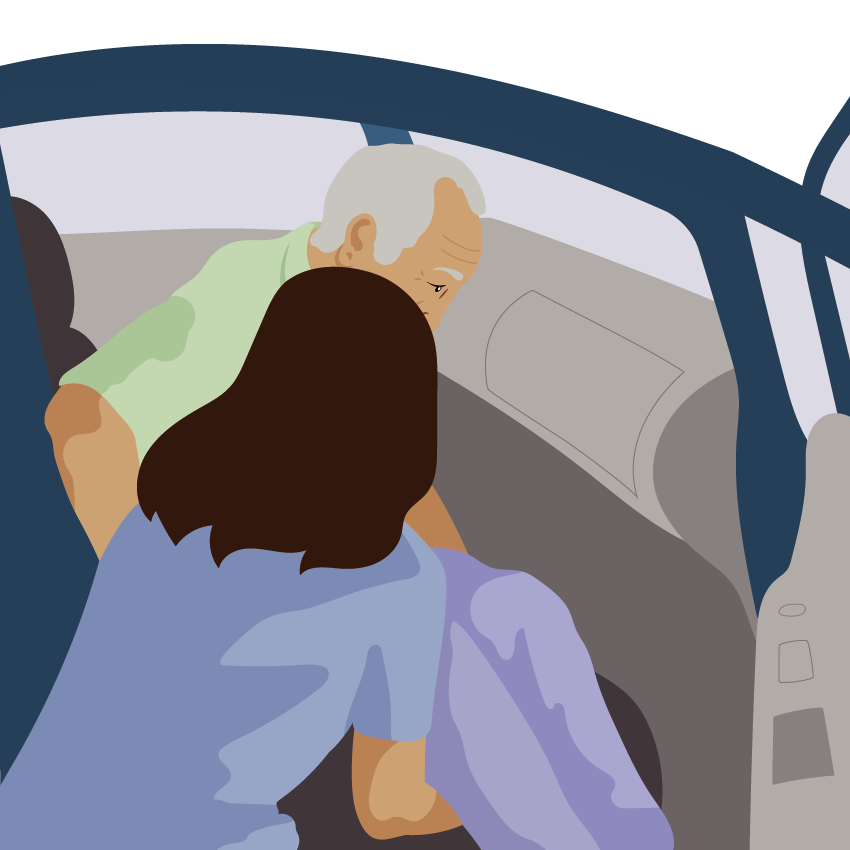
Watch the video of Ryan transferring into a vehicle.
Refer to the TAP Wheelchairs in emergencies user information leaflet to follow along.
Activity
Work together in pairs.
- One person explains and demonstrates how to transfer in and out of the vehicle
- Second person practices.
Learn more about standing transfers in the TAP Walking aids module.
Discussion
Did you have difficulty with any of the techniques?