If you haven’t already, download the TAP Therapeutic footwear assessment form and print a copy.
If you are unable to download the form, don’t worry. Each of the questions on the form are clearly shown as you go through this section of the module.
Whenever you see this icon, it means that the person may need referral.
Prepare the person
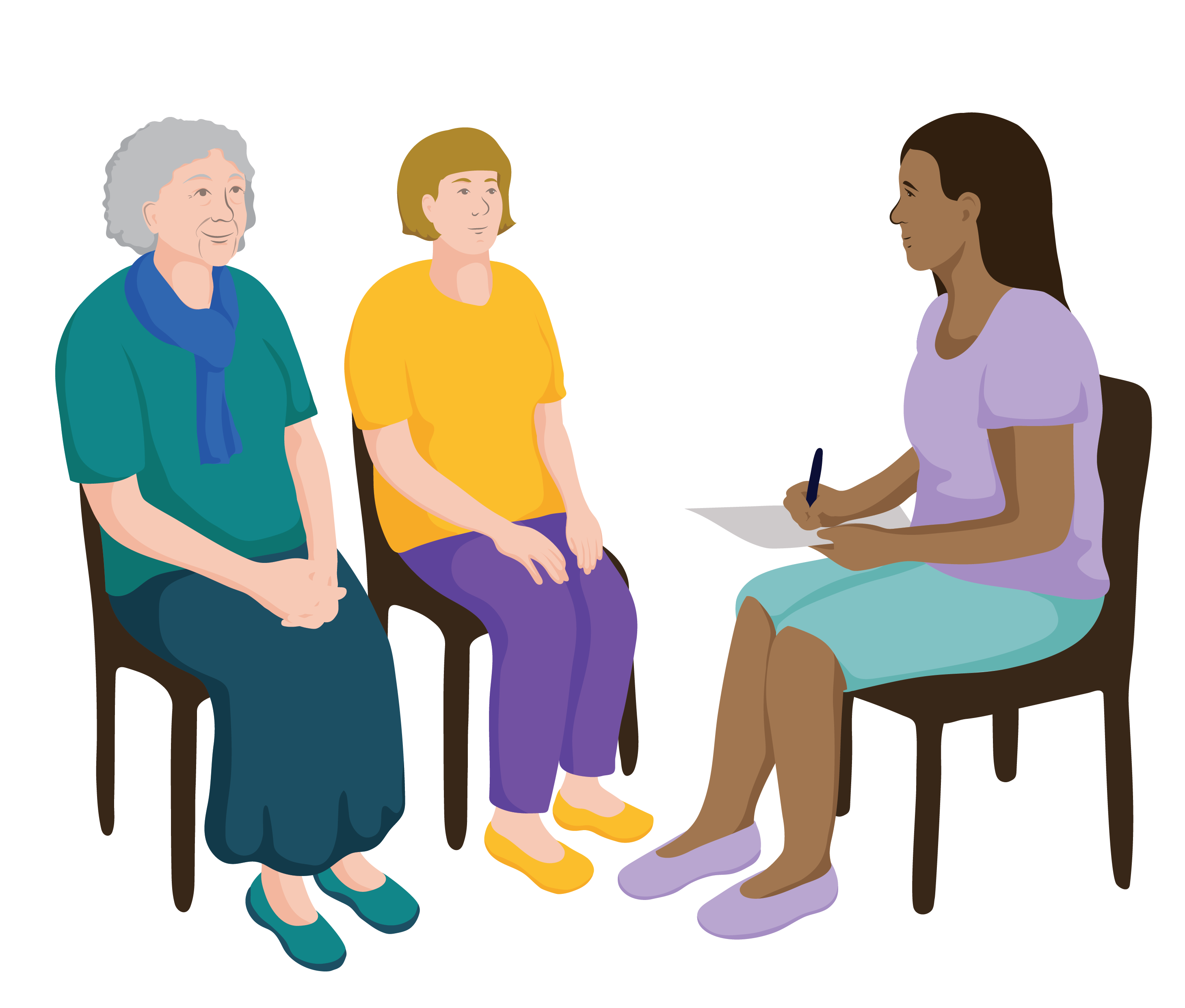
To carry out the assessment, find a quiet space to sit with the person.
Also involve family members and/or caregivers when appropriate.
Information about the person
Start by collecting contact information about the person including their name, gender, age, telephone and address.
Check suitability for therapeutic footwear
To carry out the foot screen and assessment, find a quiet space to sit with the person.
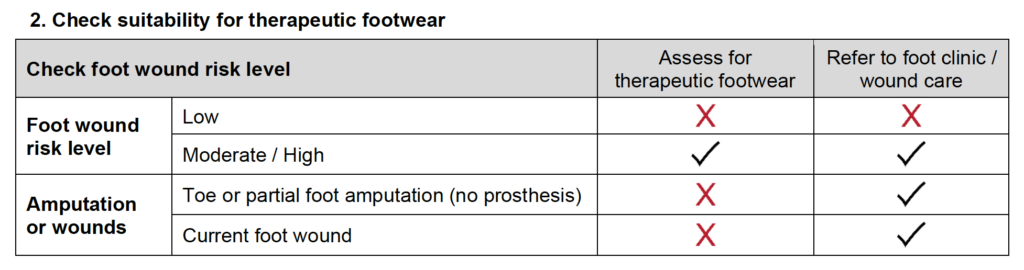
Check foot wound risk level
Check:
Foot screen wound risk level:
- Low
- Moderate or high.
Before assessing a person for therapeutic footwear, check they have had a recent foot screen to identify their level of risk of developing a foot wound.
If there has not been a foot screen within the last month, complete a new foot screen as the first step.
See TAP Mobility assistive products module to learn how to carry out a foot screen.
Question
Are these statements true or false?
1. A person with a low risk of foot wound does not need therapeutic footwear.
If you selected true, you are correct. If a person has a low foot wound risk, recommend that they wear suitable shoes.
2. A person with a medium or high foot wound risk may be assessed for therapeutic footwear
If you selected true, you are correct. If a person has a medium to high foot wound risk, continue with assessment for therapeutic footwear.
Check feet for amputation or wounds
Check for:
- Toe or partial foot amputation
- Current foot wound.
Do not provide therapeutic footwear if the person has a:
- Toe or partial foot amputation and no prosthesis or orthosis
- Current foot wound.
In both these cases, a person will have more complex foot care and footwear needs. They should be referred to a foot clinic.
If a person has a prosthesis or orthosis for their toe or partial foot amputation, you can continue with the assessment.
Always refer a person who has:
- A toe or partial foot amputation, and is not wearing a prosthesis or orthosis
- A current foot wound.
Question
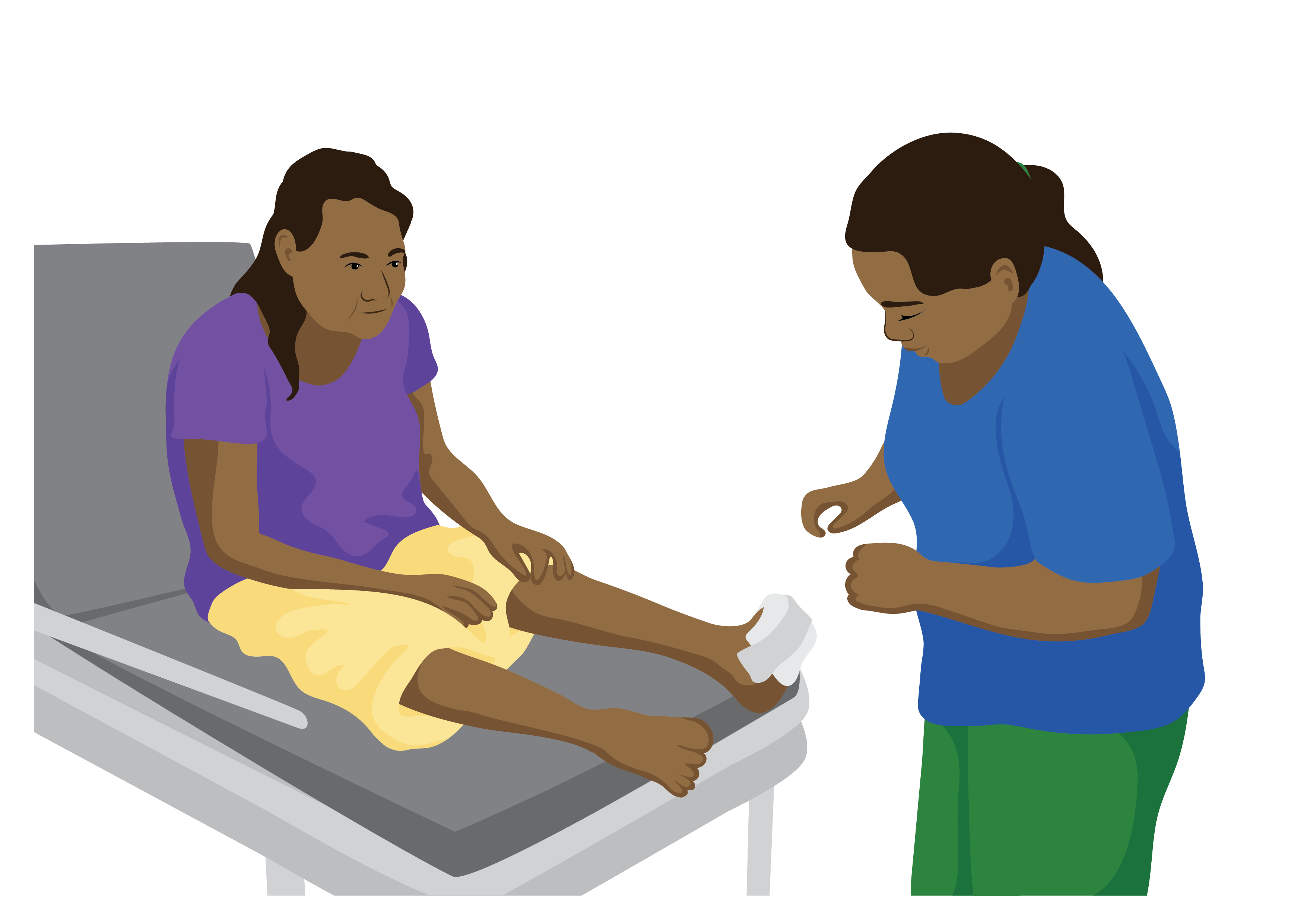
Meet Ruby
Ruby has had a toe amputated. When she walks her body weight is spread through the part of her foot that remains.
She is at risk of developing another foot wound because of the increased pressure on that part of her foot.
Ruby does not have a prosthesis or orthosis.
Can Ruby be fitted for therapeutic footwear?
If you selected no, you are correct. Ruby cannot safely use therapeutic footwear because of her toe amputation.
If Ruby had a prosthesis or an orthosis, she could wear therapeutic footwear.