Before you start
Explain to the person why therapeutic footwear is recommended.
Therapeutic footwear can look and feel strange to wear. People are most likely to wear the shoes if they fully understand why it is important for them.
Take the time to explain why this footwear is recommended.
Assess for therapeutic footwear
Once you have confirmed that therapeutic footwear is suitable for the person, the next steps are to:
- Check for foot problems
- Measure the person’s foot
- Check the person’s ability to put the shoes on and off and check their feet daily.
Check for foot problems
Check for foot problems that may affect the fit of a therapeutic shoe.
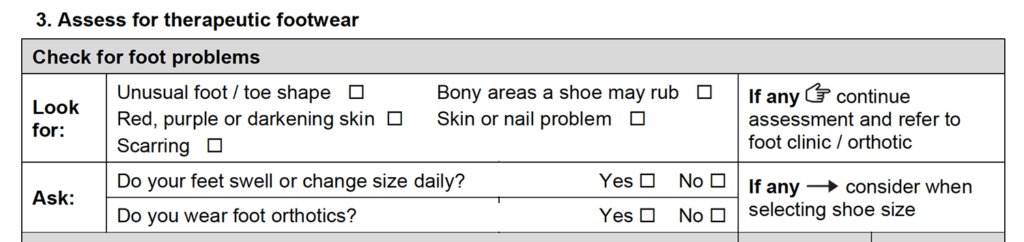
Therapeutic footwear may be worn by people who have an unusual foot shape and/or foot problems. Check that the shoe can be comfortably fitted.
Look for foot problems
Check: Look at the person’s feet.
Check both feet closely, looking for:
- Unusual foot / toe shapes
- Skin or nail problems
- Red areas
- Previous foot wounds (scars)
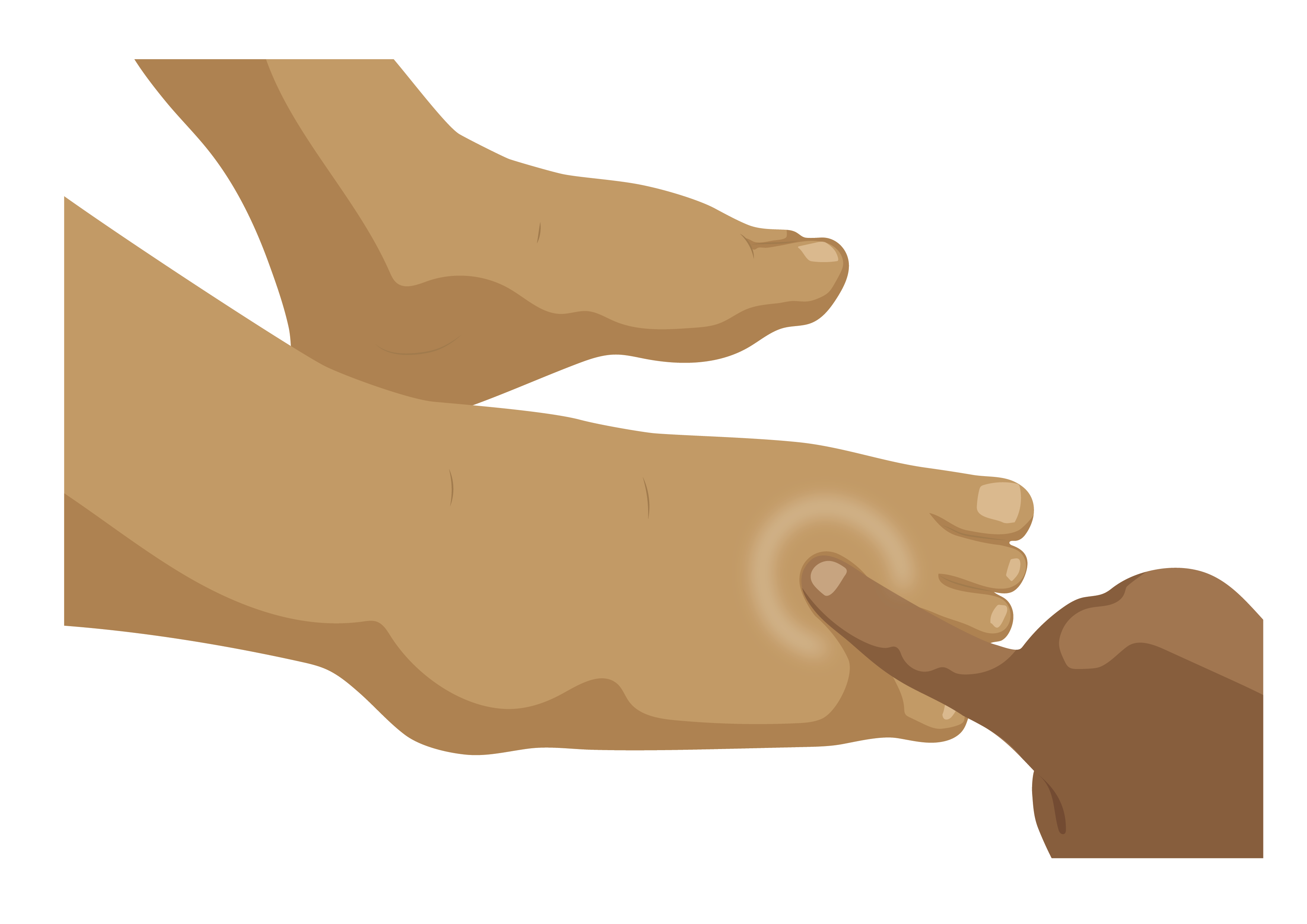
- Areas a shoe may rub.
These are all things that can increase the risk that a shoe may cause pressure or rubbing. Pressure or rubbing can lead to discomfort, pain or a wound.
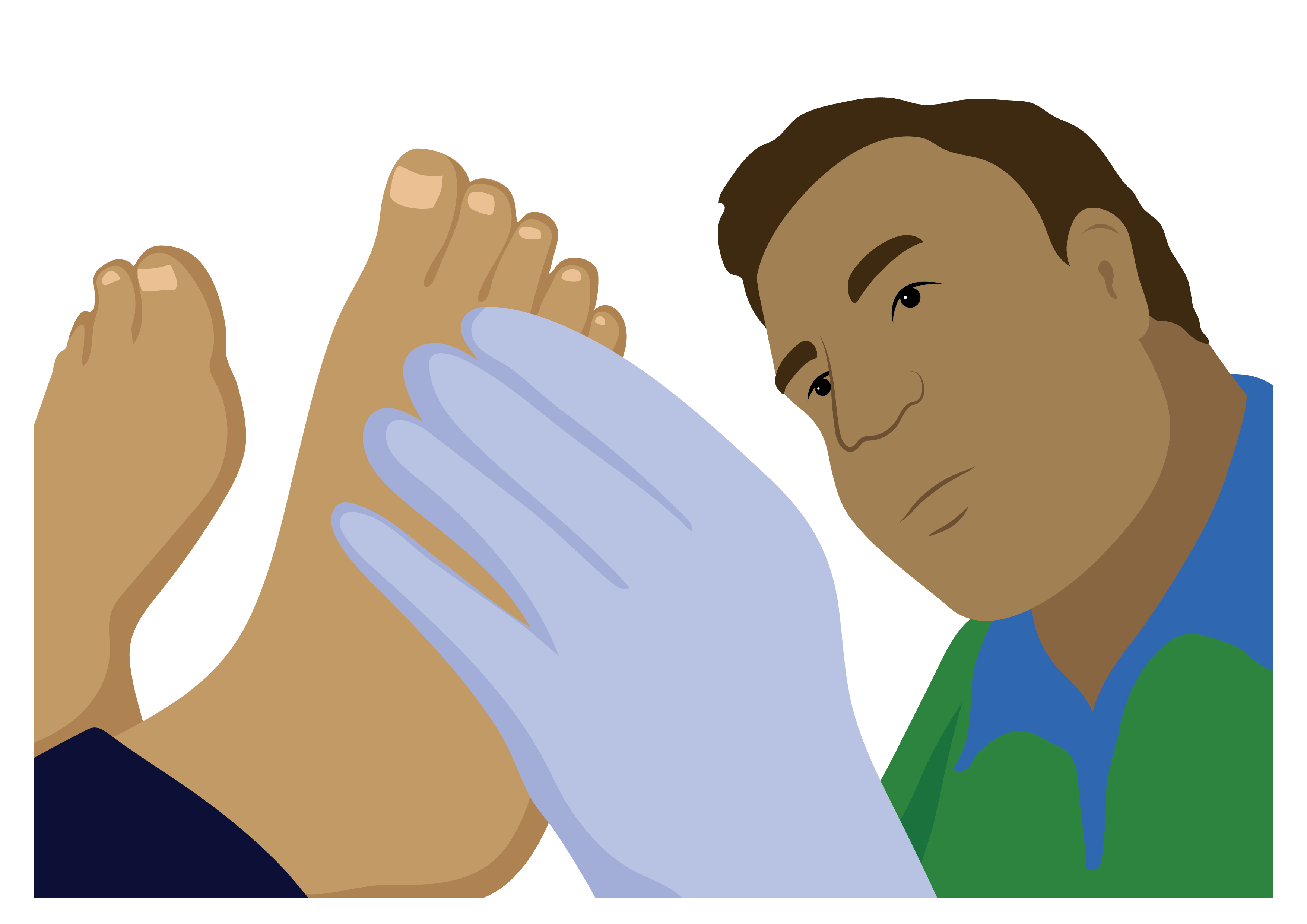
Watch this video to learn how to closely check a person’s feet.
Ask about foot problems
Ask: Do your feet swell or change size daily?
Some people may experience swelling in their feet. This may happen during the day or night, depending on the person’s activity and position.
If the person experiences swelling regularly during the day:
- Measure their feet while swollen
or
- Increase the shoe size to allow room for swelling.
Ask: Do you wear foot orthotics?
Foot orthotics can reduce the amount of space inside the shoe.
If a person is using a foot orthotic, fit their therapeutic footwear with the foot orthotic in the shoe.
To make room for the foot orthotic, you may need to remove the insole from the therapeutic footwear.
Question
A person has been prescribed a foot orthotic.
You should:
If you selected b, you are correct.
The person should use their foot orthotic in their therapeutic footwear. They should remove the insole inside the therapeutic footwear and then put the orthotic in.
Find foot size
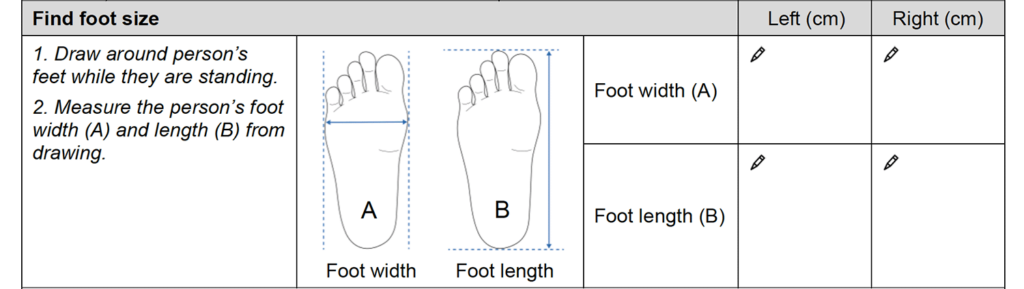
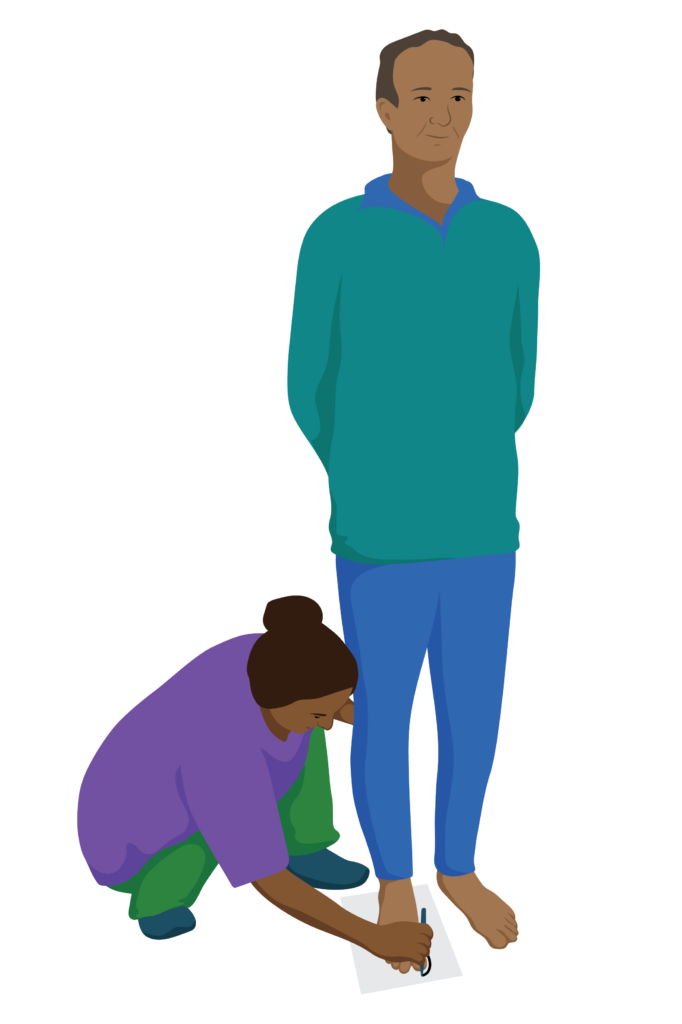
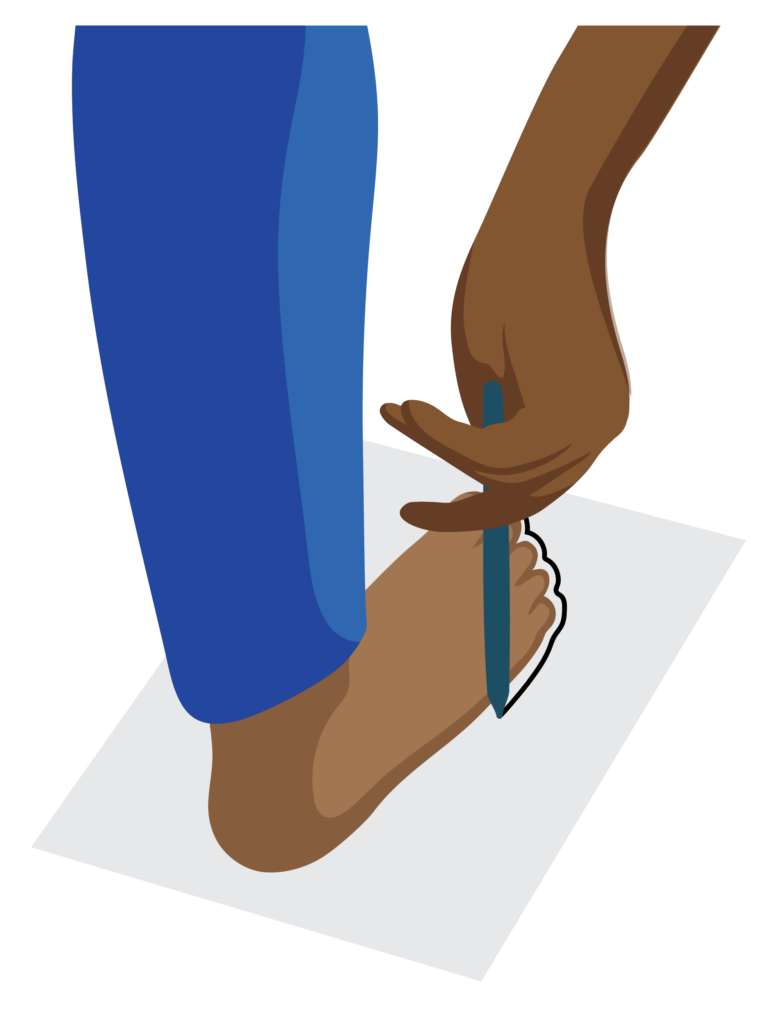
1. Draw around the person’s foot while they are standing on a piece of paper.
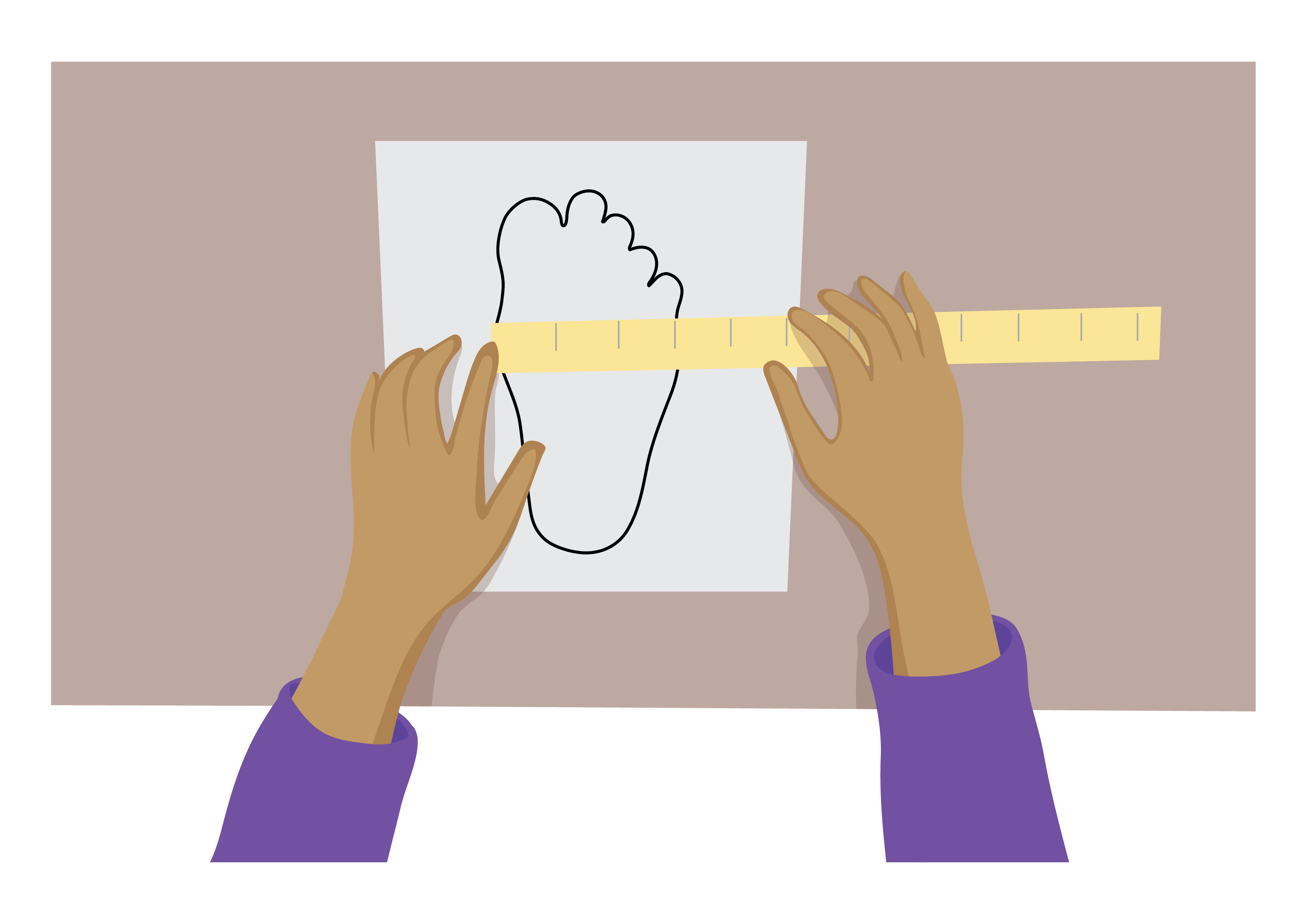
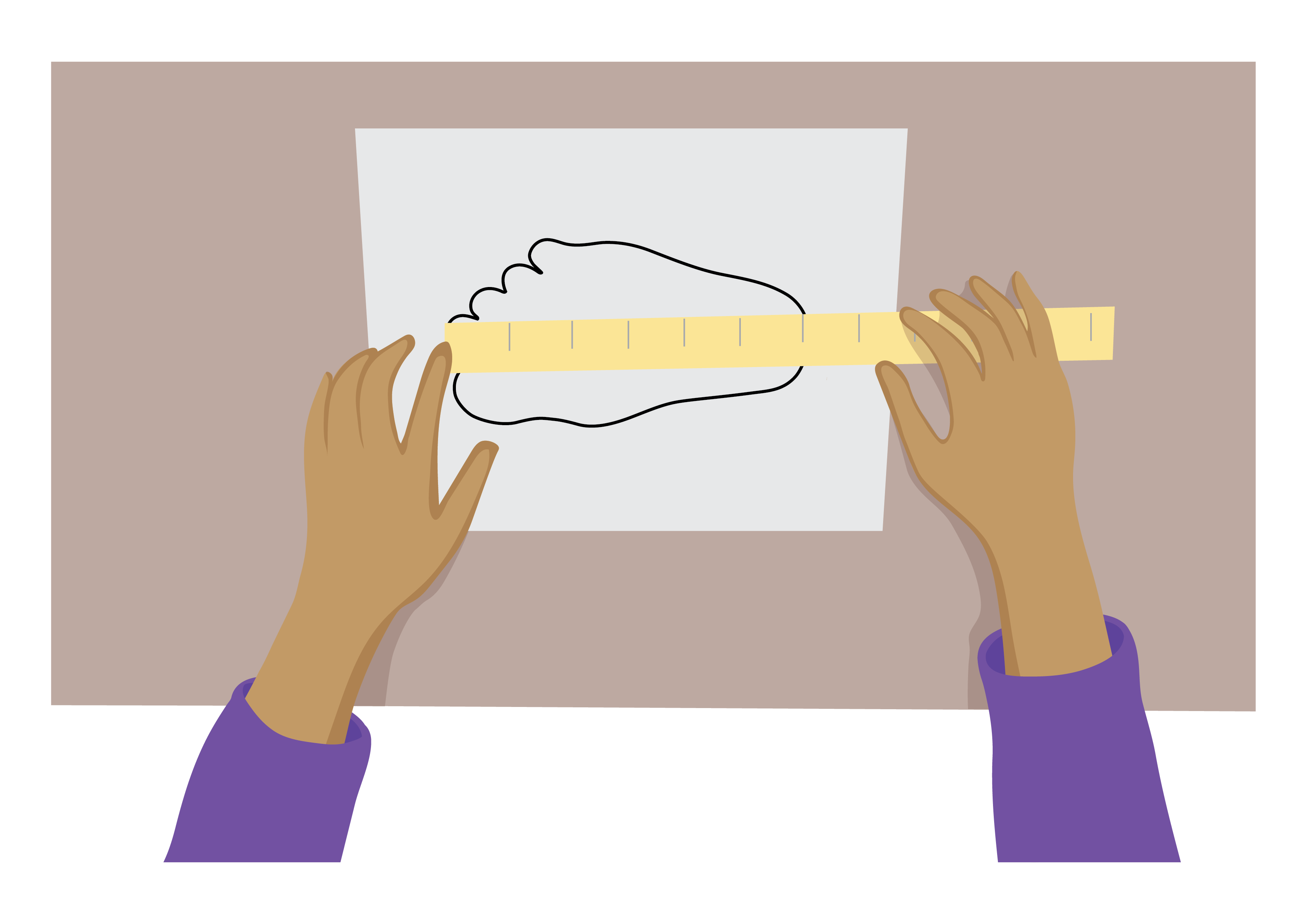
2. Using a ruler, measure the person’s foot width and length from the drawing.
3. Record the length and width of each foot on the form.
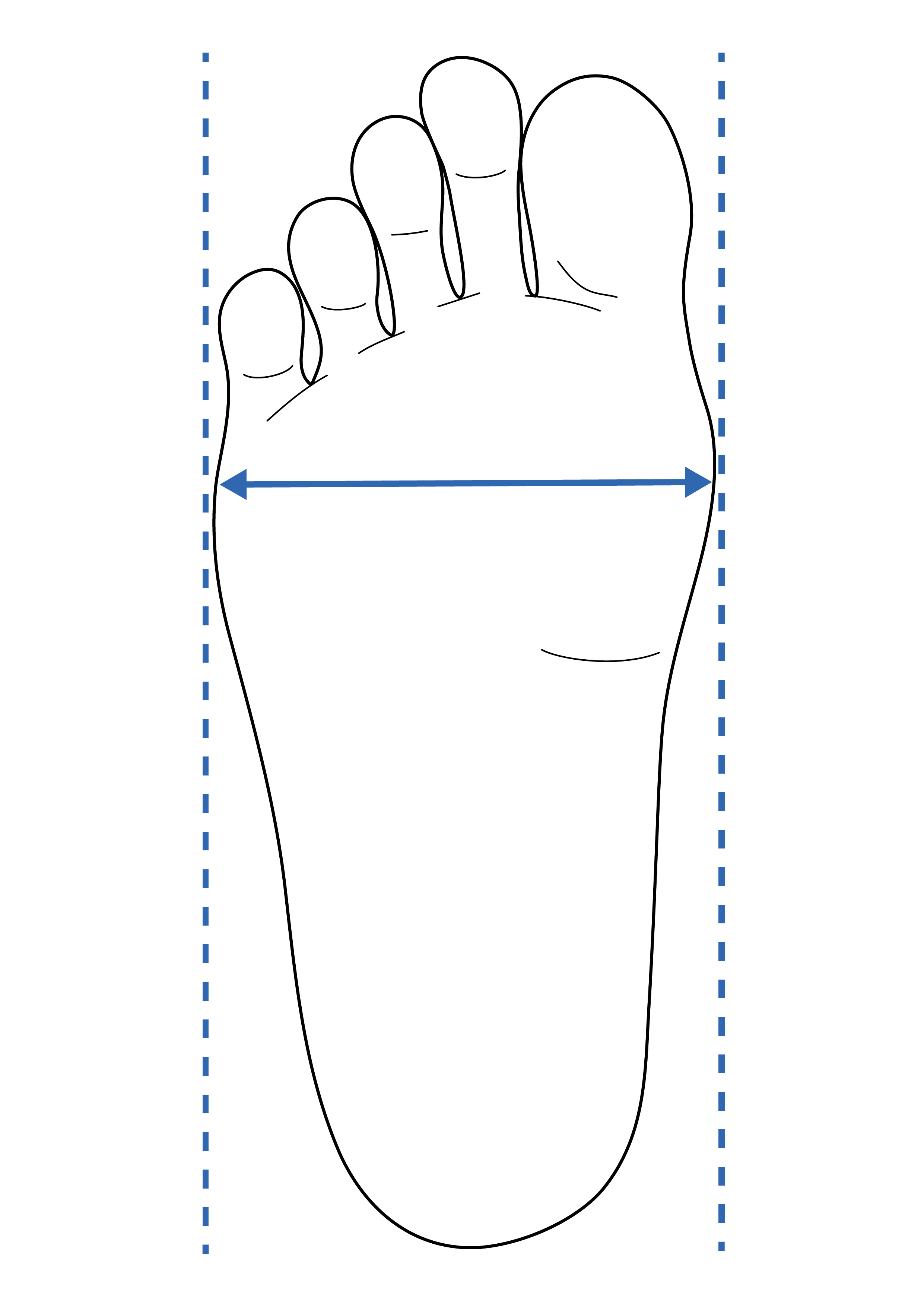
Foot width
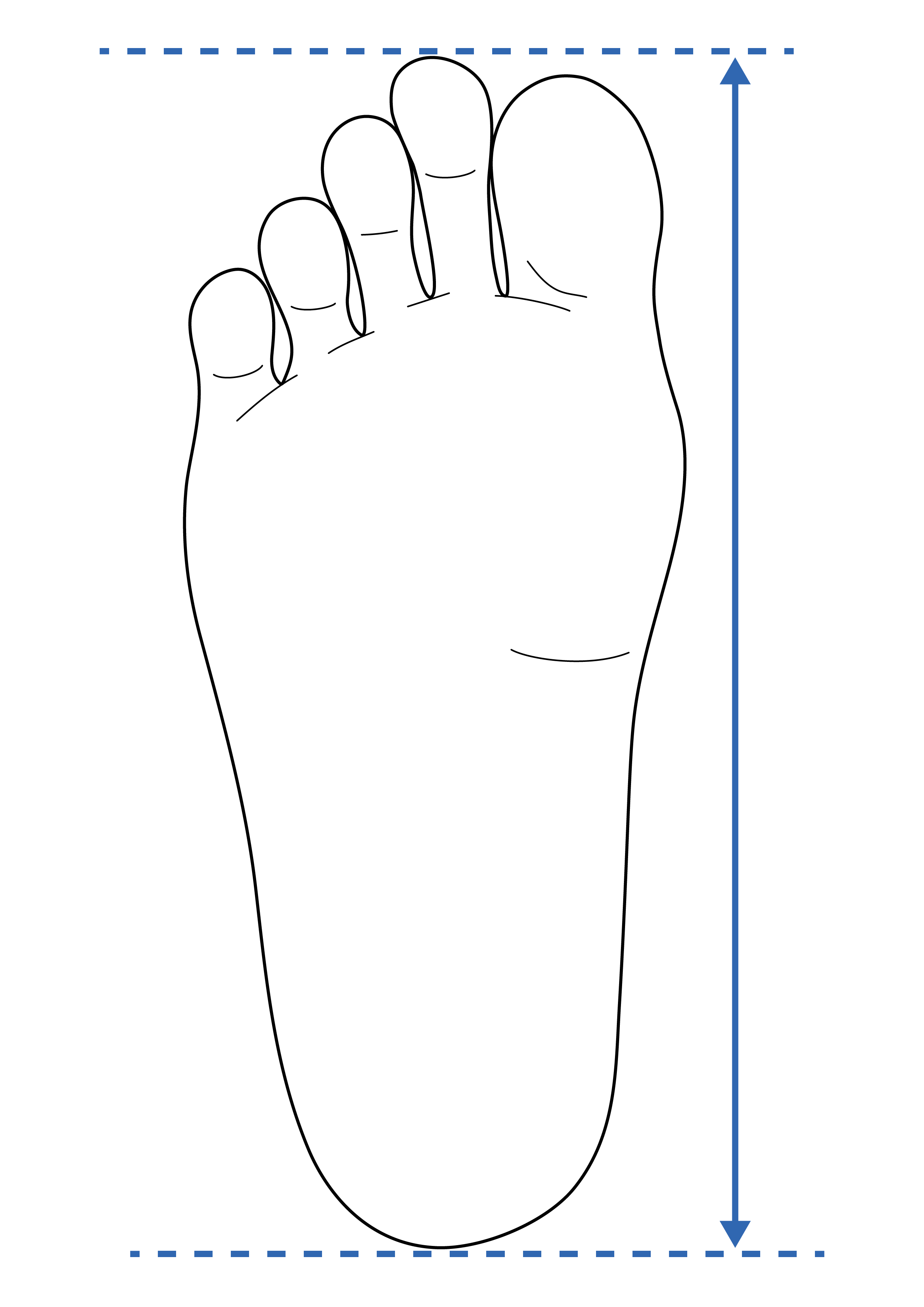
Foot length
Watch this video to see how to trace around the foot and then measure a person’s foot size.
Activity
Practice measuring foot width and length using the drawing method described.
Tips:
- Keep the pen upright and close to the edge of the person’s foot to get an accurate drawing.
- When measuring from the paper, measure at the widest width and the widest length for each foot.
Foot width
Foot length
Check ability
Ask:
- Can you put on and take off your own shoes?
- Are you able to reach and see the bottom of your feet?
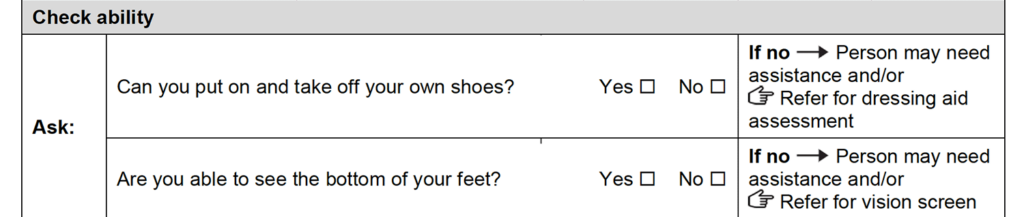
The person needs to be able to put their shoes on and off, and check their feet, each day.
They may have difficulty doing these things without assistance. This could be because they:
- Cannot reach their feet
- Have reduced mobility in their hands
- Have vision problems.
If the person cannot put on or take off their shoes or check their feet easily, they may need assistance from a family member or caregiver.
They may also benefit from a referral for other assistive products or to another health professional.
Question
What else can you suggest or discuss with a person who cannot easily see to check their feet?
Select all that apply.
If you selected a, b and c, you are correct.
If someone cannot easily see to check their feet, they are at risk of developing a wound and not noticing. It is important to talk to them about their vision.
c is incorrect.
It is important to talk to the person about problems with vision.
For information about how to do a vision screen, complete the TAP Vision assistive products module.
Select therapeutic footwear to try

The next step is to select a pair of therapeutic footwear for the person to try to see how well they fit.
This includes:
- Select shoe type
- Select shoe size.
Select shoe type
Selecting the shoe type will depend on what shoes are available.
Common shoe types described in lesson one are:
- Closed shoe
- Open heel shoe
- Open toe sandal.
Discuss with the person which shoe type will suit their needs.
Remember:
- Closed shoes offer the most protection, and are good in cold weather. However, they may be harder to fit if the person has an unusual shaped foot.
- Open heel shoes or open toe sandals may be better in warmer climates and can provide additional space for an unusual shaped foot.
If there is a choice of colour, ask the person which colour they would prefer.
Select shoe size
Use the foot measurements and the supplier sizing guide to decide which size shoe to try.
Select the shoe size for the larger foot. However, if the size of each foot varies by 2 or more sizes, consider separate sizes for each foot.
Question
As well as the person’s foot measurements, what else may affect the shoe size?
Select all that apply.
If you selected a, c and d, you are correct.A person may need a larger size if they:
- Experience foot swelling
- Wear a foot orthotic
- Have an unusual shaped foot.
The larger size will allow room for swelling, the orthotic or the shape of their foot.
b is incorrect. A shoe that is too large will not provide the same level of support and protection as a shoe that fits well.
Select shoe colour
If different colours in the appropriate type and size are available, let the person select their preferred colour.