After the assessment, make a plan with the person. Decide together:
- If they need a wheelchair
- The wheelchair set up including the weight limit and selected options
- The type of cushion
- If they may benefit from referral for other services
- Whether they require a priority follow up.
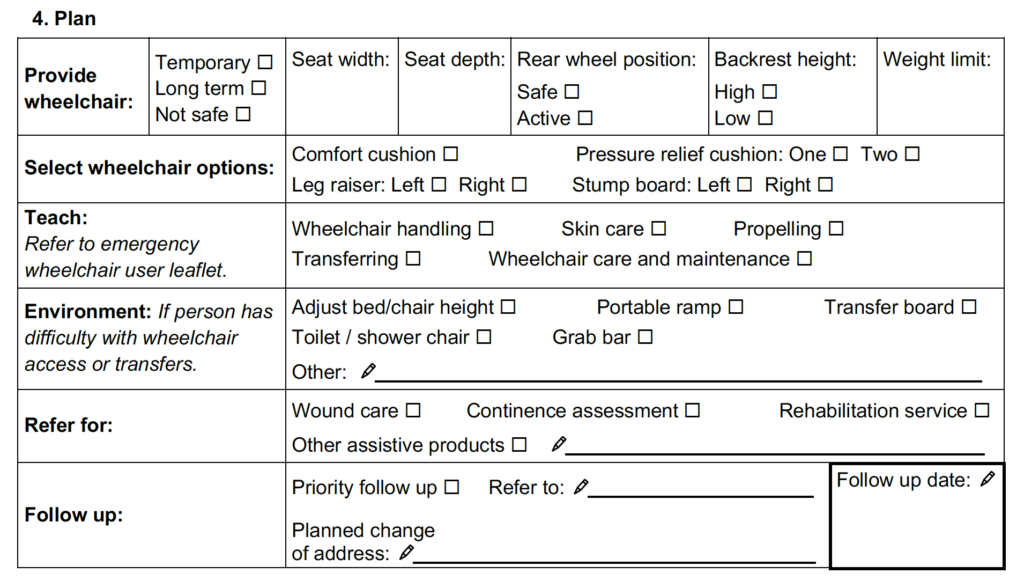
Use the TAP Wheelchairs in emergencies select and fit table to help you complete the plan with the person.
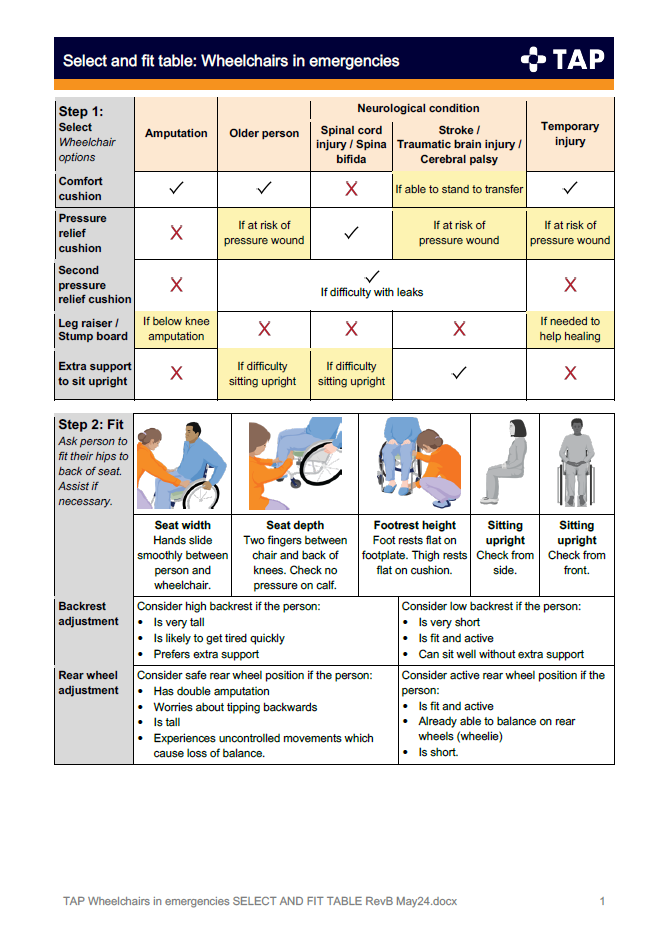
Provide wheelchair

After completing the fitting checklist, make any necessary adjustments and provide the person with a wheelchair if it is safe.
You will learn about how to check the fit of the wheelchair and cushion in the next lesson.
Record the wheelchair size and set up including:
- Seat width
- Seat depth
- Rear wheel position
- Backrest position.
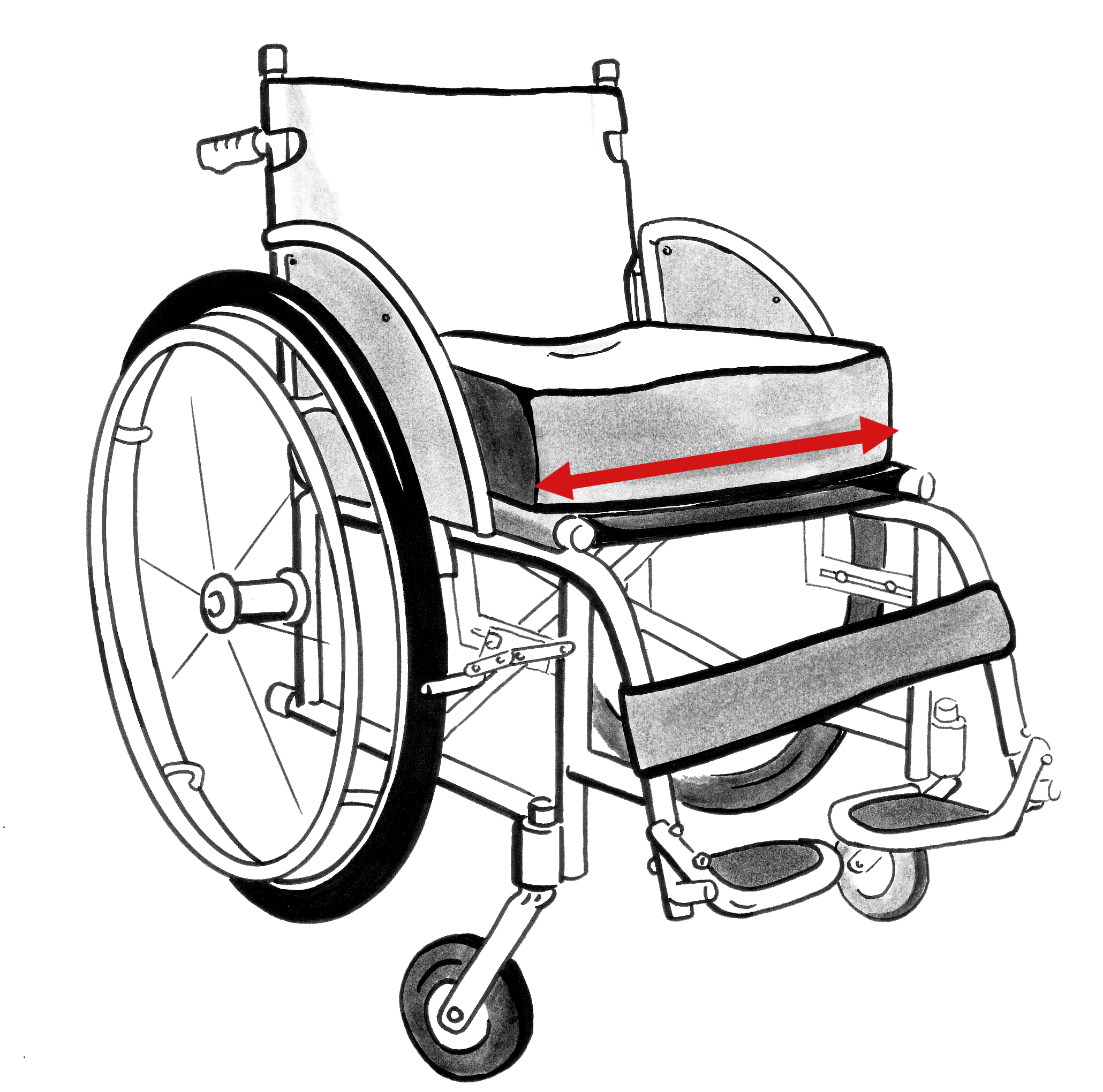
Seat width
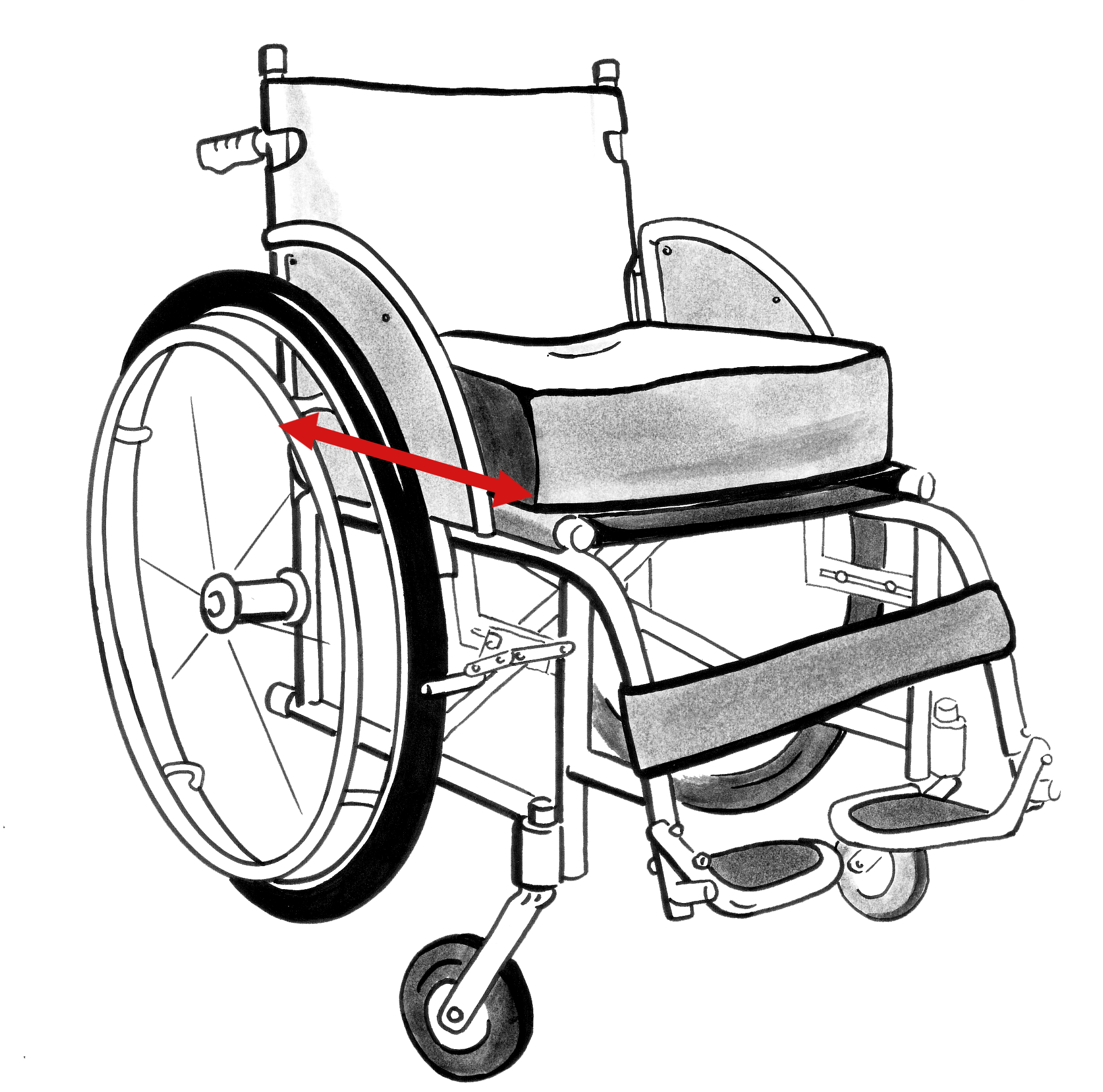
Seat depth
Activity
Using the selected wheelchair:
- Practice measuring the seat width and depth
- Check the rear wheel position and backrest height position
- Record your results in the Plan section of the form.
Did you all get the same measurements?
Select wheelchair options

Select any options, including:
- Type and number of cushions
- Type of leg support (if required).
Check the wheelchair select table when selecting options.
Teach

It is important to teach the person how to handle, use and look after their wheelchair.
If a person has had a wheelchair before they will have existing knowledge.
Introduce the wheelchair user information leaflet and with the person, decide which information will be useful.
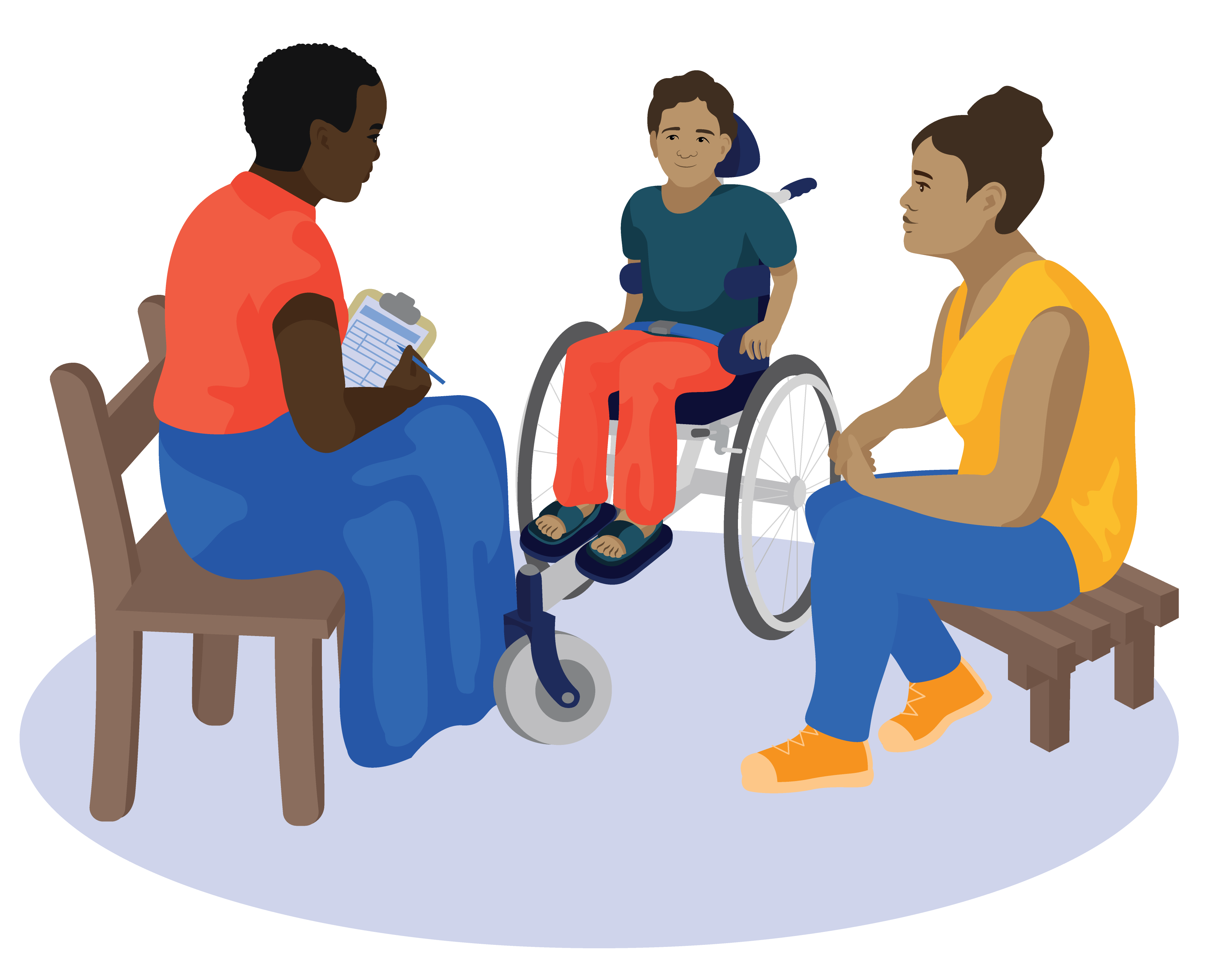
Environment

Other assistive products
If person has difficulty with wheelchair access or transfers, other assistive products may help.
Question
Which of the following assistive products may assist a person to move around their home or community?
All are correct!
Ramps can assist a person who cannot easily use steps to get in and out of buildings and move around them.
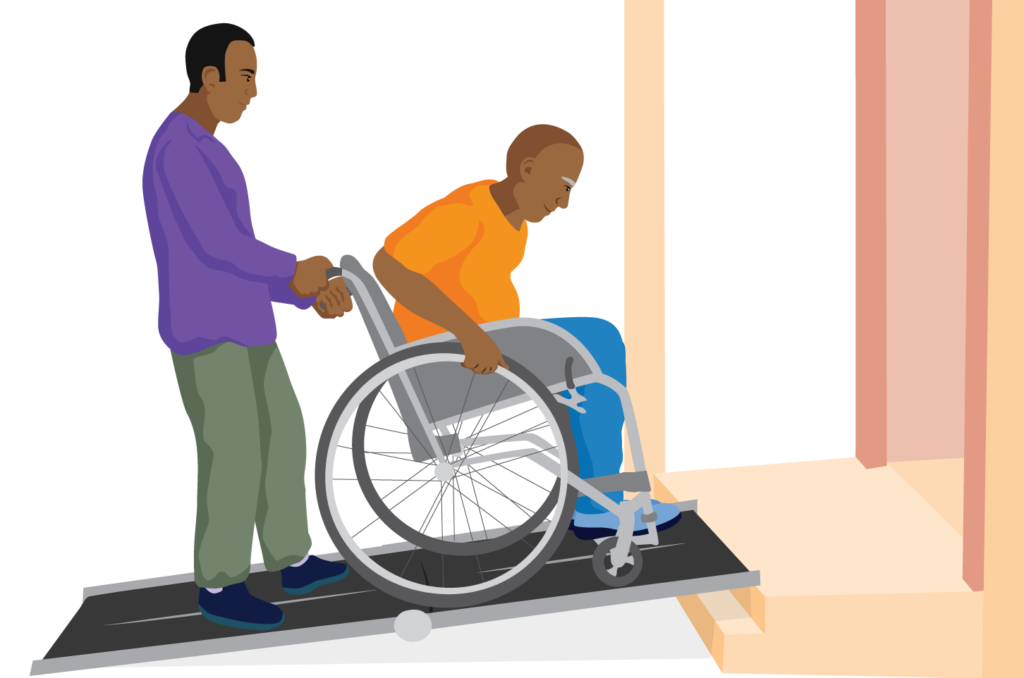
Ramps can also assist a person using a wheelchair to access a vehicle, a bus or train.
If a person cannot access their toilet and/or shower they may benefit from a toilet and/or shower chair.
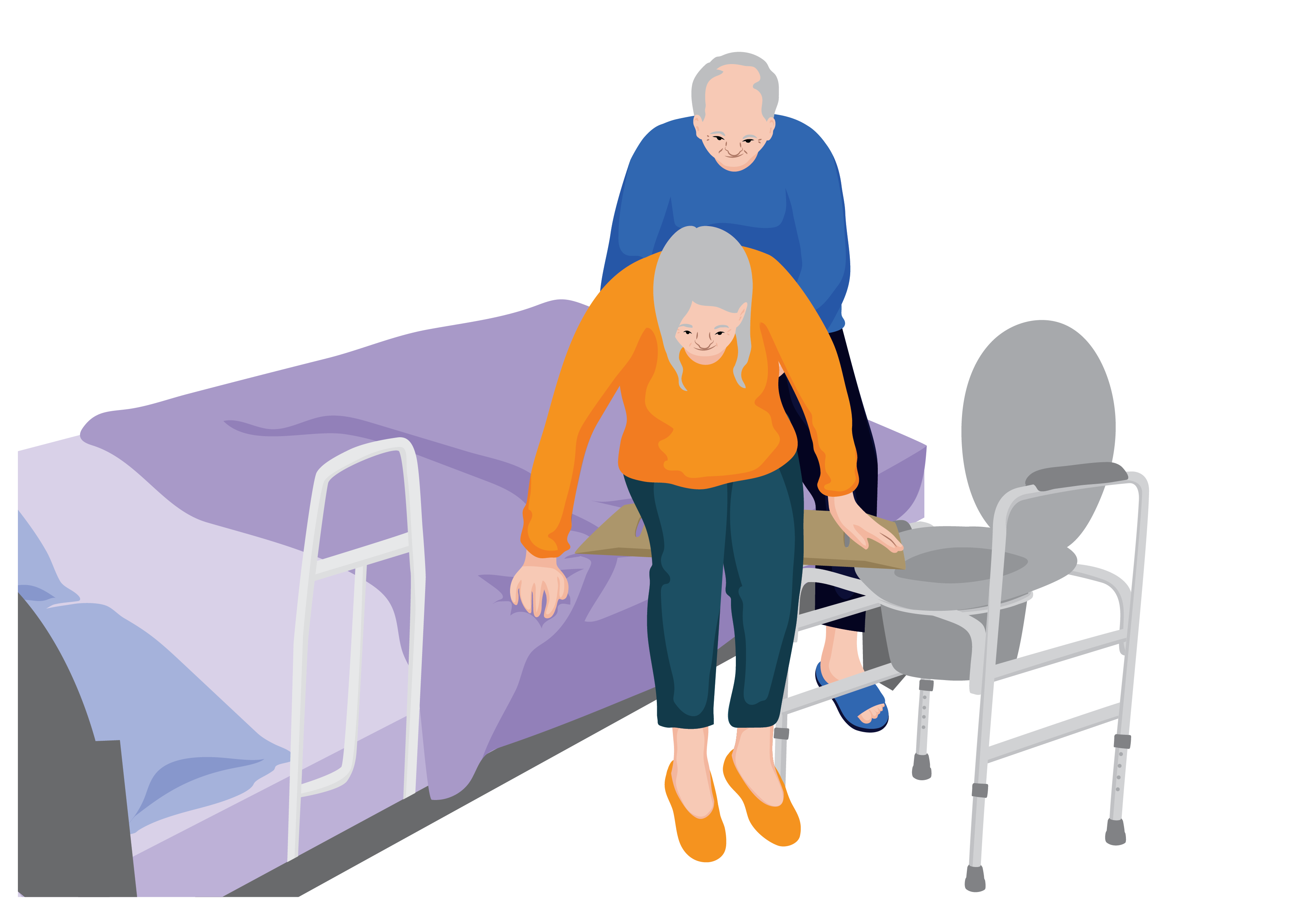
Grab bars and transfer boards can also assist a person to transfer to/from their wheelchair.
Always discuss what assistive products may be suitable for the person.
Adjusting the environment
A height difference between surfaces will make it more difficult for a person to transfer.
It is more difficult to balance and lift on a slope.
Together with the person, discuss whether it is possible to adjust the environment to make the surfaces the same height.
Referral and follow up

Make a plan for any referrals for health needs for:
- Wound care
- Continence assessment
- Rehabilitation
- Other assistive products.
Then plan any priority needs for follow up.
Now let us practice thinking about the different needs of each person, and what the right plan may be for them.
Read the information about Bernilla and Ishadi and complete the activities below.
Activity

Meet Bernilla
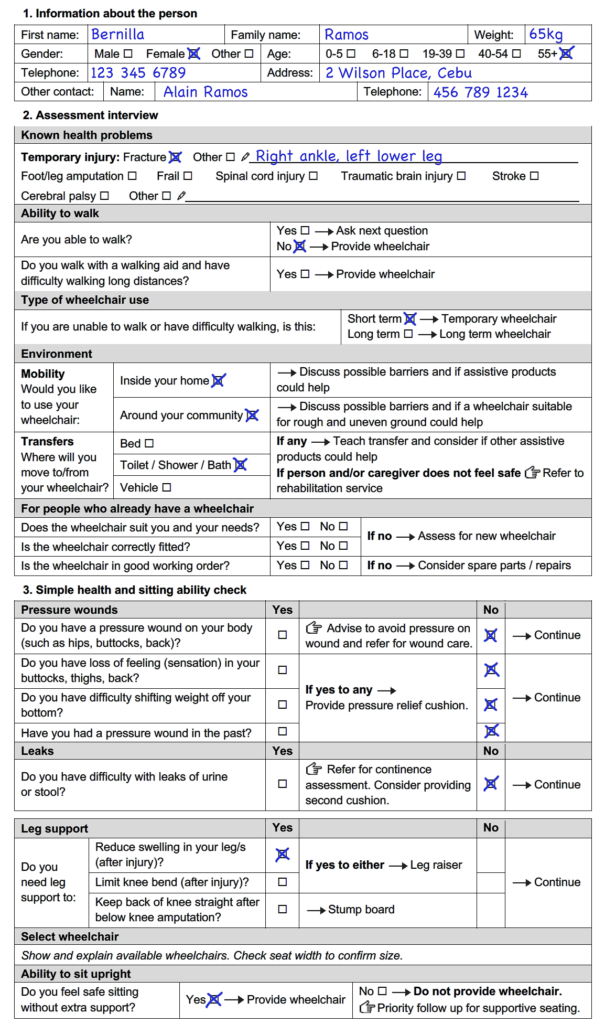
Bernilla is 66 years old and married to Alain. Bernilla was rescued after being hit by a falling tree in a hurricane.
She has a fracture of her right ankle and left lower leg and is unable to walk.
Bernilla selected the 400mm seat width and 440mm seat depth with the health worker.
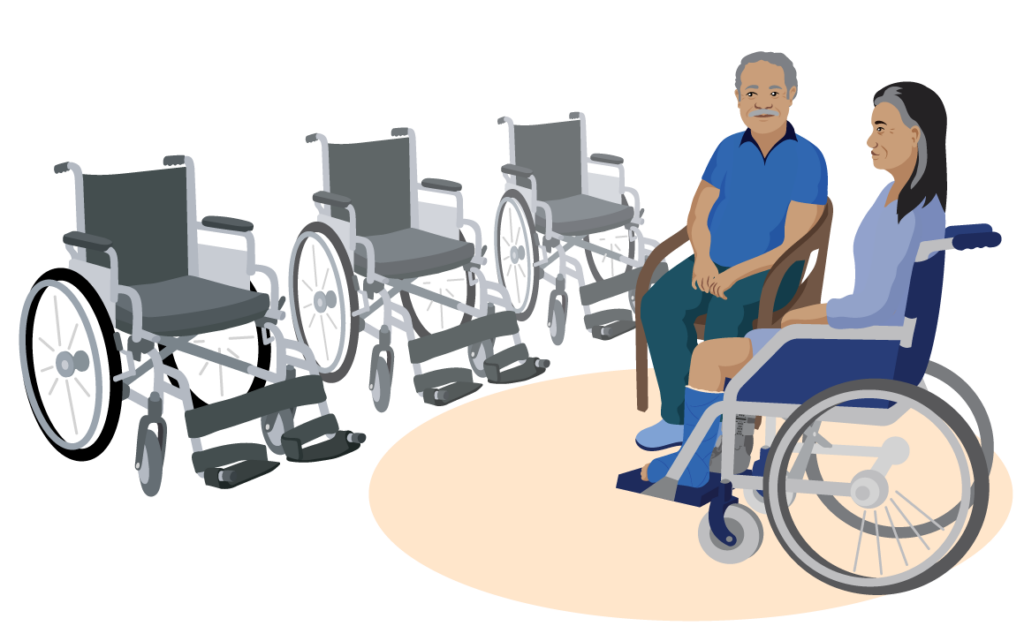 Look at Bernilla’s completed assessment interview. Then answer questions to complete a plan for Bernilla.
1. What type of wheelchair would be suitable for Bernilla?
If you selected a, you are correct!
Bernilla has an injury and will have difficulty walking for a short time while she heals. She requires a wheelchair for her temporary use to assist her mobility until her injuries heal.
Bernilla tried propelling the wheelchair with the backrest in different positions. She found it harder to sit upright when pushing with the low backrest and chose the higher one.
The weight limit of Bernilla’s wheelchair is 100kg.
2. Is the weight limit suitable for Bernilla?
Yes is correct!

3. Which cushion option would you select for Bernilla?
Comfort cushion is correct!
Bernilla has no pressure wounds and is not at risk of pressure wounds. A comfort cushion is suitable for Bernilla.
4. How many cushions would you recommend for Bernilla?
One is correct!
Bernilla does not experience leaks. She does not need an extra cushion.
5. What leg support would Bernilla benefit from?
Leg raiser is correct!
Bernilla may benefit from a leg raiser for both legs if she has difficulty with swelling from her injuries.
She could also support her feet on a chair or rest on the bed.
It is important to discuss with Bernilla so she can make an informed choice.
6. What would be important to teach Bernilla?
Select all that apply.
If you selected a, c, d and e you are correct!
Bernilla is receiving a wheelchair for the first time. It is important that she learns how to handle and look after it and how to propel and transfer in her environment.
b is incorrect.
Bernilla is not at risk of developing pressure wounds. She does not need to be taught skin care.
Look at Bernilla’s assessment interview.
7. What else could assist Bernilla’s access or transfers?
Select all that apply.
If you selected c, you are correct!
Bernilla has difficulty accessing her bathroom because the doorway is too narrow to enter with a wheelchair. A portable toilet/shower chair in a private space in her home could help.
8. What referrals would Bernilla benefit from?
Select all that apply.
If you selected c and d, you are correct!
Bernilla could benefit from an assessment for a toilet / shower chair. She may also benefit from rehabilitation to assist her to learn to walk again.
9. What follow up plan would be suitable for Bernilla?
Select all that apply.
If you selected a and c, you are correct!
Encourage anyone who receives a wheelchair to return if they have any difficulties using their wheelchair inside their home or out in the community.
Bernilla could benefit from a follow up appointment because her needs may change as her injuries heal.
b is incorrect.
Bernilla:
- Is not at risk of pressure wounds
- Does not need extra support to sit safely in the wheelchair.
She therefore does not need a priority follow up appointment.
Question

Meet Ishadi
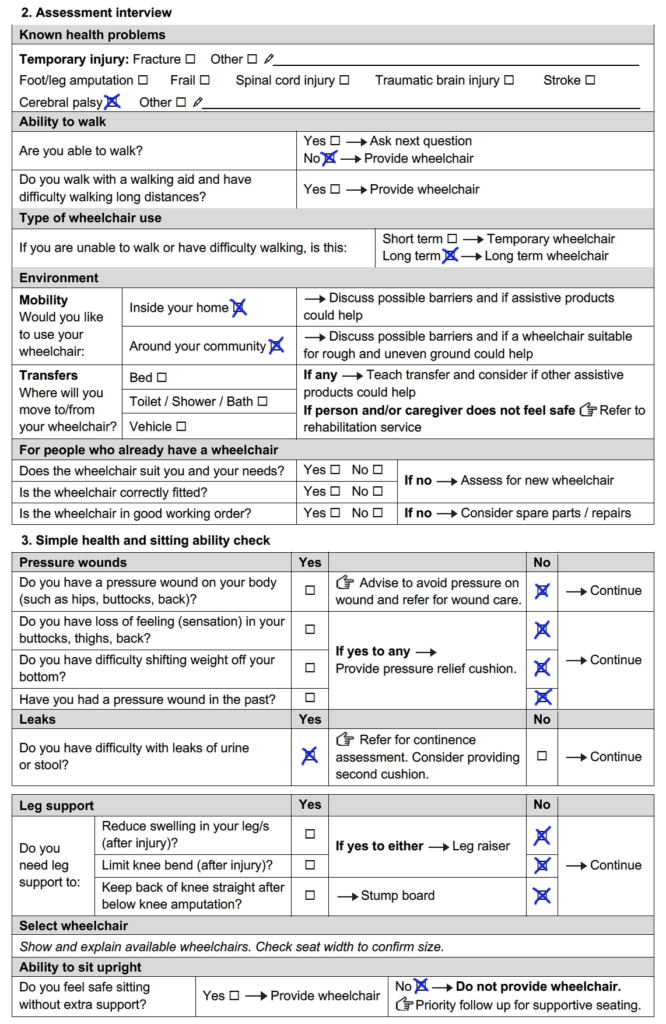
Ishadi is 10 years old and has cerebral palsy. She lives with her mother and father. During armed conflict, Ishadi and her parents had to leave their home to escape the fighting. They are living in a temporary camp.
Ishadi is unable to walk. Her family have carried her to the temporary health clinic.
During the wheelchair assessment, Ishadi tries the child size wheelchair. She has difficulty sitting upright in the wheelchair. Her body leans to the side. She starts to slide forward and is at risk of falling out of the wheelchair.

Look at Ishadi’s completed assessment interview.
What type of wheelchair should you provide Ishadi?
If you selected c, you are correct!
Ishadi needs a wheelchair for her long term use. However, she is at risk of falling out of the wheelchair. It is not safe to provide a wheelchair without extra support.
If possible, refer Ishadi for more supportive seating.
Explain to Ishadi and her parents that she is not safe in the wheelchair without extra support and a priority follow up plan. Ask her parents for contact details to put on the waiting list.