Якщо ви не зробили цього раніше, завантажте форму оцінювання TAP для забезпечення терапевтичним взуттям і роздрукуйте її копію.
Якщо ви не можете завантажити форму, не хвилюйтеся. Кожне із запитань, що містяться у формі, буде чітко описано під час опрацювання цієї частини модуля.
Ця піктограма вказує на те, що людині може бути необхідне скерування.
Підготовка
Щоб провести оцінювання, знайдіть тихе місце, де можна сісти поруч із людиною.
Також, за необхідності, залучайте членів сім’ї та/або людей, які здійснюють догляд.

Інформація про людину
Почніть оцінювання зі збору контактних даних про людину, яка до вас звернулася. Зокрема зафіксуйте її ім’я, стать, вік, номер телефону та адресу.
Оцінювання можливості використання терапевтичного взуття
Щоб провести скринінг стану стоп та оцінювання, знайдіть тихе місце, де можна сісти разом із людиною, яка до вас звернулася.
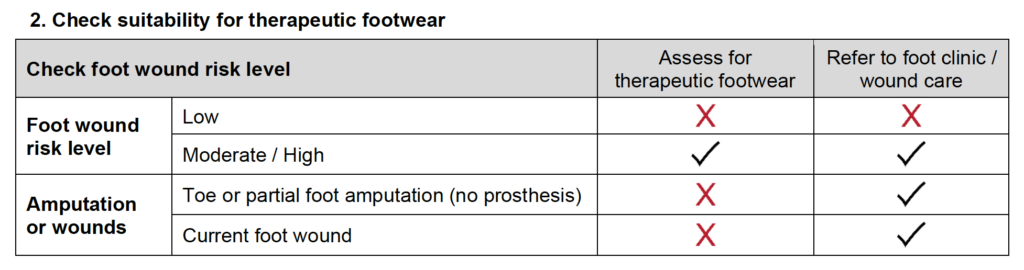
Оцінювання ступеню ризику утворення ран на стопах
Оцініть:
Який людина має рівень ризику утворення ран на стопах:
- Низький
- Помірний або високий
Перед оцінюванням потреби в терапевтичному взутті переконайтеся, що людина нещодавно проходила скринінг стану стоп для визначення рівня ризику утворення ран на стопах.
Якщо людина проходила скринінг стану стоп більше ніж місяць тому, в першу чергу необхідно провести такий скринінг наново.
Дізнатися, як проводити скринінг стану стоп можна в модулі TAP «Допоміжні засоби для пересування».
Запитання
Чи є наведені нижче твердження вірними або хибними?
1. Людині з низьким ризиком утворення ран на стопах не потрібне терапевтичне взуття.
Якщо ви обрали варіант «так», ви відповіли правильно. Людям із низьким ризиком утворення ран на стопах слід рекомендувати носити відповідне взуття.
2. Людям із помірним або високим ризиком утворення ран на стопах варто проводити оцінювання потреби в терапевтичному взутті.
Якщо ви обрали варіант «так», ви відповіли правильно. Якщо людина має помірний або високий ризик утворення ран на стопах, слід продовжити оцінювання для підбору терапевтичного взуття.
Перевірка наявності ран чи ампутацій
Перевірте наявність у людини:
- Ампутацій пальців ноги або часткових ампутацій стопи
- Ран на стопах
Підбір терапевтичного взуття продовжувати не слід у разі виявлення:
- Ампутацій пальців або частини стопи без протеза чи ортеза
- Ран на стопах
В обох зазначених випадках людина матиме складніші потреби в догляді за стопами та виборі взуття. Людей, які мають зазначені проблеми, слід скеровувати до лікаря-подолога.
Якщо людина має протез або ортез для пальця ноги або часткової ампутації стопи, ви можете продовжувати оцінювання.
Завжди скеровуйте до відповідних спеціалістів людей, які мають:
- Ампутацію пальця ноги або частини стопи і при цьому не носять відповідних протезів чи ортезів
- Незагоєні рани на стопах
Запитання
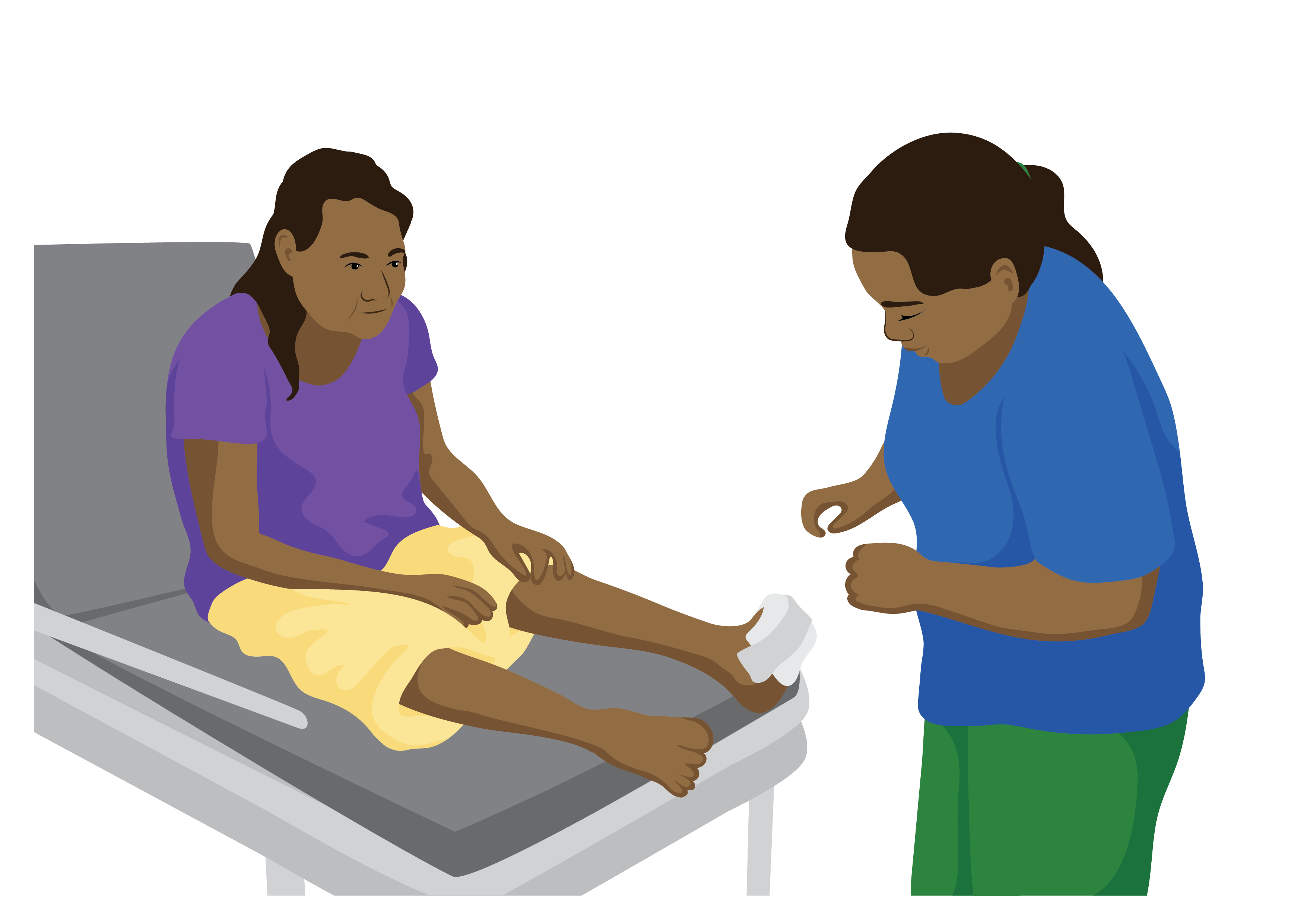
Роксолана
Роксолана має ампутацію пальця на нозі. Під час ходьби вага її тіла розподіляється на ту частину стопи, що залишилася.
Для неї існує ризик повторного утворення ран на стопі через підвищений тиск на цю ділянку стопи.
Роксолана не має протеза чи ортеза.
Чи можна підібрати Роксолані терапевтичне взуття?
Правильна відповідь — «ні». Наразі Роксолана не зможе безпечно носити терапевтичне взуття через ампутацію пальця ноги.
Якби у неї був протез або ортез, вона могла б носити терапевтичне взуття.