In this topic you will learn how to check the fit of therapeutic footwear.
Check fit
Ask the person or their caregiver to put on the therapeutic shoes. Assist them if necessary, avoiding wrinkles in the socks.
Check fit when standing
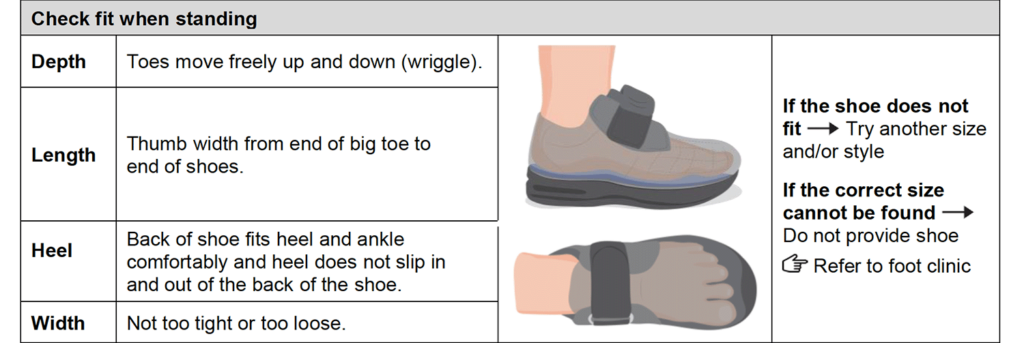
Check shoe size with the person standing and wearing socks:
- Depth: Toes move freely up and down (wriggle)
- Length: Thumb width from top of big toe to end of shoes
- Heel:
- Back of shoe fits heel and ankle comfortably
- Heel does not slip in and out of the back of the shoe
- Width: Not too tight or too loose.
Watch this video to see how to check the fit of therapeutic footwear.
If the shoe width, length, depth or heel do not fit, try another size and/or style of shoe.
If the correct size cannot be found, do not provide shoe and refer to foot clinic.
Check fit after walking
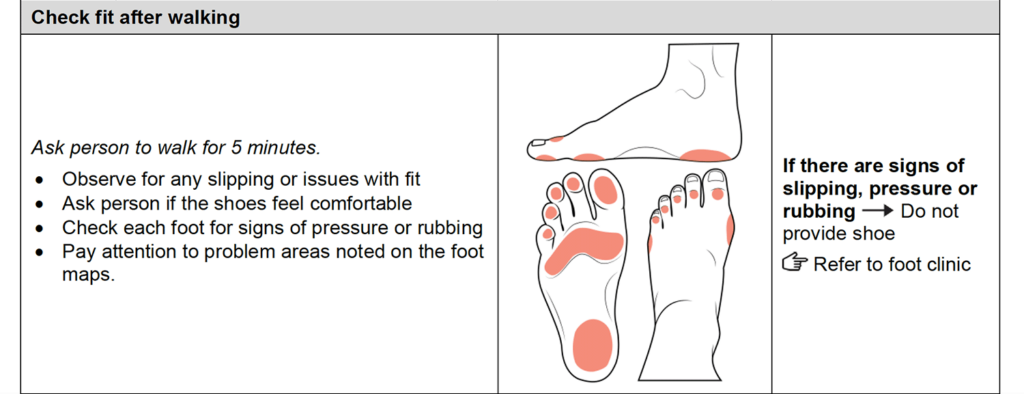
Check fit and comfort after 5 minutes standing and walking:
- Ask person if the shoes feel comfortable.
- Remember, some people do not feel their feet. You must also check the feet closely.
- Take shoes and socks off and check each foot for any signs of pressure or rubbing.
This final check is to make sure the shoes fit correctly and meet the person’s needs.
Comfort and fit
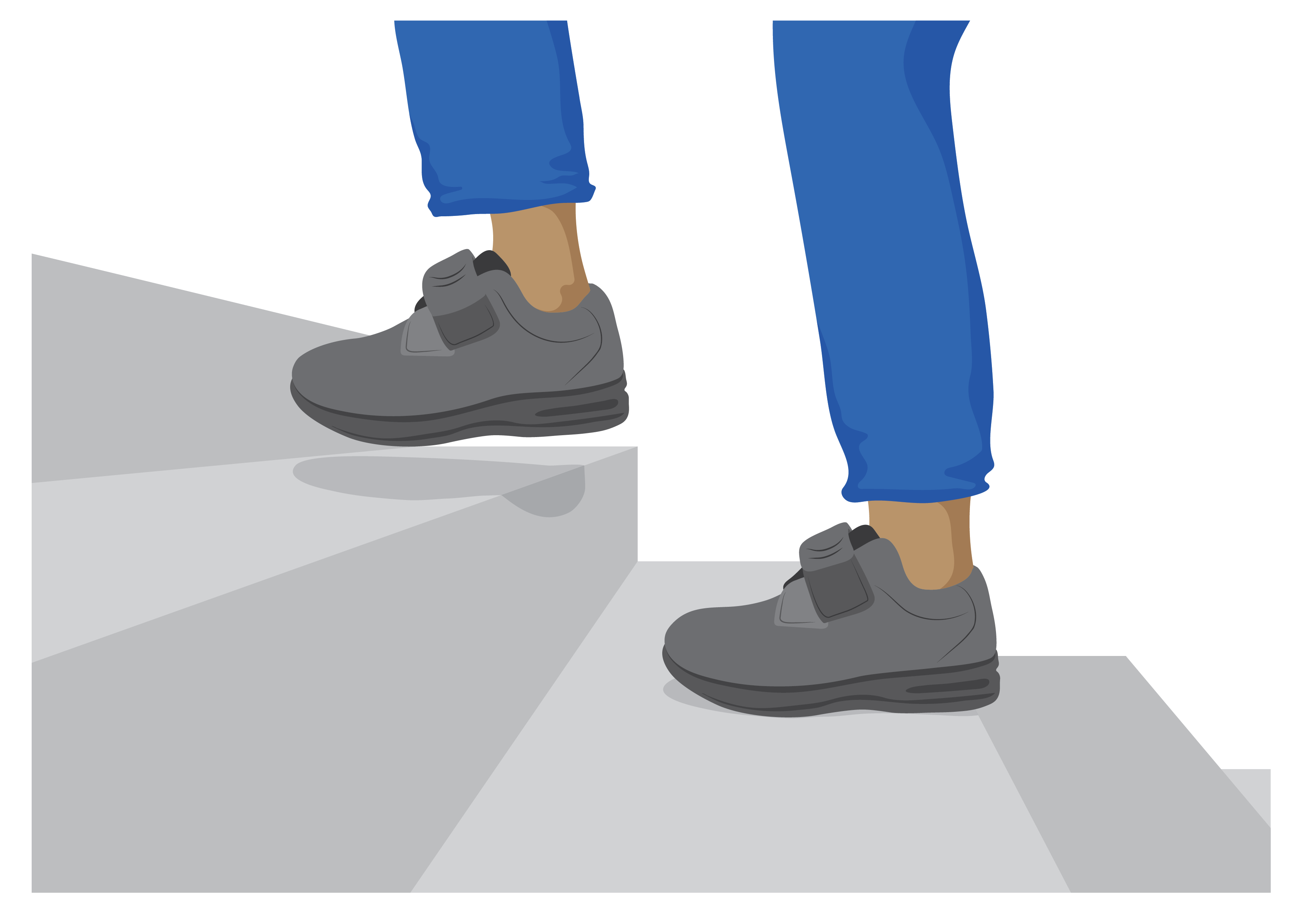
Therapeutic footwear should fit well at time of fitting. The person must find the shoes comfortable. The shoes should not cause harm to the person.
Signs of pressure and rubbing
Pressure and rubbing may look like:
- Redness
- Darkened areas
- Deep sock marks.
Check to see how long it takes for the marks to disappear. Marks that disappear quickly may not cause a problem, but marks that are still there after 10 minutes may show that the shoes are too small, or not fitting well.
Common pressure areas
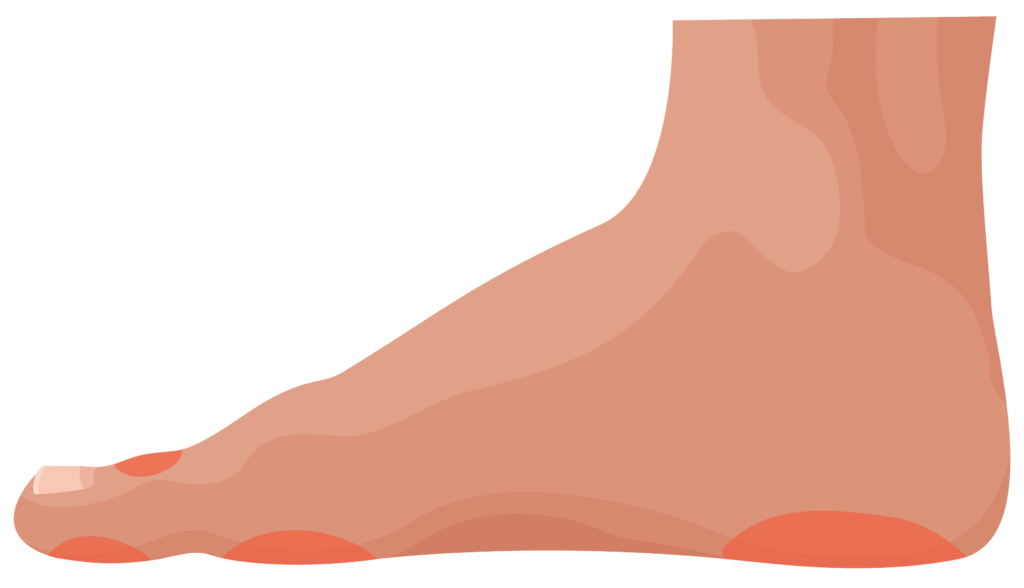
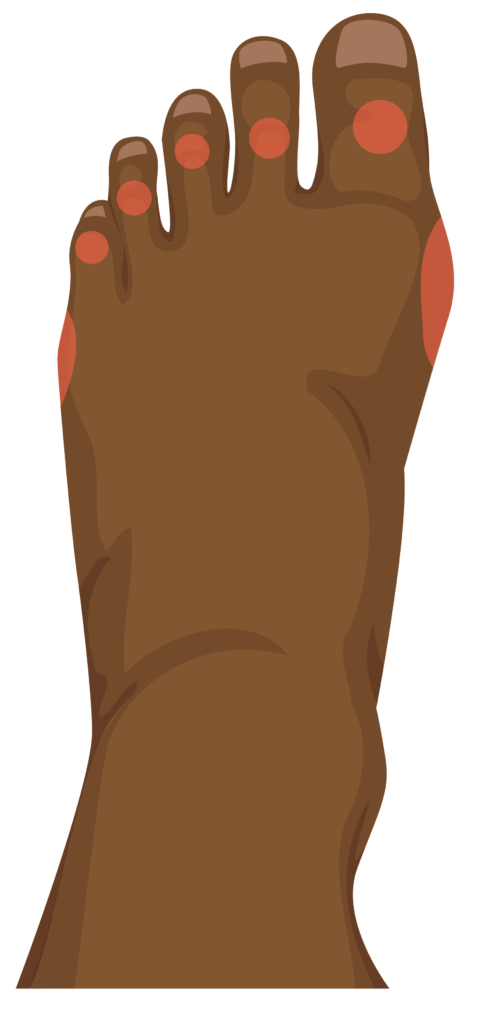
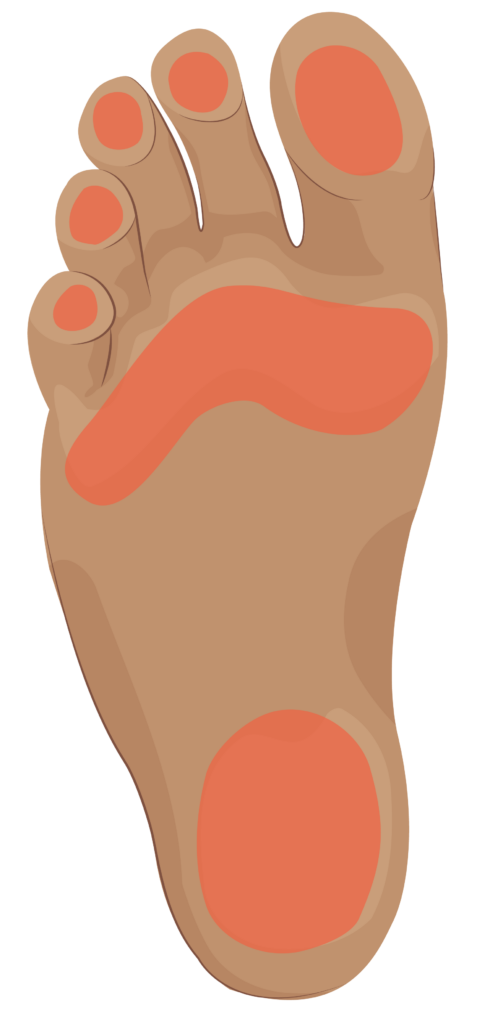
Places on the foot where pressure and rubbing happen most often include:
- Boney areas of the feet, such as:
- Top of toes
- Sides of the feet
- Bottom of toes
- Balls of the feet
- Heel.
Question
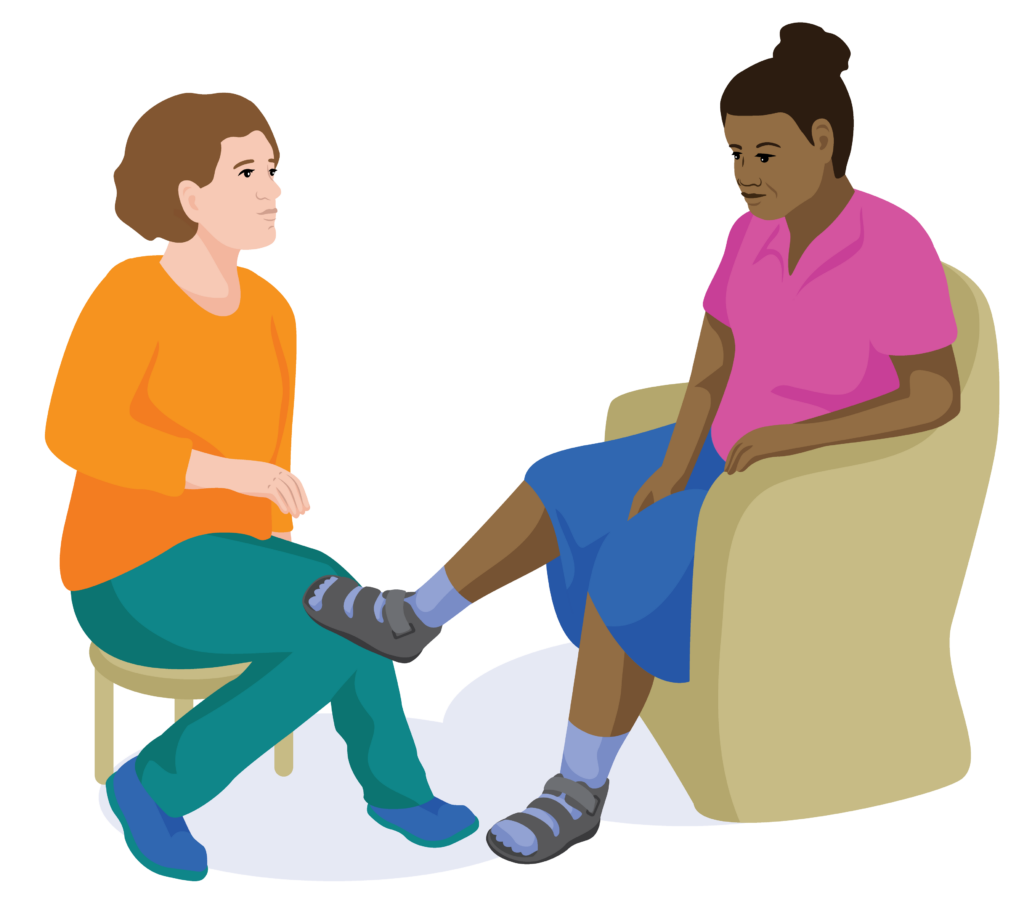
Meet Josephina
Josephina is undergoing an assessment for therapeutic footwear. Answer the questions for the following situations.
While Josephina is walking with the therapeutic footwear you notice the shoes are slipping at the heels.
1. What might this mean?
Select all that apply.
If you selected a and b, you are correct.
Check the adjustable strap is applied to a suitable tightness. If the shoes still slip, try another size.
c is incorrect.
A small shoe will cause injury, but will not slip the heel.
Jospehina is tired of trying on so many pairs of shoes. She says the shoes you have selected are comfortable and not to bother assessing the fit.
2. What should you do?
If you selected b, you are correct.
If you do not correctly fit the shoes, they may injure the person and cause a foot wound.
a and c are incorrect.
It is not safe to provide shoes without a correct fitting assessment.
You check Jospehina’s foot map and notice she has previously had a wound on the top of her second toe.
3. How do you consider this while fitting the shoe?
Select all that apply.
If you selected a and b, you are correct.
Always assess the toe depth specific for the person. If you are concerned there is not enough toe space, open toe sandal is a good option.
c is incorrect.
After wound healing, the skin will be weaker and more likely to have another foot wound.
Refer
Footwear that does not fit can cause injury. If you are unable to provide a person with footwear that fits refer them to a foot clinic.